
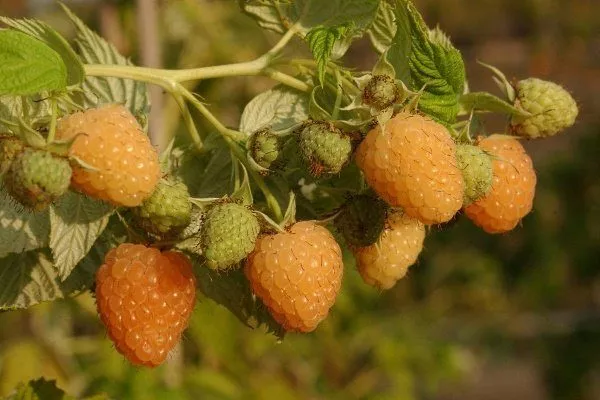
Yellow raspberries are not a very common or interesting crop in our gardens. Many gardeners are currently trying to grow them, and to do so, they should follow our recommendations.
The health benefits of yellow raspberries
Most red berries can cause allergic reactions due to their anthocyanins—substances responsible for the purple, blue, and red colors of plant parts. Therefore, young children, pregnant women, and people with allergies are advised to consume them with extreme caution, and perhaps even switch to berries of other colors, such as yellow raspberries.
This berry is not widely grown among gardeners, but its many significant advantages make it a favorite in gardens. The biochemical composition of yellow raspberries includes the following:
- low amount of organic acids;
- high in sugars, folic acid or vitamin B9;
- the presence of minerals such as iron and copper.
Yellow raspberries are also widely popular in folk remedies. They are used as:
- diaphoretic, for fevers, acute respiratory viral infections;
- a remedy that stabilizes body temperature during a cold;
- decoctions of leaves relieve cough, as part of complex therapy;
- berries regulate digestion;
- natural antidepressant and sedative.
The best varieties
Be sure to select the best varieties of delicious yellow raspberries for growing in your garden. There are quite a few available today, and each variety has its own unique qualities.
| Name | Yield (kg per bush) | Berry weight (g) | Frost resistance |
|---|---|---|---|
| Amber | 3 | 4 | High |
| The fugitive | 2.5-3 | 5 | High |
| Apricot | 3 | 4 | High |
| Yellow dessert | 2 | 2 | Average |
| Yellow giant | 6 | 6 | Low |
| Golden autumn | 2.5 | 5-7 | High |
| Golden domes | 2 | 6 | High |
| Orange miracle | 3 | 8 | Average |
| Yellow sweet tooth | 3 | 6 | Low |
| Yaroslavna (Brusvyana) | 3.5 | 9 | Average |
Amber
This variety has been known in Russia for over 30 years. It is virtually pest-free and winter-hardy. Yields approximately 3 kg per bush, harvested in 5 stages. Ripening is mid-late. The berries are neither large nor small, averaging 4 g, amber-colored, and round. They are easy to transport.
The fugitive
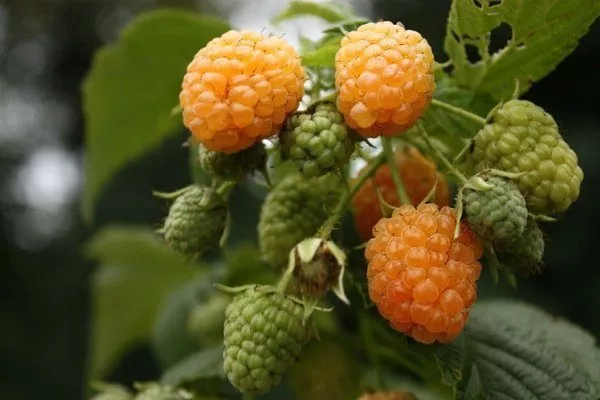
Bred by renowned Russian breeder I.V. Kazakov, this variety produces larger fruits, weighing up to 5 g, compared to the previous one, and is considered an early ripening variety. It tolerates frosty winters well, making it suitable for cultivation in central Russia. Yields are 2.5-3 kg per bush.
Apricot
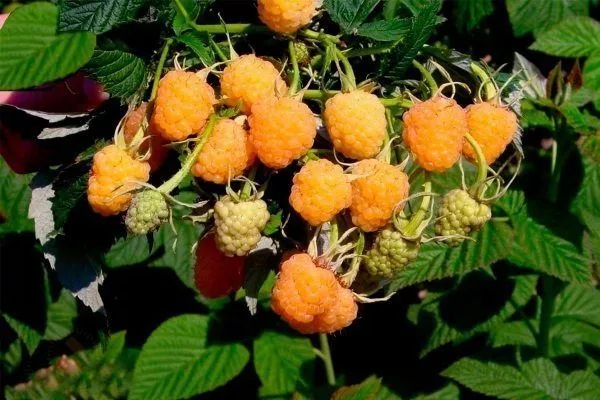
Bred in 1996, this fairly fruitful variety produces a harvest within the year of planting. It's one of the most easy-to-grow, frost-hardy varieties. The bushes reach a height of up to 1.6 m, with a slightly spreading habit. Its moderate ability to produce shoots allows for less frequent pruning.
The following are some of the features:
- after full ripening, all the berries fall off;
- If the weather is too rainy, the taste of the berries may deteriorate;
- Raspberry bush gartering is necessary every year;
- can be affected by a viral disease called raspberry stunting.
Yellow dessert
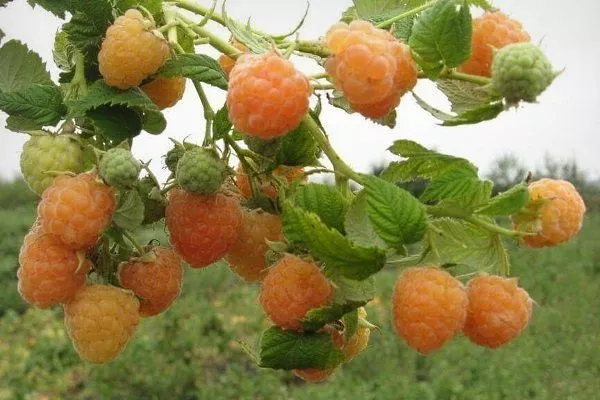
This raspberry variety was developed in Russia in the post-war years at the Gornotaiga Experimental Station. It is an early-ripening variety, yielding an average of 2 kg per bush. The berries are small, weighing up to 2 g. The plant typically does not exceed 1.5 m in height, and the bush is quite spreading. This variety is not everbearing. The thorns are not thorny.
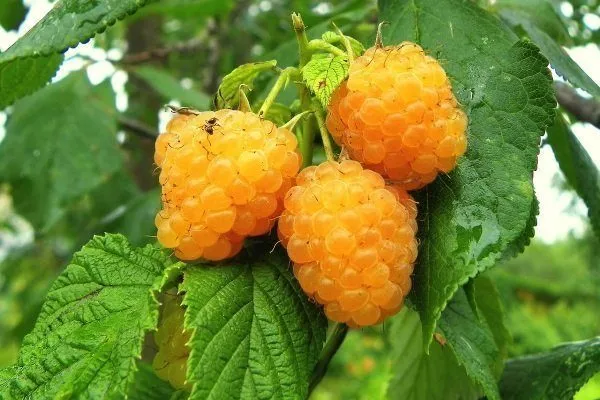
Yellow giant
This variety is distinguished by its "giant" berries, weighing up to 6 grams, and its yield is also quite high – up to 6 kg per bush. It is not very frost-resistant, requiring shoot protection. Ripening is mid-early. The bushes reach 2.5 meters, necessitating the installation of supports and tying.
With careful care, signs of remontancy appear, but this variety does not require complete pruning of the shoots, because the second year is characterized by the main abundant fruiting.
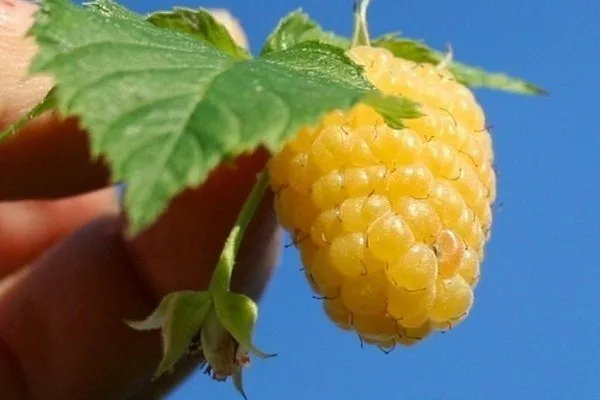
Golden autumn
The berries are quite large, weighing up to 5-7 g, and firm, making them easy to transport. The yield is average, up to 2.5 kg per bush. Fruiting occurs from mid-August to early October. The bushes are medium-sized, no taller than 2 m, and have a loose spread. They are characterized by high disease resistance.
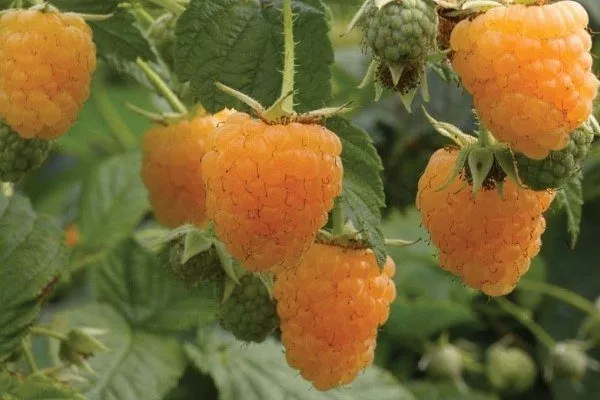
Golden domes
This variety's berries are characterized by a slightly sour taste, heavy pubescence, and a weight of up to 6 g. They tolerate winter cold well, are undemanding, and quite productive—over 2 kg of fruit per bush. This variety is characterized by a low rate of shoot formation. The bushes grow up to 1.5 m tall. Frost-resistant, only one rhizome is left exposed to snow.
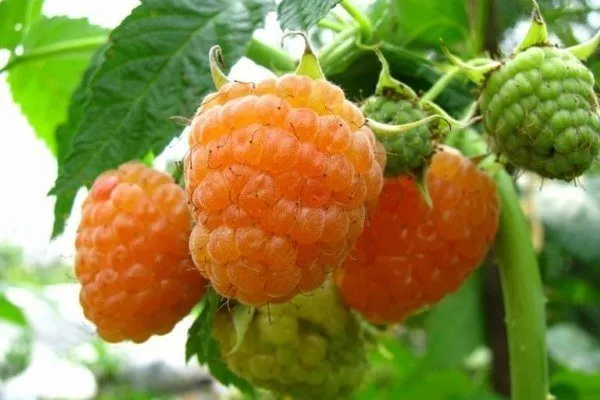
Orange miracle
The variety's fruits are quite large, reaching 8 g. It is sensitive to drafts and does not require winter protection. The bushes reach a height of up to 2 m and grow quite slowly. Even overripe berries remain on the bush and do not fall off.
By growing this variety, you can continue growing your raspberry patch for 15 years without replanting it, while maintaining its high quality. It's the only raspberry variety that allows berries to ripen on stems placed in water. It's for this reason that florists use it to create unique bouquets.
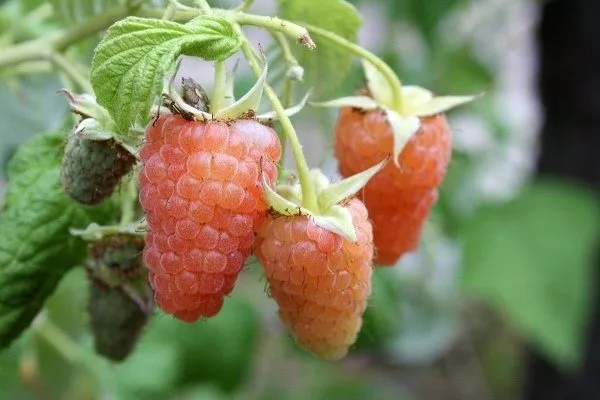
Yellow sweet tooth
It produces a high yield, exceeding 3 kg per bush. Berries weigh up to 6 g and hold their fruit for a long time, which is very pleasing. The bushes are spreading, so gardeners often use wire fencing to shape the bush. Disadvantages include poor transportability and poor frost resistance, requiring additional covering.
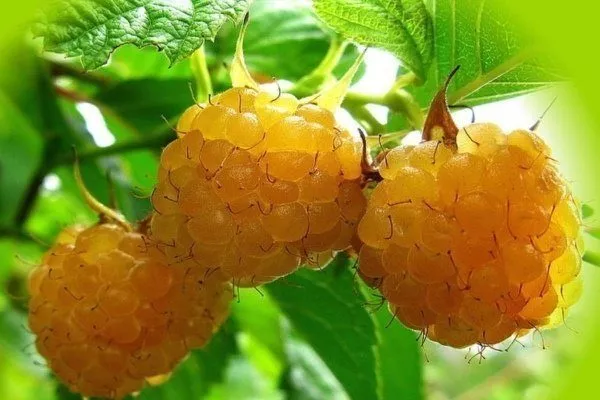
Yaroslavna (Brusvyana)
This variety was developed by Ukrainian breeders and is therefore well adapted to Ukraine's climate, but in Russia it is recommended for cultivation only in southern regions. It is a mid-season variety with an extended fruiting period: from early June until the first frost. Yields up to 3.5 kg, with berries weighing up to 9 g. The bush grows up to 1.7 m tall and branches sparingly.
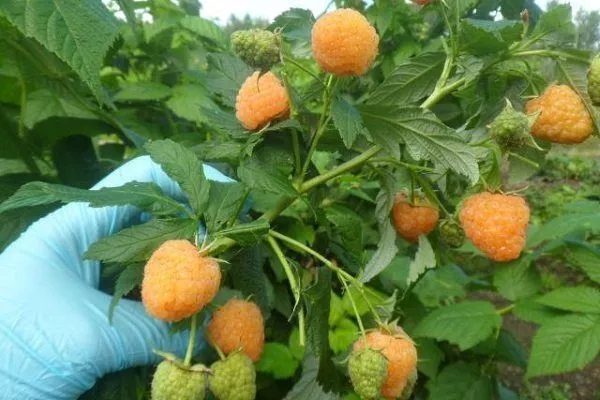
Almost all popular varieties of yellow raspberries are remontant – these are plants capable of long-term fruiting, both on young shoots and on last year’s.
- ✓ Consider the frost resistance of the variety, especially if you live in regions with harsh winters.
- ✓ For southern regions, choose varieties with high drought resistance.
- ✓ Pay attention to the ripening time so that the berries have time to ripen before the onset of cold weather.
Growing yellow raspberries
Growing yellow raspberries correctly is essential to achieving a high yield. Our recommendations will help you do just that.
Choosing a landing site
The ideal location for planting yellow raspberry seedlings is a sunny spot where waterlogging and drafts are avoided. Experienced agronomists recommend arranging rows north to south or northwest to southwest, especially in regions with short, cool summers.
It's best to plant raspberries in a site with a slope of no more than 8 degrees, or even better, a completely level site. If the site previously contained nightshade crops, consider another location, as there's a high risk of verticillium wilt. Soil previously occupied by raspberries is also unsuitable; it needs to rest for five years.
Ideal soil for yellow raspberries
The highest yields can be achieved if raspberries are planted in sandy loam and light loam soils. If this is not possible, more careful care will be required. Avoid planting in heavy, acidic soils, as the effort required will not justify the meager yield.
Planting dates
Yellow raspberries are planted in the fall: from September to October. For southern regions, a longer period or spring planting is possible. During this period, it is important to prevent frost damage to the first roots.
Subtleties of care
Yellow raspberries require high-quality care. Fertilization, watering, staking, and pruning are essential. Only under these conditions will you achieve a good harvest.
Fertilizer
The timing of fertilizer application depends on the planting method. The trench method is the most popular and requires the following dimensions: trench width 0.5-0.6 m, row spacing 1.2-1.6 m.
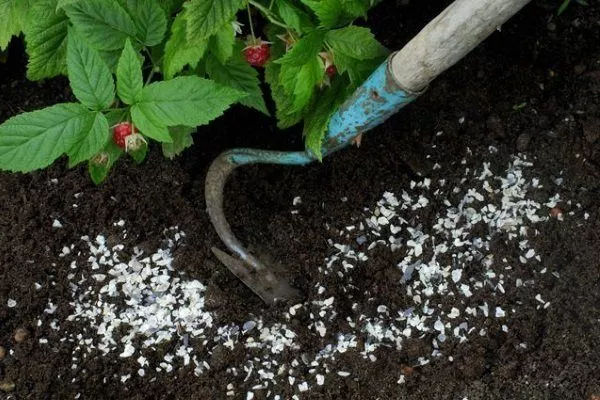
The density is maintained based on the variety, but not less than 0.4 m, and the seedlings are not planted deep. This planting method delays the need for fertilizing.
If another method is used, it's worth adding nitrogen, especially in the first couple of years after planting, as this is the growing season when the plant needs nitrogen fertilizers the most. Early spring application is recommended, but some agronomists divide the application into two parts, applying one in the fall.
Urea diluted with water is most commonly used. Other elements (phosphorus, potassium, boron, iron, and manganese) are added as needed. In your garden, you can use manure and ash.
Watering
Yellow raspberries require generous watering; this promotes the development of strong rhizomes and the penetration of roots into deeper soil layers. Like any other raspberry, without proper rooting, yellow raspberries will grow rapidly and cause a lot of trouble.
In the southern regions of the country, it is recommended to water yellow raspberries at least six times during the growing season. In temperate latitudes, two to four times is sufficient. Watering is usually done in furrows or by sprinkling.
Garter
Yellow raspberry varieties with lush bushes require staking, otherwise the plant will fall apart. In the first month of spring, dig in posts and stretch a trellis over them. It's recommended to tie the bush in three places: at 1.2 m above the ground and a couple of branches below.
Trimming
Although breeders have developed a large number of relatively unpretentious varieties of yellow raspberries, pruning is still a determining factor in increasing yield.
Everbearing varieties are pruned almost completely in the fall before frost, and during the fruiting season, only shoots that have already yielded fruit are removed. This care should not be ignored, as overcrowding of everbearing raspberries leads to a significant reduction in yield.
Non-remontant varieties are pruned twice a year to increase branching.
Shelter for the winter
Yellow raspberry varieties were developed in the southern or central regions of the country, so in these areas, the bushes do not require covering. Their high frost resistance allows them to survive the winter well.
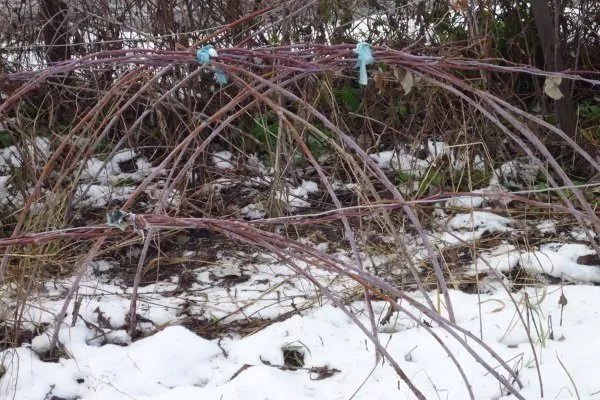
In northern regions, such as Siberia, given the harsher winter conditions, it's still worth considering covering the plants with dry grass or soil. To do this, bend the bushes down and tie them so that their height doesn't exceed 0.4 m.
Propagation of yellow raspberries
Yellow raspberries are propagated primarily by seedlings or cuttings. However, with some effort, it's possible to grow a mature bush from seeds, although this is a less popular method. Raspberry seeds have a relatively low germination rate and require special preparation before sowing. Sometimes, yellow raspberries are propagated by dividing the bush into 4-5 parts, which produces good results.
Interestingly, yellow raspberries emerged as a result of a mutation of the common red variety. It was this mutation that helped breeders in the US, Russia, Ukraine, and other countries develop a huge number of varieties of this species.
Gardeners' reviews
The downside is that it grows wild; if not pruned promptly, it will take over the entire garden. We pick berries all summer long; they're juicy, sweet, and quite large. We freeze what we don't eat for the winter, which saves us during cold seasons.
Every year, yellow raspberries, thanks to their qualities, win the love of gardeners. And for good reason: most tasters award yellow raspberries up to 4.7 points for flavor.