
Caring for raspberries in spring is the key to good fruiting. Failure to do so will result in a significant reduction in yield. Furthermore, the raspberry bush will bear little fruit not only this season but also the following one. This plant is considered low-maintenance; all gardening procedures are standard, but they must be accompanied by proper guidelines.
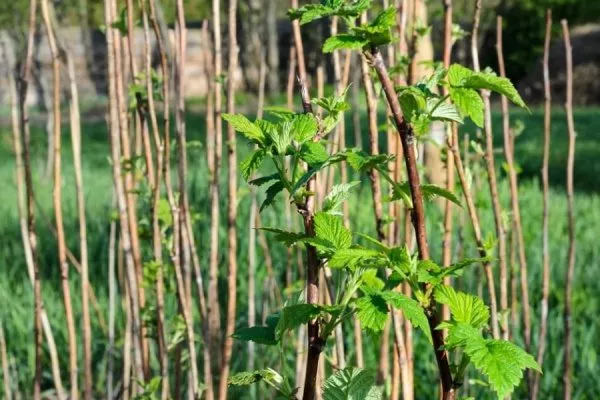
Raspberry patch: spring cleaning
The first thing a plot owner does immediately after removing the winter cover is clean up the raspberry patch. What to do:
- If you bent the branches down to the ground in the fall while preparing the bush for winter, return them to an upright position in early spring, i.e., remove the clamps and straighten the shoots. Otherwise, you won't be able to see the large berries.
- Get rid of old mulch.
- Rake up all debris, plant debris, leaves, etc. and burn them.
- Weed the area.
- ✓ Make sure that the air temperature does not drop below +5°C during harvesting to avoid damage to the shoots.
- ✓ Use only sharp and disinfected tools to remove old mulch and trim to prevent plant infections.
Correct pruning
Raspberry pruning is done before sap flow and bud break. Warm weather is essential. For example, in central Russia, the optimal time is the second half of April, in the south of the country – late March, and in the northern regions – early May.
The main pruning of raspberries is done in the fall. Work begins in the spring if no pruning was done in the fall, but this does not apply to sanitary pruning. The plant needs to be tidied up after the winter.
Algorithm of actions:
- Remove old, two-year-old shoots that did not bear fruit last season. These branches can be identified by their dryness, brittleness, and the presence of numerous lateral branches. Prune at the root; there should be no stubs left.
- Remove any weak, dried, thin, damaged, or deformed shoots from the bush. Each raspberry should have 5-6 good, healthy branches.
- After the beginning of the growing season, young branches that have not formed or opened buds at the top should be cut back to the area with active shoots.
Figure-eight garter
Staking is essential to ensure proper branch growth and even distribution of sunlight across the crown, which is essential for the flavor of the fruit. It also helps reduce overcrowding, reducing the risk of fungal diseases.
Peculiarities:
- In the spring, secure the shoots to the support. Do this before the sap begins to flow, as swollen buds are fragile and easily damaged, potentially ruining your harvest.
- First, tie the bush itself, then tie it to the support. For tall varieties, secure it in two sections. The tying should be tight, but not too tight.
- When planting raspberries in trenches, use a trellis. Install support posts, stretch rope between them, and attach the plant branches to the rope.

Loosening
After rain or watering, a dry crust can form on the soil surface, blocking air flow into the subsoil. As a result of oxygen deficiency, the root system develops poorly, the bush stops growing, fruiting fails, or the berries become significantly smaller.
To avoid this problem, loosen the soil. Begin working 2-3 hours after adding water. Keep the soil to a depth of no more than 6 cm. A small hoe is easiest to use.
- ✓ Loosen the soil only when it is slightly moist to avoid compaction.
- ✓ Use tools with a working width of no more than 10 cm to minimize damage to surface roots.
Regular spring watering of raspberries
Raspberries are moisture-loving crops. Their roots are shallow, and the topsoil dries out quickly. Therefore, they require frequent watering. They are especially demanding during the active growth phase, flowering, and fruit ripening. However, they react negatively to excess and stagnant water.
Rules for the procedure:
- water penetration to a depth of 30-40 cm;
- norm - 40 liters per 1 sq. m landing;
- watering is carried out in the root zone;
- Sprinkling is an additional way to saturate the plant;
- hot, dry weather is a reason to water the soil more often and more abundantly;
- In case of frequent downpours, action can be abandoned.
Mulching
This is a mandatory agricultural practice for raspberries. The reason for this is the specific location of the root system. The close proximity of the roots to the soil surface leads to their drying out during droughts and freezing during cold weather.
In early spring, use compost or humus for soil management. The protective layer also acts as a fertilizer. Mulch the soil around the tree trunks with organic matter. Cover the remaining area with peat or sawdust. In all cases, the layer should be no more than 7 cm thick. Ideally, 5 cm.
Avoid placing the material close to the roots. This can cause root rot. Apply mulch after the first feeding and watering.
Fertilizing in spring
Raspberry care in spring requires a variety of measures. Fertilization is part of this process. Fertilizing helps ensure a bountiful, delicious harvest.
Plant nutrition scheme with useful microelements:
- First one. The ideal time is the very beginning of the growing season, i.e., at the beginning of sap flow. The soil must warm up to 5 degrees Celsius to apply the fertilizer. This is necessary for the growth of green mass.
Use nitrogen fertilizers. Suitable options include urea (25 g per 10 liters of water, watered at the roots, at a rate of 5 liters per plant) or nitroammophoska (15 g per 1 sq. m, followed by tilling). - Second. Apply at the bud formation stage. This promotes the formation of large, sweet fruits. The plant requires phosphorus and potassium fertilizers. Diammophoska works well. Sprinkle 25 g over the soil surface. The dose is calculated per 1 square meter.
- Third. Apply during the flowering phase. Apply only potassium and phosphorus. The fertilizer should not contain nitrogen, even in small amounts. Monopotassium phosphate has proven effective. Dissolve 20 g of the preparation in 10 liters of water. Water the crop at a rate of 5 liters per plant.
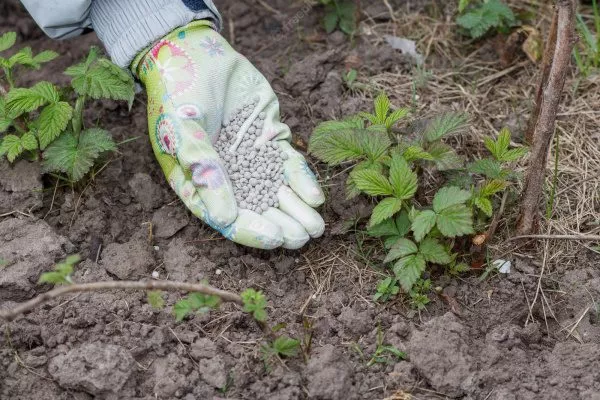
The feeding procedure has its own characteristics:
- The most effective are liquid fertilizers, i.e. mixed with water;
- Before applying the compositions (2 hours before), be sure to water the plant;
- do not exceed the specified dosages;
- do your work early in the morning or in the evening, when the sun is not hot;
- The procedure can be omitted for the first 2 years of raspberry life in one case - the initial planting was accompanied by the addition of fertilizers to the planting hole.
Pest and disease control
Raspberries are susceptible to diseases such as gray mold, powdery mildew, rust, anthracnose, and others. Apply the first foliar treatment immediately after pruning. Use a 1% Bordeaux mixture at a rate of 2-3 liters per plant. Afterward, water the plants and loosen the soil. This will prevent fungal attack.
What else can affect a plant in spring and how to deal with it:
- Rot. Trichoderma Veride (50 g per 5 liters of water) is suitable. Water the root collar area at a rate of 300 ml per bush.
- Chlorosis. There's no cure. If the leaves become dry, they dry out. The only solution is to dig up the plant and burn it to prevent the disease from spreading to other plants.
Secondary prevention against pests such as the shoot midge or raspberry midge, stem fly, bud moth, raspberry-strawberry weevil, raspberry beetle, and spider mite is carried out at the bud formation stage. Use Skor. Foliar treatment with a solution of 3 g per 10 liters of water. The recommended rate is 1 liter per 1 sq. m.
But the best way to protect your crop from diseases and pests is to follow proper agricultural practices from the beginning to the end of the season. Planting garlic or marigolds near your raspberries can provide additional protection. The pungent odor repels pests.
Landing and transplanting
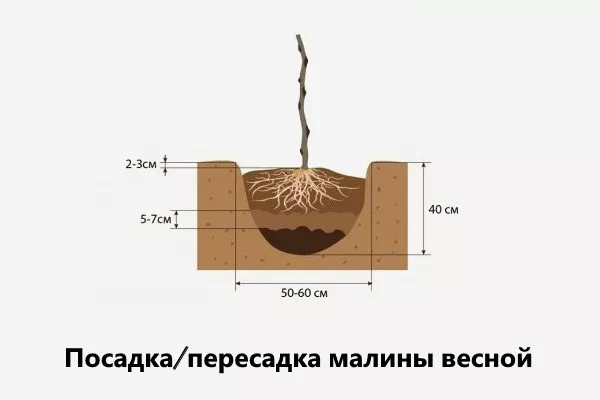
Raspberry planting and transplanting can be done in either spring or fall. If you choose the former, there are many nuances to consider:
- Choose a site that is well-lit by sunlight, without wind, and with a minimum amount of snow in winter.
- Loose soil is essential. Acidity isn't important. However, highly acidic areas should be fertilized first.
- Repotting can be done once every five years. This procedure has a positive effect on the plant, increasing yield and health, as remaining in one place for a long time depletes the soil. It's difficult for the plant to bear fruit in such a growing zone.
- The bush needs to be moved before the buds open.
- When relocating raspberries or planting a seedling for the first time, prepare a hole in advance. Size: 50 x 40 cm. Add 10 kg of humus, 50 g of superphosphate, 40 g of potassium sulfate, and 400 g of ash. The dosage is per square meter.
- The transplanted plant should be up to 0.6 m tall. Branches are pruned. In the spring, dividing the bush is acceptable. It's important that each division has 2-3 healthy shoots with strong roots.
Everbearing raspberries: care features
Everbearing raspberry – a variety that typically bears fruit twice per season. The first berries appear in July, the second from August to October, or after the first frost. The second wave is characterized by rapid fruit set and immediate ripening. They are less sweet, but larger in size.
What you need to know about caring for this crop:
- Spring pruning involves removing two-year-old shoots and weak root suckers. Shorten green branches by 25 cm.
- Planting is carried out in small holes – 35 by 35 cm.
- The distance between seedlings is 1 m.
- The bushes do not need tying.
Caring for young raspberries
Raspberries begin bearing fruit in their second year. The first year, the shoots are just growing. But this doesn't mean young plants don't need care. The same cultivation techniques are used for mature plants.
The only difference is that in early spring, cover the plantings with spunbond at night to prevent damage from subsequent frosts. Stop this procedure once warm weather sets in.
Secrets from the experts
Raspberries are grown in many areas, in almost every region of the country. Therefore, there are plenty of specialists in planting and spring care. Experienced gardeners offer several tips to help properly prepare the bush for the fruiting season:
- You can use the double pruning method for everbearing varieties. This involves pinching the crown in May, when the shoots reach 120 cm. A second similar procedure is performed the following spring. Last year's side shoots are pinched. This ensures the plant produces the highest possible yield.
- Tie the bush to a specially installed fence. More fruit will be produced due to the even distribution of light.
- During the ripening phase, watering should be reduced to a minimum. Otherwise, the flavor will be neutral and watery.
- Replanting can be done when new, strong replacement shoots are no longer sufficient to produce a good harvest. This indicates that the root system lacks sufficient space to grow.
- Apply any fertilizer after the soil has been moistened. This will improve permeability.
- Regularly add fresh fertile soil under the bush.
Also watch a video about caring for raspberries in spring:
Raspberries are subshrubs with sweet, aromatic fruits. However, spring care greatly affects their flavor. If the raspberry bush isn't harvested, pruned, or supported after winter, the harvest will be meager if the gardener doesn't water and fertilize properly. It's also important to treat the bush for pests and diseases.