
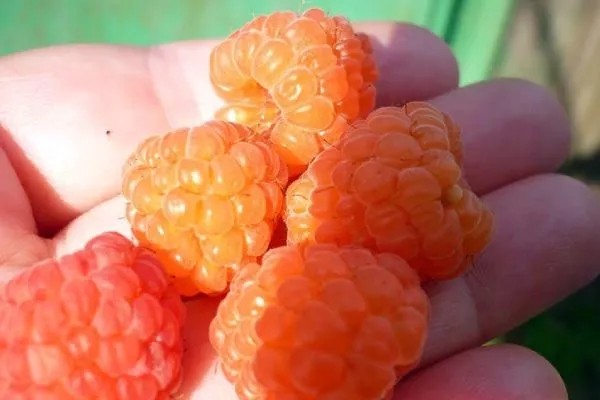
The Valentina raspberry was bred by English breeders and is a yellow-fruited variety. However, the berries of this easy-to-grow and productive variety are not yellow; their coloring combines pink and apricot shades.
History of creation
The Valentina variety was developed by British breeders in 1994. Researchers at the East Malling Experimental Station created the new variety by crossing yellow and pink raspberry seedlings (EM5588/81 x EM6225/11). The variety only appeared on the market in 2005.
Description of the variety
The bushes are erect, tall, and vigorous, reaching 2-2.5 m in height. The shoots are thick, weakly thorny, and reach 2-2.5 cm in diameter. The lateral branches are long, up to 1.2 m. The growth of suckers, as well as replacement shoots, is extremely weak.
Description of berries
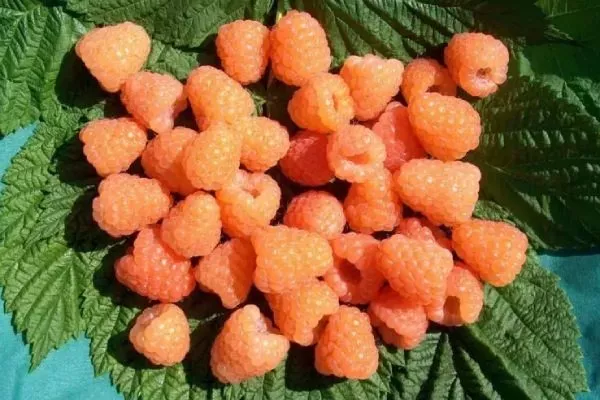
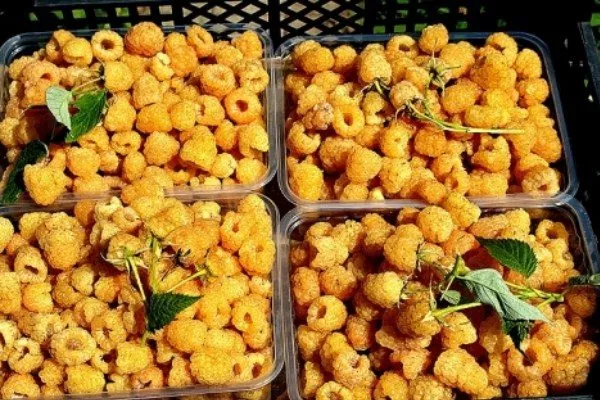
The berries are large and have an unusual apricot-pink hue. They are round-conical in shape, weighing 5-7 g each.
Purpose and taste
The berries have a sweet, dessert-like flavor, with almost no tartness. The aroma is very rich, raspberry-like. Some gardeners note the berries' excessive sweetness, which is present in the taste regardless of weather conditions—even in cold, rainy summers, they ripen sweet to the point of cloying.
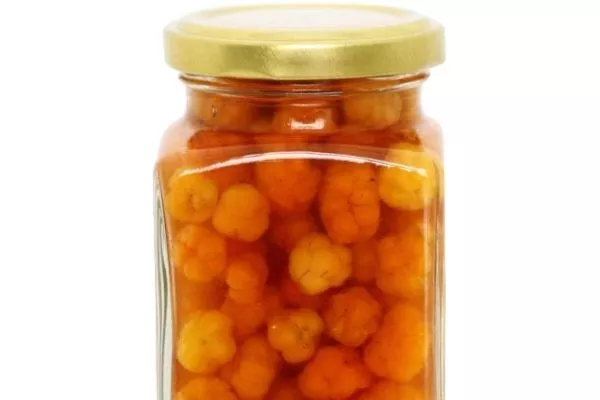
This variety has a versatile use. The berries can be eaten fresh or used in desserts and fillings. They also make excellent compotes and all kinds of winter preserves, such as jams and jellies.
Characteristics
This variety has an early ripening period. This period depends on specific climatic conditions, so the berries ripen unevenly across regions. For example, in the Moscow region, Valentina raspberries ripen in late June. The further north the region is, the more the ripening period shifts toward autumn.
The variety is considered frost-hardy and productive, with a single bush producing up to 5 kg of berries. Transportability is average, but this characteristic is a weakness of all yellow varieties.
Pros and cons
Before planting apricot-pink raspberries in your garden, it's a good idea to learn about all of their advantages. It's also worth learning about the disadvantages and other characteristics of this variety, which may be critical for some gardeners.
Pros:
Cons:
It's also worth noting that some gardeners are unhappy with the berries' excessive sweetness, but this is subjective—everyone chooses their own variety. If you prefer raspberries with a tart edge, it's best to avoid the Valentina variety outright.
Selecting a site and preparing the soil
The Valentina variety is hardy and unpretentious, but its yield largely depends on how correctly this raspberry is planted.
- ✓ Seedlings must have at least 3 healthy shoots with a thickness of 0.5 cm.
- ✓ The root system must be developed, without signs of rot or dryness.
What to pay attention to when planting:
- The best time to plant seedlings is autumn or spring. Use only high-quality planting material—healthy, strong seedlings with well-developed roots.
- A spacious, well-lit, and ventilated area is used for planting. The variety tolerates partial shade, but it may negatively impact berry size.
- The best soils for Valentina raspberries are light, nutritious, breathable, moisture-retentive, and slightly acidic.
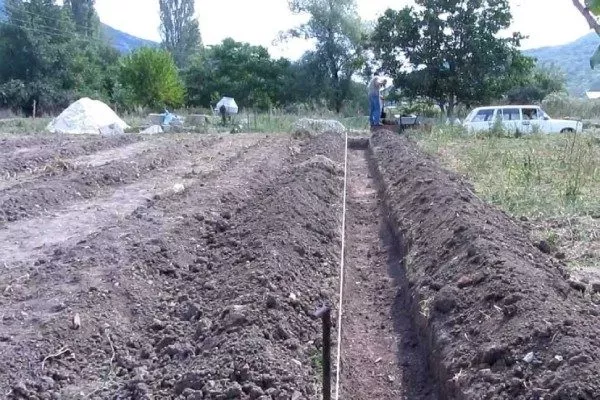
- The area is dug over in advance, enriching the soil with minerals and organic matter. 20 liters of compost, as well as 200 grams of superphosphate and potassium fertilizers, are added per square meter (during digging).
About landing
For each seedling, planting holes are dug 50-60 cm deep. The intervals between adjacent holes are 100-150 cm. Seedlings planted using standard techniques are generously watered with settled, sun-warmed water and then mulched with straw, peat, etc.
How to care?
The quality and quantity of the harvest depend not only on growing conditions and planting characteristics, but also on how correctly and regularly the crop is cared for.
How to care for Valentina raspberries:
- This variety loves moisture and needs to be watered about once a week. Reduce the frequency of watering while the berries are ripening. As with planting, use settled, warm water. During hot and dry periods, watering should be more frequent.
- The soil, slightly dry after watering, is carefully loosened, being careful not to damage the surface roots. Weeding is carried out at the same time.
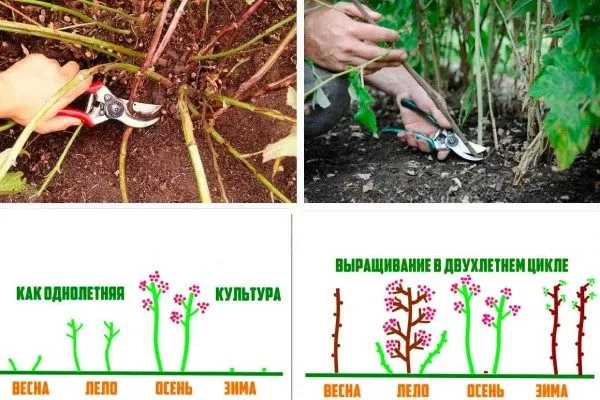
- In the spring, all old and dry branches are removed from the raspberry patch, and unnecessary shoots are also removed.
- To support the branches and ensure air circulation, they are tied to trellises. This not only maintains the bushes' shape but also allows the fruit to receive sunlight.
- Fertilizing begins in the third year after planting. Until then, the raspberries are perfectly satisfied with the fertilizer placed in the planting hole. During growth and fruiting, raspberry bushes require nitrogen, phosphorus, potassium, and iron.
- Nitrogen-containing fertilizers are applied three times per season: first in May, then at two-week intervals.
- The first pruning is done in the spring. During this period, sanitary measures are taken, including removing frozen and pest-infested branches. The second pruning is done after the harvest, removing two-year-old shoots.
- Rejuvenating pruning is performed every three years. If the bushes are not pruned, the raspberry bushes gradually lose vigor and fruiting ceases. Pruning also prevents the bushes from becoming too dense.
Preparing for winter
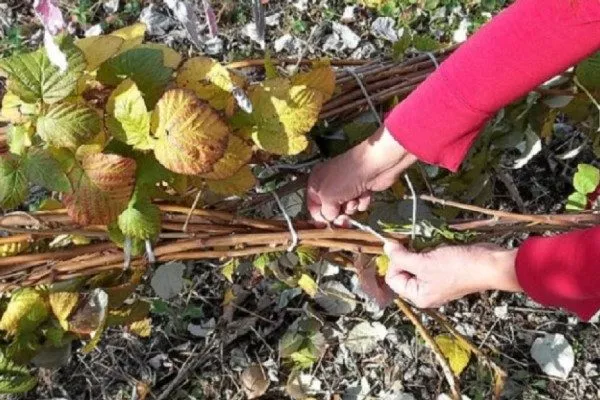
The Valentina variety is quite frost-hardy, easily surviving temperatures down to -30°C. However, raspberry bushes must be prepared for winter according to all the rules, as lower temperatures are possible in most regions, which could cause the bushes to freeze.
Pest and disease control
The Valentina variety has strong immunity to fungal and other raspberry infections. Problems are usually caused by prolonged dampness and poor agricultural practices, especially the combination of the two. This variety is most often attacked by aphids and spider mites, which can be controlled with standard insecticides such as Fufanon, Actellic, or similar products.
Under unfavorable conditions, plants can be affected by anthracnose, gray mold, and powdery mildew. Various fungicides are used for spraying, including Oxychom, Fitosporin, Bordeaux mixture, and copper sulfate.
Reproduction
Valentina raspberries are propagated vegetatively. Cuttings are considered the simplest and most effective method. This allows for the rapid production of new bushes that fully embody the varietal traits of the parent plants.
Collection and storage
The berries are picked in dry weather, so they stay fresh longer. Ripeness is determined by their color and how easily they separate from the stems. The best time to pick them is morning and evening, when the berries are not exposed to strong heat.
Harvested raspberries are immediately cooled to preserve their freshness and flavor. If left at room temperature, they can turn sour, release juice, and spoil. Therefore, the berries are placed in the refrigerator for a few minutes. For long-term storage, the berries are placed in a plastic bag, the air is removed, and placed in the freezer. Raspberries can be stored here for several months.
Reviews
The Valentina raspberry will appeal to fans of unusual varieties. If you believe raspberries should be incredibly sweet, and their color can range from bright red, then this English variety is for you. This apricot-pink variety requires trellis support, but overall, it's very easy to grow and productive, making it a perfect fit for any garden or homestead.