
The Terentiy raspberry is a popular large-fruited variety bred domestically. Our gardeners and summer residents appreciate it for its combination of excellent flavor, large berries, excellent agronomic characteristics, and ease of care.
Description of the Terentiy raspberry
The Terentiy raspberry bushes are medium-sized, vigorous, and robust. The average plant height is 1.5 meters. The shoots are straight, fleshy, and thornless. The leaves are large and dark green. The plant resembles a small tree, covered in large red berries.

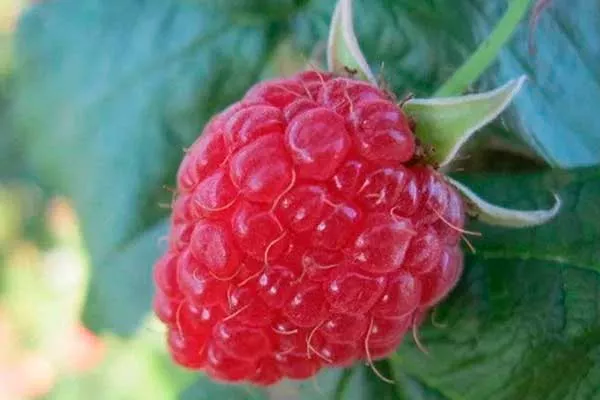
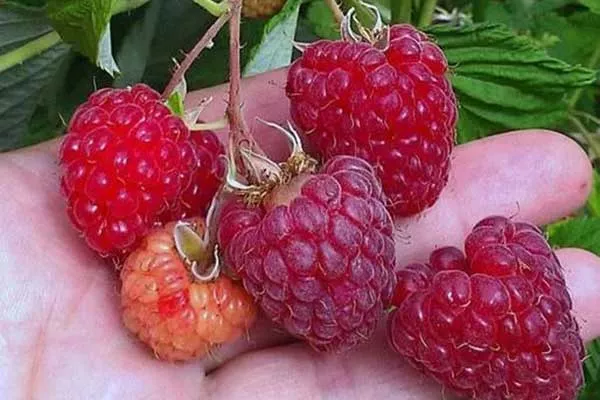
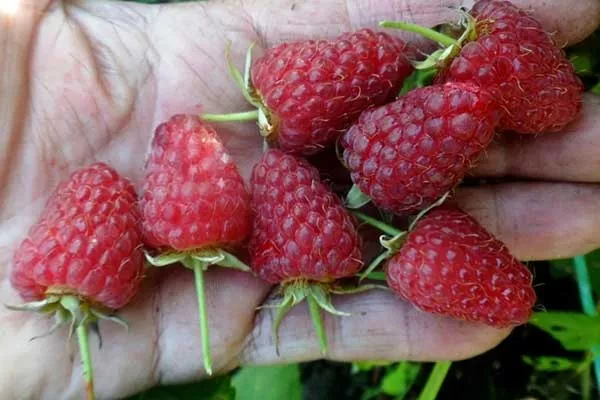
The fruits of the Terentiy variety are purple-red, large to very large, and fleshy. Fruit weight ranges from 10 to 15 g, with individual specimens reaching 25 g. The surface is shiny, the drupes are uniform, medium-sized, and tightly adherent to each other. The fruit is conical in shape. The seeds are small.
Who and when developed the Terentiy variety?
The Terentiy variety was developed by a Russian breeder from the Institute of Horticulture (VSTISP). Its creator is Professor V.V. Kichina. The year of its development is 1998. The Terentiy raspberry was obtained by cross-pollinating the Tarus and Patricia varieties.
The taste of fruits and their uses
The fruit's flavor is sweet, but not cloying, and the flesh is tender and melts in the mouth. The berries have a rich raspberry aroma.
Main characteristics
The Terentiy raspberry is a mid-early variety. The fruits ripen in July. It is moderately frost-hardy, withstanding temperatures down to -30°C. This variety is best suited for regions with light frosts and snowfalls.

The yield is very high—from 6 to 10 kg of berries. In commercial cultivation, approximately 20 tons of berries are harvested per hectare.
Pros and cons
The large-fruited Terentiy variety is popular with gardeners and summer residents for good reason. This raspberry has many advantages, but it also has some disadvantages that are best known before planting. These disadvantages may make this variety unsuitable for your intended purposes.
How to plant raspberries?
To get maximum yield from the Terentiy raspberry, it is important to plant it correctly, following the planting technique and pattern.
- ✓ The soil pH level should be within 5.5-6.5 for optimal growth of Terenty raspberries.
- ✓ The soil must contain at least 3% organic matter to provide the necessary nutrition.
Landing features:
- Choose a sunny, warm site free from drafts and strong winds. It's recommended to plant the bushes so that they are protected on the north side—by a building wall, fence, or tall trees. Low-lying areas with stagnant water are contraindicated.
- This variety grows best in loamy soils that retain moisture well. Raspberry soil should be well-drained and neutral or slightly acidic.
- For planting, dig holes 0.5 m deep and 0.4 m in diameter. Leave 0.5 m gaps between adjacent holes. The optimal distance between rows is 1.5 m.
- Each hole is filled with a nutrient mixture made by mixing 10 kg of humus and 0.5 kg of wood ash. Mineral fertilizers, such as superphosphate and potassium salt, are also added.
- Before planting, the roots of the seedlings are dipped into a clay slurry made from clay and mullein, which has the consistency of thick sour cream.
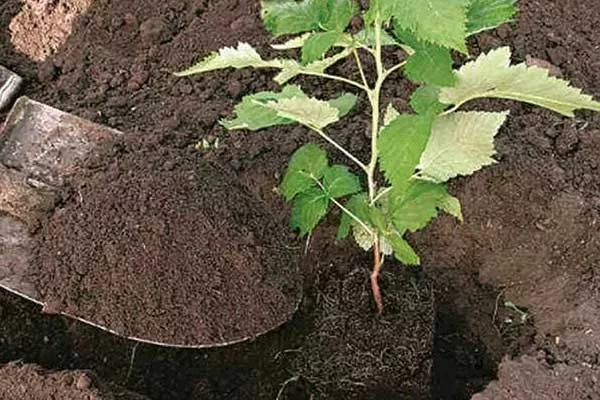
- The seedlings are cut to a height of 30 cm and planted in holes so that their root collars are level with the ground. The roots are covered with soil, compacted, and then watered generously with warm, settled water. After moistening, the soil is covered with humus, straw, or other suitable material.
Care requirements
The health of the bushes, the quantity and quality of the harvest, and even the taste and size of the berries, largely depend on care. The Terentiy variety requires standard agricultural practices—watering, fertilizing, pruning—and in regions with harsh winters, this raspberry also requires insulation.
How to care for raspberries Terentiy:
- Water the bushes approximately once a week. The frequency depends on the weather, rainfall, soil conditions, and the growing season. In May, the recommended watering rate is 3 liters per plant; in June, 6 liters. A moisture-replenishing watering is performed in October.
- In spring, raspberry patches are fertilized with a 1:15 solution of mullein diluted with water. During fruiting, superphosphate and potassium salt are added (30 g per square meter). In autumn, the soil in the raspberry patch is dug over, adding humus and wood ash.
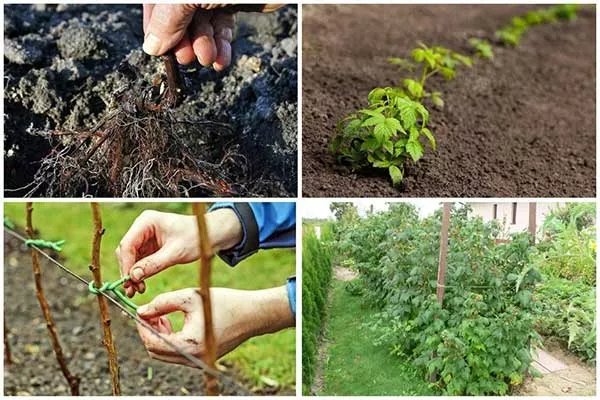
- After wintering, frozen branches are pruned from the bushes, if any are found. Eight to ten shoots are left on each bush and shortened by approximately 15 cm. In the fall, two-year-old shoots that bore berries in the summer are pruned. New growth is also pruned, as it will freeze over the winter anyway. All pruned branches are burned to prevent the spread of diseases and pests.
- In areas with harsh winters, shoots are bent to the ground in early autumn and then covered with snow. If there is no snow cover, raspberry bushes are covered with agrotextile. However, as soon as the weather warms and the snow melts, it is removed, otherwise the raspberries will rot.
Pest and disease control
The Terentiy raspberry has a high immunity, but for prevention, it is recommended to spray it with Bordeaux mixture in the spring. After the bushes bloom, they are treated with biologically active agents. To kill parasite larvae and fungal spores, wood ash is added to the soil in the fall.
| Method | Efficiency | Period of application |
|---|---|---|
| Bordeaux mixture | High | Spring |
| Biologically active agents | Average | Bloom |
| Wood ash | Low | Autumn |
The insect pests that pose the greatest threat to the Terentiy raspberry are the stem gall midge, raspberry mite, common spider mite, and raspberry beetle. To control them, use Karbofos, Actellic, Aktara, and other popular insecticides.
How to harvest and store crops?
The Terentiy raspberry is usually harvested in the second half of July (the exact timing depends on climate conditions). Harvesting occurs in dry weather. Moldy or rotten fruit are discarded immediately. The berries are picked carefully, being careful not to crush them.
Raspberries should be picked before they're very ripe, otherwise they'll swell and ooze. Place the picked berries in a shallow container to prevent them from squashing each other. Store fresh berries in the refrigerator at a temperature of +2 to +5°C and 90% humidity. Here, they can safely be stored for about four days.
Reviews
The Terentiy raspberry will certainly be appreciated by lovers of large-fruited varieties. This variety successfully combines all the qualities characteristic of an ideal variety—along with hardiness and undemandingness, this raspberry, with its strong and vigorous bushes, is capable of producing a bountiful harvest of sweet, large berries.