
Tarusa raspberry is a very popular variety among gardeners and summer residents. This renowned crop has many advantages and its own unique characteristics. When growing Tarusa raspberries, it's important to know and strictly follow all planting and care guidelines. Only a responsible approach can yield good harvests.
History and description of the Tarusa raspberry tree
Tarusa was bred in 1987 and has been sold since 1993, becoming popular among gardeners. The variety was developed by staff at the All-Russian Institute of Selection Technologies and Nursery Science of the Russian Academy of Agricultural Sciences, led by renowned breeder Viktor Kitchener.
The scientist obtained the raspberry variety by crossing the Scottish variety Shtambovy-1 and the domestic variety Stolichnaya.
Specifications:
- Resistance to harsh weather conditions. This drought-tolerant species thrives in dry climates. It doesn't require frequent watering or heavy rainfall. In fact, these can significantly reduce yields and even cause plant death.
- Maturation. Mid-July to mid-August. Tarusa is a mid- to late-season variety. The time to harvest depends heavily on the climate zone where the tree is grown, so the average harvest times may vary by 10-15 days.
- Productivity.It has a high yield. Up to 4 kg or more per plant, up to 20 tons per hectare. The berries are large, dry, transportable, and have a long shelf life, making this variety often grown for commercial fruit.
- ✓ The absence of thorns on the branches makes harvesting and plant care easier.
- ✓ The ability to bear fruit several times per season, which increases the overall yield.
Appearance and features
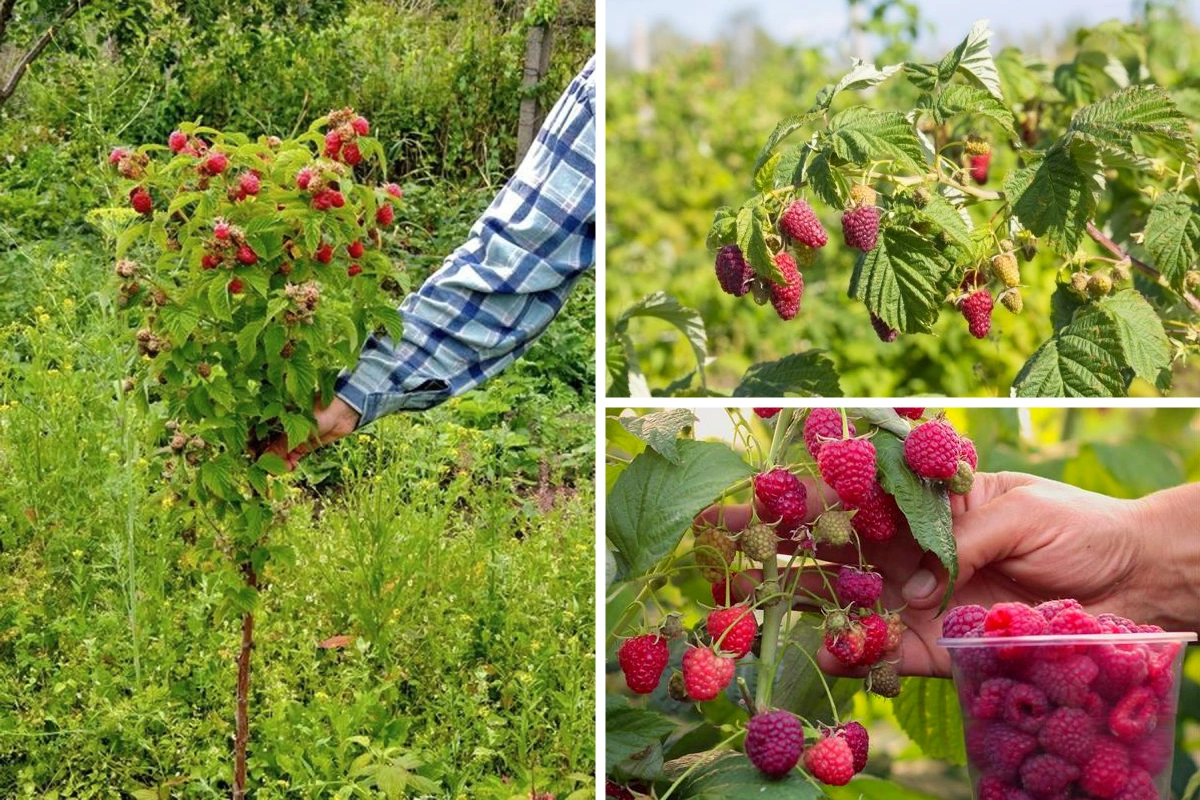
Tarusa has a thick, long, and rigid stem. Although the plant doesn't require support, it produces a higher yield of sweet berries when supported by a trellis. A dozen branches can grow from a single trunk, reaching up to 0.5 meters in length. This characteristic gives the shrub the appearance of a small tree.
The bush grows upward. The bushes themselves are short. The branches are thornless and thick. This compact raspberry has no branches at the base of the plant and branches actively from the middle to the top. The leaves are large, heart-shaped, with distinct veins.
Berries and their taste
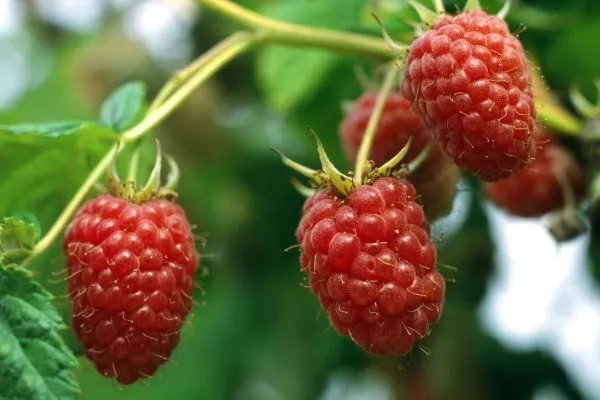
The cultivar's treasure is its berries, each with a small drupe. The fruit is large, and the berries are obtusely conical, significantly larger than the average garden raspberry, reaching 5-7 cm in length and weighing 12-15 g. The cap is 3 cm high, and the fruits are dark red when ripe (they can turn burgundy when exposed to too much sun).
Tarusa raspberries have excellent flavor—sweet and delicate, with a distinct classic raspberry aroma, moderate sugar content, and a slightly tart flavor. The berries are dense, juice-retentive, and can remain on the stem for a long time after full ripening.
Key advantages and disadvantages
The Tarusa raspberry variety has its pros and cons. With proper cultivation, the harvest will be abundant and delicious.
| Advantages Tarusa raspberry varieties | Flaws |
| The berries are excellent for all types of processing (drying, jam, pie filling, etc.). | The crop is damaged by insects and requires treatment with pesticides. |
| High productivity, quality retention during storage and good transportability; fruits do not become smaller or softer. | Due to a genetic mutation, the berries are sometimes smaller. |
| The variety has proven frost resistance down to -25-30°C, but in any case, it is better not to take risks and mulch the plants for the winter, since after winter thaws, frosts with a very sharp drop in temperature may occur. | During the rainy season, the fruits are sour and watery. |
| The bush is compact and branches well on the sides, but does not take up much space - therefore, the variety can be planted in denser and narrower rows, and get more berries from a smaller area. | In winter, the tree needs to be kept warm. |
| The tree has a small number of root branches, which makes it easier to care for the plants, but creates problems with mass propagation. | |
| Raspberry tree Tarusa is a remontant variety (bearing fruit several times per season). | |
| This is a mid-early variety, which ensures a good harvest at a time when there are few other raspberries on the market. | |
| Completely thornless variety. | |
| Large and beautiful fruits with a strong “signature” raspberry aroma. | |
| Elastic straight shoots, attractive appearance of the bush. |
Where to buy seedlings?
Buying Tarusa raspberries is easy: find a reputable nursery with quality plants. The variety is popular, so it shouldn't be difficult. The investment and effort in growing a raspberry garden will always pay off, so don't be afraid to grow this delicious berry.
Landing features
Raspberry cultivation has its own nuances. It's important to know and adhere to planting times, choose the right location, and prepare the soil.
Planting dates
The survival rate of seedlings in new locations depends on the correct timing of planting. The variety can be planted in the spring (around mid-March or early April), when all the snow has melted. Autumn planting Occurs in the first half of September. The exact date is determined based on weather conditions in each specific region.
Choosing a location
Like all raspberries, this variety prefers a sunny, warm location. When planting several bushes in a row, if possible, plant them in a north-south direction to ensure the plants receive the most favorable light.
Shading the plantings with nearby trees is only permissible in southern regions where the sun can be intense. It's also important to ensure protection from drafts, which Tarusa raspberries hate. This raspberry is best grown near:
- strong fence;
- any building;
- walls of the building.
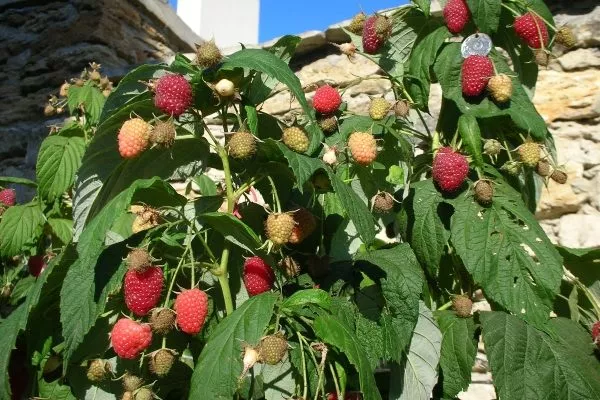
It's also important that the raspberry bushes are planted in a location with relatively deep groundwater and avoid waterlogging during snowmelt, precipitation, and watering. Otherwise, there's a risk of root rot and plant death.
Soil preparation
If the soil in your area is highly acidic, add lime (about 800 grams per square meter) before planting. Proper soil nutrition is also important. To achieve this, apply the following per square meter:
- one glass of wood ash;
- 150 grams of complex mineral fertilizer;
- about two large buckets of rotted humus.
It is advisable to add peat to clay soils.
- ✓ The optimal planting depth for seedlings should be at least 50 cm to ensure stability and proper development of the root system.
- ✓ The distance between seedlings should be at least 1 meter, and between rows - 1.5 meters to ensure sufficient space for growth and ventilation.
The planting hole is about fifty centimeters deep and sixty centimeters wide. The distance between plantings is one meter, and between rows, at least one and a half meters.
Step-by-step instructions
Tarusa is planted in spring or fall. Planting in spring should be done early. Raspberries planted at this time will only begin bearing fruit after the first season. In fall, the tree should be planted at least by the end of October, as it may begin to grow in a warm fall and then die in winter.
Planting order:
- Dig holes 50-60 cm apart (one meter or even one and a half meters apart, if possible) and fill each hole with fertilizer, such as bird droppings or ash. If you plan to plant a grove, dig a trench. The distance between rows should be 2 meters.
- Digging the ground,pick it out Remove all excess roots to reduce weeds later. Raspberries love water, but don't tolerate too much. It's recommended to plant this tree in a shallow mound. The stems cover a large area, so space the trees widely.
- Add nutritious compost to the hole. Before planting, preserve the root system in a root growth stimulant, such as Zircon, Heteroauxin, Kornevin, etc.
- Place the seedling in a hole no lower than the root collar, at the same depth it was growing at. Fill the hole with soil and compact it.
- Prune branches to no more than 25-30 cm from the ground. Cover the soil around the trunk with mulch (humus).
- At the final stage, water each plant with 5 liters of water.
- For 2-3 days, create a cool environment for the raspberries, protecting them from direct sunlight.
Video instructions for planting raspberries in the fall:
Caring for the crop
Strict adherence to care guidelines is essential, otherwise your raspberry patch may fail to produce a productive harvest. Be sure to regularly shape the bush, water, and fertilize. Plan ahead for a comfortable winter for your plants.
Shaping and tying the bush
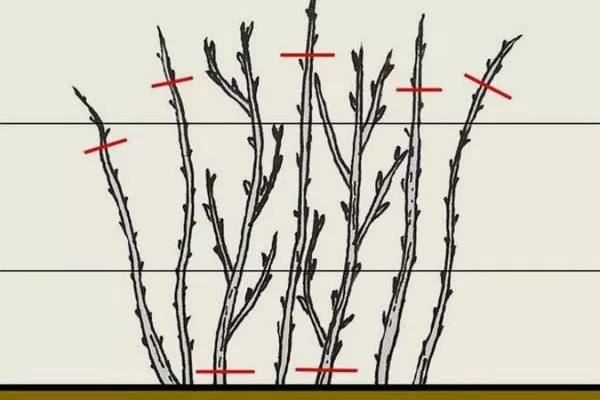
The bushes should form 8-12 lateral branches, which are cut at a distance of 50 cm from the mother stem.
To form this type of raspberry into a tree, you will need to shorten the stem in two stages:
- Pinch the tips of the shoots for the first time in early summer. They should be at least 1 meter 20 cm long. They are pruned to 10 cm, which stops growth and encourages the formation of lateral shoots. By autumn, about a dozen such branches will have formed, each between 40 and 90 cm long.
- Next spring, cut back the old stems and shorten the side branches so that they are about 40 cm long; up to 2 dozen berries will form and ripen on these side shoots.
This method increases raspberry yield. However, if the first pinching is delayed, the side shoots don't have a chance to develop and freeze.
Watering
Water your raspberries regularly to prevent the soil from drying out. But it's important not to overwater: overwatering can cause root rot.
Basic rules of watering:
- On hot summer days, mulch the soil around the trunk using onion peels or something else, making the layer at least 10 cm thick.
- In dry weather, watering should be done every 10 days, especially during the fruiting period.
- If you want to reduce watering, cover the tree trunk circle with mulch.
- Moisture must penetrate at least 25 cm to wet the entire root system.
Fertilization
Fertilizing is essential for a good harvest. Organic and mineral fertilizers should be applied regularly and effectively, in full prescribed amounts, at specific stages of raspberry growth.
What is important to know:
- Dry fertilizer can be applied in early autumn: granulated superphosphate and potassium salts, wood ash or humus are scattered around each tree.
- No fertilizers should be used in dry weather.
- In early spring, add two and a half to three liters of solution (fifty grams of urea and ten liters of water) and a glass of ash under each tree.
- Ammonium nitrate can be used for spring fertilization at a rate of 10 grams per square meter.
Preparing for winter
Tarusa raspberries are resistant to freezing temperatures. Overwintering in areas where the average winter temperature does not drop below -30 degrees Celsius is not a problem. In regions where this is a risk, September raspberries are carefully bent to the ground and secured in place.
The plant's stems are quite flexible in autumn, so it won't be difficult to press the bush's branches down to the soil. Leaves that haven't yet fallen from the plants shouldn't be a problem.
In areas with a lot of snow, the above preparation will be sufficient. The snow blanket completely covers the plants and protects the buds from freezing. If a snowless winter is likely, the plants are additionally covered:
- agricultural fibers;
- or natural breathable materials (spruce branches, straw, hay, etc.).
Reproduction
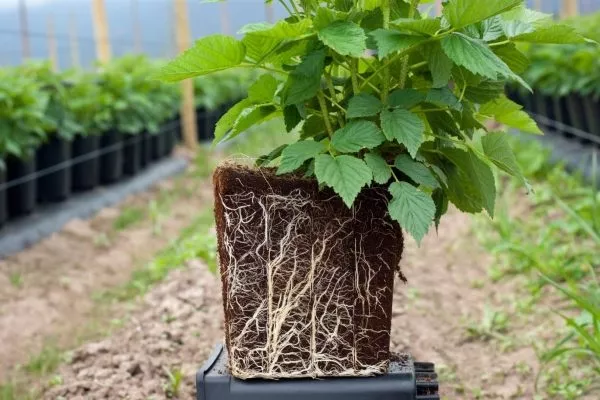
The Tarusa raspberry tree can be propagated using root cuttings and shoots. Let's look at each method in more detail.
Root cuttings
This method of raspberry propagation is used only in the fall. A mature raspberry tree should be carefully dug up, roots and shoots should be removed, and cuttings at least ten centimeters long should be taken.
Important rules:
- Each cutting should have two (or at least one) healthy buds.
- No more than three or four cuttings can be taken from an adult plant.
In warm southern climates, prepared cuttings can be immediately planted in the ground to a depth of up to five centimeters, thoroughly moistened, and covered with a transparent plastic cover until sprouts appear.
Cuttings can be stored until spring by placing them in a planting box in sand and peat (1:1 ratio of peat to river sand) in a cool room at a temperature of 0 to 4 degrees Celsius. The seedlings are transplanted to their permanent location in the second half of April.
By shoots/offspring
Propagation by root suckers is the simplest method. This method can be used throughout the summer. To propagate by layering, creeping roots are separated from the stems formed on the mother plant. These are then immediately planted in their permanent location.
Subtleties of the reproduction method:
- Cut off the shoots that have formed around the raspberry bushes, leaving a small piece of root on each seedling.
- The seedlings are placed in pre-prepared piles of soil, fertilized, watered and mulched.
- If plants aren't producing enough shoots, they can be stimulated by trimming the main central part of all branches to the ground. After a while, new shoots will appear.
Video instructions for planting raspberries using root suckers:
Diseases and pests
Resistance to pests and diseases The variety has a high fertility rate. Even infected plants can produce an excellent harvest.
Typical diseases of the bush
Standard raspberry varieties are not very resistant to diseases, especially fungal ones. Therefore, the tree should be regularly treated with copper-containing products and fungicides, and in early spring with a weak solution of Bordeaux mixture.
In summer, use "Skor" or "Fitosporin", as well as a biological product that fights fungal diseases.
Pests of crops
The most common pests for this variety and information about them are presented in the table.
| Pests | Symptoms | How to fight? | Prevention methods |
| Raspberry beetle | The fruits become small and wither. | Spraying the leaves with Karbofos (70 g per 10 l of water) when seedlings appear and before flowering. | Digging 20 cm of soil around the plant. |
| Aphid | The branches become deformed and the leaves curl up into tubes. | Use of Karbofos at the budding stage. | Pruning branches that have a black coating. |
| Stem gall midge | The stem becomes covered with blisters containing larvae. Plant growth slows. | Spraying with Bordeaux mixture 1% in spring and autumn. | Removal of affected branches. |
Harvesting and use of fruits
This crop is considered mid-late. The berries ripen around July 10th. The crop produces up to five harvests. The crop finishes harvesting in August. The fruits are harvested as they ripen. Harvesting is recommended during dry weather during the day.
Raspberries are rich in nutrients. They contain glucose, fructose, vitamin C, and other beneficial minerals.

These delicious fruits can also be preserved for the winter. This can be done in the following ways:
- Place in plastic containers or bags and store in the refrigerator, then the berries can be used at any time to make compotes.
- They are dried in the sun and then used as a filling in pies.
- The most common way to prepare raspberries is to make jam.
Gardeners' reviews
Tarusa is a delicious and unusual-looking raspberry. After reading this article about the raspberry tree, its cultivation characteristics, and the variety's pros and cons, any gardener can decide whether to grow the plant in their own garden.