
Raspberries come in hundreds of varieties and hybrids, differing not only in ripening time and growing region, but also in taste, color, and fruit size. Of particular interest are the new everbearing varieties, which bear fruit in waves and produce two harvests per summer.
Early varieties
Early varieties often have low yields, but they allow for the earliest possible harvest—the harvest can begin as early as the second half of June. Early-ripening varieties are resilient to harsh weather conditions—they are hardy and undemanding.
| Name | Ripening period | Yield (kg per bush) | Fruit weight (g) |
|---|---|---|---|
| Meteor | early | 2 | 2.8-3 |
| Novokitaevskaya | mid-early | 4 | 2.8-3 |
| Bryansk Cascade | early | 3.6 | 3-3.5 |
| Patricia | early | 6-9 | 8-12 |
| Modest | mid-season | 2.2-3 | 3-4 |
| Balm | mid-season | 2-3 | 3 |
| Reward | mid-season | 2.5-3 | 2-3 |
| Tarusa | mid-late | 4 | 7-10 |
| Brigantine | late | 2-3 | 3 |
| Pride of Russia | mid-early remontant | 5 | 10-20 |
| Yellow giant | mid-early remontant | 4 | 8-13 |
| Coal | mid-season | 6 | 4 |
Meteor
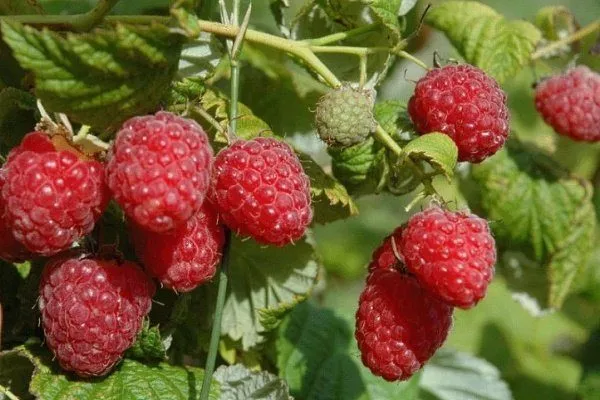
This is one of the earliest varieties. If we were to rank the earliest ripening varieties, "Meteor" would be the leader. The first berries can be enjoyed as early as late June. This time-tested variety was developed in 1987.
Description. The bushes are upright and gently spreading, reaching a height of 1.8-2 m. Each bush yields 2 kg of berries per season, or approximately 80 centners of berries per hectare. Ripening is uniform. The berries are medium-sized, weighing 2.8-3 g. The color is ruby. The shape is round-conical. The flavor is good, and the fruits have a pleasant raspberry aroma. The fruits are covered with a waxy coating. Sugar content is 6-9%. Vitamin C – up to 30 mg per 100 g.
Pros:
- the berries are resistant to stress, they retain their marketable appearance for a long time and tolerate transportation well - they do not get crushed or release juice;
- the plant grows without trellises;
- resistance to most fungi;
- they are frost-resistant and easy to care for;
- high level of self-pollination;
- tolerates dry weather well;
- easily propagated by cuttings.
Cons:
- if the bush grows higher than 2 m, it has to be tied to a trellis;
- "Meteor" is inferior in yield to new varieties;
- Spider mites can damage the crop; Meteor has no resistance to them;
- The fruits are inferior in sweetness to many varieties.
Novokitaevskaya
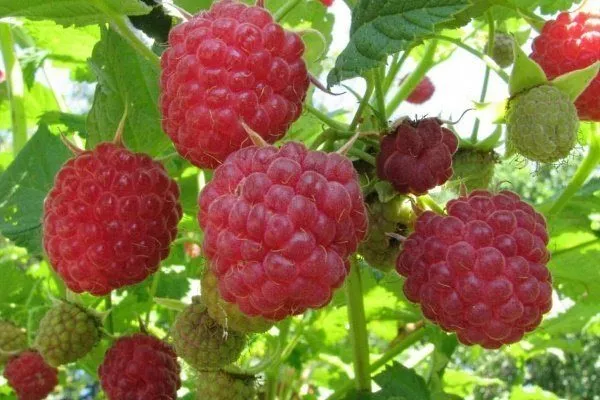
One of the oldest, proven varieties, it has been in the State Register since 1974. This mid-early variety is winter-hardy, but it is especially actively grown in the Caucasus, Ukraine, and the southern regions of the Russian Federation.
Description. Semi-spreading bushes, up to 2 m tall. Upright, with pendulous tops. Average yield is 110 centners per hectare. A single bush produces up to 4 kg of berries. The fruits are medium-sized, weighing up to 3 g. The berries are shaped like short cones. The color is deep red. The flesh is sweet, juicy, and aromatic. Sugar content is 9.8%, vitamin C – 31%. This variety is very productive; when grown on an industrial scale, following proper cultivation techniques, it can yield up to 200 centners per hectare.
Pros:
- the variety is resistant to pests, powdery mildew, and fungi;
- a drought-resistant variety that can withstand stem damage;
- high consumer qualities.
Cons:
- there is insufficient resistance to viral diseases;
- The drupes do not adhere tightly to each other, so the variety is not transportable.
Bryansk Cascade
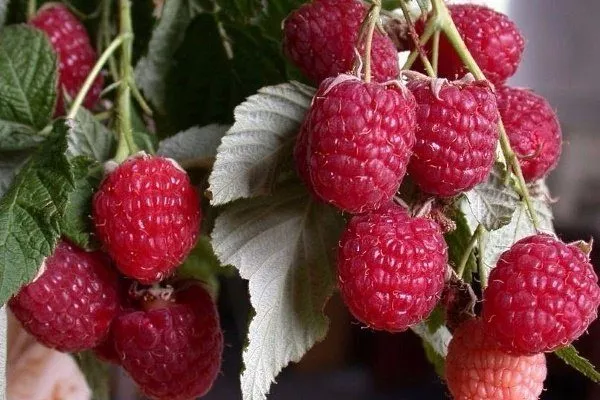
An early, all-purpose variety. Included in the State Register since 1992.
Description. Medium-sized, thornless bushes, not exceeding 2 m in height. Good yield—up to 3.5 kg of large, red berries per bush. Each fruit weighs up to 3.5 g. The berries are obtusely conical. The drupes are irregular and tightly clinging to each other. The sweet and sour fruits are aromatic. High in sugars and vitamin C. A versatile variety.
Pros:
- high taste qualities;
- tolerates extreme winter temperatures;
- easy to transport;
- resistance to fungal diseases.
Cons:
- requires frequent soil moistening;
- does not tolerate drought well;
- may be affected by mosaic spotting.
Patricia
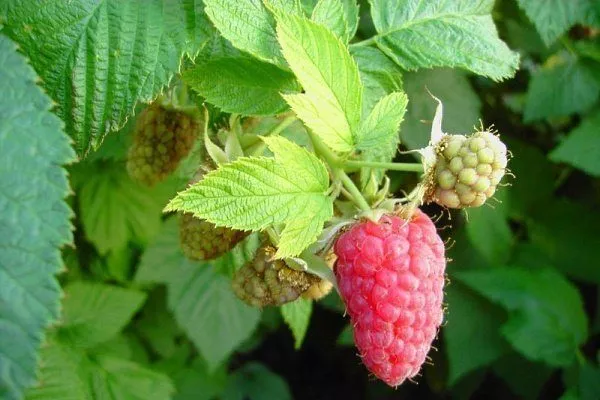
An early, large-fruited variety developed in the 1980s. The domestic variety "Patricia" was developed from its English counterpart of the same name.
Description. The plant has a medium spreading habit. Height: 1.6-1.8 m. Berry weight: 8-12 g. Conical, bumpy fruits with a sweet and sour taste and a slight raspberry aroma. One bush produces 6-9 kg of fruit. Bushes reach their maximum yield in the 3rd-4th year of vegetation.
Pros:
- moderate amount of basal shoots;
- no thorns;
- without falling off, they hang on the branches ripe for 5-6 days;
- Ideal for canning.
Cons:
- the shoots bend under the weight of the fruit, bend in the wind - they need to be tied up;
- not suitable for freezing;
- does not tolerate frost well after the spring thaw;
- If agricultural practices are not followed and conditions are unfavourable, the berries may become deformed and may be double.
Sun
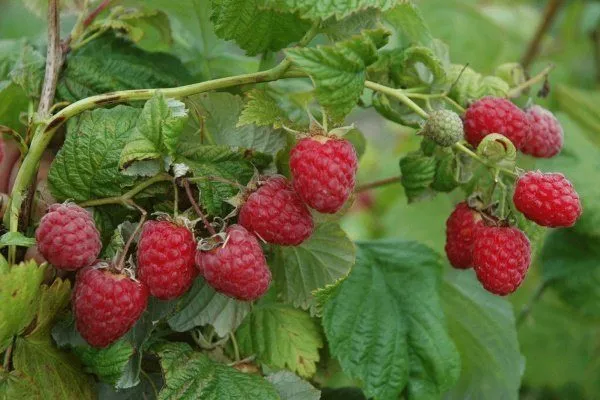
An early-ripening, non-everbearing raspberry. Included in the State Register since 1992.
Description. A low-growing plant, about 2 m tall. Each bush yields 1.4 kg. The berries weigh 5 g. The purple fruits have tender, aromatic flesh.
Pros:
- few thorns;
- dessert variety – suitable for any processing;
- transports well, does not leak;
- resistant to spider mites.
Cons:
- with a lack of moisture, crop yields decrease;
- does not like open windy areas.
Mid-season varieties
Mid-season varieties ripen in the second half of summer. They are typically used for bulk processing and winter storage. These varieties are the most popular among gardeners. They have excellent flavor, are productive, and have a strong immune system.
Modest
A domestic mid-season variety developed in the 1970s. Harvest occurs in the second ten days of July. Breeders sought to create a variety resistant to Russian frosts and raspberry diseases. "Skromnitsa" was only added to the State Register in 1990.
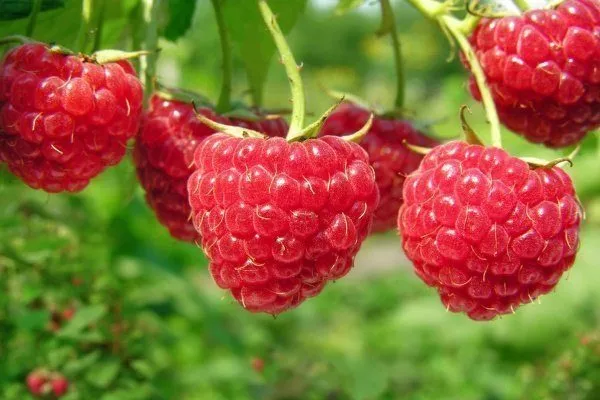
Description. The plant grows up to 2 m in height. These are gently spreading subshrubs, well-branched, and virtually thornless. Greenish, non-prickly thorns are present only at the base. The berries are medium-sized, weighing 3-4 g. The fruits are spherical, but the largest can be elongated. The berries are bright crimson and grow in clusters. The flavor is dessert-like, sweet, with a subtle tartness. Sugar content is approximately 9%. A bush yields 2.2-3 kg of fruit. In commercial cultivation, the yield is 90-1290 c/ha.
Pros:
- ease of harvesting – due to the fruits ripening in bunches;
- the fruits are dense and do not release juice during transportation;
- resistance to almost all raspberry diseases, including fungus and anthracnose;
- pest resistance;
- the versatility of the fruits – they are suitable for jam, compotes, preserves, and freezing;
- It can withstand both frost and drought.
Cons:
- is attacked by spider mites;
- may be affected by gray mold.
Balm
This reliable and stable variety is well known to Russian gardeners; it was developed over 30 years ago by domestic breeders. This mid-season variety bears fruit in late June or July, although the exact ripening time varies by region.
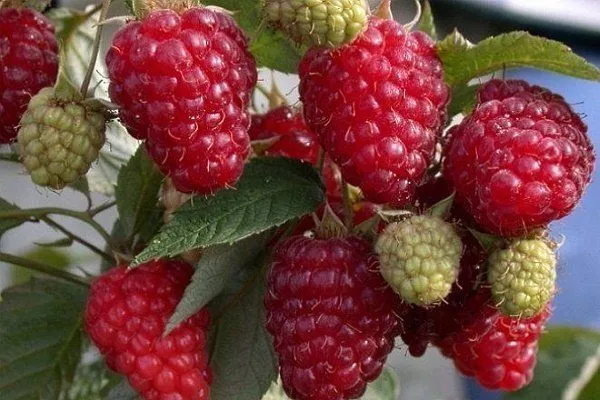
Description. The plant grows up to 1.8 m in height. The fruits are medium-sized, weighing 3 g. When ripe, they turn ruby red. The flavor is classic – sweet with a hint of tartness. A bush can yield 2-3 kg or more. When grown commercially, the yield reaches 60-80 c/ha. The shoots are thorn-bearing.
Pros:
- the fruits are dense, do not wrinkle or release juice during transportation;
- the berries are easily separated from the receptacle;
- strong shoots do not need tying;
- there are almost no thorns;
- ripe fruits do not fall off for a long time;
- there is little root growth - it does not spread across the area;
- very tasty berries – reminiscent of wild raspberries;
- high content of vitamin C;
- resistance to viral and fungal diseases;
- winter hardiness - the variety overwinters without shelter.
Cons:
- not the highest yield;
- the taste of the fruit depends largely on the weather, soil, and care characteristics;
- The berries have a sour taste.
Reward
This variety has stood the test of time—it's been cultivated for about fifty years. It appeared in the 1970s and remains popular to this day. It's one of the most delicious varieties—its berries rank near the top in tasting scores. Fruits appear in the second year of growth. Ripening occurs in late June to early July.
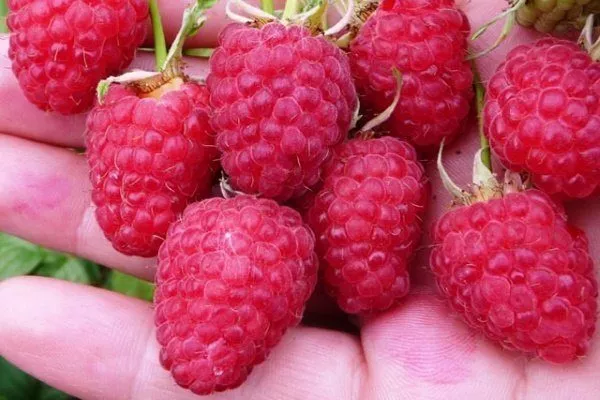
Description. The semi-spreading plant reaches a height of 2 m. One bush produces 2.5-3 kg of berries. The fruit weighs 2-3 g. The shape is oval-conical. The color is red, without a waxy coating. The aroma is faint.
A special feature of the “Nagrada” variety is that the stems acquire a reddish tint in autumn.
Pros:
- not prone to thickening;
- very few thorns;
- friendly ripening;
- the berries have a dessert taste;
- high immunity to many viral diseases;
Cons:
- not suitable for Siberia and the Far East region;
- the fruits have a very delicate consistency and become crushed during transportation;
- does not tolerate drought well;
- poor response to intensive agricultural technology – the variety is unprofitable to grow on a large scale.
Shulamith
A new mid-season variety. Included in the State Register in 2017.
Description. A spreading plant up to 2.2 m tall. Bright red conical fruits weigh up to 4 g. They have a sweet and sour taste, are soft, and have a distinct aroma. A single bush produces 3.5-4 kg of fruit.
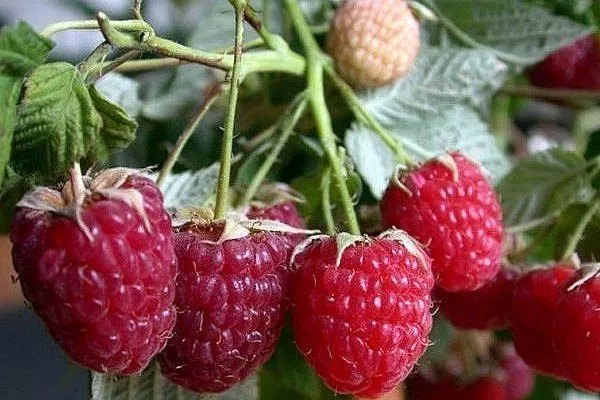
Pros:The variety is resistant to diseases and pests.
Cons:
- gartering to trellises is required;
- In the middle part of the stems there are thorns.
Late varieties
Late-ripening varieties are a boon for gardeners who haven't yet acquired everbearing raspberries. Late-ripening raspberries ripen at the end of summer and continue to bear fruit until frost.
Tarusa
This is the first "raspberry tree" of domestic selection. The variety was developed in 1987. The standard plant has a thick trunk, giving it a tree-like appearance. It prefers a dry climate.
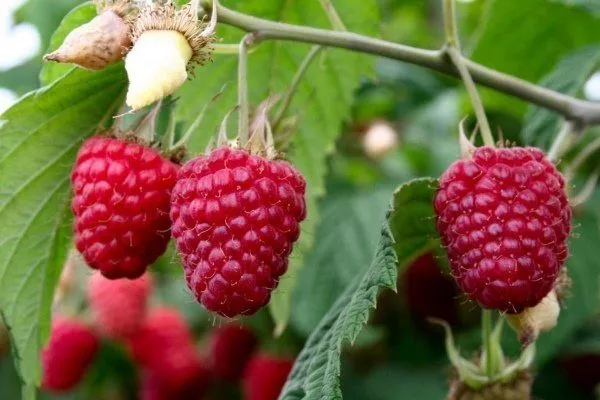
Description. The plant is upright, with dense, wood-like shoots. They are thornless. A single bush yields up to 4 kg of fruit. Larger yields are also possible. Up to 200 centners can be harvested from one hectare. Fruit weight is 7-10 g, with a maximum yield of 16 g. Color: bright red. Shape: blunt cone.
Pros:
- frost-resistant – survives at temperatures down to minus 30°C;
- due to the adhesion of branches, the growth of shoots is reduced during the growth period;
- small drupes;
- tolerates transportation well, maintaining the attractiveness of the berries.
Cons:
- does not tolerate humidity well - prolonged precipitation can destroy the entire crop;
- mediocre taste - because of this, the berries are mainly used for preparations;
- the yield is so high that, despite its strength, the shoots of the “tree” bend towards the ground;
- During windy periods, crop losses are observed; to increase the stability of plants, they have to be tied to supports.
Ruby
Mid-late variety with extended fruiting period.
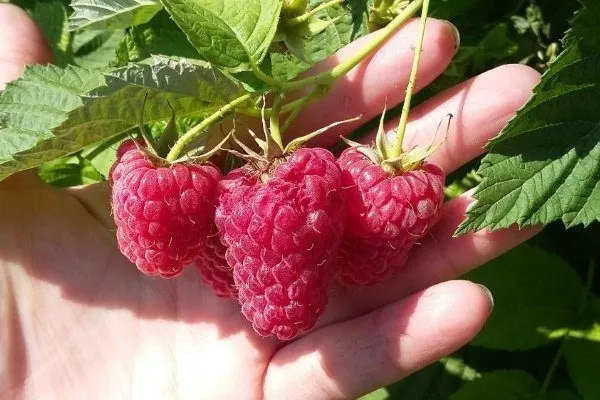
Description. The plant is medium-sized and spreading. Height – up to 2 m. It is virtually thornless. The berries are red, obtusely conical in shape. Weight – 3-4 g, maximum – 5.5 g. The fruits are firm, with a strong adhesion of drupes. One bush produces 3-4 kg of fruit. Per hectare – 80 centners.
Pros:
- satisfactory attitude to frost;
- spider mite resistance;
- Suitable for freezing;
- does not fall for a long time when ripening;
- extended maturation period;
- tolerates transportation well.
Cons: The variety is demanding in terms of lighting and soil quality.
Brigantine
A mid-late variety developed in the 1970s, it is very popular in all regions. It begins to bloom only in late July, and the first berries appear in August.
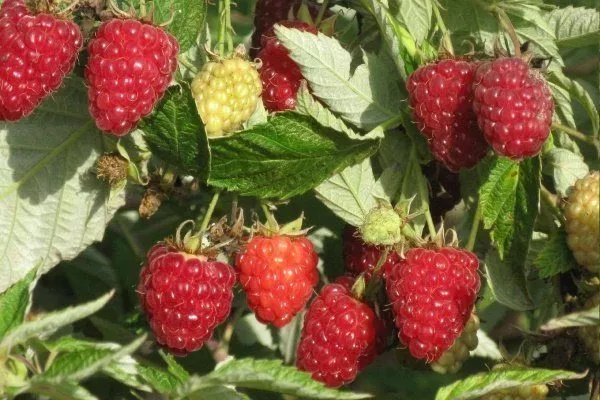
Description. The plant grows up to 2 m tall. The bushes are loosely spreading, with strong, upright shoots. The thorniness is medium. Berry weight is 3 g. The flavor is sweet and sour. Yield is 2-3 kg.
Pros:
- tolerates moisture deficiency well;
- undemanding to soil;
- does not require winter cover.
Cons:
- low tasting score – the berries are sour and have practically no smell;
- needs to be tied to a trellis.
Everbearing varieties
Everbearing varieties are every amateur gardener's dream. These varieties allow for two harvests: the first in early summer and the second in late fall. The first berries grow on shoots grown last year, while the second harvest is harvested from shoots grown this year. By planting everbearing varieties, you get twice as many berries, ensuring a long supply of fresh berries, and making a substantial stockpile for the winter.
Zyugana
A new variety bred in Switzerland (by Lubera). A versatile and reliable everbearing variety, allowing for two full harvests per season. This winter-hardy, high-yielding variety is one of the most successful – it poses no problems and supplies gardeners with berries all summer long.
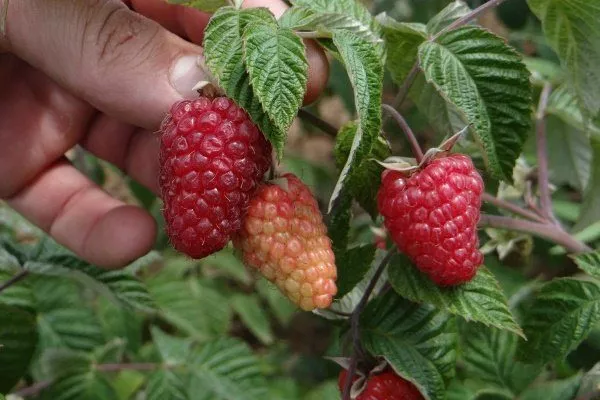
Description. The plants are vigorous and compact, with vertically growing branches. They reach a height of up to 1.7 m. The berries are large and glossy. They are conical in shape and weigh 8 g. With proper care, the berries can reach 10-12 g. The average yield per bush is 7-12 kg. The berries are very sweet, containing a high amount of sugar.
Pros:
- are easily transported;
- high taste characteristics;
- they can withstand extreme summer conditions – dry periods, high temperatures;
- immunity to the main raspberry diseases, good resistance to raspberry fly, raspberry aphid and root cancer;
- the branches are so strong that they do not need to be tied to a trellis;
- The berries can be stored for 5 days without losing their marketable appearance.
Cons: The variety has virtually no drawbacks, but one condition: to achieve high yields, the plants must be provided with suitable growing conditions. Specifically, the variety requires good watering, supplemental feeding with complex fertilizers, and pruning of the tops.
Pride of Russia
Another name is "Ispolin." This mid-early, everbearing, and self-fertile variety was developed in 1992 by Russian breeders.
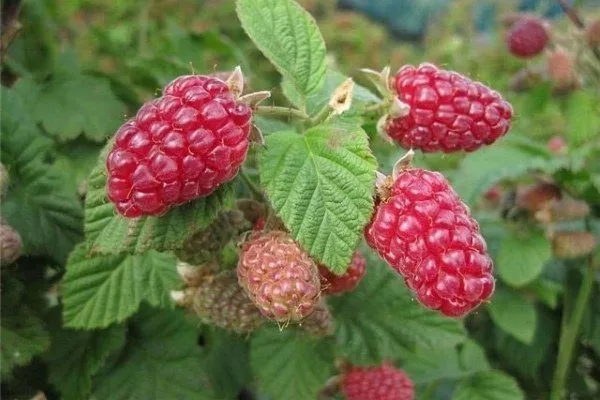
Description. The plant is medium-sized, up to 1.8 m tall. Each branch holds 20-30 large berries. The fruit weighs 10-20 g. The color is brown. The shape is blunt-tipped cones. The taste is sweet with a slight tartness. The aroma is faint. Up to 5 kg can be harvested from a single bush.
Pros:
- high immunity to most diseases;
- no thorns;
- easy to transport and store for a long time;
- withstands extreme conditions – frosts down to minus 30 degrees;
- rarely suffers from mosaic, chlorosis, fungal diseases, rot;
- ease of care and propagation.
Cons:
- vulnerability to wind gusts and excessive drought;
- under unfavorable weather conditions, double fruits appear;
- low sugar content, deterioration of taste characteristics in rainy climates;
- For good harvests, additional feeding is needed.
Polana
A mid-season variety from Polish breeders. Developed in 1991, it produces fruit well in Russia. In the south, it yields at the end of July, and in the north, in August. This everbearing variety is recommended for cultivation in the south to ensure two harvests. Fruiting ends in October.
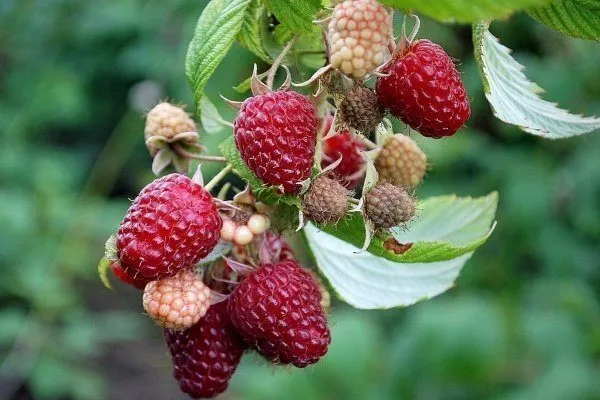
Description. The plant is vigorous, reaching a height of 1.6-1.8 m. The shoots are thornless. The fruit can bear fruit without support. The berries are purple, medium-sized, and weigh 3-5 g. The berries have a tart flavor. One bush produces up to 4 kg of berries.
Pros:
- the fruits are dense - they do not wrinkle and can withstand transportation;
- easy care – the variety is so undemanding that experts often call it “raspberry for the lazy”;
- the root system can withstand severe frosts;
- the fruits, once ripe, do not fall to the ground for a long time;
- simple reproduction;
- rarely gets sick and is resistant to pests.
Cons:
- the taste depends on the weather; in rainy periods the fruits are more sour than in sunny periods;
- not suitable for northern regions;
- shoots do not tolerate frost well;
- root shoots are actively growing.
Hercules
This domestic remontant variety is unsuitable only for northern regions, where its yield drops significantly. In favorable climates, "Hercules" produces several harvests, bearing fruit from June to mid-September.
If there are unripe berries on the branch and the cold weather has already set in, cut the branch off, place it in water – in a few days the berries will ripen.
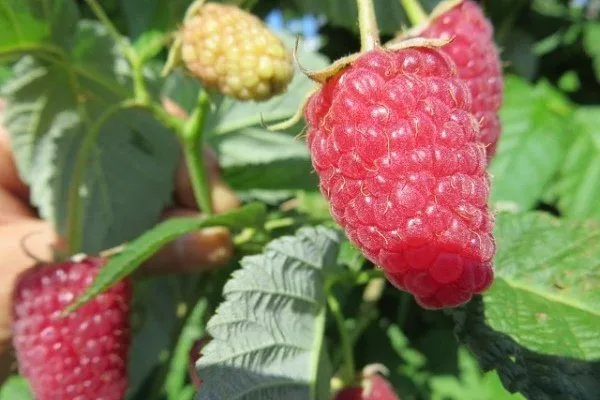
Description. The plant is vigorous, reaching a height of 2 m. Proper pruning allows for the formation of lateral branches, which facilitates the harvesting process. The berries are conical in shape. They are bright red or ruby-red, weighing 5-6 g. The berries have a tart flavor, making them ideal for canning. Yields are up to 5 kg.
Pros:
- strong branches do not bend under the weight of berries - you don’t need to tie them to a trellis;
- does not require frequent watering – once a week is enough;
- the root system is resistant to rot.
Cons:
- the stems are covered with large thorns;
- It tolerates frosts well, but if winters are extremely harsh, it is better to cover the bushes with agrofibre - it is important not to overdo it, so as not to provoke rotting of the root system.
Atlas
A mid-season everbearing hybrid. Large-fruited raspberry with two heavy yields.
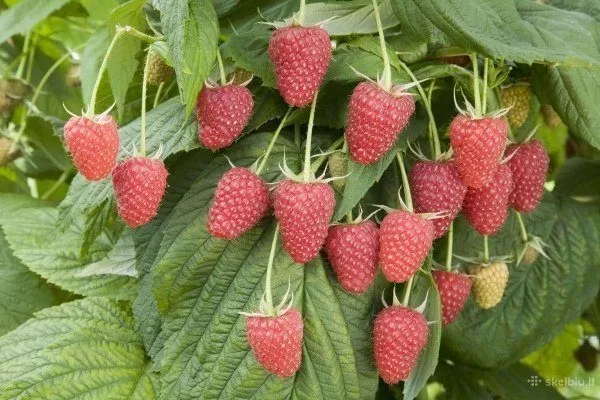
Description. Vigorous bushes have thick shoots and large fruits. The spreading habit is weak. Bushes reach up to 2 m in height. Short thorns are sparsely located at the base of the shoots. Berry weight is 6-8 g, with a maximum of 10-11 g. The fruits are red, sweet, and dense, conical in shape. The tender and juicy flesh has a sweet and sour taste. The yield per bush is 2-2.5 kg.
Pros:
- does not wrinkle, tolerates transportation well;
- powerful shoots do not require garter;
- tolerates harsh winters well;
- long fruiting period - until frost;
- ripe fruits do not rot or fall off for a long time;
- retains its taste in cold and rainy weather;
- The fruits retain their marketable appearance for a long time under any conditions - on the bush, during transportation, after being picked.
Cons:
- when there is a lack of moisture, the berries become smaller and lose their juiciness;
- in hot weather and with good watering, the berries become soft and cannot be picked;
- pests settle in ripe fruits that are not removed from the branches in time;
- The hybrid is also not suitable for regions where frosts begin in August-September – ‘Atlant’ simply does not have time to produce two harvests.
Penguin
A mid-season remontant variety. Included in the State Register since 2006.
Description. A standard plant. Height: 1.2-1.4 m. The shoots are vigorous and self-supporting, requiring no staking. Thorns are dark and large. The number of thorns decreases in the second year. Clusters bear 8-10 berries. Almost half the shoot is devoted to the fruiting zone. Berries weigh 6-8 g. One bush produces approximately 3.5 kg of berries. The fruits are broadly conical in shape. The dark crimson fruits have fleshy pulp and tightly attached drupes. The flavor is sweet and tart. The first harvest occurs in early July, the second in early September.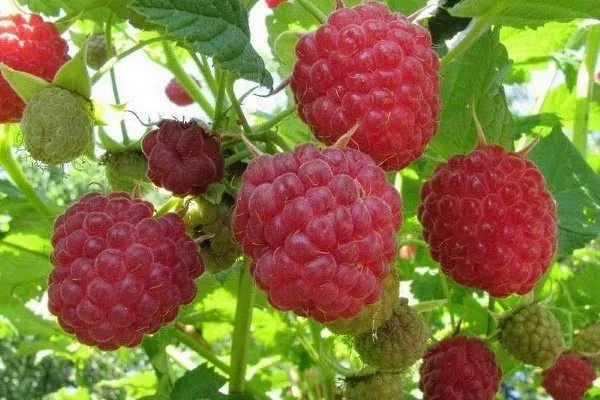
Pros:
- withstands frosts down to minus 25°C;
- good shelf life and transportability;
- the berries do not fall off even when overripe and dried out;
- decorative appearance;
- high immunity to raspberry diseases.
Cons:
- does not tolerate drought well;
- there are thorns on the shoots;
- the taste and aroma of the fruit depends on the weather and soil characteristics;
- Late harvests can only be collected in the southern regions.
Taganka
A remontant variety from Moscow breeders. Fruit appears on both new and previous year's shoots. This variety is mid-late, so in colder regions, fruit set on new shoots occurs late, preventing the harvest from ripening.
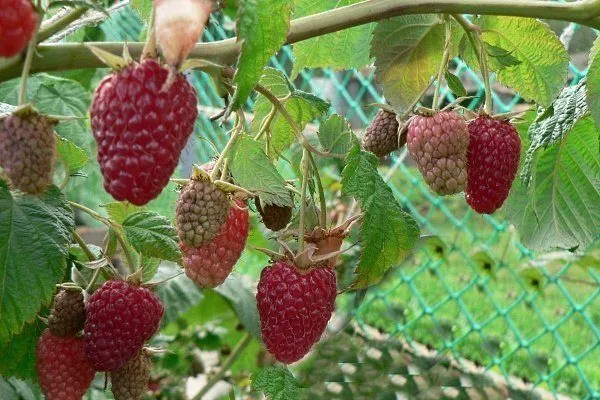
Description. The plant is large and tall—up to 2 m—with a spreading habit. Fruiting branches hold 20-30 berries at a time. The berries are very large, weighing up to 17 g. The fruit is conical, with a strongly rounded tip. The berries are dark scarlet in color and have a strong aroma. The flesh is juicy, sweet, and rich in flavor. One bush produces up to 5 kg of fruit.
Pros:
- produces up to 5 shoots per summer – the variety is easy to propagate;
- thanks to the dense skin, the berries can be transported safely;
- exquisite taste;
- pest resistance;
- large-fruited;
- frost resistance – up to minus 20°C.
Cons:
- to prevent branches from breaking due to large clusters of berries, they are tied to trellises;
- does not tolerate water deficiency well;
- After picking, the berries do not keep for long.
Diamond
This everbearing raspberry has an attractive appearance. It has been listed in the State Register since 2006. The harvest ripens in late July and continues until the first frost.
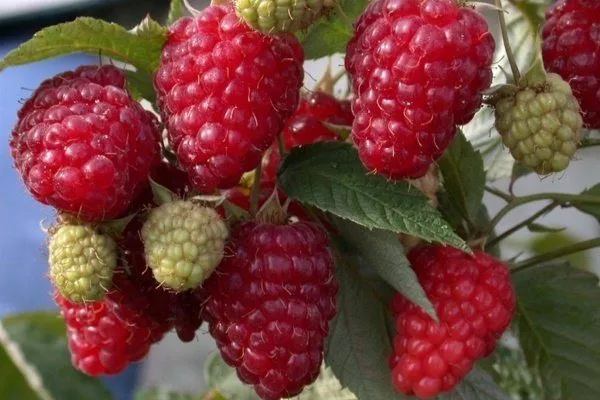
Description. The bushes grow up to 1.5 m tall. First- and second-year shoots differ in color, being reddish and brown, respectively. The berries weigh up to 4 g; they are dark red, almost purple, and glossy. Their sweet and sour taste makes them ideal for canning. One bush produces up to 4 kg of berries.
Pros:
- the fruits are juicy, but not soggy;
- pleasant unsaturated aroma of fruits;
- The fruits are dense and transport well."
- long fruiting;
- heat resistance;
- tolerates short-term droughts well.
Cons:
- the fruits are sour;
- Insufficient frost resistance for northern regions – the bush freezes at minus 24°C.
- requires a lot of sunlight;
- minimum root growth - this makes propagation difficult.
Heritage
An old, proven American variety, created in 1962, "Heritage" has given rise to numerous new raspberry varieties developed by American and European breeders. The first harvest is in mid-July, the second in mid-September.
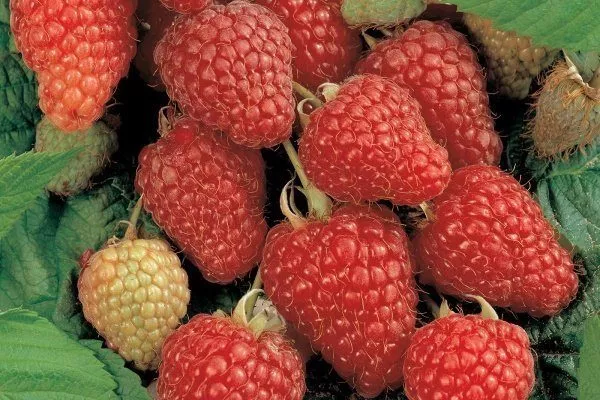
Description. The plant is not particularly spreading. Height ranges from 1.8 to 2 m. Branches are strong and upright. Thorns are moderately spread. Shoots turn reddish in late summer. Berries grow in compact clusters. Root suckers are few, but sufficient for propagation. The fruit is short and cone-shaped. Berries are uniform in size, weighing 3-3.5 g. When ripe, they turn dark burgundy. The flesh is juicy, with an intense raspberry aroma. An average yield of 3-3.5 kg per bush is achieved, with a maximum of 6 kg.
Pros:
- do not fall off - when ripe, they hang on the branches for about five days;
- general purpose;
- high score on the tasting scale;
- tolerates severe frosts well.
Cons:
- the bulk of the second harvest does not have time to ripen - if the variety is grown in a northern climate;
- does not tolerate drought well;
- needs to be tied to a trellis;
- If the humidity regime is disrupted – there is an excess or lack of moisture – the berries become sour.
Monomakh's Cap
A domestic remontant variety bred for central Russia. It has a shallow root system that does not produce root suckers.
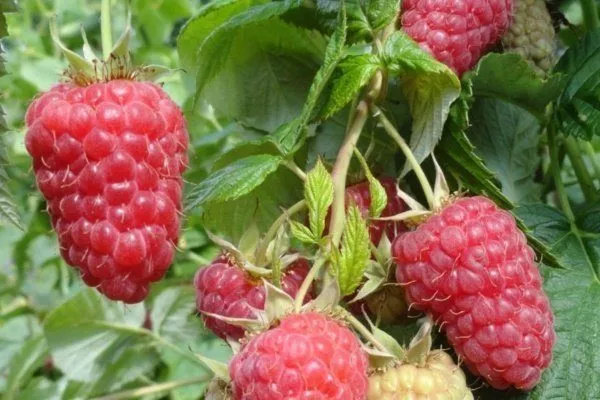
Description. A vigorous plant, its shoots resemble small tree trunks. The fruits are very large, weighing 6-9 g; with good cultivation practices, the berries can reach 18 g. The seeds are small, and the flesh is dense and juicy. A bush produces up to 6 kg of berries. It is recommended to prune the bush at the base in the fall.
Pros:
- self-pollination, but when grown without pollinators, the yields are smaller;
- the fruits are easy to collect - they fall off the branches without any difficulty, without getting crushed or falling apart;
- can be stored for up to 5 days without losing their marketable appearance;
- transports well.
Cons:
- in the middle zone, the harvest often does not have time to ripen;
- affected by diseases and pests;
- You need a soil with weak or neutral acidity.
Indian summer
The first everbearing variety bred domestically. There is also an improved variety, Babye Leto-2, which boasts greater winter hardiness and higher yields.
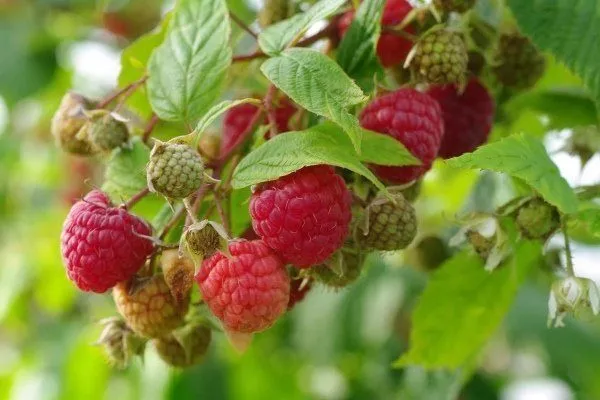
Description. The bushes are small, reaching up to 1.5 m in height. The spreading habit is moderate. The plant is upright. The berries weigh 2-4 g and have almost no aroma. Up to 1 kg of berries can be harvested per bush.
Pros:
- very tasty berries – they remain sweet even in rainy weather;
- a small amount of undergrowth;
- resistance to leaf curl, gray mold, and other raspberry diseases;
- high winter hardiness.
Cons:
- low yield;
- vulnerability to powdery mildew;
- They don’t transport well – it’s better to eat the berries fresh and not transport them.
Yawn
A Swiss-bred remontant variety. It produces two harvests. The above-ground portions of the plants are cut back before winter. The second harvest ripens in the second half of August. Fruiting continues until frost.
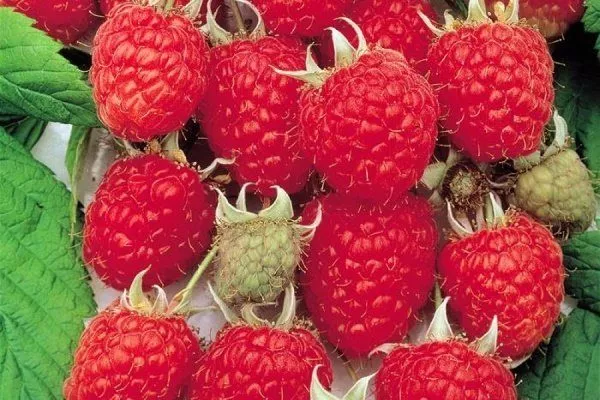
Description. A medium-sized plant with round-conical, dark-red fruits. The fruits are large and glossy, weighing 2.5-3 g. Maximum fruit weight is 5 g. Yield: 50 c/ha. The berries are sweet and sour, and are suitable for all-purpose use.
Pros: the fruits do not get crushed during transportation.
Cons: The shoots are moderately covered with thorns.
Brusvyana
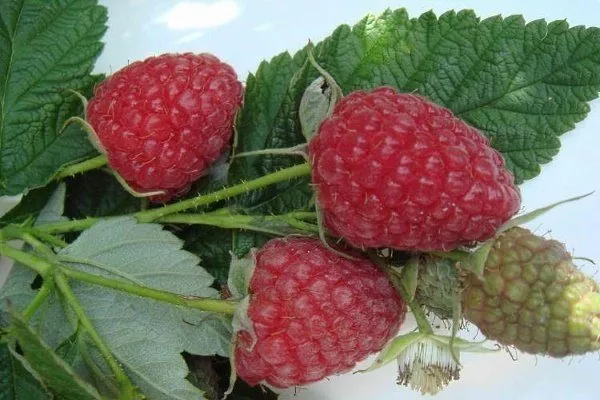
A new variety bred in Ukraine. Developed in 2008, the first fruiting occurs in June, the second from August until frost. The first harvest is more abundant than the second. Fruiting begins in the second year of planting.
Description. A tall, tree-like bush, up to 2.2 m tall, with abundant branches. The berries are bright red and slightly elongated. They are very large, weighing up to 15 g, and have a rich flavor. The bush produces up to 8 kg of berries per season.
Pros:
- dense fruits are easy to transport;
- in the southern regions you can get not 2, but even 3 harvests;
- excellent presentation;
- excellent dessert taste;
- easy care.
Cons:
- weak root shoots – require caution when replanting;
- requires a lot of sun - without it the berries become sour;
- the bushes emit a sharp and unpleasant smell;
- the acidity of the fruit – although many people even like the sourness in berries.
Yellow varieties
Raspberry color isn't limited to red. Breeders have developed several varieties with yellow, orange, and amber fruit. While they're not particularly popular or superior to red varieties in terms of nutritional value, many amateur gardeners enjoy adding a plant with an unusually colored berry to their collection.
Orange miracle
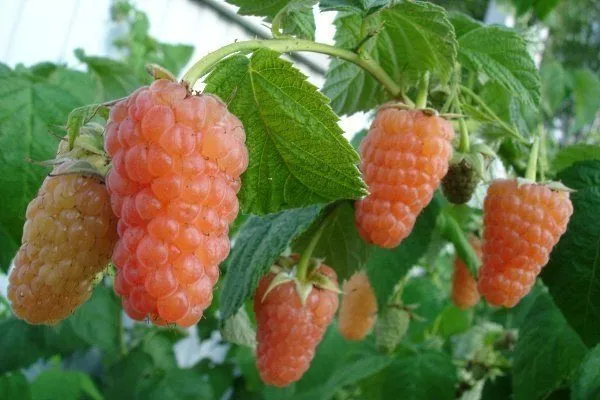
A raspberry with exotic-colored berries. This everbearing variety, bred domestically, has been registered since 2009. The first berries can be harvested in mid-July. However, annual cultivation is considered more productive, with the fruit ripening from the second half of August until frost.
Description. The plant is massive, moderately spreading, with spiny shoots. It reaches a height of 1.8 m. The berries are yellow-orange, elongated, tapering and rounded at the end. Each berry reaches 4-4.5 cm in length and weighs 8-12 g. As the berries ripen, their color changes—first light orange, then amber. Due to intense sunlight, they can acquire a pink tint. Up to 5 kg of berries can be harvested per bush.
Pros:
- hypoallergenic;
- large fruits;
- the collected berries retain their consumer qualities for up to 5 days;
- The fruits have large drupes and small seeds.
Cons:
- weather and agricultural practices influence the taste and quantity of berries collected;
- Due to pests, the first harvest may be modest, and the second harvest may not have time to ripen;
- thorns on shoots;
- does not tolerate drought well;
- affected by gray mold;
- in rainy weather the berries become sour and watery;
- faint aroma;
- The shoots bend under the weight of the fruit and sway in the wind – tying is necessary.
Yellow giant
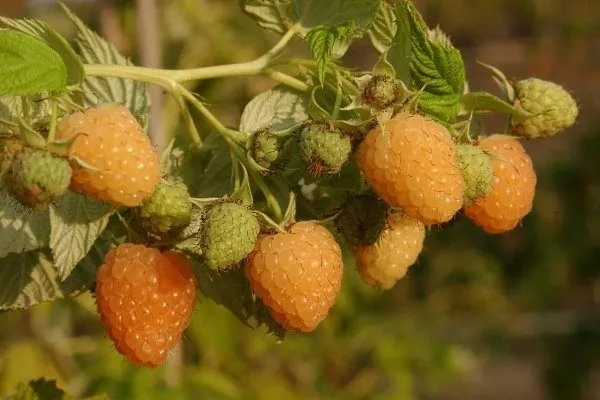
This everbearing variety was developed over half a century ago. It grows even in the harshest conditions—in Siberia and the Urals.
Description. The plant grows to a height of 2 m. The bushes are vigorous. Large, cone-shaped fruits are bright yellow, weighing 8-13 g. Each bush yields up to 4 kg of fruit.
Pros:
- almost no shedding of ripe fruits;
- tolerates harsh winters without problems;
- immunity to most diseases;
- The berries are sweet and suitable for jams, preserves, and jellies.
Cons:
- abundant growth;
- poorly transported;
- prickly thorns.
Golden autumn
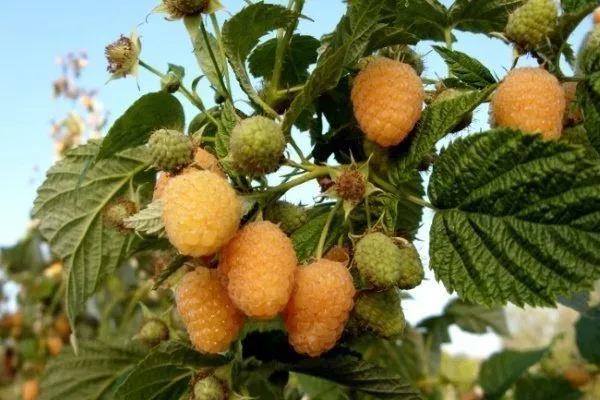
Another everbearing yellow-fruited variety. Ripens from August to September.
Description. The fruits are large, bright yellow, weighing 5-7 g. Plants are up to 2 m tall. Yield is 2.5 kg per bush.
Pros:
- more vitamin C than red varieties;
- suitable for processing and for fresh consumption;
- frost resistance – up to minus 30 degrees;
Cons: mediocre taste.
Black varieties
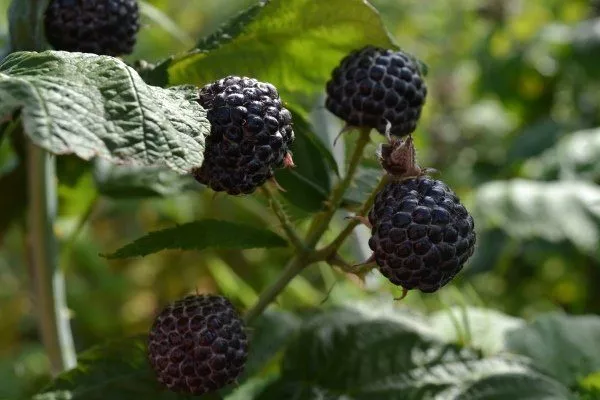
Black raspberries are not grown commercially. Breeders create black varieties to please amateur gardeners with a taste for exotic fruits. Black raspberries resemble blackberries in appearance, but often have a superior flavor.
Coal
A mid-season variety with black, very sweet berries.
Description. With proper cultivation practices, the yield is high—a bush can produce up to 6 kg per season. Berry weight is 4 g. The plant height is up to 2.5 m. The shoots are arched.
Pros:
- once ripe, the berries do not fall off for a long time;
- high tasting score;
- immunity to many diseases;
- the fruits are dense - they are transported well, do not wrinkle, and do not release juice;
- frost resistance.
Cons:
- all shoots are covered with thorns;
- needs to be supported.
Cumberland
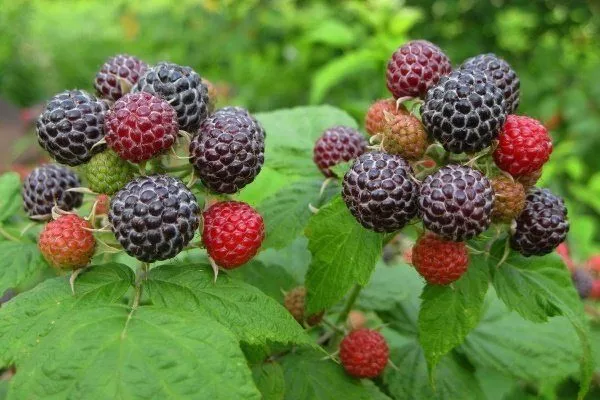
A black-fruited hybrid of raspberry and blackberry. Developed about a century ago by American breeders, it's little known in Russia but receives positive reviews from those who grow it in their gardens. It's a mid-early, non-everbearing variety.
Description. The drooping shoots grow up to 3.5 m without pruning. The fruit weighs 2 g. The berries change color as they ripen: initially purple, then cherry-colored, and when ripe, black with a bluish bloom. One bush produces up to 10 kg of berries.
Pros:
- does not produce shoots – the plant does not “creep” across the area;
- Berries are antioxidants, boost immunity, and have antipyretic properties.
Cons:
- there are thorns on the shoots;
- large seeds;
- Do not plant next to blackberries or other raspberry varieties to avoid mixing of varieties.
- ✓ Soil acidity (pH) should be between 5.5-6.5 for most raspberry varieties.
- ✓ The distance between bushes should be at least 0.5 m for early varieties and up to 1 m for late and remontant varieties.
Other varieties
In addition to the above-mentioned varieties, there are others that are no less popular:
- Maroseyka. A non-everbearing variety with large, thornless fruits. Developed in the 1970s, the light red berries weigh 10-15 g and remain fruit-free for a long time. Yield: up to 6 kg. Mid-early. The root system is frost- and drought-tolerant. Under commercial cultivation, it degenerates after 12-15 years.
- Arbat. A late, large-fruited variety. Elongated, conical, dark-red berries weigh 15-18 g. A bush produces up to 9 kg of berries. The fruits are very sweet and pleasantly fragrant. This variety is not everbearing.
- "Aborigine". An early raspberry for the Non-Black Earth Region. Yields up to 5 kg. Fruit weigh 4-8 g, are bright red, and conical in shape. Good marketability and excellent transportability.
- "Lyashka". The name varies – Lyachka, Laska, Lachka. This is a non-everbearing early raspberry of Polish selection. Yield: 6 kg. Large red berries, 3-4 cm long, weigh 6-10 g.
- "Apricot". A mid-season, everbearing variety. Fruit is amber-colored. It bears fruit from August until frost. Yield: 4 kg. Thorns are at the base of the shoots. Berries weigh 3-4 g. A plus: hypoallergenic.
- "Eurasia". A large-fruited, everbearing, drought-resistant variety. The only drawback of this raspberry is its mediocre taste. The fruits are sweet and sour, with a weak aroma. Yield is 2.6 kg per bush. The berries are raspberry-burgundy in color and weigh 6.5 g. They retain their flavor and shape even when deep frozen.
- "Crane". A remontant variety for southern regions. Versatile fruit. Weight: 3.5 g. Up to 2 kg per bush. Ruby-colored berries with a distinct tartness. Small seeds. Transports well. High score on a 5-point tasting scale: 4.7. Thornless.
- "The Daughter of Hercules". A variety of the "Hercules" variety. Produces two harvests. Ripening occurs in waves from August to October. The dense, dark-red berries weigh 10-20 g. High yields—up to 10 kg per bush. They hold their shape well after defrosting. A drawback for some gardeners is a slightly sour taste.
- "Kalashnik". A late-bearing variety. It bears fruit after all other varieties have finished fruiting. The fruit is a deep red. The berries are glossy and weigh up to 3 g. Each bush produces about 3 kg of berries. Ripening begins in August. The shoots are thorny and require annual pruning to prevent the fruit from becoming smaller.
- "The August Miracle". An early everbearing variety. Fruiting lasts from August until frost. Low bushes produce 6 kg of fruit. The berries are bright crimson and weigh 6-7 g. The variety is transportable and frost-resistant.
- Firebird. A late-season remontant variety. In northern regions, the second harvest does not have time to ripen. The bright red berries weigh 5-6 g. The variety has high disease resistance and is easy to transport. Yields up to 3 kg.
- "Stolichnaya". A mid-season, large-fruited raspberry. Produces up to 5 kg of berries per bush. The very sweet and sugary fruits contain a high copper content, which is why "Stolichnaya" is recommended as a folk remedy for sedatives. This variety is easy to care for, thornless, and disease-resistant. The berries are not prone to shedding.
Table of raspberry varieties by criteria
When choosing a raspberry variety for your garden, several criteria should be considered. These include personal taste, the soil in your garden, weather conditions, the height of the bush, and many other factors.
| Variety | Resistance to fungal diseases | Resistance to viral diseases |
|---|---|---|
| Meteor | High | Average |
| Novokitaevskaya | Average | Low |
| Pride of Russia | High | High |
Table 1 lists raspberry varieties with ripening times and other characteristics.
Table 1
| Variety | Criteria | ||||
| ripening periods | color | yield, kg per bush | fruit weight, g | Favorable regions for cultivation | |
| Meteor | early | red, ruby | 2 | 2.8-3 | middle zone and northern latitudes |
| Novokitaevskaya | mid-early | deep red | 4 | 2.8-3 | Caucasus, southern regions of the Russian Federation |
| Bryansk Cascade | early | red | 3.6 | 3-3.5 | middle zone and northern latitudes |
| Patricia | early | red | 6-9 | 8-12 | middle zone |
| Modest | mid-season | bright crimson | 2.2-3 | 3-4 | central and northern latitudes, Siberia |
| Balm | mid-season | ruby | 2-3 | 3 | central and northern latitudes, the Urals, Siberia |
| Reward | mid-season | red | 2.5-3 | 2-3 | middle zone and northern latitudes |
| Tarusa | mid-late | bright red | 4 | 7-10 | middle zone and northern latitudes |
| Brigantine | late | red | 2-3 | 3 | suitable for all regions |
| Pride of Russia | mid-early remontant | brown | 5 | 10-20 | middle zone and northern latitudes |
| Yellow giant | mid-early remontant | bright yellow | 4 | 8-13 | all regions, including Siberia and the Urals |
| Coal | mid-season | black | 6 | 4 | middle zone |
Table 2 shows varieties recommended for different regions of Russia.
Table 2
| Region | Recommended varieties |
| Moscow region |
|
| Middle zone |
|
| Siberia |
|
| Southern regions |
|
Color, flavor, fruit size and shape, and even yield are all secondary factors. To achieve high and consistent raspberry yields, the ripening time, frost resistance, and regional climate must be considered first and foremost.