
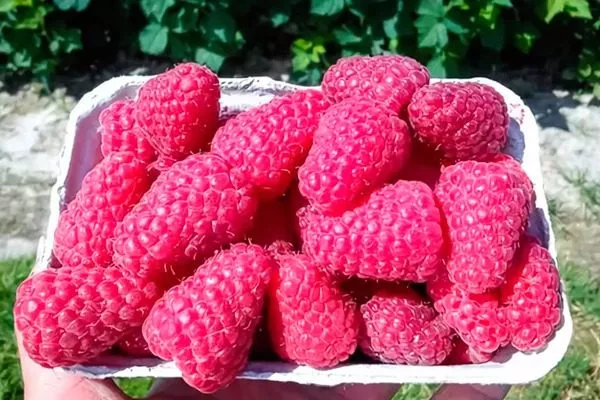
The Sokolitsa raspberry variety is a relatively new development. It boasts high yields, good density, and resistance to many diseases. Its fairly large berries retain their marketable appearance for a long time, making them easy to transport over long distances. It can be grown both in open beds and in greenhouses with plastic film.
History of selection
The Sokolitsa raspberry variety was created in 2011. Its ancestors were the well-known Polana and Molding Promise varieties, which were crossed by Polish breeders.
Dr. Jan Danek and Agnieszka Orzel participated in the development process. The Sokolitsa raspberry was introduced to Russia between 2014 and 2016.
Introduction to the variety
Sokolitsa is a non-remontant variety, but under the most favorable autumn conditions, a second fruiting may occur at the tops of young shoots during the season.
Bush, branches, leaves
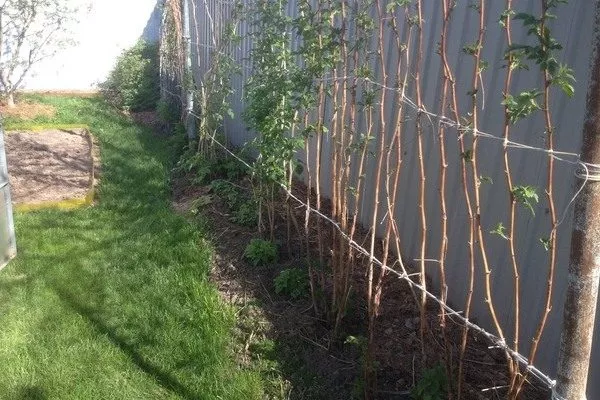
The bush is characterized by medium density. Its stems reach a height of 170-200 cm. They are covered with small, thin, and not sharp thorns, making it easy to care for.
Other varietal characteristics:
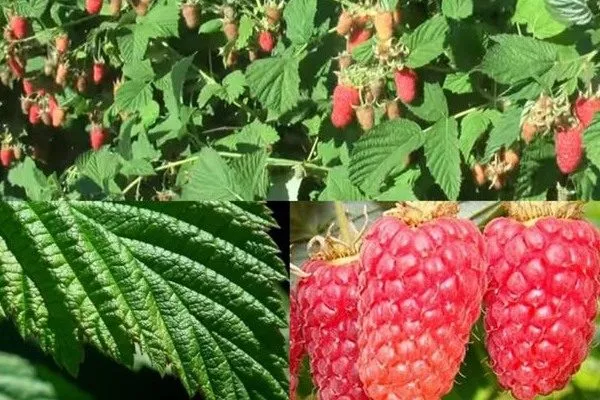
- The leaves of the Sokolitsa are a rich green with a slight sheen. They have a corrugated appearance and a narrow, oval shape. They are mostly straight, but can be slightly curled, with numerous fine teeth along the edges.
- The thorns are located mainly on the upper parts of the shoots.
- The branches are strong and rigid, grow straight and reach upward.
Flowers, fruits, seeds
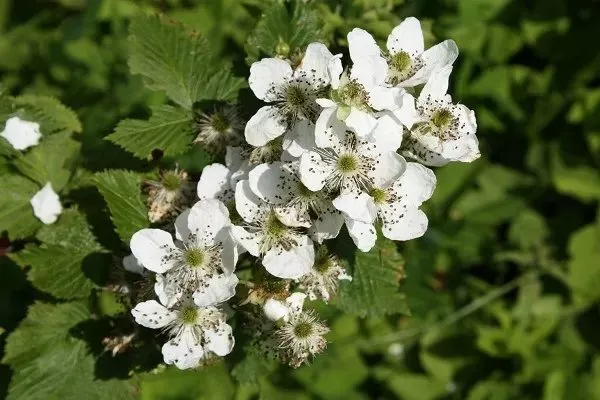
At the beginning of May, the raspberry bushes are adorned with buds that bloom in abundance and simultaneously. The small, pure white flowers form numerous beautiful clusters.
Other indicators:
- The fruits acquire an elongated shape, resembling a vertical strip compressed from the sides – like a cylinder.
- The berries have a firm consistency and strong structure.
- The fruits are large, reaching 2.4-3.2 cm in length and weighing from 5 to 7 g; with very good care, their weight can be 10-13 g.
- They are painted in a rich reddish color and have a slight shine.
- Raspberries impress with their sweetness and juiciness. They also have a pleasant aroma.
- Hidden inside the berries are several small seeds that are almost invisible when eaten.
- The berries have impeccable commercial characteristics and do not crumble during picking.
- They ripen simultaneously, which allows for mechanized harvesting during industrial cultivation.
Frost resistance
This species is moderately tolerant of low temperatures, but in cooler regions of the country, frost protection is recommended. However, the variety is heat and drought-resistant, able to survive long periods without loss.
Pollination and fruiting methods
The Sokolitsa variety is self-pollinating, meaning it doesn't require additional pollinators. However, to increase yield and fruit quality, it's helpful to plant nearby varieties with similar flowering times, such as Lyashka.
The ripening period varies by region. For example, in Central Russia, fruiting can be expected from early to mid-July, while in southern regions, the berries become edible after June 10. When grown in greenhouses, the harvest occurs earlier – berries can be picked as early as May 12-15.
Productivity
This raspberry variety boasts high yields, reaching 5-7.5 kg per bush. However, proper cultivation is key. Careful plant care will ensure even more impressive results.
Growing regions
Today, the Sokolitsa variety is successfully cultivated and produces bountiful harvests in the southern and central regions of Russia, Siberia, the Far East, as well as in Ukraine and Belarus. Remarkably, Polish raspberries can be grown both outdoors and in greenhouses.
Storage
Berries have a long shelf life. They stay fresh in the refrigerator for up to 7-8 days, allowing them to be transported over long distances.
Landing rules
The raspberry patch should be located in a sunny spot away from strong winds. A slightly elevated area is ideal. Raspberries do not tolerate excessive moisture.
To thrive, they require fertile soil—this can be loamy or sandy loam. If the soil is poor, it needs to be enriched with minerals and organic matter.
Other characteristic features of planting and pre-planting work:
- When choosing seedlings for planting, pay attention to their quality. They should be healthy and well-developed. When purchasing, carefully inspect them: the root system should be moist but not moldy, and the soil should be firm.
The length of the shoots should be approximately 35-45 cm, without spots, cracks and signs of dryness. - The optimal time to plant the Sokolitsa variety is spring or fall, when the sap flow has ceased. In spring, seedlings can be planted when the soil has warmed and temperatures remain consistently above freezing.
- In Siberia and the Urals, it is recommended to carry out work only in the spring, so that the plant has time to take root and begin to grow.
The process of planting seedlings includes the following steps:
- Dig holes or trenches to a depth corresponding to the size of the plant's root system.
- Then add fertilizer to each hole, which can consist of organic matter, mineral components and wood ash.
- Next, place the seedling in the hole and cover it with a layer of soil.
- Compact the surface moderately, then water with warm water and place a layer of mulch in the root zone.
When planting large numbers of plants, it's important to maintain a certain distance between them, which should be no less than 60-65 cm. Leave a gap of 100-140 cm between rows.
Care
When caring for the Sokolitsa raspberry variety, it is necessary to pay special attention to several key aspects:
- Moisturizing. This variety tolerates dry summer days well and doesn't require frequent watering. A few irrigations during flowering and fruit formation are sufficient. It's important to avoid overwatering and watering with cold liquids.
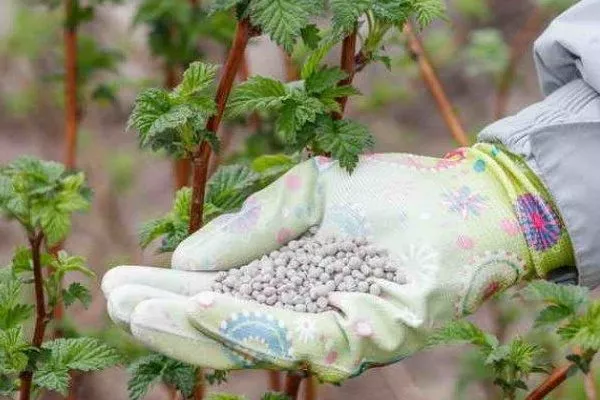
- Nutrition. For optimal growth, fertilize regularly. Nitrogen-containing fertilizers can be used in early spring. Organic fertilizers are essential, but they should be mixed with mineral fertilizers for better absorption.
When fruit is forming, introduce complex mixtures, and after harvesting, raspberries require phosphorus to prepare for the next season. - Trimming. The procedure is similar to that for other varieties. In the fall, remove all old shoots, and in the spring, carry out sanitary pruning, removing damaged, dried, or broken branches.
If too many suckers appear on raspberry bushes, they should also be removed to prevent overcrowding and maintain fruit production. These suckers can harbor pests and deprive the raspberries of nutrients needed for fruiting.
Preparing for winter
Since this raspberry variety was developed in Poland, it is not particularly frost-hardy. It requires protective cover. Before the onset of winter frosts, apply a mulch (peat mixed with straw, rotted manure, etc.) to the soil to protect the root system from freezing.
Young bushes should be carefully pressed into the ground and covered with agrofibre. Night frosts are undesirable for this raspberry variety.
Diseases and pests – how to control them
The Sokolitsa variety is distinguished by its significant resistance to various pathogens. However, it is occasionally susceptible to certain diseases. The most common ones that can affect this raspberry variety include:
- Anthracnose. This is one of the most common diseases. It spreads quickly. The first signs appear on the leaves—round, gray-purple spots. Later, the leaves curl, dry out, and fall off.
If the disease appears during fruit ripening, the fruit will dry out. There is no cure for anthracnose. If the disease is detected, affected bushes must be removed from the area immediately. - Powdery mildew. This disease causes a white or gray, dust-like coating to appear on the leaves. Over time, this coating thickens, potentially leading to the death of the plant. If the problem is noticed in its early stages, the plant can be saved by removing and destroying the affected parts.
- Gray rot. Characterized by the appearance of grayish spots on leaves and berries, as well as brownish rings on shoots. This disease most often occurs during fruit ripening and progresses very rapidly. Infected bushes should be removed.
To prevent these diseases, spring treatments should be carried out using products containing 3% Bordeaux mixture, copper oxychloride, or Hom. Proper garden maintenance is also important.
Raspberry pests include the raspberry beetle and the stem fly, which can cause significant damage to the berries. The raspberry beetle damages leaves, fruits, and buds, which contributes to berry rot. Specialized chemicals such as Karbofos and Iskra can be used to control these pests.
Methods of reproduction
The falcon reproduces well on its own, annually producing numerous young basal shoots that can be used to plant new raspberries.
It is recommended to plant seedlings in early spring, when the temperature is consistently above zero, or in late autumn, when the leaves begin to fall.
How to do it right:
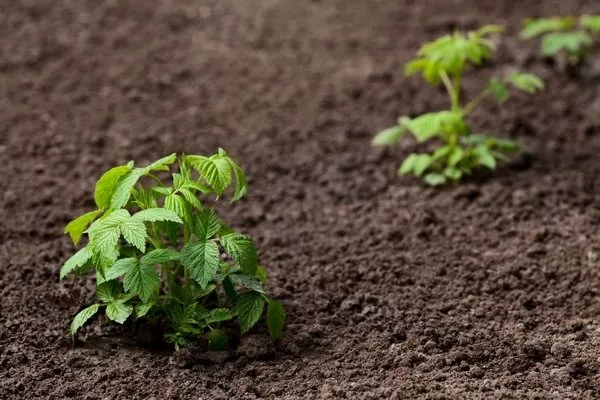
- Before planting, prepare the soil: dig holes or trenches 12-17 cm deep, enriching the soil with compost, ash, and phosphorus-potassium fertilizers. Space the plants 60 cm apart, and 1 m between rows. Seedlings should be pruned to 35 cm.
- When using store-bought bare-root seedlings, soak them in a growth stimulant solution for several hours before planting. It's best to choose plants with protected roots, as they have a higher chance of survival.
- Once the seedlings are planted, they need to be watered and protected with mulch. Over time, they will begin to grow and develop actively.
What are the pros and cons?
This variety has a number of important qualities, which is why it is preferred by both experienced and novice gardeners:
The variety also has its disadvantages:
Gardeners' reviews
Despite the fact that the Sokolitsa variety requires specific care, and if these aren't met, the harvest may not be as expected, this raspberry is gaining more and more fans. It is prized for its flavor and berry size, as well as its resistance to the main enemies of raspberries and drought.