
The Shapka Monomakh raspberry, also known as Rubus idaeus, is a large-fruited, everbearing crop best grown as an annual. However, double-harvesting increases the risk of the berries not ripening. This is especially true in cooler climates.
History of the variety's development
At the end of the 20th century, Russian scientist I.V. Kazakov contributed to the development of domestic raspberry breeding by creating a variety capable of multiple fruiting. This breeder developed a comprehensive method for growing raspberries that does not require complex agricultural techniques.
In developing the new variety, Kazakov set himself the goal of developing a plant with large fruits and an easy-to-care-for stem that would require minimal attention from the gardener. This variety successfully passed trials in the Bryansk region and became one of the scientist's leading breeding achievements.
Introduction to the variety
Beginning with the description of this raspberry variety, it's worth noting its unique appearance. It resembles less a typical bush and more a small tree with a compact crown. This variety is capable of self-pollination, but gardeners have noticed that during periods when bee and bumblebee numbers are low, yields decline.
To ensure a bountiful harvest, use this tried-and-true method: take 1 tablespoon of honey, dissolve it in a bottle of water, and spray it on your raspberry patch. This is especially important in the fall, when the number of flying insects decreases sharply.
External characteristics of the bush and berries, their taste and purpose
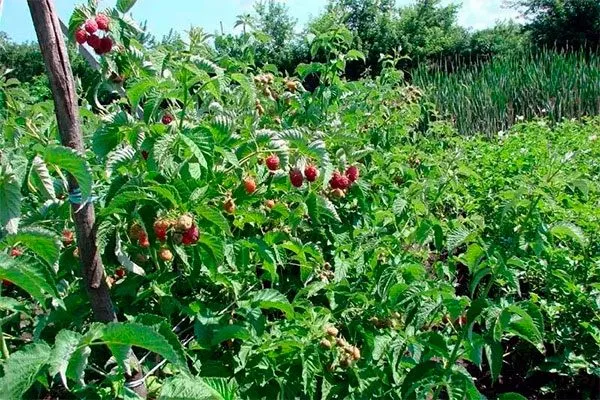
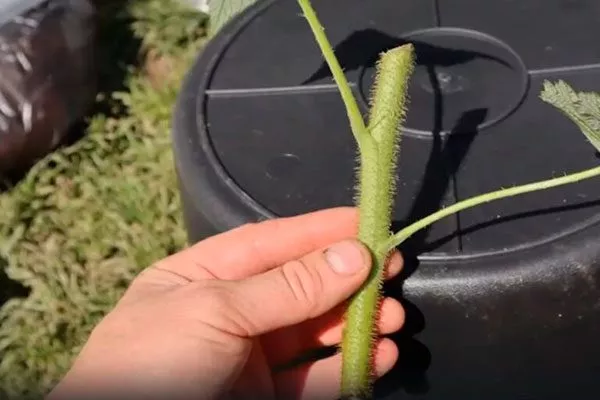
This is a standard, medium-sized bush, reaching a maximum height of 140-150 cm. Its shoots are sparsely covered with stiff thorns, which are present only at heights of up to 35-40 cm, so the thorns do not pose any particular difficulties during harvesting.
Other varietal characteristics:
- At the base of the bush there are 4 skeletal shoots, from which many branches of a branching type extend;
- the crown is spreading, and the stems are drooping, so garter is required;
- little growth occurs;
- leaf blades are rich green, heart-shaped, medium-sized;
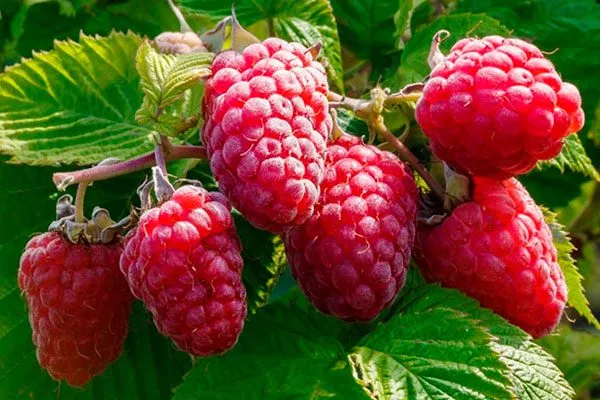
- the flowers are snow-white and large, and the number of ovaries on one branch reaches up to 8 pieces;
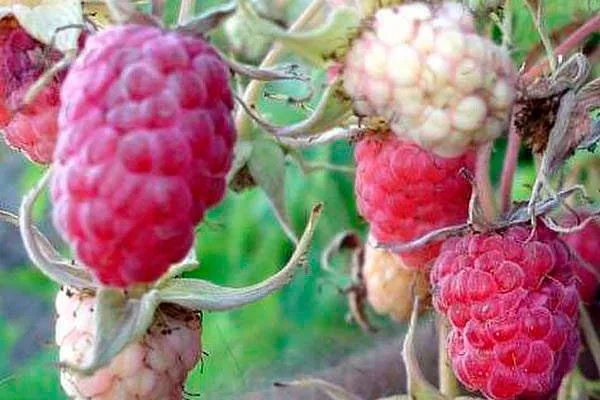
- the color of the berries is red and very dark at biological ripeness;
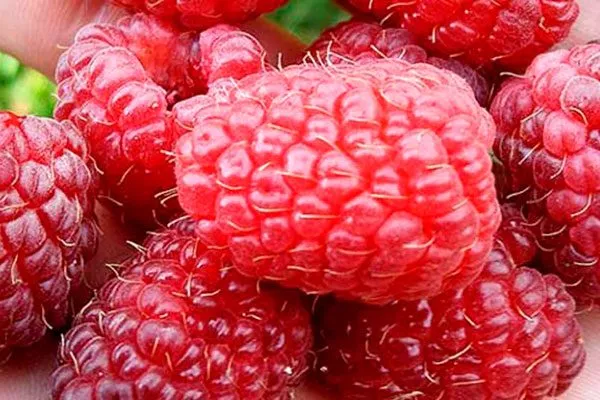
- the shape of the fruit is elongated-conical with a blunt tip;
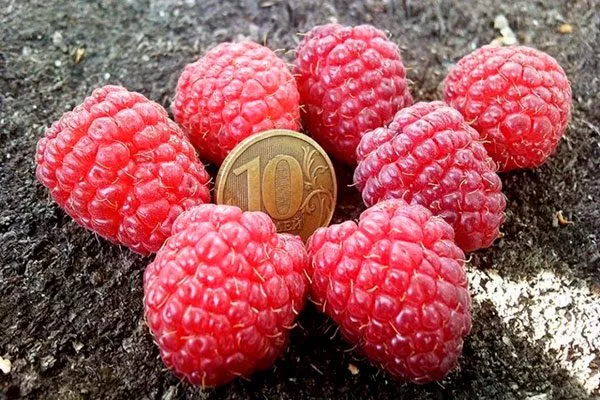
- the weight is 6-7 g, but if the growing conditions are high, the weight can reach up to 15-20 g;
- the consistency of the pulp is dense, but juicy;
- good separation from the stalk;
- the drupes are small, so you can hardly feel them while eating;
- the aroma and taste are clearly expressed;
- The taste is sweet and sour, so after tasting tests the variety was awarded 4.1 points out of 5.
- ✓ The variety is highly resistant to most pests, except for the raspberry beetle.
- ✓ Berries retain their shape and flavor during transportation for up to 5 days when stored properly.
Raspberries are moderately caloric, containing approximately 50 kcal per 100 g. This variety has beneficial properties, and it's especially important to consume raspberries during fever, as they have antipyretic properties. For this purpose, the berries (and even the branches and leaves) are brewed and infused.
Ripening time, storage
The first harvest begins on July 15th, and the second occurs in the last ten days of August. Fruiting continues until the first frosts of winter. This variety is distinguished by its long fruiting period. The berries separate easily from the stalk without being damaged or breaking into drupes.
Storage features:
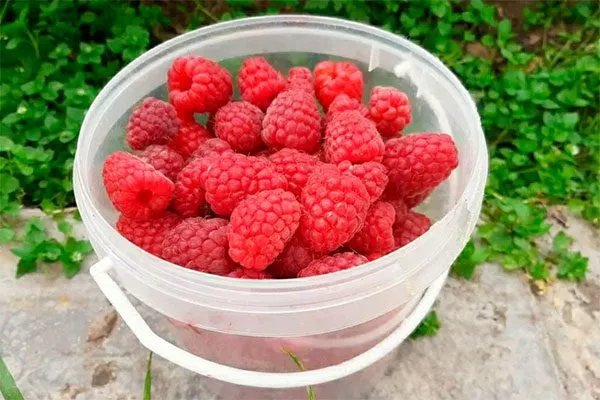
- To store your harvest, use containers, stacking the berries up to eight layers deep. This allows you to transport raspberries over long distances while maintaining their flavor and quality for up to five days.
- Fresh raspberries can be stored in the refrigerator for up to 4 days. If left in a room with a comfortable temperature, the shelf life is reduced to 9 hours, after which the berries should be frozen or processed in some way.
- The Monomakh's Cap raspberry is ideal for winter preservation, as its small drupes are practically invisible when ground with sugar or dried.
Growing regions
The Shapka Monomakh raspberry variety thrives and thrives in southern and central Russia. In the Krasnodar and Stavropol regions, as well as in the North Caucasus republics and the Crimean Peninsula, the harvest is almost fully ripe.
In the Moscow region, gardeners usually cut off shoots containing unripe berries and dry them before the onset of winter frosts. In winter, these medicinal, aromatic branches are used to prepare medicinal herbal mixtures and teas, and added to dried fruit compotes.
Productivity
The Monomakh's Cap is distinguished by the ability to harvest twice per season, but you can also choose one of the following options:
- leave the plant for a double harvest;
- shape it in such a way that the fruit is collected only once.
In the fall, when the ground is already covered with snow, the bushes are pruned right at the soil surface. This will encourage new young shoots to emerge the following year, which will bear fruit.
Frost resistance
The Shapka Monomakh variety has good frost resistance and can withstand temperatures down to -25 degrees Celsius, provided the bush is cut back to ground level in late autumn. If growing raspberries as a regular everbearing variety, it is recommended to cover the branches with non-woven material or cardboard. In southern regions, such measures are not necessary.
Basics of Growing
Raspberries thrive in full sun and prefer to grow in areas where the soil warms up sufficiently. It's important to provide protection from cool winds and excessive soil moisture.
- ✓ The optimal soil acidity for the Shapka Monomakh raspberry should be within the range of 5.5-6.5 pH.
- ✓ The depth of groundwater should not exceed 1.5 meters to prevent rotting of the root system.
Features of planting operations
Raspberry "Shapka Monomakh" (Monomakh's Cap) can be planted in either spring or fall. If planting in the fall, choose warm days. It's important to pay attention to the condition of the seedling's root system. If the roots are exposed, plant them in the spring before growth begins or in the fall. If they are closed, plant at any time during the growing season.
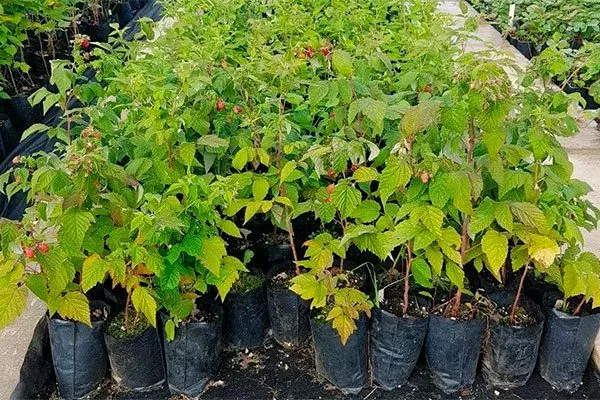
When planting remontant raspberry varieties, follow standard recommendations:
- The recommended distance between the groundwater level and the soil surface is 150-200 cm.
- Choose a location on the south side of the plot so that the raspberries are close to buildings but not in their shade.
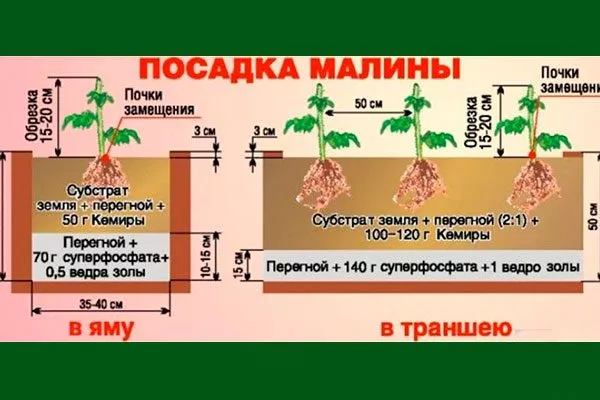
- Dig holes of equal dimensions – 30-35 cm wide and deep. The distance between bushes should be at least 100-120 cm, and the distance between rows should vary from 150 to 200 cm.
- Before planting, add fertilizer to each hole: 2 tablespoons of superphosphate and 200-250 g of wood dust, thoroughly mixing them with the soil.
- Carefully place the seedling into the prepared hole, filling the root system with the prepared substrate. It's important that the roots don't curl upward and that there are no gaps between them.
- The root collar of the seedling should be at ground level. If it's left higher, the root system will be exposed, and if it's left lower, the roots may rot.
- Water the plants (about 10-12 liters) and cover the soil with mulch. Humus or peat moss, which can be mixed, are ideal for raspberries. Apply a 5 to 12 cm layer of mulch, leaving the plant trunk exposed.
Trimming
Careful monitoring of shoot growth is critical for successful raspberry cultivation. It is recommended to leave no more than six strong shoots on a single bush. Any remaining shoots should be removed throughout the growing season.
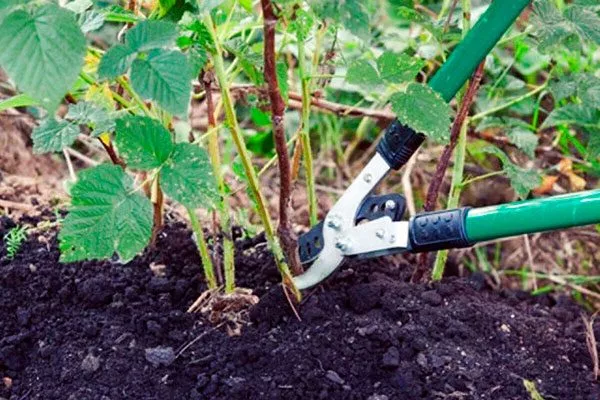
Remember that without pruning, raspberries will become too dense, the berries will shrink, and the risk of fungal diseases will increase. Remove young shoots at ground level with a sharp pruning knife, then treat the cuts with potassium permanganate or garden pitch.
Watering and fertilizing
When caring for plants, special attention must be paid to watering and nutrition:
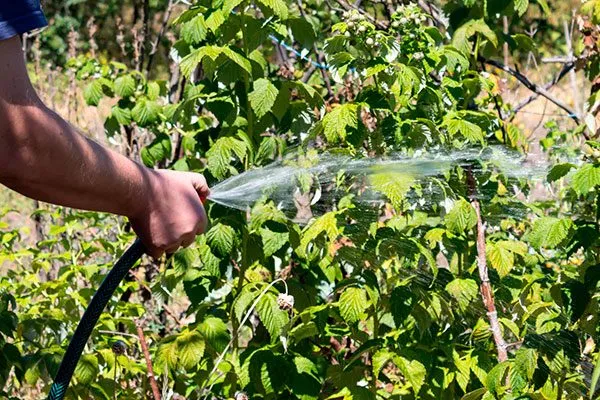
- The Shapka Monomakh raspberry requires regular and generous watering to keep the soil at the roots slightly moist. Under normal weather conditions, 10-15 liters of water per plant per week is sufficient; during hot periods, watering should be increased to 2-3 times per week.
- Fertilizing should also be regular. Do the first application in early summer, then two or three times during the season. Use an organic fertilizer mixture—a mullein solution. Dilute the concentrate 1:3 to the original volume and incorporate it into the soil after a thorough watering. You'll need 4-5 liters per square meter of planting area.
Prevention and protection from pests and diseases
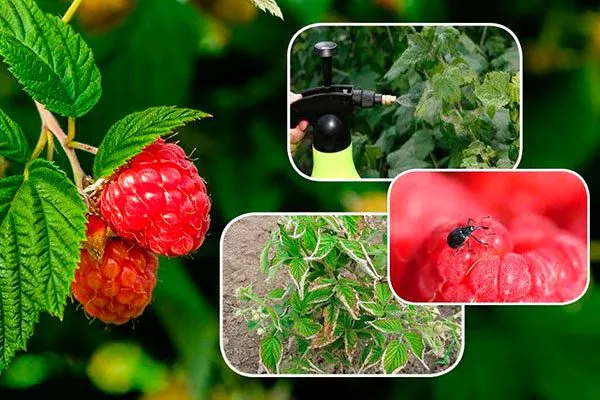
Monomakh's Cap is vulnerable to viral infections. In the early stages of the disease, when it's still possible to stop the spread of pathogens, the affected branch can be removed and destroyed.
Other hazards:
- During flowering, raspberries are often attacked by the raspberry beetle, which significantly reduces yield. To control the pest, remove it manually or use insecticides, observing all safety precautions.
- When spider mites infest the leaves, they take on a grayish tint and fall off. Colloidal sulfur or malathion are effective treatments for this condition.
- Fungal diseases can only affect raspberries as a result of overwatering or cold, damp weather. If spots with a purple border and black dots appear on the leaves, this indicates the development of anthracnose.
One of the key methods for preventing fungal diseases is early spring spraying of the bush and soil with Bordeaux mixture at a concentration of 4%. This same solution, but at a reduced concentration of 1%, can be used in combination with modern fungicides.
Harvesting
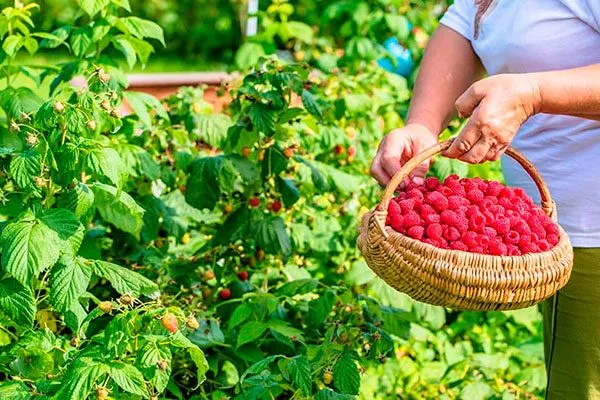
To prolong the shelf life of raspberries, pick them in dry weather. Separating the berries from the stems and carefully placing them in shallow baskets or rigid boxes will help preserve their freshness.
Reproduction
Raspberries can be propagated using various methods:
- Using green shoots. This method is considered the most common and is typically used in the second year after planting. When the green shoots reach a height of 20 cm, they are transplanted to another area.

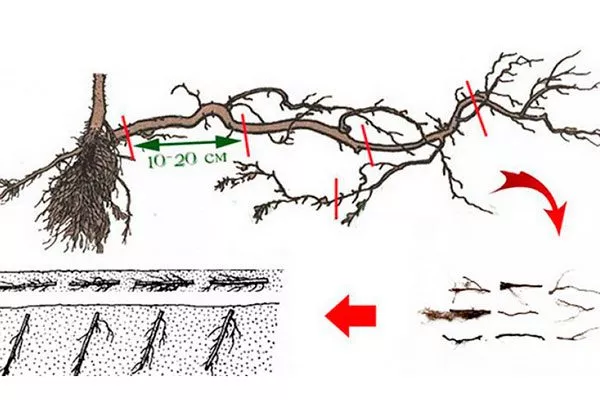
- Use of root cuttings. After harvesting in the fall, dig up strong roots from under the raspberry bush, measuring about 8 mm in diameter and 12-15 cm long. Store these roots in a dark room, covered with dry sand. In the spring, plant the cuttings horizontally in shallow trenches, cover with soil, and water thoroughly until fully established.
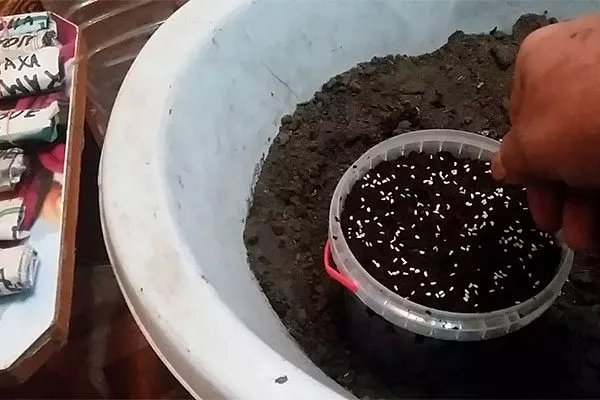
- Seed propagation. This method may not preserve the raspberry's varietal characteristics. The procedure is simple: crush the raspberries and soak them in water, discarding any hollow ones. The remaining seeds are planted in pots with light soil to a depth of 5 mm, then covered with plastic wrap for several weeks and protected from drought.
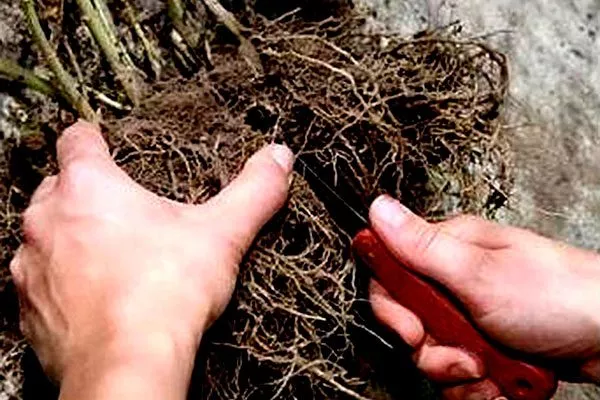
- Dividing the bush. In early spring or late autumn, the raspberry bush is removed from the ground and divided into separate parts, after which each part is planted in a separate hole.
Pros and cons
Experienced gardeners working with the Shapka Monomakh variety highlight a number of advantages:
Review of reviews
The Shapka Monomakh raspberry is distinguished by its excellent taste, marketable appearance, and ability to withstand long-distance transportation. It produces impeccable yields, but the berries do not ripen during the second fruiting wave in all climates. Cultivation is straightforward—the key is to provide timely feeding and maintain moisture around the trunk.