
The Samorodok raspberry is a new variety that has already found many fans among Russian gardeners. Its popularity is due to its early ripening berries, excellent taste, beautiful appearance, and vibrant aroma, the bushes' resistance to frost and drought, and its low maintenance requirements. Like any everbearing variety, it produces two harvests: one in summer and one in fall.
History of origin
Samorodok is a recent achievement of Russian breeding, having not yet undergone variety testing. It is not listed in the Russian Federation State Register. Its authorship belongs to the Kokinsky Reference Center of the Russian Academy of Agricultural Sciences' All-Russian Scientific Research Institute of Variety Propaganda (VSTISP).
The scientists' goal was to develop a highly productive, everbearing berry variety that would be resilient to adverse weather conditions. Samorodok is precisely that. It is drought- and frost-resistant, boasting strong immunity and endurance.
Introduction to the Samorodok raspberry variety
Before planting raspberry bushes of this variety in your garden, read their description.
Berries
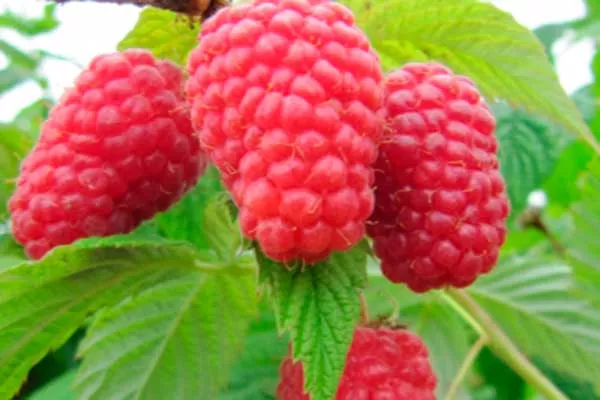
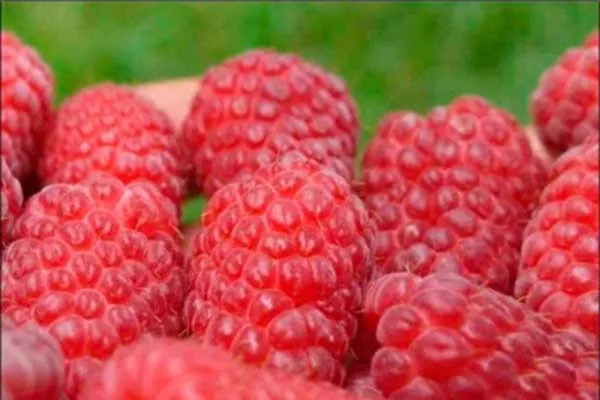
Samorodok has gained popularity among gardeners due to its large fruit, marketable appearance, and excellent quality. Its berries have the following characteristics:
- weight - 8-13 g;
- elongated conical shape;
- dark cherry-colored skin, elastic and shiny;
- strong adhesion of small drupes;
- dense pulp, aromatic, with an abundance of juice;
- small seeds that are not felt when eating raspberries.
Bush
The berry plants are upright and medium-tall. They don't require support and produce small amounts of suckers.
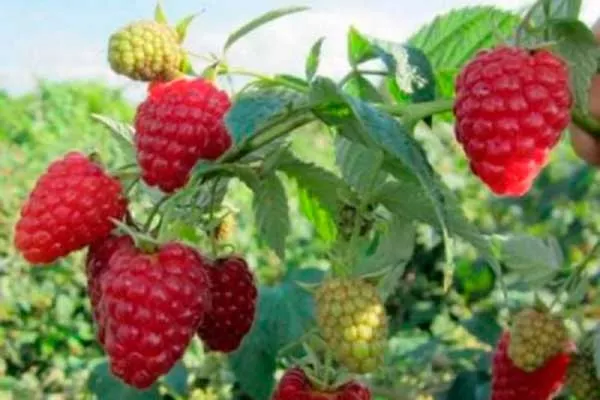
Samorodok bushes have distinctive features:
- height: 1.5 m (with good agricultural conditions, the “growth” of the bush reaches 2 m);
- shoots: straight, moderately drooping, covered with sharp spines along the entire length;
- foliage: large, rich green, slightly pubescent, oval-shaped;
- flowers: bisexual, white, consisting of 5 petals, their diameter is 1 cm, collected in racemes.
| Parameter | Indicator | Note |
|---|---|---|
| Average weight | 8-13 g | Record specimens up to 15 g |
| Form | Elongated conical | Length to width ratio 1.5:1 |
| Drupes | Small (0.8-1.2 mm) | Adhesion density 95-98% |
| Dry residue | 14-16% | Optimal for transportation |
| Acidity | 1.2-1.4% | pH 3.2-3.5 |
Taste and purpose
This raspberry variety has excellent flavor. The berries are sweet and tart, very aromatic. When fresh, they make a wonderful summer dessert, rich in vitamins.
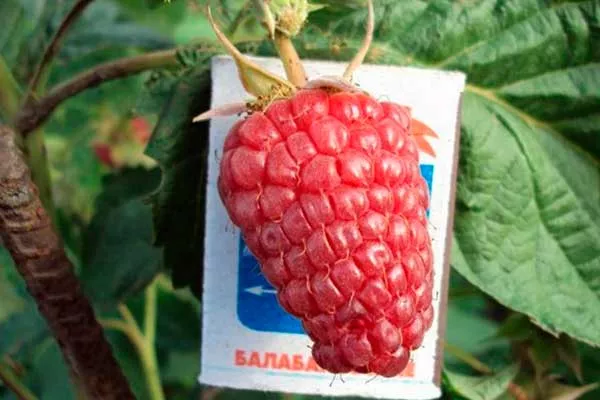
Housewives use the fruits of the Samorodok for culinary purposes:
- they make drinks from them (compote, fruit drink, juice, liqueur);
- added to desserts;
- used as a pie filling;
- They make jam, preserves, marmalade, and jelly.
The garden crop is canned, dried, and frozen. Thanks to their firm texture, raspberries retain their shape after defrosting and look beautiful when preserved for the winter.
Characteristics
This variety is gaining increasing popularity among domestic gardeners and farmers thanks to its excellent technical characteristics. It's not only large-fruited and tasty, but also productive.
Ripening time and yield of raspberries
Samorodok is an early-ripening garden variety. Its harvest ripening time is as follows:
- the last days of June - the first berries ripen on the bushes;
- mid-summer - mass harvest of the first wave of fruiting;
- from September until the first frost - obtaining a second harvest due to the remontant nature of the variety.
This raspberry variety is considered high-yielding. One mature plant produces 3 kg of berries. Intensive fertilization can achieve even better results. The fruit is shelf-stable and easy to transport.
Frost resistance
This variety is characterized by excellent frost resistance. The bushes overwinter safely at temperatures as low as -25°C. They are successfully grown in central Russia.
Disease resistance
The variety of berry crop is resistant to fungal infections:
- anthracnose;
- spotting;
- verticillium wilt;
- rust;
- powdery mildew;
- curliness.
Advantages and disadvantages
The variety has many advantages that make it attractive to domestic gardeners:
Samorodok also has its disadvantages:
Features of growing Samorodok raspberries
Grow this berry variety in your garden, following proper agricultural practices. Planting and care are standard, just like for other everbearing varieties.
Thanks to its upright stems, Samorodok doesn't require staking, but experienced gardeners don't neglect it. They tie young stems to a trellis or a wooden stake (1.5 m high) to prevent them from breaking under the weight of the large fruits. The stems are secured in two places.
Landing rules
The variety grows and bears fruit well in a garden plot that meets the following requirements:
- sunny or in partial shade;
- level, slightly elevated (a lowland with stagnant moisture is not suitable for growing berry bushes);
- protected from wind and drafts;
- located in the southern part of the garden;
- with soil: light, fertile, loose, breathable, sandy loam or loamy, with a neutral or slightly acidic reaction;
- with groundwater levels of 1.5 m or more.
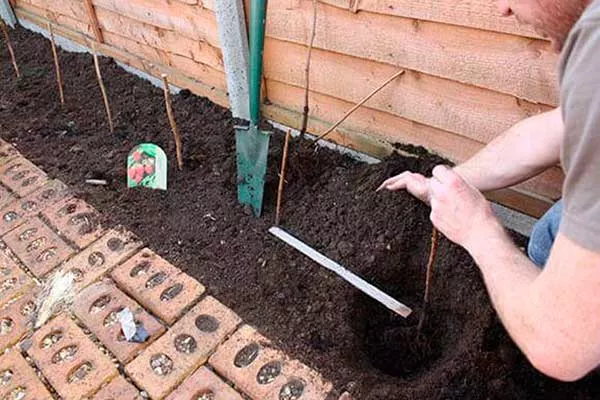
Plant Samorodok bushes in the spring (second half of April) or fall (late September, early October). If you prefer the fall procedure, complete it 20 days before the first frost.
Prepare the planting holes in advance. 14 days before planting, follow these steps:
- Dig holes measuring 0.4 x 0.4 m. The distance between holes is 0.7 m. If you're planting raspberries in rows, space the holes 1.5-2 m apart.
- For 6 months: soil analysis (pH, NPK, organic matter)
- 3 months before: Add dolomite flour (at pH <5.5)
- For 2 months: deep digging with green manure
- In 1 month: forming planting beds
- 2 weeks in advance: application of starter fertilizers
- Line the bottom of the holes with crushed stone, forming a drainage layer.
- Partially fill the holes with nutrient-rich soil mixture. To make it, combine turf with humus, sand, and peat (2:1:1:1).
- Add 100g of wood ash to each hole.
Site preparation calendar
How to care?
To ensure a bountiful and high-quality berry harvest, ensure your Samorodok bushes receive proper care. This includes the following procedures:
- WateringThis variety prefers moderate watering. During the first month after planting, water the raspberry patch once every 7 days. Then, reduce watering to once every 14 days.
A mature plant requires adequate watering only during budding, when fruit sets. Irrigation is also necessary during dry weeks. - Weeding and looseningRemove weeds regularly to prevent them from robbing the plant of nutrients and water. Weed raspberries especially thoroughly during the first two years of growth. Remember to loosen the soil after watering and rain. Combine these procedures.
- MulchingTo control weeds and retain moisture in the soil, cover the tree trunk circle with organic matter.
- Formation of the bushTo ensure maximum raspberry productivity, reduce the number of shoots per bush to 6-8. Remove any excess shoots. Leave strong, healthy branches.
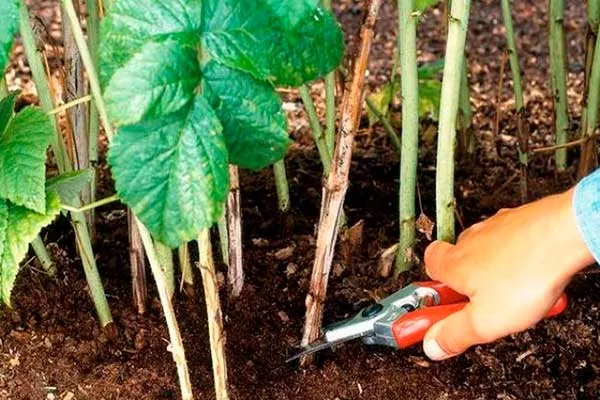
- Pruning two-year-old branches after removing berries from themPerform this procedure in October or November. Use pruning shears to trim the fruiting shoots flush with the soil surface. Do not leave stumps. Otherwise, green shoots will inevitably emerge from them, delaying your fall harvest by a month.
- Top dressingFertilize raspberries for the first time in the third year after planting. Until then, they will have sufficient nutrients from the planting.
During the branching period, apply organic matter and nitroammophoska. During the summer, water the plants with solutions of superphosphate (40 g per 10 l) and potassium sulfide (35 g per 10 l). Fertilize once every 21 days.
| Development phase | Watering rate | Frequency | Way |
|---|---|---|---|
| After landing | 5-7 l/bush | 2 times a week | Root |
| Vegetation | 10-12 l/bush | Once every 10 days | Drip |
| Budding | 15 l/bush | 2 times a week | Row spacing |
| Fruiting | 12-15 l/bush | Once every 5 days | Drip |
| After collection | 8-10 l/bush | Once every 2 weeks | Root |
Preparing for winter
Thanks to its excellent frost resistance, Samorodok can easily overwinter without artificial cover in the central regions of the country. Snow cover is sufficient. In areas with harsher climates, raspberry bushes require preparation for winter:
- before the frost hits, mulch the trunk circle of the bush with straw, peat, rotted leaves (mulch layer - 10 cm);
- cover with agrofibre;
- to throw snow on after it falls.
Reproduction - methods
Propagate the Samorodok raspberry using young shoots that grow throughout the season. Follow the procedure step by step:
- Dig out the shoots along with some of the roots.
- Transplant it to a new site.
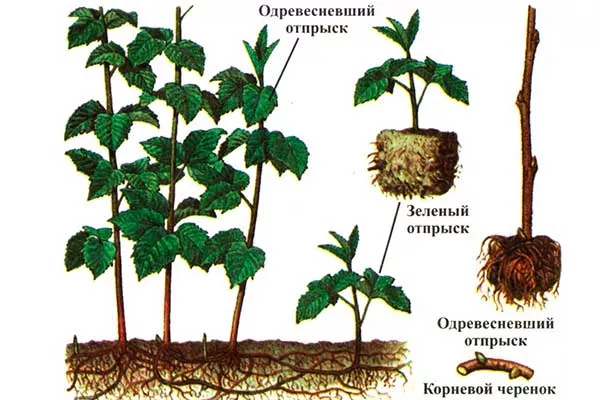
Propagation by cuttings is also possible. Begin in early spring, before the plant's growing season begins. Follow these step-by-step instructions:
- Dig up the bush on one side to expose its roots.
- Cut the cuttings. They should be 20 cm long. Each should have two or more buds.
- Plant the cuttings in a new location.
- Water the planting.
- Cover it with agrofibre.
Disease and pest prevention
This variety boasts strong natural immunity. Its bushes are rarely affected by diseases, particularly fungal infections and pests. Under poor care and unsuitable growing conditions, the plant can become ill. Address this problem with fungicides and insecticides.
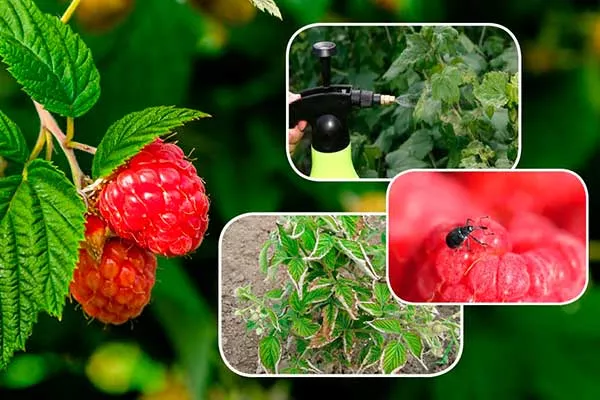
Carry out preventative measures to prevent raspberry bushes from being affected by diseases and pests:
- prune old and diseased shoots;
- collect fallen leaves and take them outside the area;
- get rid of weeds;
- in spring and autumn, loosen the soil (depth - 8-10 cm);
- spray the bushes with Karbofos before they bloom;
- plant calendula, mustard, and dill next to the raspberry bush to repel pests;
- To prevent raspberry bushes from becoming diseased, treat them with iron sulfate (300 g per 10 liters of water) after leaf fall, and in the spring, before the buds swell, with Bordeaux mixture.
- ✓ Treatment with 3% copper sulfate before bud break
- ✓ Spraying with Fitoverm (2 ml/l) at t +18…+25°C
- ✓ Installation of pheromone traps (1 pc/50 m²)
- ✓ Shoot regulation (no more than 8 pcs/m²)
- ✓ Timely collection of fallen fruits (every 3 days)
- ✓ Disinfection of instruments (70% alcohol or 5% potassium permanganate)
Gardeners' reviews of the Samorodok raspberry
The Samorodok variety deserves the attention of Russian gardeners, despite its relatively recent introduction. It produces highly productive fruit when planting and caring for it correctly. Simply follow its cultivation techniques carefully to harvest large, juicy berries twice per season.