
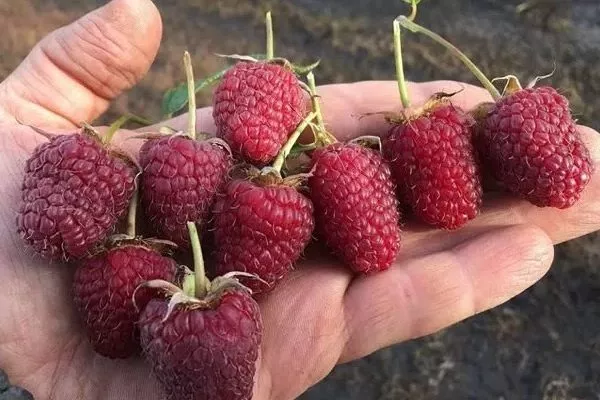
Samokhval is the name of a domestic everbearing raspberry variety. Gardeners value it for its self-fertility, excellent yield, and resistance to frost and disease. It is suitable not only for private but also commercial cultivation due to the productivity of its bushes, shelf life, and transportability of its berries.
History of the variety's development
Samokhval is a variety developed at a Nizhny Novgorod nursery by breeders Vladimir and Ilya Shiblev. It is the result of crossing Nizhegorodets with Karamelka. Its other name is Nizhegorodets-2.
This berry variety was added to the Russian state register in 2018. It is suitable for cultivation in many parts of the country:
- in the southern regions;
- in the Central Belt;
- in the Urals;
- in Siberia.
Introduction to the variety
Before purchasing Samokhvala seedlings for growing at your dacha, familiarize yourself with the botanical description of the bushes and berries, as well as the technical characteristics of the variety.
External characteristics of the bush and berries, their taste and purpose
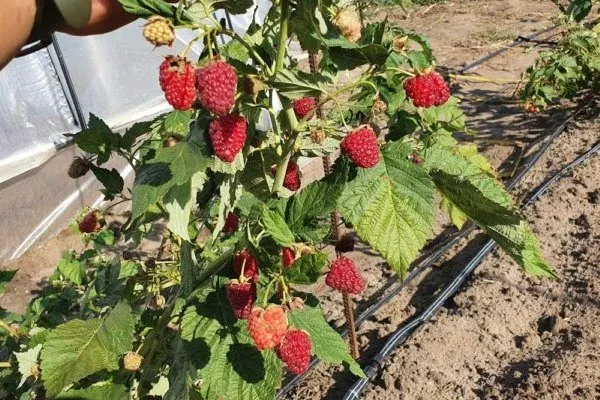
Plants of this variety have a strong and extensive root system, producing abundant shoots. They are distinguished by a large number of shoots. They are characterized by the following traits:
- strong, upright structure;
- moderate spreading;
- "height" - 1.5 m;
- straight stems of varying thickness (from medium to 2 cm in diameter) with a drooping upper part;
- a large number of medium-sized spines, curved downwards;
- foliage: large, oval-shaped with a pointed tip and a serrated edge, corrugated, rich green and slightly discolored at the bottom;
- numerous medium-sized white flowers collected in cluster-shaped inflorescences.
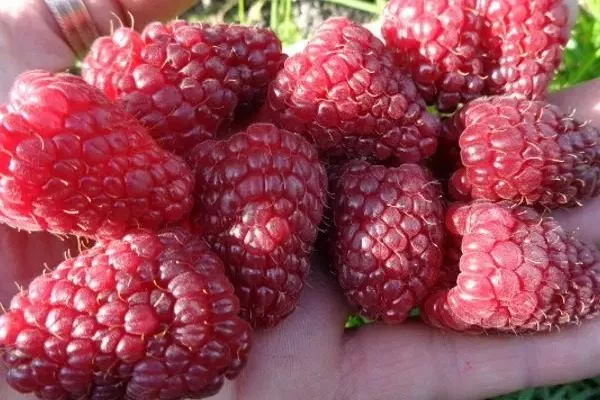
This raspberry variety produces excellent quality berries. These characteristics are:
- large sizes (diameter - up to 3 cm, length - 5 cm);
- weight - 8-10 g (maximum weight - 15-18 g, obtained with enhanced agricultural technology);
- elongated obtuse-conical shape;
- the skin is a rich red color, slightly pubescent, shiny (overripe berries have a light coating on it);
- The pulp is dense, juicy and aromatic.
The Samokhval raspberry is delicious and sweet. Its pulp is quite sugary and has a slight tartness. It receives a tasting score of 4.5 out of 5.
The harvest of garden crops is universal in its purpose:
- berries are eaten fresh;
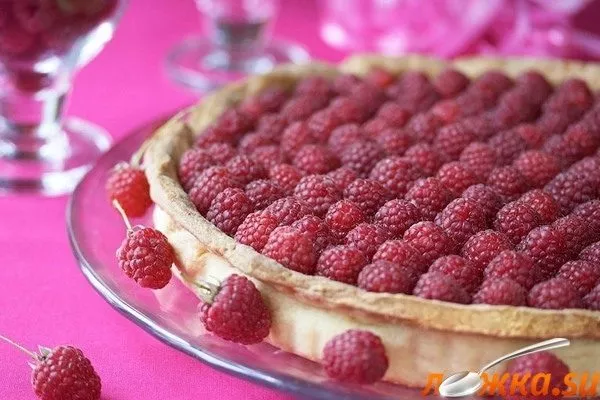
- add them to desserts;
- processed to obtain puree and juice;
- they make compote, syrup, and jam from them;
- they make liqueur;
- canned;
- dry;
- freeze.
When ripe, the yield
Samokhval is a remontant berry variety. Growing it allows you to harvest twice per season: in summer and fall.
The berries ripen late:
- mid-August - when growing the variety in the south;
- August 20 - in the Central Belt;
- early September - in areas with colder climates;
- mid-autumn – the second wave of fruiting.
You'll get your first berries as early as the year you plant the bush. It bears fruit evenly and abundantly. Raspberries ripen on both current and previous year's shoots. With regular feeding, you won't be disappointed with their taste and size. The fruit is dry when removed from the branch.
The yield indicators of the variety are as follows:
- 1 bush yields up to 8 kg if you do not neglect fertilizing and provide it with high-quality care;
- Farmers growing the variety on an industrial scale harvest up to 18,000 kg per hectare of raspberry planting.
Samokhval's harvest is distinguished by its shelf life and transportability. Raspberries are best stored in the refrigerator, if placed in a shallow container. They don't fall apart or leak.
Planting and caring for Samokhval raspberries
The rules for planting and growing this variety of raspberry are no different from those for other berries. Success depends on choosing a suitable location with fertile soil, regular watering and fertilizing, and annual pruning.
Selecting and preparing a planting site
To ensure your berry crop rewards you with a bountiful harvest of sweet and juicy berries, choose the right spot in your garden. The site should meet the following requirements:
- be sunny and even;
- have good air exchange, but be protected from drafts and gusty winds;
- should not be located in a lowland, where it is damp and cold, and not on a hill, where the bushes will suffer from a lack of moisture;
- be quite extensive, since the Samokhval raspberry quickly grows and goes beyond the row;
- stay away from plantings of other varieties of berries, sea buckthorn, elderberry, strawberries;
- not be in the place of an old raspberry patch or where you previously grew peppers, eggplants, tomatoes;
- characterized by loose, light, fertile soil, neutral or slightly acidic, loamy, sandy loam or chernozem, with a groundwater level of 1.5 m.
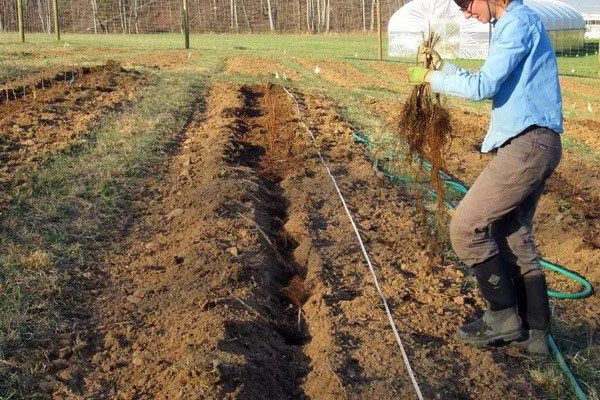
Landing rules
Plant Samokhval raspberry bushes according to the following timeframes:
- in spring (in March, April);
- in autumn (in September, October).
If you perform the procedure in early spring, you'll reap the first harvest later that year, in the fall. When planting, follow this pattern:
- the distance between plants is 0.5-0.7 m (when planting them in a trench) or 0.7-1 m (if you plant bushes in holes);
- between rows - 1.5 m.
Plant berry crops step by step:
- Dig a trench or planting hole. Depth: 0.5 m. Hole diameter (trench width): 0.4-0.5 m.
- Line the bottom with humus mixed with compost, peat, wood ash, and mineral fertilizer.
- Place the seedlings in the holes (or trench), after soaking their roots for several hours in water with a growth stimulator added to it.
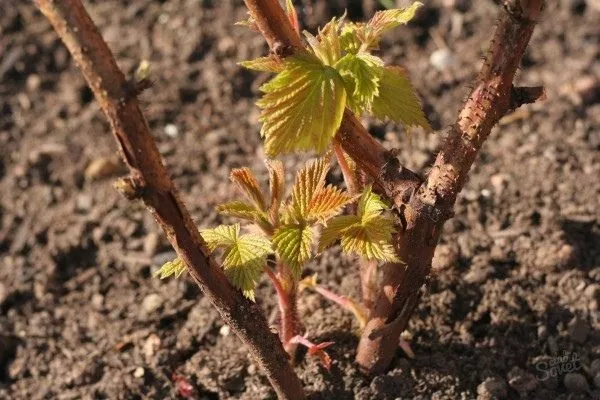
- Cover them with fertile soil. Tamp it down under the bushes. Make sure the root collars are 2-3 cm below ground level.
- Water the planting. Mulch it with straw, sawdust, or peat.
- Trim the seedlings to a height of 0.4 m.
Watering and fertilizing
To obtain a rich harvest, provide your plants with high-quality care, which includes the following procedures:
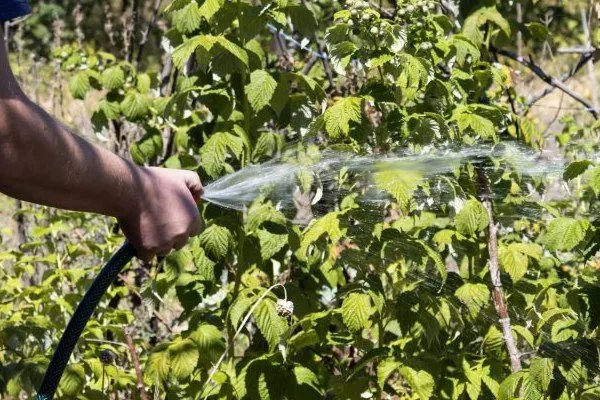
- WateringFor root irrigation, dig a ditch near the planting trench. Fill it with water regularly. If there is sufficient rainfall, use 20 liters per bush. Watering frequency: once every 7 days.
- Top dressingFertilize your raspberries for the first time in the spring after the snow melts. Use a solution of chicken manure (1:15), saltpeter, and urea. Fertilize the raspberry bushes a second time when they begin to bloom. Use potassium and phosphorus fertilizers (20 g per 10 liters of water). Fertilize them again when the bushes begin to bear fruit. Add organic fertilizer.
Trimming
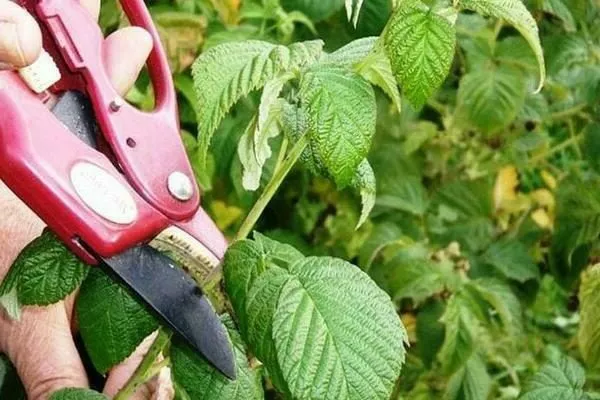
Prune berry plants in the fall, 14-20 days before the onset of frost. Shorten shoots as much as possible, leaving small stumps. This will yield the following results:
- increase crop yields next year;
- protect plants from rotting, diseases and insect attacks.
Some gardeners prune only the older branches, leaving the young shoots for next year. This technique allows them to produce even more berries.
In the spring (in April, after the snow melts, before the buds swell), do sanitary pruning of the raspberry bush, which consists of removing unproductive shoots:
- dry;
- frozen;
- sick.
Preparing for winter
Samokhval is a winter-hardy variety. Plants can withstand temperatures down to -30°C. In cold climates, mulch the soil around the tree trunk to prevent roots from freezing. If there's no snow cover, cover the bushes with agrofibre. If there's enough snow, cover the raspberry patch with it.
Harvesting
Hand-picking raspberries is a labor-intensive process. It's made easier by the following factors:
- uniform ripening of berries, characteristic of the variety;
- their density;
- easy to separate from the bush;
- dry break.
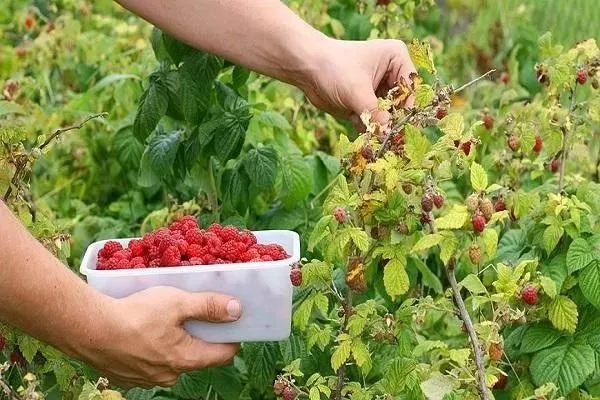
Pick ripe berries every other day, at least once every three days. Gather the harvest into small baskets. Mechanical harvesting is also possible.
Reproduction
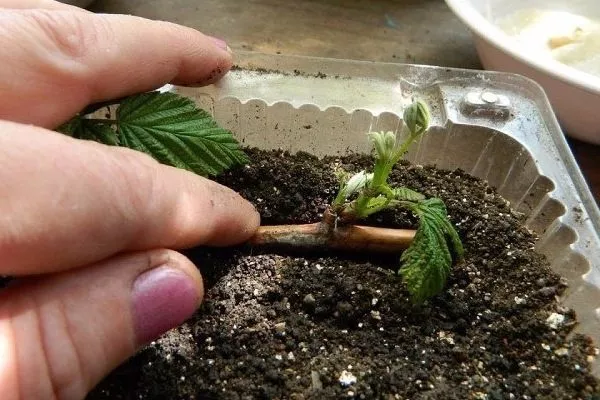
Samokhval produces a lot of young shoots. Use them for propagation. Separate the shoots from the parent plant and replant them with the root ball throughout the season, not just in spring or fall. They have a high survival rate.
This variety can also be propagated by dividing the bush. Follow these steps:
- Choose a strong plant.
- Dig it out.
- Divide into several parts so that each has 3-4 trunks with living buds and strong roots.
- Plant the divisions in the garden.
Diseases and pests
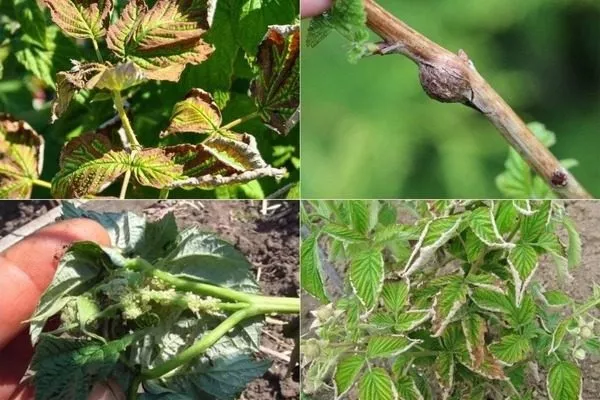
Samokhval is resistant to diseases and pests. Under unfavorable growing conditions, its bushes are susceptible to infections:
- powdery mildew;
- rust;
- anthracnose.
To prevent the problem, treat the planting with Bordeaux mixture (1%). If the bush is already diseased, prune the infected branches and spray it with a fungicide (Horus, Topsin-M, Topaz).
If not properly cared for, raspberries are susceptible to pest attacks:
- raspberry-strawberry weevil;
- spider mite;
- raspberry aphid;
- stem gall midge.
To get rid of pests, use insecticides such as Iskra, Actellic, or Allatar. To prevent pest attacks, prune your raspberry bushes before winter.
Pros and cons
Domestic gardeners enjoy cultivating this variety in their gardens thanks to its positive characteristics:
Each type of culture has its own disadvantages:
Reviews of the Samokhval raspberry variety
Samokhval is a new everbearing variety that has won the hearts of Russian gardeners in its short lifespan. It is prized for its marketable quality and dessert-like flavor, its long fruiting season, which occurs in two waves, and its winter hardiness.