
Raspberries are among the easiest plants for gardeners to propagate. There are many ways to propagate this berry. The choice of method depends on the time of propagation, how quickly you need to harvest the new bushes, and so on.
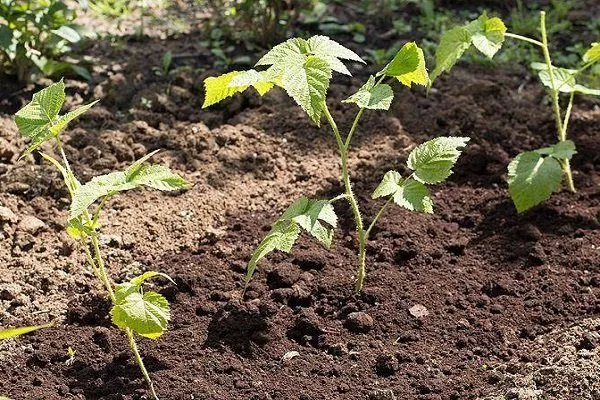
Raspberry growing rules
Regardless of the method of raspberry propagation, it is necessary to comply with a number of requirements to ensure the production of high-quality planting material.
Rules for propagating raspberries:
- To obtain planting material Use only healthy bushes. Ignore any weakened, stunted, or diseased plants. Choose plants with:
- abundant fruiting;
- strong stems;
- healthy, bright green foliage.
Criteria for selecting healthy bushes for propagation- ✓ Check for visible damage on stems and leaves.
- ✓ Check for signs of disease, such as spots on leaves or unnatural coloring of stems.
- Raspberry bushes direct sunlight is contraindicatedPlant young raspberries in areas:
- with diffused lighting;
- not prone to flooding during precipitation and snow melting;
- on slightly acidic, loose and fertile soils.
- The plants are not demanding to moisture, but when planting young seedlings watering is required.
Seasonal features of raspberry propagation
Raspberries are easy to propagate because they can be done at any time, except winter. The propagation method chosen depends on the time of year—there are preferences for each season.
It's impossible to say which time of year is best for propagating a crop—spring, fall, or summer. Reproduction success in different seasons depends largely on climate, propagation method, variety, and other factors.
Features of seasonal reproduction:
- Spring. Work begins before the sap begins to flow. During this period, both vegetative and seed propagation are possible. Moreover, in spring, virtually all methods of propagating berry bushes are acceptable—suckers, division, and cuttings.
- Summer. The optimal method for this time is propagation by green cuttings.
- Autumn. Cuttings or division are used.
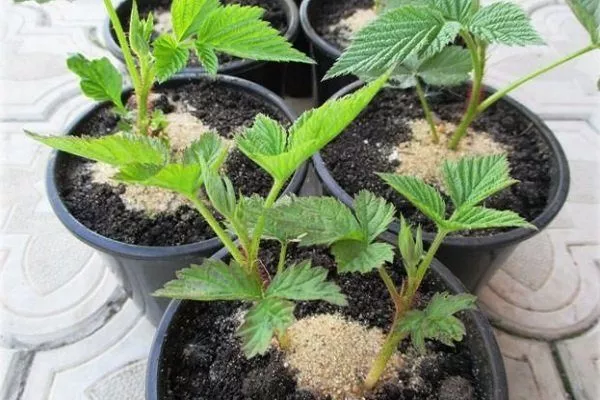
Methods of raspberry propagation and their features
There are many ways to propagate raspberries. Vegetative methods are preferred.
| Name | Ripening period | Disease resistance | Frost resistance |
|---|---|---|---|
| Root cuttings | 2-3 years | High | High |
| Green cuttings | 1-2 years | Average | Average |
| Lignified cuttings | 2 years | High | High |
| Green root shoots | 1 year | High | High |
| Apical layering | 2 years | Average | Average |
| By dividing the bush | 1 year | High | High |
| Growing raspberries from seeds | 2-3 years | Low | Low |
| Scottish method of raspberry propagation | 2 years | High | High |
Root cuttings
A root cutting is a part of a root that has lateral branches that are capable of independent growth after separation from the rhizome.
Signs of a suitable root cutting:
- thickness – more than 2 mm, optimal – 5 mm;
- length – 10-15 cm;
- number of buds – 1-2 pieces.
Dig up the soil, stepping back 40 cm from the bush. Carefully separate the lateral shoots from the central rhizome and remove them from the soil, being careful not to damage the small roots.
Further steps depend on the time of year. Let's look at the process using root layering as an example in the spring.
The order of reproduction in spring:
- Place the prepared cuttings into the furrows prepared in advance for planting. The furrows should be 10-15 cm deep.
- Cover with soil and water thoroughly.
- Cover the plantings with film to create a greenhouse effect and speed up the emergence of green shoots - as soon as they appear, remove the cover.
If it's cold outside, the cuttings can be planted in boxes rather than in furrows. These can then be placed in a greenhouse. The minimum depth of the containers is 20 cm. The boxes are filled with a 1:1 mixture of peat and sand. Planting occurs when warm weather sets in, around the end of May.
When propagating in the fall, the dug-up shoots are stored. Features of autumn propagation:
- Root cuttings are placed in a trench (depth – 15 cm) and fill with soil. The furrow is then covered with sawdust or leaves. The second option is bookmark in boxes, filled with sand, and stored in the cellar.
- Storage temperature The planting material temperature is 0…+4°C. If it drops below this value, the shoots will die; if it rises above this value, they will sprout earlier than necessary.
The survival rate of root cuttings reaches 80%. Gardeners believe this propagation method is best used in the fall. The optimal age of the mother plants is 3-4 years.
Green cuttings
This propagation method is only suitable for summer. Cutting should be done in cloudy weather.
The procedure for propagation by green cuttings:
- Cut the green shoot off at ground level. Cut into 8-10 cm pieces.
- Place the cuttings in a growth stimulant solution, such as Kornevin, for 12 hours. The solution should not be colder than 18°C, otherwise the cuttings will not root.
- Plant the cuttings in the trenches.
- ✓ Maintain the temperature of the growth stimulator solution at least +18°C.
- ✓ Ensure high humidity in the greenhouse for rooting of cuttings.
Plant the cuttings in a greenhouse, as propagation occurs towards the end of summer, before the cold weather sets in. If planting in open ground, cover the cuttings with plastic film.
After a couple of weeks, feed the plants. Dilute a liter of mullein in 10 liters of water and water them. After 1.5-2 months, transplant the seedlings to their permanent location.
Lignified cuttings
This propagation method is used in the fall, after the leaves have fallen and the stems have turned brown. Woody shoots form on the roots from adventitious buds. For propagation, use shoots located 0.3 m from the bush.
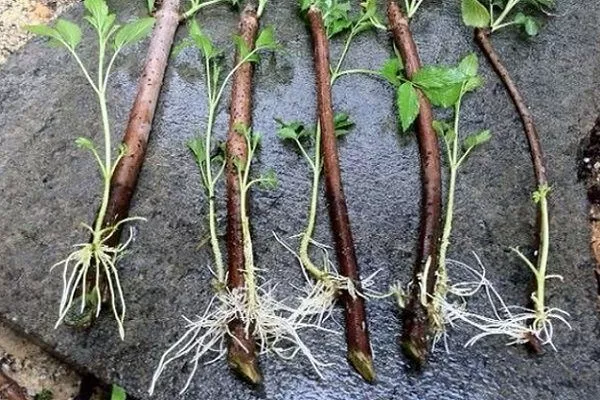
Reproduction order:
- In the first half of September, cut off woody cuttings with pruning shears.
- Divide each shoot into pieces 25-30 cm long.
- Place the planting material in the cellar, having previously wrapped it in cloth and immersed it in wet sand.
- When February comes, renew the lower cuts and soak in water for 12 hours.
- Place the cuttings in honey water (dissolve 1 teaspoon in 1 liter). Roots will appear in a month.
- When the roots reach 1 cm in length, transfer the cuttings to containers with soil. Make wide holes, place the seedlings in them, and cover the roots with sand.
- Water the soil regularly, but not excessively. Overwatering will cause roots to rot.
- In three weeks the seedlings will take root and grow leaves.
- Planting in the ground occurs in May.
Green root shoots
This method is used in the spring. It allows for quick and easy harvesting of planting material. The bushes, produced from green root suckers, are harvested the following year after planting.
Reproduction order:
- Inspect the tops. The mother plants should be free of disease or pest damage. If a plant is infested with raspberry fly, do not use it for propagation.
- Step back 40-45 cm from the bush and dig up the shoots that have reached 15-25 cm in height. Remove the plants along with the roots and the root ball.
- Prepare a planting hole large enough to accommodate the roots. Sprinkle the roots with a mixture of compost and humus. Add another 1 tablespoon of wood ash.
- Water the seedlings and mulch the soil.
Apical layering
This method is effective for purple and black raspberries. It's used in late August to early September. When the tops become loop-like, they're ready for rooting.
The procedure for propagation by apical layering:
- Start the propagation process in May – select flexible and thin shoots and pinch off their tops to promote better development of lateral roots.
- Prepare the soil for layering. Loosen it and add peat and sand—one bucket per square meter.
- Dig furrows. The recommended depth is 10 cm. Bend the stem so that 10-15 cm of its top touches the ground.
- Secure the top with a wire staple to the bottom of the furrow.
- Cover the laid tops with soil and water.
- At the beginning of autumn, using pruning shears, separate the stems of the mother bush from the young plants, leaving a distance of 30 cm.
- When the leaves fall, trim off the remaining parts of the mother shoots.
- Trim the tops of the layers - this will improve the growth of lateral shoots.
- Dig up the cutting with a lump of soil and replant.
By dividing the bush
As soon as the snow melts, raspberries begin to grow. They can be propagated by division as early as March. However, autumn is considered the best time for this method of propagation.
The order of reproduction by division:
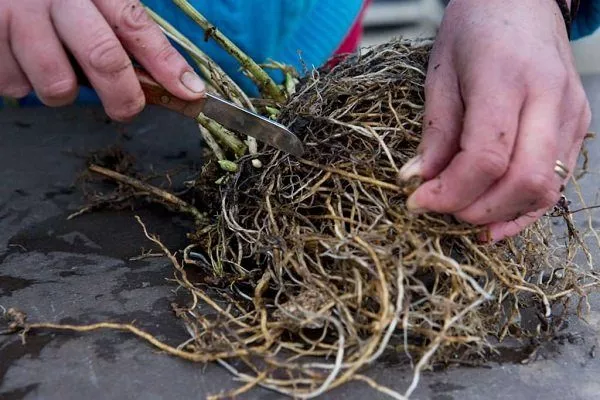
- Dig up the bush with its roots, being careful not to damage them. Carefully shake the soil off the roots.
- Using sharp pruning shears, divide the bush so that each part has 2-3 stems.
- Prepare planting holes. The optimal depth is 30-40 cm. Mix peat with sand (3:1).
- Place the seedlings in the holes, cover with prepared soil mixture, and water.
Growing raspberries from seeds
This is the longest and most difficult method. Ordinary gardeners rarely use it. Firstly, there are a great many vegetative methods for propagating raspberries, and secondly, seed propagation does not guarantee the preservation of varietal characteristics.
Seed propagation is commonly practiced by plant breeders. They use it to develop new varieties. Hobby gardeners find it difficult to grow a cultivar from seed, but they do produce shrubs for hedges.
The order of propagation by seeds:
- Pick the largest berries from the raspberry bushes. Select only fully ripe berries.
- Crush the berries in a saucepan.
- Rinse the resulting mixture in water to separate the seeds from the pulp. Use a sieve to strain the water.
- Soak the seeds in water for 24 hours.
- Remove the seeds from the water and mix it with moistened sand. Place them in cloth bags and store in the refrigerator.
- In March, sow the seeds in containers with potting soil to a depth of 5 mm. Sprinkle the seeds with sand and cover the seedlings with a glass lid. Water and ventilate them regularly.
- Once the leaves emerge, begin hardening off the seedlings. Unhardened seedlings will die. Take the seedling trays outside, gradually increasing the time from 1 to 24 hours.
- Plant the seedlings in mid-May. Plant in the morning. Dig holes 10-15 cm deep and place the seedlings in them, cover with soil, and water.
- Cover the plantings with plastic film. Remove it after a month. New leaves will appear on the seedlings in a couple of weeks.
Raspberry seeds can be stored in the basement. To do this, place them in boxes with moistened moss, which is sprayed with water twice a month.
Scottish method of raspberry propagation
This method is considered to be very effective, as it allows you to quickly and easily obtain a lot of high-quality planting material.
Procedure:
- In March, apply fertilizer to the soil under the bushes. Mix peat, sand, and sawdust (1:1:1). Apply one bucket of soil mixture per square meter. This step stimulates bud formation on the rhizomes.
- In September, the roots are divided into sections, collected into small bundles, wrapped in cloth, placed in a box with wet sand and taken to the basement.
- In spring, transplant the root cuttings into a 1:1 mixture of sand and peat. Water generously. Within a couple of weeks, numerous green shoots will appear.
- Plant the sprouts and rhizomes in containers. They will quickly take root there.
- After a week, transplant the seedlings into individual pots. Fill them with a soil mixture of turf, sand, and peat. Add superphosphate and dolomite flour to the mixture – add 5 and 50 g, respectively, per 100 liters of soil.
A month after planting in pots, the raspberry seedlings can be transplanted to their permanent location. In just two years, the young bushes will produce their first harvest.
Everbearing raspberries: what they are and how to propagate them
Everbearing raspberries differ from regular raspberries in that they produce fruit for a long time. They produce several harvests per season. Everbearing raspberries produce larger berries that set and ripen quickly.
Everbearing raspberries are propagated vegetatively and by seed. Two- to three-year-old bushes are used for propagation.
The easiest and most effective way
Everbearing raspberries send up new shoots from their roots every year, some of which die back in the fall. Those that survive produce fruiting branches the following year. This characteristic allows for a harvest to be collected in the year of planting—in August or September.
This crop is characterized by the presence of large quantities of young green shoots, which are very similar in appearance to nettles. The "nettle" method is considered the easiest way to propagate everbearing raspberries.
Propagation by "nettle":
- Rake the soil away from the base of the green shoot.
- Cut it off, capturing part of the white underground part of the stem (3-5 cm).
- Treat the planting material with stimulants and plant it deep into a loose sand-peat soil mixture. The entire root and part of the shoot should be underground.
- Water the plantings and cover with plastic bottles.
The plants will take root in 3-4 weeks. Once they are fully established, they are planted outdoors. Planting time is late June.
Planting in spring
Everbearing raspberries are often propagated using woody cuttings prepared in the fall, stored in the refrigerator or cellar. They are cut around the end of October. The cuttings are 20 cm long.
Raspberries are planted in the spring Plant vertically in pots with loose, moist soil, deepening the cuttings by 1 cm. The cuttings are pre-treated with growth stimulants. Root cuttings are placed horizontally and covered with soil.
In southern regions, cuttings can be planted directly in open ground, providing protection from the sun and night frosts. It is recommended to make holes in the plastic for ventilation. In the fall, the strengthened seedlings are transplanted to their permanent location.
Knowing how to propagate raspberries will allow you to successfully increase your berry production throughout the warm season. Using your own planting material, you'll not only plant healthy, high-quality raspberries but also save money on buying seedlings.