
The Polka raspberry was developed by Polish breeders led by Jan Daken. The variety was produced for industrial use. Today, the Polka raspberry is grown in many European countries and in Russia.
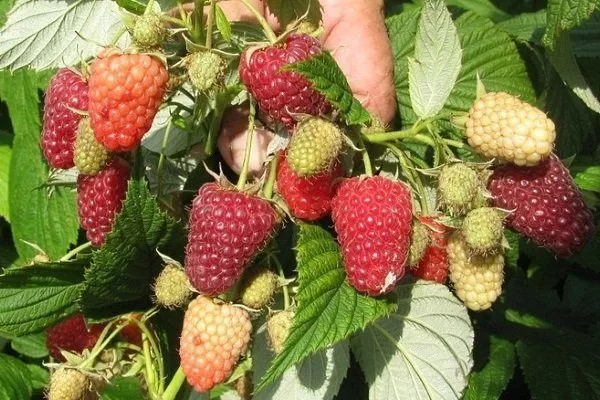
everbearing raspberry variety "Polka"
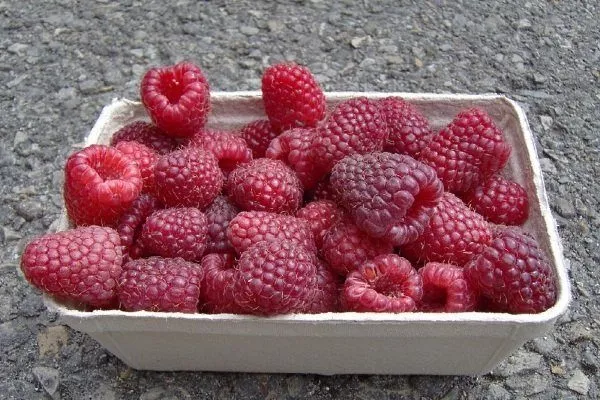
The fruits of the Polka raspberry do not get crushed or deformed during transportation
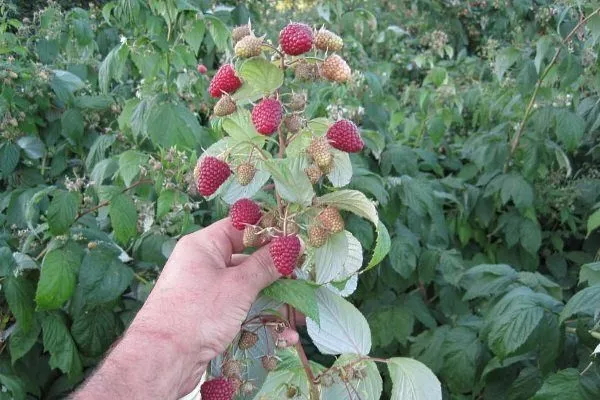
The fruiting period of the Polka raspberry variety lasts three months and ends with the onset of frost
Description of the Polka raspberry variety
This raspberry variety is everbearing, bearing fruit until frost sets in. While regular raspberries only bear fruit until midsummer, this variety will delight you with its berries until September or October.
Advantages of the variety
The main advantages of this variety include:
- The plant has low shoots that reach 1.5 meters, making it a medium-sized variety. The trunks are upright, have few thorns, and grow quickly. The bush is stable and does not sag under the weight of the berries.
- The rhizome is robust and fibrous. This type of root system prevents the shrub from taking up all the space in the garden.
- The berries are deep red and slightly pubescent. They grow on clusters of up to 10. The fruit is cone-shaped, reaching 3 cm in diameter. The berries are smooth, juicy, and fleshy. They weigh between 10 and 15 g.
- It bears fruit for three months. Flowers appear in mid-July.
- Polka grows well in open ground and greenhouses.
- The bushes themselves aren't very frost-resistant. During periods of frost, raspberries require additional cover. If the shoots are mown down, covering the raspberries is not necessary.
- It begins to bear fruit in the first year after transplantation.
- The plant is resistant to gray mold, a common disease affecting shrub foliage. Spider mites are not a problem.
Disadvantages of the variety
The main disadvantages are:
- The plant does not tolerate temperatures above 35 degrees – the stems and leaves dry out, and the fruits bake.
- Polka's weak point is its root system, which is often susceptible to rot, cancer, and verticillium wilt.
Correctly carried out treatment will prevent the occurrence of diseases.
Landing rules
By providing the Polka raspberry with favorable conditions, you can expect a good harvest. The key is to follow basic planting guidelines.
Landing time
Bare-root plants establish themselves well in early spring before bud break. The first summer harvest will be limited, as the seedlings haven't yet gained strength. It's best to plant Polka in the fall, a few weeks before frost, to allow the plant time to take root, acclimate to the soil, and harden off before the onset of cold weather. Learn about planting raspberries in spring. this article.
Seedlings grown in containers and transplanted into soil take root better and adapt well. With this type of planting, planting can be carried out at any warm time of year.
Soil preparation and site selection
The following points need to be taken into account:
- Everbearing raspberries need to be planted in well-lit areas. Insufficient light prevents the plant from blooming early, reduces fruit yield, and degrades the berry's flavor.
- In relatively cold climates (central and northern parts of the continent), it is recommended to place raspberries on the south side, where there is protection from the north wind by a fence or buildings.
- The variety's weak point is its rhizome, so it's best not to plant Polka in areas with high humidity or near water. It's also best avoided at elevated elevations where snowdrifts blow away in winter, exposing the soil. In summer, raspberries suffer from lack of moisture.
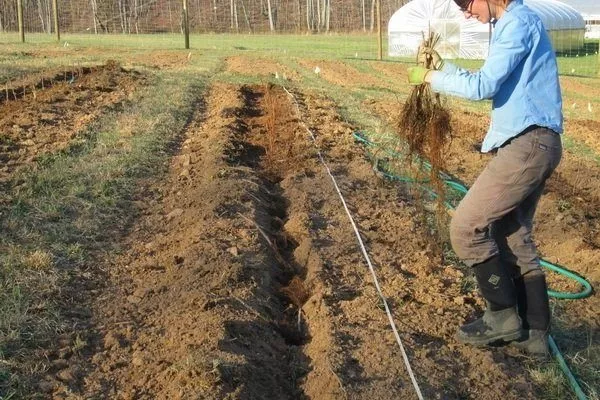
Recommendations for the soil type to plant Polka in:
- The berry bush is undemanding to soil, but it is recommended to choose soil with a slight acidity index.
- Polka loves to be near currants, apple trees, cherries, and blackberries. Vegetables are preferable to plant near bushes. It doesn't like sea buckthorn or grapes growing nearby.
Selection of seedlings
The ideal option is to buy seedlings from specialized nurseries or reputable gardening farms. These are labeled with the following information:
- variety;
- planting date;
- care instructions.
When selecting young berry bushes, inspect them carefully. Healthy plants have flexible shoots, a seedling thickness of 1 cm, and smooth, clean bark. The root should be slightly moist and free of tangles. Several rootlets should extend from the central root branch.
Experienced gardeners recommend purchasing two-year-old container-grown seedlings. These seedlings have well-developed rhizomes and will easily establish themselves in their new location.
A huge selection of young plants is available before the first frost. At this time, it's too late to transplant the shrubs into the ground. To prevent the plant from dying before the frost sets in, it's placed in trenches. To do this, dig a hole 15 cm deep with a slope on one side, into which the shoots are placed. Then, fill them with soil and cover them well with insulation. To repel and protect against small animals, cover the area with spruce branches.
Planting: A Step-by-Step Process
The step-by-step planting process looks like this:
- A few days before planting the seedlings in the ground, prepare the site: dig up the soil, remove excess plantings, fertilize the soil with humus and commercial fertilizers.
- Immediately before planting, soak the rhizomes in a biostimulant solution for 2 hours. To prevent rot, add Fundazol to the solution.
- Gardeners use linear planting (a trench is dug and the seedlings are placed in it) and bush planting (scattered). With the linear method, the raspberries receive more light and are easy to care for and harvest. The holes should be at least 45 cm deep and 70 cm wide. It's important to remember that the bush grows quickly.
- Pour a small mound of soil into the hole.
- Place the bush in it, carefully spreading out the roots. Seedlings from containers are placed with a lump of soil.
- Cover the shoot with soil, leaving the base of the root open.
- To strengthen the base of the roots, cover the seedling near the ground with straw.
- Leaves at a height of 40 cm must be cut off.
Caring for Polka raspberries
This variety of raspberry requires special care, which must be performed regularly. Otherwise, the plant's fertility will be low.
Watering
The plant requires constant watering. Heat negatively impacts berries and yield. On hot days, the berries bake, begin to dry out, and the foliage wilts. For good growth and fruitfulness, the soil moisture at a depth of 30 cm should be at least 75%.
- ✓ Optimum soil moisture at a depth of 30 cm should be at least 75%, but not exceed 80%.
- ✓ On hot days, it is necessary to increase the frequency of watering to 2-3 times a week to prevent the fruits and leaves from drying out.
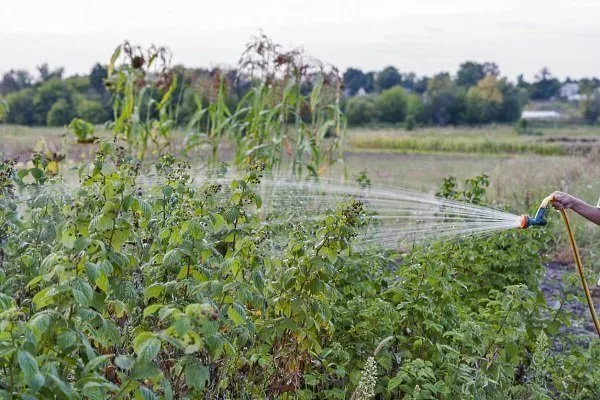
When humidity drops, water the plants once every 7 days. In early autumn (if there is no precipitation), water raspberries at a rate of 20 liters per bush.
Humidity levels above 80% are detrimental to this raspberry variety. Residual water in the hole blocks oxygen from reaching the roots, causing the leaves to turn yellow. Avoid watering for a period of time and loosen the soil.
Types of irrigation:
- Sprinkler irrigation – water is sprayed from a hose or sprinkler. This method is recommended in dry weather: watering irrigates the bush itself and increases air humidity. Sprinkler irrigation is not recommended during the fruit ripening period.
- Furrow irrigation – in this case, water is mixed with fertilizer. Before irrigation, trenches are dug to allow the liquid to flow. After irrigation, the trenches are filled in.
- Drip irrigation is the best watering option. Holes are drilled into pipes running along the bushes, delivering pressurized water directly to the roots. Consequently, humidity remains constant, increasing fertility by 35%. This type of irrigation requires an automated system (convenient for large areas).
| Irrigation method | Efficiency | Recommended for |
|---|---|---|
| Sprinkling | Average | Dry weather, not during the fruit ripening period |
| Furrow irrigation | High | Use with fertilizers |
| Drip irrigation | Very high | Large areas, automation |
Wet soil should be loosened to prevent crust formation. To avoid damaging the roots, loosening should be done shallowly (about 7 cm).
If the planting site is in an area with low humidity, it is necessary to cover the soil mulchIt retains moisture in the soil, preventing evaporation. It is usually covered with straw or onion skins.
Weeding
Weeding the bush regularly is essential; nettles and other weeds draw essential nutrients from the soil and block sunlight. Weed carefully, avoiding damage to the root system. If new shoots appear between the bushes, remove them. Overcrowding is undesirable, as it negatively impacts yield.
Top dressing
For an optimal balance of nutrients, the bush needs fertilizing.
How to determine what a plant lacks:
- the leaves started turning yellow for no reason – there is not enough nitrogen;
- unnatural dark green color of stems and leaves – decreased phosphorus levels;
- Rounded leaves and dark edges indicate potassium deficiency.
During the spring growth period, raspberries are fed with urea (30 g per square meter). The fertilizer is a mixture of cow manure or chicken manure mixed with water (1:10 or 1:20, respectively).
Fertilizers containing nitrogen increase soil acidity, which Polka doesn't like. To regulate the acidity, sprinkle the soil with ash.
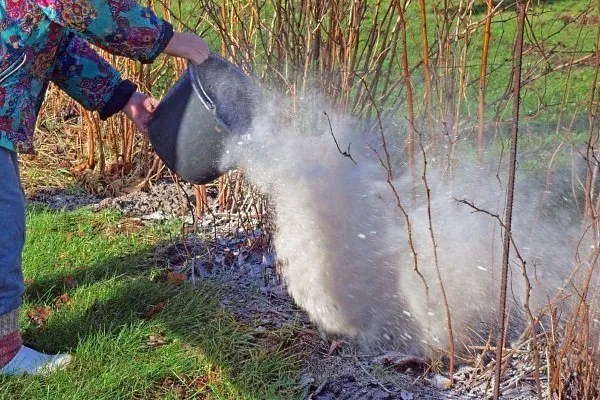
The Polish cat is sensitive to chlorine. Its presence can cause a condition called chlorosis.
When the first berries appear, you can water the bush with organic fertilizer – an infusion of nettle and onion peels. Finely chop the nettles, place them in a container of water, and leave for 7-10 days. Then strain the infusion and dilute it with water 1:10. A mixture of onion peels (0.5 kg per 10 liters) is also prepared.
Garter
This raspberry variety doesn't require staking or additional support. Sometimes, when a bush is overloaded with berries, the stems begin to bend toward the ground. In this case, staking can be used.
A stake is carefully driven in 20 cm from the bush, taking care not to damage the root system. The stem is tied in several places to prevent damage to the bark.
Some gardeners use netting for linear planting. Stake stakes are driven into the rows on either side, and wire or netting is tied between them in several rows. As the shoots grow, they are secured to the netting.
Reproduction
There are several options to propagate the culture:
- By seeds – this method is acceptable for breeders, as the process takes a lot of time.
- Green cuttings – in June, young shoots are cut (at a 45-degree angle). They are then transplanted into a site prepared for seedlings. Within two weeks, the seedlings will revive in moist soil. Closer to autumn, the young shoots are transplanted into the raspberry patch.
- Root cuttings – in September, the roots are dug up, cut into 10 cm pieces, and buried in moist soil. Cover with mulch and spruce branches. The area is covered with plastic, which is removed in the spring after shoots emerge. The shoots are grown throughout the season and transplanted into the raspberry patch in the fall.
- Dividing the bush: the bush is dug up by the roots, divided into several sections, and replanted into separate holes. The tops of the stems are cut off to allow for the development of lateral branches.
Pruning and wintering
At the end of October, all above-ground parts of the raspberries are cut back (leaving 3 cm from the stem). This method helps protect the bushes from frost, improves fruit production, and protects the crop from pests.
Read the article about How to properly prune raspberries in the fall.
If you leave only young shoots and remove the old trunks, the yield will be lower (the bush will develop unevenly). Cover the remaining shoots and stumps to prevent the plant from freezing in freezing temperatures.
In spring, before buds begin to open, remove frozen and broken stems. Remove all excess branches (leave up to nine on a single trunk). Before flowering, remove the tops of the bush (15 cm) to stop the raspberry from growing, which improves yield.
Harvesting
On an industrial scale, the harvest is collected with special scoops that grab the entire cluster. In the garden, it is recommended to carefully cut off the clusters and then pick the berries. This prevents the fruit from becoming misshapen. The bush itself, from which the cluster was cut, directs nutrients toward the ripening of new berries.
An overview of the Polka raspberry variety is presented in the video below:
Diseases and pests
Since this raspberry variety is completely mown down before winter, pests rarely bother the plants. However, in unfavorable soil, this variety may develop root problems.
Diseases:
- Root canker – tumors form on the roots, the bush withers, and fertility decreases. Bacteria can originate from soil or compost. To prevent this, avoid growing raspberries in the same spot and disinfect the roots before planting. To treat this, cut off the tumors and treat the cut areas with a 1% copper sulfate solution, or completely dig up the plant.
- Verticillium wilt – roots crack, leaves turn yellow and fall off, berries become small. To treat, treat the affected area with a 0.2% solution of Vitaros or Fundazol.
- Root rot – the greenery at the roots becomes spotted, the leaves turn brown, and the roots rot. Treatment involves destroying the bushes and treating the raspberries with a special fungicide solution.
Pests:
- May beetle - water plants with manganese or remove beetles by hand.
- Raspberry moth - before the buds appear, spray the bushes with lime (1 kg per 10 l).
- Aphids - it is necessary to wash off the insects under running water.
Gardeners' reviews
The Polka raspberry will certainly yield a bountiful harvest if properly cared for. It's essential to follow all planting guidelines, protect against diseases and pests, and harvest the crop in a timely manner.