
The Poklon Kazakovu raspberry is characterized by double fruiting, as it belongs to the group of everbearing varieties. It produces large berries with increased juiciness, excellent transportability, long shelf life, and excellent resistance to drought and frost. This raspberry is resistant to viruses, fungi, and harmful insects.
History of selection
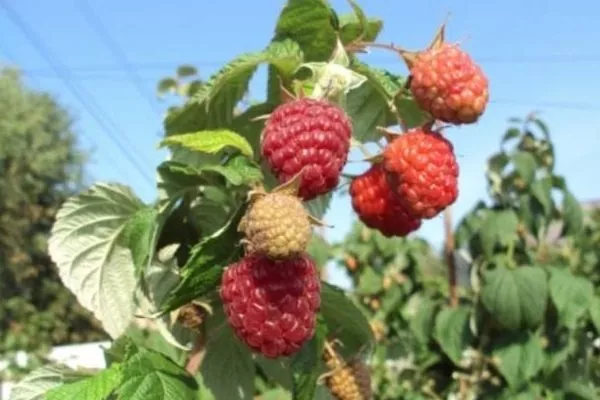
The Poklon Kazakovu remontant raspberry variety is a newcomer to the world of horticulture, developed by Russian specialists in 2014. This berry crop has already been included in the State Register of Breeding Achievements and is actively cultivated in nurseries for subsequent sale.
Peculiarities:
- It was named in honor of the distinguished Russian biologist I. V. Kazakov, who dedicated his life to developing new varieties of everbearing raspberries. Many scientists, including V. L. Kulagina, participated in its creation.
- The goal of the breeding work was to develop a raspberry variety with excellent taste, a reliable early harvest, as well as high resistance to drought, excess moisture, and low temperatures.
- To simplify the growing process and reduce costs for farmers and gardeners, the Poklon Kazakovu variety was also made resistant to various diseases and pests.
- Scientists succeeded in achieving all planned results, which led to the active distribution of this raspberry variety among consumers in Russia and abroad.
Regions for planting
This variety, considered native to the Ural region and southern Siberia, is distinguished by good frost resistance. It has a well-developed root system, strong stems, and easily adapts to both black and clay soils, without requiring intensive watering.
For these reasons, nurseries in the Moscow region and surrounding areas actively sell seedlings in both wholesale and retail quantities. This raspberry variety is in demand abroad: it is exported to the CIS countries and some Central European countries, where it is propagated by cuttings to adapt to local climate conditions.
General idea of the variety
The remontant raspberry variety called Poklon Kazakovu is distinguished by its distinctive appearance thanks to its extensive bushes, which, unlike most varieties, tend to droop, creating an attractive appearance.
Bush and branches
This twisting bush has powerful roots that firmly establish themselves in permeable soils. Several sturdy shoots, reaching 1.5 cm in diameter, emerge from the root mass. As they mature, they become woody and covered with small thorns, making care and fruit harvesting difficult.
Other varietal characteristics:
- The stems have slight radial fractures and are rarely completely straight.
- The height of the bush can vary from 150 to 180 cm when grown in northern regions, and reaching 180-230 cm in greenhouses or in favorable climatic conditions.
- The crown of the bush is wide and spreading, its diameter can reach 90-100 cm, requiring regular shaping and pruning to avoid a decrease in yield due to chaotic growth.
- New shoots on the branches are colored deep purple.
- The bush has natural protection against pests thanks to the waxy coating that covers each stem.
- There is no pubescence on the shoots.
Leaves
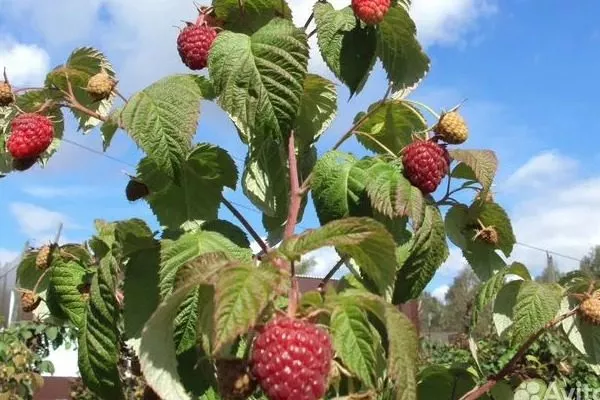
In April, leaves begin to actively develop, reaching their standard size in about three weeks. Up to six leaf blades emerge from each shoot node, creating a nearly round crown. This allows the berries to be covered by a dense canopy of deciduous leaves, necessitating thinning.
Other indicators:
- The leaves are oval in shape with pointed tips and strong petioles up to 5 cm long.
- Along the edge of the leaf blade there are distinct serrations that stretch as the plant grows and begins to bear fruit.
- There is wrinkling between the veins, which promotes photosynthesis.
- When they first form, the leaves are a light green, reminiscent of lettuce. As they reach full size, they become glossy and change color to a deep emerald. The undersides appear slightly lighter due to their silky texture.
- The leaves range in size from 10 to 13 cm in length and 7-9 cm in width.
- The petiole thickness ranges from 0.3 to 0.6 mm, while the sharp edge of the leaf begins to form at a distance of 5 cm from the point of attachment to the petiole.
- Initially, the leaves are covered with a slight downiness that appears when they open. Over time, along with flowering and fruiting, the downiness gradually disappears. By the end of the season, the leaves are almost completely pubescent.
Flowers
The variety blooms twice a season: the first occurs in the third ten days of April, and the second in early August. Several buds develop at each node of the plant, attached to the branch by a long petiole strong enough to support the future fruit. Its length can reach 6-7 cm.
Flowers also differ in the following parameters:
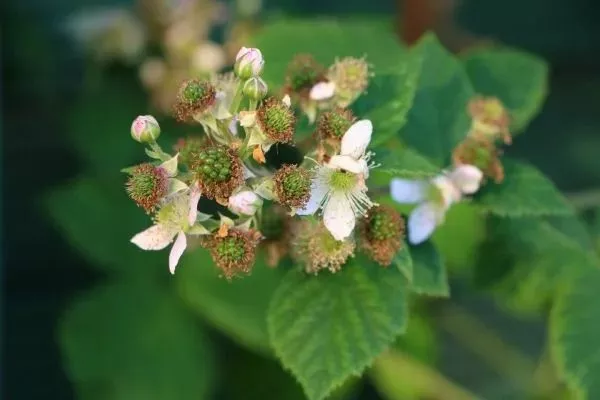
- The structure is a regular cup-shaped flower, as the petals remain closed throughout the fertilization period. They are tightly packed together, forming a rounded inflorescence.
- Inflorescences can reach 1.2-1.6 cm in diameter in cross-section and up to 1 cm in width, including the receptacle. The central part of the inflorescence usually does not exceed 0.6 cm, and the spherical part of the pistil, where the berries form, measures up to 0.7 cm.
- The petals are beige, becoming more intense toward the end of flowering and as they fall. The receptacle is yellow-green with a brownish tint due to pollen. Over time, small dark spots appear on the petals, caused by pollen falling from the stamens during pollination.
- The flower is soft and delicate. Cone-shaped petals are arranged along the perimeter of the receptacle, reproducing the shape of the inflorescence and protecting it from scattering and destruction before it's time to fall.
- The petals have a rounded base and slight serrations along the edges. They are attached to the receptacle via a shortened petiole. Distinct veins are visible on the petal surface.
- The flower's stamens are thin and elongated, whitish or yellowish, with pollen sacs formed at the tip of each. Some stamens grow longer than others, and it is these stamens that distribute pollen onto the stigma of the inflorescence, ensuring its fertilization.
Fruit
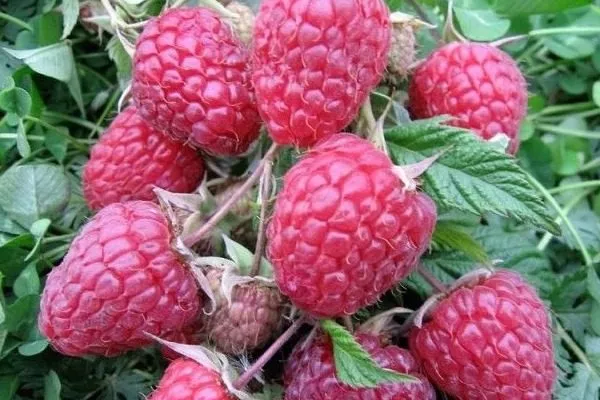
The berries of this variety are spherical, composed of numerous dense segments covered with a slight pubescence. The fruit contains 20 to 25 rows of these segments.
Peculiarities:
- Large berries typically range in size from 1.2 to 1.7 cm. The diameter can reach a maximum of 1.2 cm, and the internal opening after separation from the stalk is up to 1 cm deep and up to 0.8 cm in diameter.
- The average weight of berries ranges from 7 to 9 g, provided the bushes are properly cared for and the necessary fertilizers are added to the soil.
- The shape resembles an elongated cone, the height-to-base ratio of which exceeds 1:2, and the slope of its sides to the vertical is no more than 20 degrees.
- The berries of this variety first turn white at the top, and then gradually shimmer from pink to bright red.
- This variety is distinguished by its low acidity and high sugar content. Its distinctive aroma is also a distinctive feature.
- The flesh is particularly dense, making them resistant to damage and easy to transport. They retain their aroma and appearance when stored at room temperature and in perforated containers.
Compound:
- Fructose, pentose and other organic sugars make up to 18%.
- Proteins, mucus and fiber – up to 4.5%.
- Fats due to the structure of the stone, up to 0.8%.
- The carbohydrates that accumulate due to sugar in raspberries of this variety reach up to 8.5%, which is higher than the average for other varieties of this crop.
- Vitamin C – up to 1.2%, Vitamin B – up to 0.3%.
- Tannins formed in the pits do not exceed 0.12%.
- Natural acids such as malic, tartaric, citric and others make up to 0.7%.
The caloric content of fresh berries is up to 60-65 kcal per 100 g.
Bones
The seeds are incredibly small and barely visible, a result of meticulous selection work on this plant. Each drupe is covered with a thick layer of pulp and a smooth shell, making it easy to crack thanks to the softness of the outer tissue. The seeds are no larger than 0.2-0.3 mm.
Drying and pressing releases essential oils from each seed, giving raspberries their distinctive spicy aroma. The oil concentration can reach 30%, making this crop not only a healthy food source, fresh or processed, but also a valuable ingredient in medicinal and cosmetic products.
Resistance to frost and drought
Given that this variety was specifically bred for growing in Siberia and the Urals, its low-temperature tolerance is a key advantage. It can withstand temperatures as low as -29 to -34 degrees Celsius without the need for cover.
Pollination
This variety is capable of producing fruit even without pollinating insects. However, over time, the quality of the berries, their size, weight, and number per shoot, deteriorate, indicating a decline in the bush's quality due to a lack of genetic diversity.
Therefore, when creating a garden with this raspberry variety, it is recommended to plant 5% to 10% of other varieties such as Eurasia, Zyugana, etc. alongside it. They should be morphologically similar to Poklon Kazakovu and have the same flowering period.
Features of fruiting and ripening
Poklon Kazakovu is a raspberry variety that produces excellent fruit twice a year in central Russia. To improve fruiting, fertilize the soil in early spring and protect the young tree with mulch, extending the ring of mulch up to half a meter from its trunk.
Other subtleties:
- The first flowers appear on raspberries already in April, when the leaves bloom on the shoots.
- Flowering lasts for about three weeks, but this period may vary depending on weather conditions.
- After the flowers fade, the petals fall and on the same shoot where the flowers were previously, the first green berry begins to form.
- All fruits are set almost simultaneously, with an interval of no more than 4-5 days.
- Over the next three weeks, the berries ripen, first turning white and then intensely reddish.
- The harvest is collected when the berries become soft and deep red to the touch.
- After harvesting the fruit, the old flower stalks die off, and new buds begin to form in their place at the same nodes, allowing for a harvest twice a year.
What kind of harvest does it produce?
The Kazakov raspberry boasts impressive yields, significantly expanding its potential uses and increasing farmers' commercial interest in this crop. With proper care, including adequate irrigation and disease and pest control, raspberries can produce yields with the following characteristics:
- in the northern regions of the country, one bush can produce 3 to 3.5 kg of berries;
- in the central regions of Russia this figure reaches 4.5-5 kg;
- When grown in greenhouse conditions, you can get up to 7 kg per bush, which promises an average yield of up to 17 tons per hectare of raspberry field.
Storing berries
To achieve maximum profitability, farmers strive to sell their entire harvest. Therefore, preserving the berries' original appearance and flavor is crucial, which depends on their storage conditions:
- At room temperature, avoid placing them in airtight containers to prevent rotting or other damage. The maximum shelf life for such a harvest is one week. Keep in mind that placing the berries on a cloth will cause them to dry out and curl, which will lead to a loss of marketability.
- If berries are stored in a cold place: in a refrigerator, cellar or similar room with a temperature of 10 to 15 degrees, they can retain their original appearance and taste for 15-18 days.
- For long-term storage, berries can be kept in a refrigerator at a temperature of up to +5°C (41°F) with regular air exchange. After this period, the berries should be either sold or processed, as they begin to spoil.
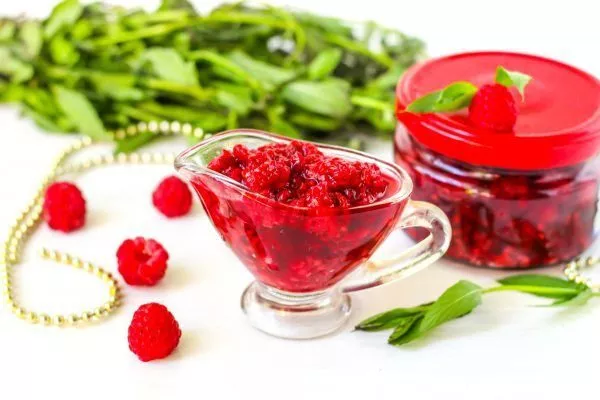
- If a farmer plans to preserve their harvest for a longer period for subsequent sale during the winter season, they can use blast freezing technology to freeze their produce at extremely low temperatures. Subsequently, the raspberries should be stored in a freezer without the possibility of defrosting until they reach the end consumer.
Planting nuances
The variety is sensitive to soil quality and prefers neutral, slightly acidic soils. Fertile soil enriched with minerals and organic matter is ideal. Consider other criteria as well:
- Choose a planting site with direct sunlight and no drafts. Bright light is essential for high-quality berries, as insufficient light not only slows the fruit's growth but also reduces its aroma and flavor. It's important to protect the garden from drafts, as the leaves of this variety are particularly fragile and vulnerable to damage.
- Monitor the groundwater level to ensure it remains at a sufficient distance from the surface. Root systems do not thrive in soggy soil, so when water levels are high, it's recommended to create well-drained beds.
- The soil should be rich in humus, while alkaline soils are best avoided. Soil acidity can be adjusted with ash, peat, or freshly harvested green manure.
- Loosen clay soils by adding sand or sphagnum.
- Do not plant near strawberries, blackberries or other fruit trees or shrubs.
Optimal planting conditions can be created not only in spring but also during the summer months, with autumn considered the most favorable. During this time, the roots will have time to establish themselves, adapt to the new conditions, and produce a harvest the following year.
The success of planting also depends on the climatic conditions of the region: in the north, it is recommended to plant raspberries before the buds open in the spring, while in the south, autumn is the most suitable period.
The process of planting raspberries includes several nuances:
- Prepare the area thoroughly by removing all weeds and debris, then digging and loosening the soil;
- During the preparation process, add organic fertilizer, and immediately after planting, use compost and rotted manure;
- To protect the garden from the spread of raspberry roots, install hedges, burying them to a depth of about 40-60 cm;
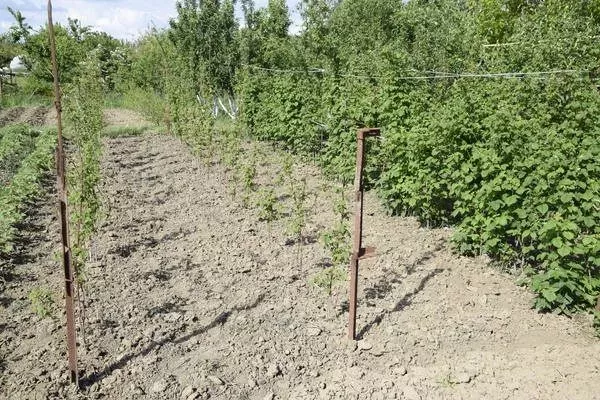
- the distance between seedlings should be at least 70-80 cm, and between rows about 100-120 cm;
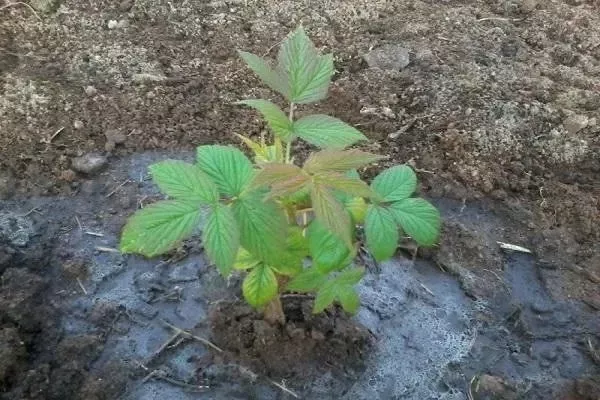
- The planting depth of the bush is determined by the characteristics of the soil: if it is dense, the collar of the plant should be at ground level, but if it is light, it should be deepened by several centimeters;
- Make holes for planting raspberries about 40-50 by 40-50 cm in size.
Care instructions
An experienced gardener or farm owner must meticulously care for each bush. This process involves a number of relatively simple but important steps that must be carried out in a prescribed manner:
- Pruning shoots. The stems of Poklon Kazakov require pruning in early spring each year. Shorten them to a height of at least 15 cm, which encourages the plant to expand its crown.
To prevent berries from being shaded, thin the foliage regularly. Remove any diseased or pest-infested parts. - Irrigation. This raspberry is highly drought-resistant and doesn't require frequent watering. However, to ensure optimal growth and increased yield, use drip irrigation with an automated system equipped with a fine-mist sprayer. With regular watering, each bush requires 10-15 liters, 3-4 times a week.
- How to feed. Immediately after planting, water the root zone with a 5% urea solution to ensure the soil is saturated with nitrogen. For a bountiful harvest, purchase a complete fertilizer mix containing phosphorus, iron, zinc, copper, and other essential chemicals.
Don't give up on organics in the fall or spring.
This variety is fast-growing, producing new shoots around the main stem each season. These shoots should be removed to maintain order in the raspberry patch or used for propagation. In the latter case, the mulch layer should be positioned so that the new stems can grow freely until they begin to develop.
Preparing for winter
During the winter, when there is no snowfall, it is recommended to protect the bushes with agrofibre, provided that the shoots were not pruned in the fall. If the entire bush was pruned, covering only the root system with mulch is sufficient.
If we are talking about young seedlings purchased in the fall and less than one or two years old, carefully fill the soil around them, add mulch and cover the bushes with a protective porous material.
Pests and diseases
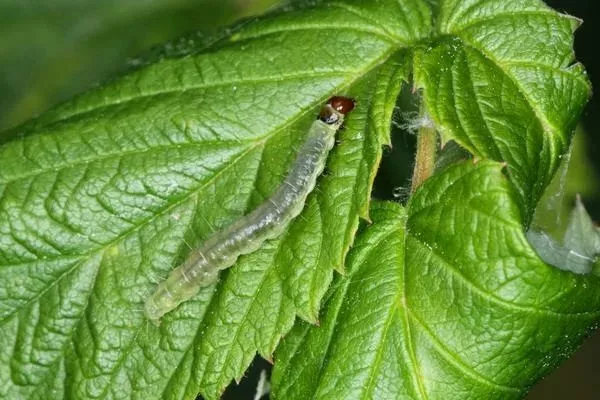
This variety has fairly good resistance. The use of toxic products is not recommended, so for prevention, use folk remedies and Bordeaux mixture.
What is the best way to propagate?
This raspberry variety is grown by grafting, dividing clumps, or growing root suckers. Thanks to its rapid growth, raspberries are easy to propagate, and establishing seedlings requires little effort. This process can be started at any time of year.
Pros and cons
The Poklon Kazakova variety is popular among gardeners and professional farmers due to its numerous advantages. It is cultivated in both private plots and industrial agricultural enterprises.
Benefits include:
Disadvantages that are also present:
Despite the fact that many of the listed shortcomings are largely subjective, they are often ignored by gardeners and summer residents, due to which the cultivation of this variety is actively spreading.
Gardeners' reviews
To successfully grow Poklon Kazakova raspberries, it's important to carefully prepare the soil, provide it with nitrogen fertilizer, perform the recommended pruning, thin out the main stems, and follow all planting, mulching, and watering guidelines. The berries have an excellent flavor and aroma reminiscent of real wild raspberries.