
Many gardeners prefer fall planting. While there's no significant difference between fall and spring planting, each has its advantages and disadvantages. Let's learn how to properly plant raspberries in the fall and what to do to ensure a harvest next summer.
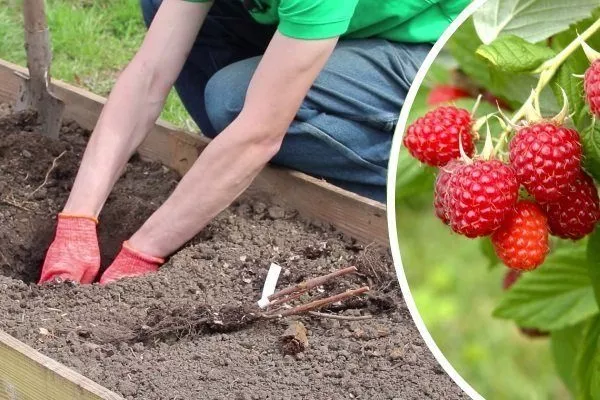
When are raspberries planted in the fall?
Autumn is considered the most favorable time for planting raspberries. Before the cold weather sets in, the seedlings have time to take root, and the existing root system not only strengthens but also grows new roots.
Raspberries are planted in autumn if:
- This variety is winter-hardy. Non-winter-hardy raspberries are best planted in the spring.
- The weather is favorable for autumn planting – this is especially true for southern regions and temperate climates.
- It's important to get a harvest as soon as possible. By planting seedlings in the fall, gardeners can expect to see their first berries by summer. Raspberries planted in the spring don't bear fruit until the following year.
We recommend reading the article about the best varieties of raspberries.
Planting times in different regions
The timing for planting raspberries in the fall is determined by the regional climate. The seedlings should be given sufficient time—at least 3-4 weeks—to establish proper roots.
Features of autumn planting of raspberries in the regions:
| Region | When to plant? | Note |
| Central and Volga regions | From September to October | Here raspberries can be planted at any time, but autumn planting makes them stronger and more resilient. |
| Northern regions, Siberia and the Urals | Until the first days of September | It's important to consider current weather conditions. If late summer is cool and damp, it's best to postpone planting until spring. Fall planting in this case risks crop failure and fungal diseases. Rows should always be arranged from north to south. |
| South and southern regions | From mid-September to November | The seedlings have time to take root well and get stronger. |
According to the lunar calendar
Today, many gardeners rely on the lunar calendar when working in their gardens. Cultivation work performed on favorable days is more effective.
According to the lunar calendar for 2019:
- Favorable autumn days for planting raspberry seedlings are September 1-4, 7-9, 17-19.
- Unfavorable days: September 10-11, 14, 20-22, 24-25, 28.
Advantages and disadvantages of autumn planting
Why is it beneficial to plant raspberries in the fall:
- At this time, the market offers a wide variety of planting material at affordable prices—you can choose any variety you like. Seedlings are often sold with berries attached, so buyers can see what they're buying. In the spring, the selection is always smaller.
- Autumn weather is cool, humidity is high, and temperatures drop at night. These conditions stimulate root growth in seedlings. In spring, the weather can change dramatically, with temperature swings from hot to cool negatively affecting the growth of newly planted seedlings. This isn't a problem in autumn.
- Easy care. After planting, seedlings require minimal care—major agricultural maintenance is postponed until spring.
- In the fall, the seedling accumulates nutrients and strengthens. A seedling planted in the spring expends energy on growing green mass, and it also has to take root. Because of this energy expenditure, spring seedlings are weaker than fall ones.
Fall planting has one drawback: you need to closely monitor the weather to ensure the planting time is right. It's not always possible to accurately predict the best time.
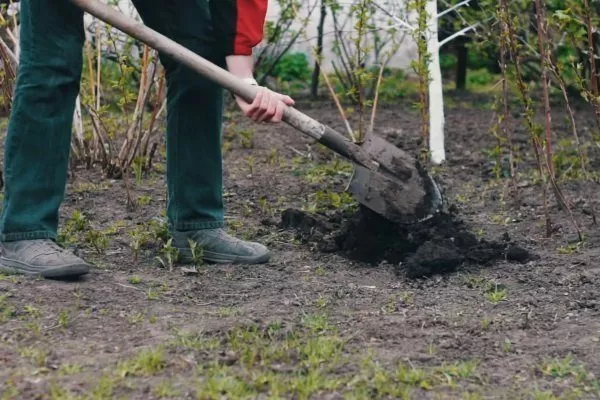
What conditions are required?
For autumn planting to be successful, several conditions must be met, here are the most important:
- Take only one-year-old seedlings.
- Choose the site carefully – it must meet the requirements for lighting, soil composition, etc.
- Stock up on water – you will have to pour 8 liters under each bush.
- Check the quality of the planting - if the seedling easily moves upward when pulled out, replant it, otherwise it will freeze.
- Choose the planting time so that there is about a month left before frost – so that the roots take root and the buds do not have time to awaken.
- Planting should be carried out at 80% air humidity and at a temperature of 10-15°C.
How to choose seedlings?
You can't expect a good harvest without high-quality planting material. Here are some criteria for choosing one-year-old raspberry seedlings:
- developed root system;
- root length – 10 cm;
- flexible shoots about 1 cm thick at the base;
- There should be no signs of rot on the roots.
- Soak the roots of the seedlings in water for 2-3 hours before planting to restore moisture.
- Trim damaged roots back to healthy tissue.
- Treat the roots with a root solution to stimulate growth.
Choose seedlings with closed roots. This type of planting material is usually available at nurseries and garden centers. Raspberry seedlings grown in individual containers are transplanted using the transshipment method, along with the root ball. The survival rate of such seedlings is almost 100%.
Choosing a landing site
Requirements for a site for planting raspberries:
- Lighting. Good sun exposure. Ideally, the area should receive direct sunlight for most of the day. Avoid planting raspberries between fruit trees, as this will reduce aeration and light, resulting in reduced yields.
- Relief and humidity. Raspberries don't thrive in drafts and wind, so it's best to plant them close to a fence, at least a meter away. Slopes where the soil can dry out are not suitable.
The crop loves moisture, but does not tolerate excessive waterlogging, as the roots will rot. Avoid planting raspberries in low-lying areas where water stagnates. The groundwater level should be at least 1.5 meters below the surface. - Neighborhood. The best neighbors are currants and blackberries. It's not advisable to plant raspberries near competing crops such as grapes and sea buckthorn.
When choosing a planting site, it is necessary to take crop rotation into account:
- The worst predecessors for raspberries - nightshades (eggplants, potatoes, tomatoes) and wild strawberries.
- The best predecessors – pumpkin, zucchini, cucumbers, beans, green manure.
The following video explains the best location to plant raspberries in the fall:
Raspberries can be replanted in the place of a former raspberry patch after 4-5 years.
Preparing the landing site
Soil preparation begins 1.5 months before planting raspberries. The procedure for preparing the site is as follows:
- Dig the soil deeper – at least 30 cm. Carefully break up any clods.
- When digging, remove weed rhizomes.
- When digging, add fertilizers per 1 sq. m:
- humus – 2 buckets;
- superphosphate – 60 g;
- potassium sulfate – 50 g.
Criteria for selecting ash for processing- ✓ Use only hardwood ash, excluding oak and walnut, due to their high tannin content.
- ✓ The ash must be completely cooled and sifted through a fine sieve to remove large particles.
- Level the dug soil with a rake.
Soil requirements
Raspberries prefer fertile soil. If the soil is deficient in nutrients, the raspberry leaves will turn pale and yellow. When choosing and preparing soil for planting, consider the following:
- Loams. The optimal option. These soils retain water well. Add humus and create high-quality drainage using expanded clay – the result is ideal soil for raspberries.
- Sandy loams. This is also an excellent option. Well-drained soil that doesn't allow water to stagnate is ideal.
- Sandstones. Raspberries grow well in sandy soils, but only if fertilized and watered regularly.
- Clay soils. An undesirable option: raspberries in clay soils grow weak and unproductive. Add sand to clay soil—one bucket per square meter.
Raspberry soil acidity ratio:
- The optimal soil acidity is neutral.
- For acidic soils, add lime at a rate of 0.5 kg per 1 sq. m.
- Alkaline soils are unfavorable. Therefore, chalk and ash should be applied with extreme caution, as they can alkalize the soil and cause root canker. Gardeners often apply ash during berry formation to improve their flavor.
You can determine the approximate acidity level simply by observing weed growth. Plantain, sorrel, horsetail, and fireweed thrive in highly acidic soils. Clover and nettles thrive in neutral soils.
The correct distance between bushes
Leave enough space between raspberry bushes to allow them to grow comfortably, receive adequate light, ventilation, and be easily maintained. The distance between bushes depends on the planting method:
- If raspberries are planted in rows, there should be at least 70-100 cm between adjacent seedlings. Between rows – 1-1.5 m. No more than 2 seedlings can be planted in one hole.
- If the strip method is used, the step in rows is 35-50 cm. The distance between strips is 1.8-2 m.
Planting methods and instructions
Raspberries are most often planted using bush or trench methods. Farms typically use the strip method. Let's look at all three methods in more detail.
Bushy
This planting method is used in regions with high humidity. A sparse raspberry bush promotes good ventilation and reduces disease incidence. The bush method does not require pre-fertilization of the soil.
Step-by-step instructions:
- Two weeks before planting, dig holes 40 cm deep. The diameter of the holes is 30-40 cm.
- Add 5 kg of humus or compost to each hole.
- Prepare a mixture of 1/2 of the excavated soil and fertilizer: superphosphate (20 g) and potassium sulfate (10 g). You can replace the latter with two cups of ash.
- Fill the hole with potting soil about halfway.
- Place the seedling in the hole, spreading the roots in different directions.
- When burying the roots, make sure that the root collar of the seedling does not end up below the soil level.
- While covering the roots with soil, shake the seedling periodically so that there are no voids left between its roots.
- Form a circular hole around the seedling and pour 5 liters of water into it.
- Shorten the shoots, their height should be about 20 cm.
- Mulch the soil with hay, straw or humus.
This video shows how to plant raspberries in the fall, which can lead to a very good harvest next season:
Ribbon
Planting using a strip or single-row method is somewhat more complicated than the bush method, but it is the most popular when growing raspberries over large areas.
Step-by-step instructions:
- Dig a trench - a "ribbon", 40-50 cm wide. Depth - from 40 cm. Length - at your discretion.
- Add fertilizer to the trench and mix it thoroughly with the excavated soil. Fertilizer application rate per square meter:
- rotted manure – 3 kg;
- superphosphate – 30 g;
- potassium salt – 20 g.
- Space the seedlings 45-60 cm apart. The distance between rows should be 1.5-2 m. When choosing a planting pattern, consider the height of the bushes, as this varies depending on the variety. If the raspberries are tall, use maximum spacing.
- Plant the seedlings so that their roots are vertical and not bent. Seedlings planted in a ribbon formation form a straight line.
In addition to the single-row planting method, there's also a double-row planting method. It's almost identical to the previous method, but the bushes are planted in a strip of two rows:
- In the tape, rows are located at a distance of 40-80 cm from each other, depending on the height of the variety.
- The interval between seedlings is the same as with the single-row tape method – 40-50 cm.
The main advantage of the two-row method is space saving.
Trench
The trench method is a variation of strip planting. Its main difference is the nutrient cushion placed at the bottom of the trench. This cushion serves as a long-term source of nutrients for the raspberry bush. The decomposition of the plant debris also provides additional warmth to the bushes.
Step-by-step instructions:
- Dig a trench 40-50 cm wide and 60-70 cm deep.
- If the soil is heavy and clayey, place a 10-15 cm layer of gravel and sand on the bottom of the trench. Then lay down a layer of branches, followed by fallen leaves, hay, and green material. To ensure even maturation, you can layer the layers with sawdust or fertile soil.
- Water the layers of plant debris thoroughly.
- Place a soil mixture of fertile soil, organic matter, and mineral fertilizer on top—prepare it as described above. Next, plant the seedlings, just as with the strip method.
Only healthy shrubs and trees are used as a plant base for the nutrient cushion.
Regardless of the planting method chosen, it is recommended to fence the edges of the planting area. To do this, bury slate or boards in the ground to prevent the raspberries from spreading across the plot.
In this video, a gardener shares his experience planting raspberries in the fall using the trench method:
Post-planting care
Care involves maintaining normal soil moisture and preparing the plantings for winter. To complete all autumn agricultural activities on time—before the frosts—it's important to monitor the weather.
Do I need to water it?
Raspberries are watered during planting, then paused—the root system of the seedlings will grow and develop better without additional moisture. In many regions, autumn weather is rainy, so watering is definitely not necessary for newly planted raspberries. Only some time after planting, if the soil is dry, are the seedlings watered.
Experienced gardeners recommend watering the shrub before winter to replenish its moisture—this makes it more frost-resistant. The soil should be moistened to a depth of 40 cm.
Is fertilizing necessary?
Fertilizing in the fall is not necessary—the plant received all the beneficial organic matter, as well as potassium and phosphorus, during planting. The nutrients provided at planting provide the plant with enough nutrients for 2-3 years.
If raspberries are planted in unfertilized sandy soil, fertilizer can be applied immediately after planting. Dig 15-cm-deep furrows between the rows, running the entire length of the row. Fertilize at a rate of 40 g of potassium salt and 60 g of superphosphate per plant. First, add the required amount of fertilizer to the furrows, then fill them with water to dissolve the minerals.
Mulching
Autumn mulching is used from the first year of raspberry growth. Mulch is spread thinly immediately after planting, and a thicker layer is applied just before frost. This procedure protects the root system. This is especially important in the absence of snow cover.
For mulching use organic materials with a neutral acidic environment.
Organic mulch for raspberries:
- Peat. The perfect solution. This organic material, sourced from marshlands, is ideal for raspberries. It can even be laid on unexpected snowfall. A layer 5-7 cm thick is sufficient for winter cover.
- Sawdust. This affordable material is more popular among gardeners than others. Sawdust turns into humus within 2-3 years.
- Compost. It is less suitable than others for autumn mulching of raspberries due to its high nitrogen content.
Straw and rotted leaves can also be used as mulch; they are usually used before wintering.
Preparing for winter
In southern regions, raspberries planted in the fall don't require any cover—mulching alone is sufficient. In temperate and northern climates, future raspberry patches are covered for the winter. These covers are designed to withstand the winter snowfall and protect the seedlings from frost. Plants not covered are at risk of freezing.
The procedure for preparing young raspberries:
- If there is no rain, water the plantings.
- Loosen and mulch the soil with a thick layer of organic matter—peat, dry leaves, or spruce branches. Mulch protects the roots from freezing and simultaneously provides nutrients. The mulch layer should be 5-10 cm thick, otherwise it will have no effect.
If the variety isn't frost-hardy, or winter temperatures in the region are very low, you'll have to bend the seedlings down to the ground. This should be done a week before the first frost. The seedlings should be bent down very carefully. They are laid on one side and secured. In winter, snow is piled on the raspberry patch.
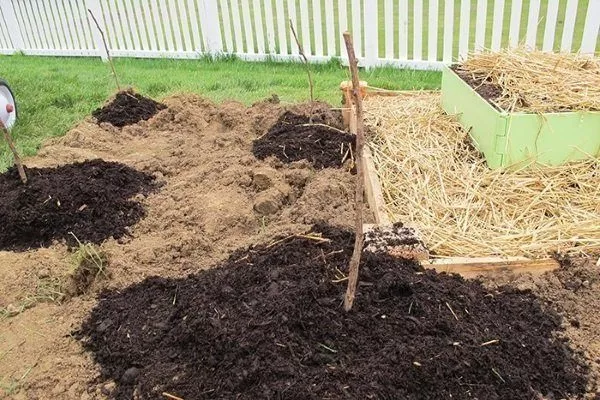
Common mistakes beginners make when planting for the first time
Planting mistakes that prevent you from getting a large harvest:
- The raspberries were planted too early. Once established, the seedlings have time to send up shoots. Once active, the plant may be damaged by the first frost, and its immunity will be weakened.
- Raspberry bushes thrive in a shaded area. Due to lack of sun, the plant stretches toward the light, its shoots thinning and failing to mature by the end of the season. As a result, some of the buds at the ends of the shoots freeze in winter.
- The raspberry bush is planted on clay soils where moisture stagnation occurs.
- The seedlings were poorly pruned during planting. The above-ground portions of the plants draw nutrients away, preventing rooting.
- The seedlings used were of poor quality – too old, with dry roots, with defects, traces of diseases (a description of raspberry diseases is written here), damaged by insects.
When to expect fruiting after planting?
Harvesting a crop the very first summer is one of the main advantages of fall planting. But to realize this benefit, the seedlings must be properly cared for. If the young plants suffer from water shortages, freeze during the winter, or are attacked by pests, the following year's harvest will be meager, or the raspberries will not produce any berries at all.
Conditions for obtaining a harvest next year:
- correct planting – healthy planting material, application of fertilizers, etc.;
- ensuring normal soil moisture;
- careful covering for the winter - in accordance with winter temperatures;
- treating the soil under the bushes with Karbofos - 10 ml per bucket of water (calculated for one bush);
- The soil is treated with a solution of copper sulfate to combat fungi and lichens.
If the seedlings survive the winter and receive proper care in the spring, the first berries will appear in July-August, depending on the ripening time of the variety.
The most difficult part of fall planting of any crop is choosing the right moment. If the raspberries bud before frost sets in, there's no chance of a harvest. Otherwise, planting raspberries in the fall is simple and involves a standard set of agricultural practices.