
Orbita is a mid-season raspberry variety. Gardeners love it for its large size and excellent flavor, high yields, and the bushes' resistance to frost, prolonged rains, and fungal infections. This variety is of interest not only to small home gardeners but also to large agricultural companies engaged in commercial berry cultivation.
History of the variety's development
Orbita is an achievement of domestic breeding. Its creator is G.D. Aleksandrova, representing the Leningrad Fruit and Vegetable Experimental Station. The progenitor of this new berry variety is the "Pride of Russia" raspberry.
Introduction to the variety
If you're planning to plant Orbita bushes in your garden, familiarize yourself with their description and technical specifications. This variety is popular among gardeners in the northwestern regions of Russia. It is distinguished by its resistance to winter cold (hardiness zone -4) and moisture, and is resistant to fungal attack.
Description of berries, bush, taste and purpose
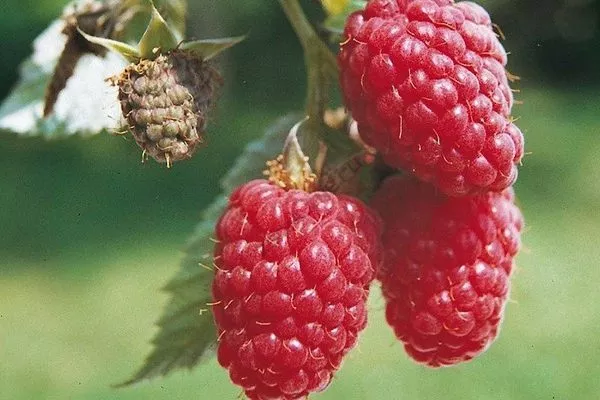
Plants of this variety are medium-sized, compact, upright, and semi-spreading. They possess the following distinctive features:
- height: 1.5 – 2 m;
- shoots: straight, characterized by a purple color and the presence of a waxy coating on their surface, devoid of pubescence;
- foliage: green, without gloss, wrinkled, with a jagged edge and a pointed tip;
- thorns: They are located along the entire length of the shoot.
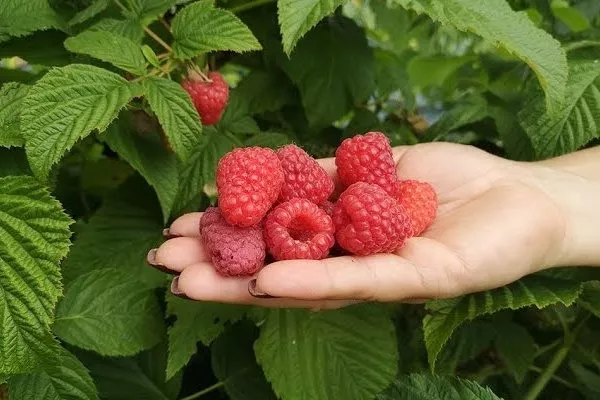
The Orbita raspberry harvest has a marketable appearance and excellent consumer qualities. Its fruits are characterized by the following characteristics:
- large size;
- weight - 3 - 4 g (with increased application of fertilizers the weight of berries reaches 8 g);
- wide, obtuse-conical shape;
- dense structure;
- deep red skin color;
- small seeds that are practically not noticeable when eating the berries.
The harvest of this garden variety is versatile. The fruits are eaten fresh or cooked into preserves, marmalades, compotes, and marmalades. Their dense texture makes them suitable for freezing, drying, and canning.
Ripening time
Orbita is a mid-season, non-everbearing raspberry. It produces a harvest once a year.
Its ripening period:
- mid-July - the first ripe berries appear on the bushes;
- The second half of July or the first days of August – summer residents carry out a mass harvest.
Thanks to the uniform ripening of the fruits and their dense structure, gardeners can harvest them mechanically. This does not affect the berries' marketability. The harvest is very shelf-stable and transportable.
Productivity
The variety is considered high-yielding. Indicators:
- Summer residents collect from 3.5 kg to 6 kg of raspberries from 1 adult bush per season;
- Farmers growing garden crops on an industrial scale receive 900 kg per 1 hectare of berry planting.
Features of cultivation
The Orbita variety's cultivation practices are standard. They differ little from the planting and care guidelines for other non-everbearing berry varieties.
A distinctive feature of this variety is that they don't require support due to their upright, medium-sized growth. They are not susceptible to fungal infections and rarely suffer from diseases. They are easier to care for than other raspberry varieties.
Selecting a site and landing
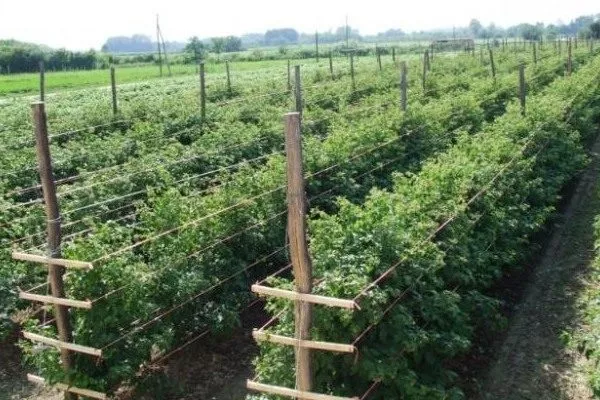
Select a plot in your garden for your raspberry patch, taking into account all the characteristics of the variety. The planting site should meet the following requirements:
- be well lit by the sun;
- reliably protected from gusts of wind by a fence, building or trees (note that the wind protection should not create a dense shadow, but only slightly shade the raspberry bushes);
- located on flat or slightly elevated terrain, and not in a lowland with close groundwater levels;
- located in the southern part of the garden;
- with soil: light, fertile, loose, breathable, sandy loam or loamy, with a neutral or slightly acidic reaction;
- where you previously grew garden crops such as dill, beans, garlic, onions, beets, carrots (it is advisable to allocate a plot for raspberries where green manure was previously grown: clover, alfalfa, vetch, lupine);
- not located in the place of former plantings of potatoes, peppers, tomatoes, eggplants, strawberries and physalis (crops are considered poor predecessors for raspberries).
Prepare the area for growing Orbita raspberry bushes in advance, 14 days before planting. Follow these steps:
- dig the soil to a depth of 30 cm;
- remove weeds along with the roots;
- remove plant debris from the area;
- Add organic fertilizers such as mullein or humus.
Plant raspberries in bushes, following the following pattern:
- the distance between planting holes is 0.6 m;
- between rows - 1.5-2 m.
Dig holes measuring 0.5 x 0.5 m. Line the bottom of each hole with a layer of drainage material and a mixture of humus and wood ash. Place the seedling in the hole. Carefully fill the hole and its roots with soil. Tamp the soil around the trunk. Water the planting. Mulch it with non-acidic peat.
Watering and fertilizing
The Orbita berry variety is a moisture-loving plant. It responds well to ample watering. Irrigate several times per season, using up to 5 liters of water per plant:
- before the bushes bloom;
- during the period of berry setting;
- in October (carry out moisture-charging irrigation, using 20 liters of water per bush).
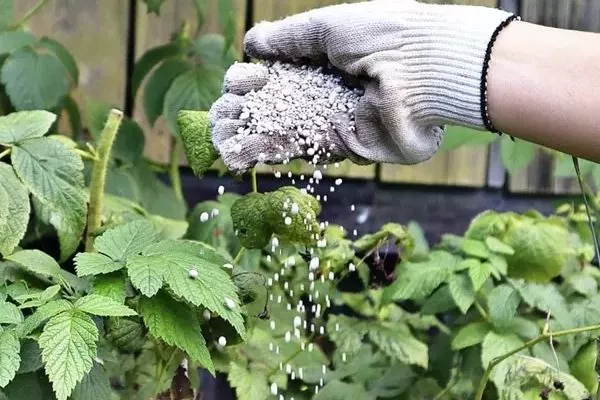
This variety requires additional nutrition. Don't neglect feeding if you want to get plenty of large, tasty berries. Fertilize your raspberry patch according to the following schedule:
- in the spring, apply nitrogen-containing compounds;
- at the time of flowering of bushes and formation of fruit ovaries - mineral complexes rich in potassium, nitrogen and phosphorus;
- after harvesting berries - phosphorus-potassium mixtures;
- at the end of the growing season - phosphorus preparations.
This berry crop responds well to organic fertilizer. In spring, water it with a solution made from rotted manure (1:10) or bird droppings (1:15). Fertilizing with urea is also acceptable (60 g per square meter).
Tying up
The Orbita raspberry variety is easy to grow in a garden plot. It doesn't require support or trellis tying, making it much easier to care for.
Trimming
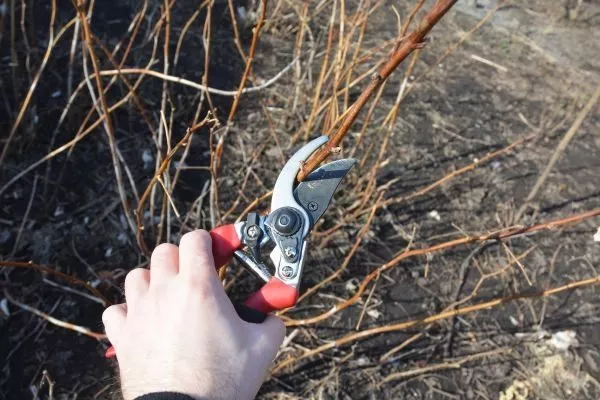
Fruit-bearing branches on this variety of raspberry bushes develop over the course of two years. In the first year, buds on the rhizome produce one-year-old shoots, which produce berries the following year. After the harvest, the shoots die back. Raspberry bushes require regular pruning to encourage the growth of new productive branches.
Prune berry crops twice per season:
- remove fruiting two-year-old shoots immediately after harvesting (be sure to complete the procedure before the first frost);
- In early spring, prune the bushes to form replacement branches, remove all dry, frozen, diseased and damaged shoots.
When pruning raspberries, follow the rules and recommendations of experienced gardeners:
- use sharp and disinfected instruments;
- shorten shoots to healthy tissue;
- When pruning, focus on the outer bud to prevent branches from crossing;
- cut dead, infected and weak branches to the base at the ring, and then burn them outside the area;
- Make cuts even and smooth, do not allow the stumps to split;
- Cover the cuts with garden pitch.
Frost resistance and preparation for winter
The Orbita raspberry was bred specifically for cultivation in the northwestern regions of the country, characterized by a cold climate. It is characterized by excellent winter hardiness. During heavy rainfall, the bushes do not require shelter. A layer of snow is sufficient to insulate the roots.
Young seedlings need to be prepared for winter in their first year. Follow these step-by-step instructions:
- Bend one-year-old shoots to the ground to prevent them from freezing.
- Sprinkle the root area with mulch (10 cm layer).
- Cover the raspberry patch with agrofibre.
- Throw a snowball at him.
Diseases and pests
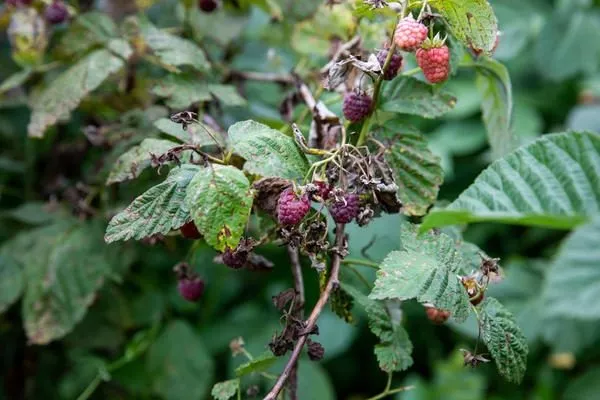
This variety is resistant to major garden diseases, particularly fungal infections. With proper cultivation practices, its bushes are disease-free and undamaged by harmful insects.
Unfavorable growing conditions and improper care are the main reasons for raspberry bushes being affected by rust and pests:
- raspberry-strawberry weevil;
- spider mite.
Timely pruning, weeding, loosening, and preventative treatments will help you avoid diseases on your raspberry bushes. Remember that the use of chemicals is prohibited during the fruiting period.
Reproduction
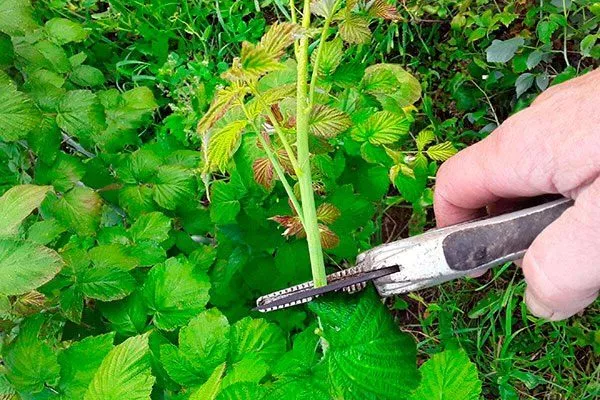
Propagate Orbita bushes using one of three available methods:
- through young growth;
- dividing the bush;
- root cuttings.
To propagate using young shoots, follow these steps:
- Select the healthiest and strongest shoots.
- Separate them from the mother plant along with the soil lump.
- Place the resulting planting material into pre-dug holes or trenches.
By dividing the bush, you can rejuvenate the parent plant. Follow these steps:
- Choose the most abundantly fruiting bush, not damaged by pests and showing no signs of disease.
- Divide it into several parts, leaving 3-4 shoots in each of them.
- Plant the cuttings in your garden. They will grow rapidly and produce their first fruits by the end of the season.
Propagate raspberries using root cuttings step by step:
- Dig up a large root from a healthy, strong plant. It's about the thickness of a pencil.
- Cut the root into 15-20 cm cuttings, leaving 2-3 live buds on each.
- Cover the cuttings with soil, applying a layer 5-7 cm thick.
- Place them in a greenhouse to germinate or cover them temporarily with film.
- When shoots appear from the buds in the fall, transplant the cuttings to a permanent location.
If you're propagating berry plants in the fall, place the prepared cuttings in containers with fertile soil and store them in the basement. Water them occasionally during the cold season. In the spring, move the containers to a greenhouse or yard, covering them with plastic to speed germination.
What are the pros and cons?
Gardeners love the domestic Orbita variety for its many advantages, such as:
The variety is not without its drawbacks:
Reviews
The domestically bred raspberry variety Orbita delights gardeners with its large, sweet-tasting berries and high yield. Its popularity is growing year after year. This is due to the bushes' resistance to pests and diseases, their winter hardiness, and their tolerance to prolonged rainy weather.