
The Orange Miracle raspberry is everbearing, meaning it can produce fruit repeatedly throughout the growing season. This variety also boasts an unusual coloring—bright yellow with orange accents. It has impeccable characteristics, but only moderate drought tolerance. It is easy to grow.
History of the variety's development
I. V. Kazakov's successful breeding at the Bryansk Region All-Russian Scientific Research Institute of Raspberry and Crop Breeding (VSTISP) gave birth to the Orange Miracle variety, which, like many other raspberry varieties, was made possible by his hard work. This relatively young variety, registered in the State Register only in 2009, is suitable for cultivation throughout Russia.
Introduction to the variety
To understand whether this variety is worth planting on your own plot or on an industrial scale, be sure to familiarize yourself with all of its characteristics.
Appearance of the bush
The shrub is considered tall, but its crown is moderately spreading. Orange Miracle also has other varietal characteristics:
- height - 180-200 cm;
- type of shoots – upright, slow growing, which eliminates the need for frequent pruning by the gardener;
- number of replacement branches per season – 5-7 pcs.;

- crown – compact;
- studdedness – multiple, but medium-sized spines, initially soft green, later hard brownish-brown;
- leaf blades – deep green in color, with a wrinkled surface and small serrations on the edges;
- branches – thickened, with a slight waxy coating and light fuzziness.
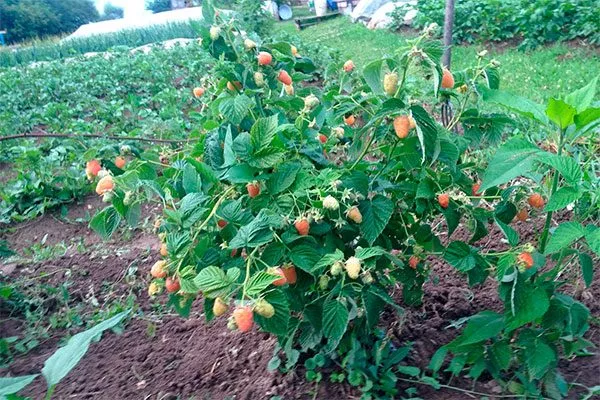
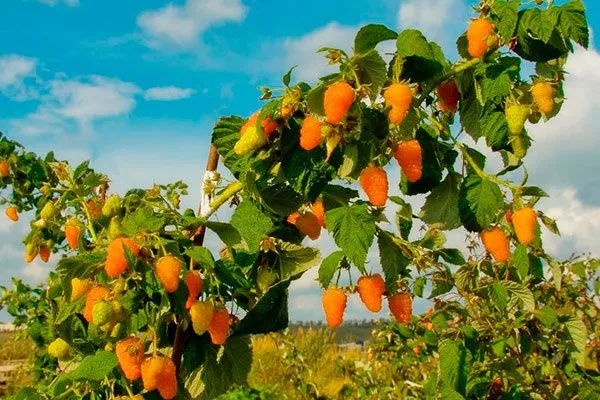
Berries and their taste qualities
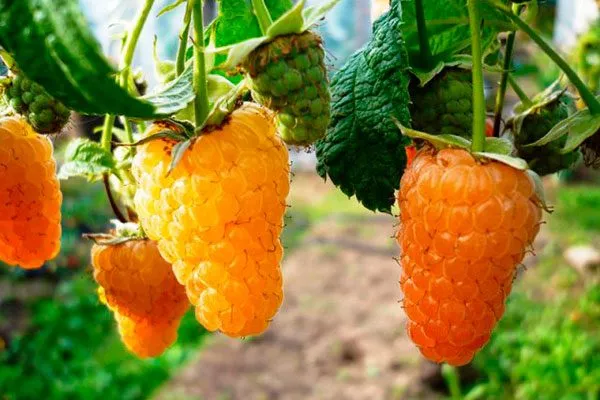
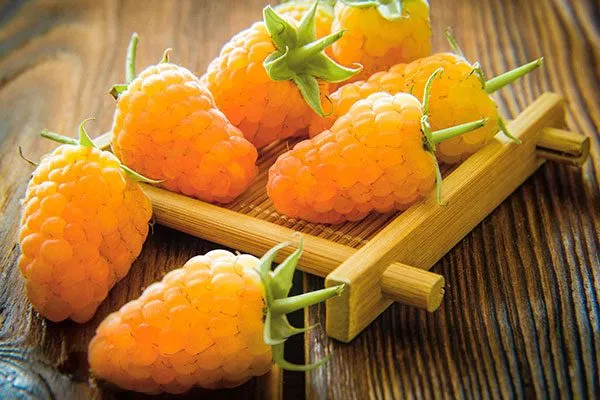
The large fruits have a glossy surface, but a velvety appearance. Consumers are most impressed by the rich orange-yellow hue, reminiscent of the sun. The variety can also be identified by other distinctive features:
- parameters: about 3-4 cm in length, weight 5-8 g, but under the most favorable growing conditions berries up to 12 g are formed;
- If the site is located in the sunniest areas, the color may acquire a pinkish tint, and in cloudy summer weather – light yellow;
- the pulp is dense, due to which the drupes do not crumble during harvesting and storage, even when overripe;
- the shape is elongated-conical with a rounded tip;
- aroma – not very strong;
- The bones are small and almost imperceptible.
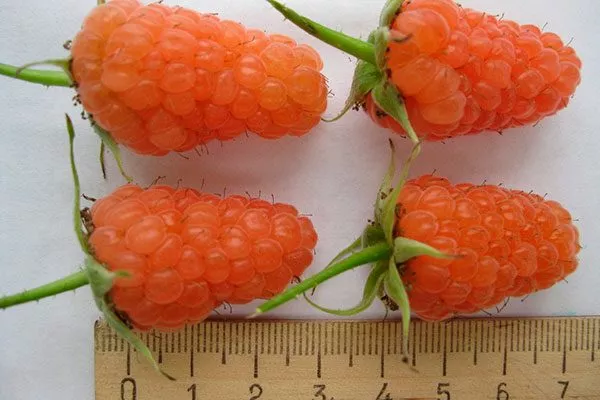
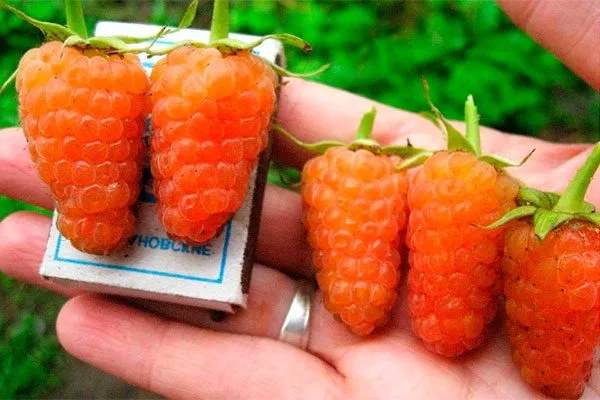
The taste qualities deserve special attention, as they depend on current weather conditions:
- if the summer is hot and sunny, the berries absorb all the sweetness;
- If the season is cool and rainy, the fruits become more sour.
Features of fruiting, harvesting time and yield
Orange Miracle is a mid-season variety, but its fruiting period is extended. These characteristics likely account for its limited use in commercial horticulture.
Subtleties of fruiting:
- The ripening of the fruits of this variety begins at the end of July and continues until the first autumn frosts.
- The first crop of Orange Miracle is ready for harvesting from July 8-10, while the second crop can be harvested from August 18-20 until the onset of cold weather.
- It is distinguished by its productivity – up to 2.2-2.6 kg of berries can be collected from each bush per season.
Features of cultivation
Orange Miracle prefers to grow in a brightly lit and elevated area, where it will be located at a significant distance from groundwater (at least 150-200 cm deep).
The variety has moderate drought tolerance and does not require external pollinators during the flowering period.
There are two methods of planting: with an open or closed root system:
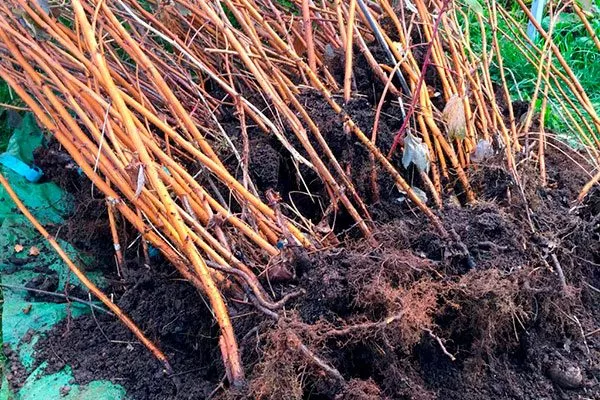
- Raspberry seedlings with open root system – These are plants grown outdoors and temporarily protected with plastic film. When choosing, look for the presence of white roots. This indicates recent digging. These seedlings are less expensive, but their survival rate is below average.
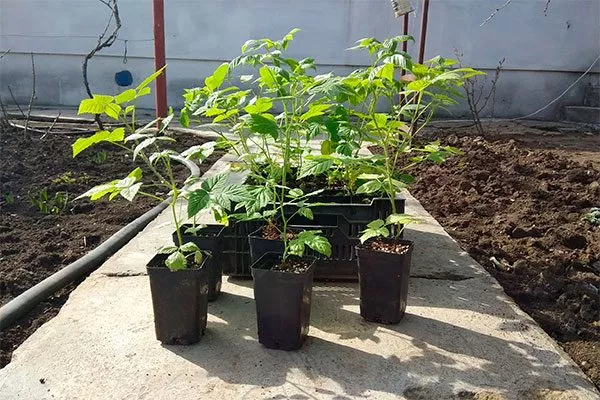
- Seedlings with a closed root system - They are propagated in containers and sold with a large piece of soil. If the soil doesn't fall apart or crumble when pulled out, and the roots remain intact, then the planting material is of good quality. These seedlings are more expensive, but they root quickly.
Planting methods
A gardener must not only understand the characteristics of the Orange Miracle raspberry variety, but also master various methods of planting it in open ground, each of which has its own specific features.
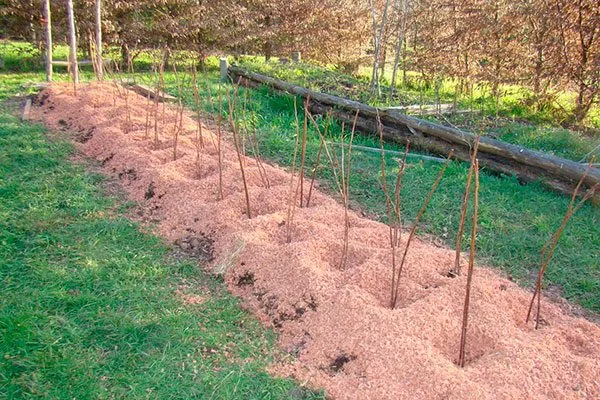
- Rows. This method, also known as strip or trench cultivation, is recommended for growing in large areas. Planting bushes in trenches makes their subsequent maintenance easier. With proper fertilizer distribution, yields increase significantly.
The disembarkation procedure includes the following stages:- Select a suitable area and mark the boundaries. The distance between rows of seedlings should be up to 1.5 m.
- Place a drainage layer at the bottom of the trench and add the necessary fertilizers, excluding chemicals. It's beneficial to feed the seedlings with organic matter, such as compost.
- After planting the plants, compact the soil surface and water it carefully.
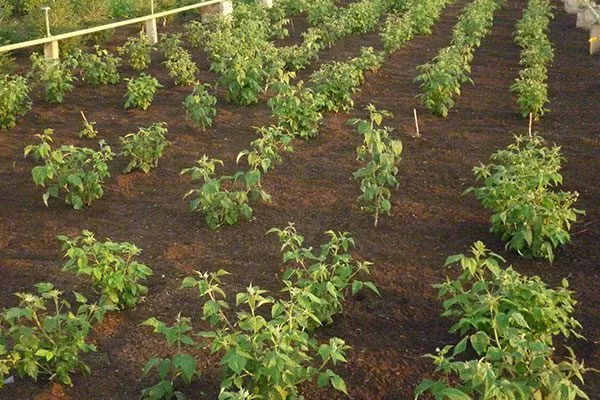
- Bush system. This method is used by many gardeners due to its simplicity and functionality. The space between planting holes should be at least 70-80 cm to ensure sufficient space for easy passage between rows.
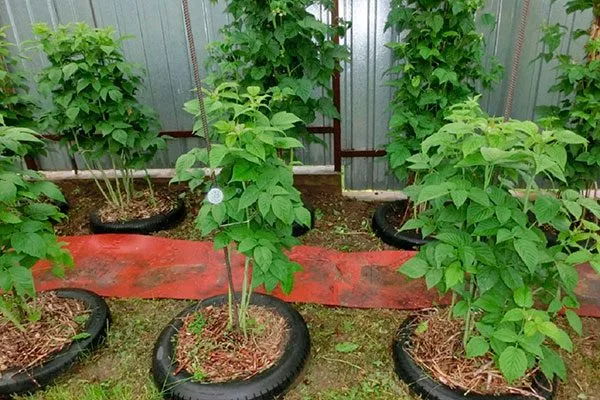
Fertilizer is added to each hole and a layer of fertile soil is added. It is recommended to install 40-50 cm high posts next to the planting rows, to which the seedlings are then tied. - Alternative methods. Raspberries are grown in tires or other containers that prevent the plants from spreading quickly throughout the garden. There's also a unique method of growing raspberries on logs, which are periodically replaced with fresh ones when the old ones begin to rot.
The process of planting seedlings
Orange Miracle isn't picky about soil, but for best results, choose loamy soils with a pH no higher than 6. If the pH exceeds this level, the berries may be small and lack full flavor.
Soil preparation for planting raspberries begins a month in advance. The following fertilizers should be added to the soil:
- potassium sulfate – 50 g;
- superphosphate – 20 g;
- compost or humus – up to 10 kg.
Features of planting seedlings:
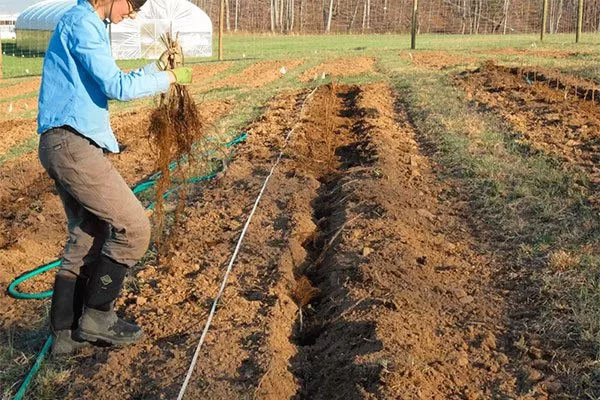
- When planting bare-root orange raspberries, first shorten the roots and then reduce the shoots by a third.
- Pits or trenches – 40-50 by 50-60 cm in size.
- Place the seedling in the dug hole, holding it upright, and carefully distribute the roots inside. When filling with soil, the root ball should be completely covered, including the buds, but do not bury the root collar—it should remain at ground level.
- After planting, each seedling requires 20-30 liters of water.
- To retain moisture and prevent crusting, which can block airflow, apply a mulch layer of humus or compost. In the fall, you can use sawdust or dried leaves.
Care instructions
Care procedures do not take much time and effort - it is enough to follow standard schemes, but also adhere to the varietal characteristics.
Trimming
Raspberries can be pruned using two methods:
- To harvest two or three crops, prune all shoots at the base of the bush in the fall. This will ensure fresh growth the following year, which will then produce berries.
- If you are satisfied with one harvest, then shorten all two-year-old shoots in the fall or spring, leaving only those branches that sprouted in the current season.
It's important to remember to perform sanitary pruning. Perform this from early spring to fall. This includes removing dying or dead branches, as well as excess lateral shoots that clutter the bush.
Watering and fertilizing
Orange Miracle does not tolerate dryness, so regular watering is essential, taking into account the soil moisture level. To ensure healthy growth of young branches and the formation of flower clusters, begin watering immediately after the spring melt or rain has evaporated.
Features of top dressing:
- In the spring, plants require nitrogen-rich organic compounds, such as chicken manure or mullein, which helps improve the quality of the bush.
- Before the flower stalk buds, add mineral complexes, potassium sulfate, compost and wood dust, which will have a positive effect on the quality of the fruit.
Mandatory garter
Because the shoots of this variety are weak and prone to bending under the weight of the berries, they require additional support. The easiest way to provide this is to install a trellis. Drive wooden or metal supports into the soil at regular intervals. String wire between them in two or three tiers.
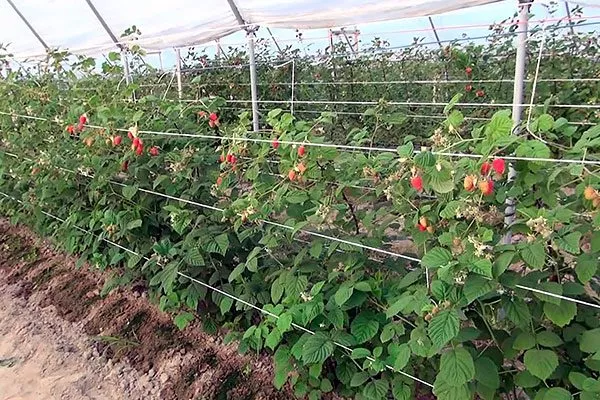
As the bushes develop, they are tied down. This approach not only provides support but also significantly simplifies the berry harvesting process.
Collection and storage
It's best to pick the berries early in the morning or late in the evening. If it rains before picking, postpone the process until the berries have dried, as wet berries spoil very quickly. For storage or resale, pick the berries with the stems attached. Immediately after picking, pack them into containers for storage or transport.
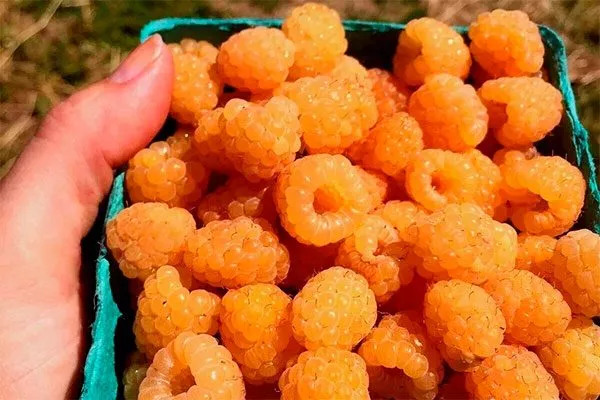
At room temperature, raspberries can be stored overnight; in the refrigerator, they retain their quality for up to 5 days, and when frozen, for a longer period.
Frost resistance and preparation for winter
When stems are removed in the fall, the root system remains intact and can easily withstand temperatures down to -20 degrees Celsius. To protect it over the winter, apply a thick layer of mulch, which can be made from peat or dried leaves from shrubs and trees. Combined with snow cover, this provides reliable protection even for young roots. After the snow melts, carefully remove the mulch.
Carefully bend the unpruned shoots to the ground, secure them with metal staples, and cover them with boards. Then, lay leaves, spruce branches, or covering material over them.
Diseases and pests
Orange Miracle boasts high disease and pest resistance, which is typical for standard raspberry varieties. Its high resistance to fungal diseases makes this variety especially valuable in high-humidity conditions. However, plants can be susceptible to aphid attacks, stem gall fever, and raspberry beetle.
To prevent pests, take preventative measures, including treatment with Bordeaux mixture or copper sulfate. Prevention also includes:
- regular removal of weeds and fallen leaves;
- digging the soil;
- removing excess shoots.
Plant a bed of garlic next to your raspberries; its aroma will not only help control the spread of young raspberry shoots, but will also reduce the likelihood of disease or pests.
Reproduction
Orange Miracle is propagated by dividing the bush or by shoots that appear from the root system.
Pros and cons of the variety
The Orange Miracle raspberry has earned a reputation in the gardens of our domestic gardeners thanks to its undeniable advantages:
Disadvantages of everbearing raspberries
Review of reviews
The Orange Miracle raspberry is renowned for its excellent yields, repeated fruiting, unique color, and ease of cultivation. The key is to strictly monitor the moisture level around the trunk to prevent the roots from drying out due to lack of water or rotting due to excess water.