
A good raspberry harvest can only be achieved if gardeners can prevent diseases and pests from appearing on their beloved bushes in a timely manner. However, if pests cannot be avoided, effective measures must be taken to eliminate the problem. Read on to learn about the most common raspberry pests and diseases, as well as control methods.
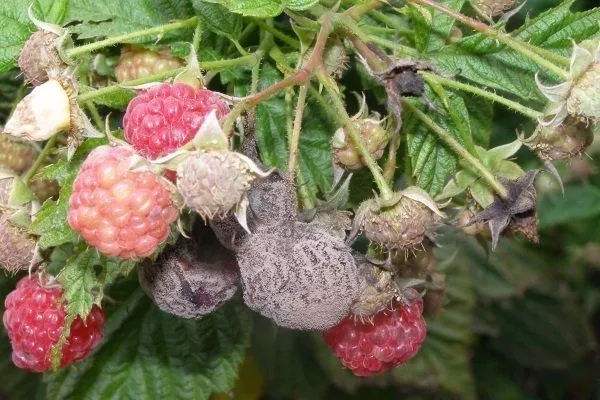
Raspberry pests
Today, several dozen insects (aphids, leafhoppers, glassworms, raspberry flies, etc.) can be identified among raspberry pests. However, even experienced gardeners and vegetable growers don't know how to properly and effectively combat them. Frequent use of chemicals causes the berries to absorb them, making them unsafe to eat.
To learn how to deal with insects, it's important to understand their nature and weaknesses. After all, their appearance is often triggered by an abundance of weeds or poor plant care.
| Name | Adult size | Period of activity | The main damage |
|---|---|---|---|
| Raspberry beetle | Small | From the beginning of flowering to harvest | Absorption of berries and leaves |
| Raspberry bud moth | 9-12 mm | March – the first flowers appear | Damage to buds and flowers |
| Raspberry and strawberry weevil | Small | May - June | Damage to buds |
| Ticks | Microscopic | May - August | Wilting of leaves and fruits |
| Raspberry fly | Up to 7 mm | Spring - summer | Death of young plants |
| Raspberry stem or shoot midge | 1-2 mm | End of August | Death of a bush |
| Raspberry glasshouse | Small | July | Damage to stems |
| Leafhopper | Small | All season | White bloom on leaves and fruits |
Raspberry beetle
Poor maintenance and the presence of various weeds around and near raspberry bushes can lead to the appearance of the raspberry beetle. Commonly known as the "raspberry beetle," it is small in size and has a hairy, brown covering.
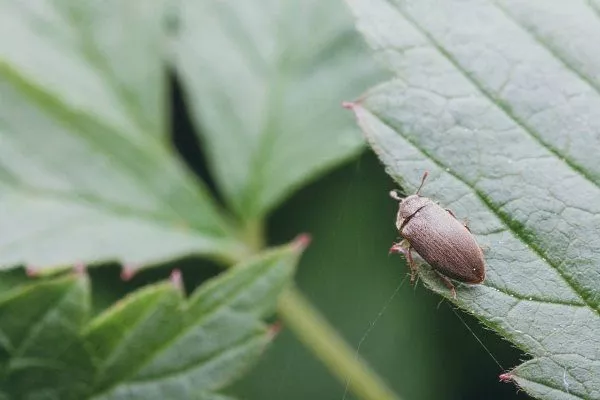
Getting rid of it isn't easy, but it's possible if you prevent the larvae from spreading early. They first appear in the soil at a depth of no more than 10 cm, where weeds sprout. Once the beetle larva gains strength feeding on pollen, it moves on to a more desirable target: a raspberry bush.
The beetle first consumes the berries closest to the ground. Therefore, if a gardener notices small holes in the berries or small bugs on the leaves, it's time to sound the alarm. It's easiest to get rid of the beetle before it gains strength. This pest can ruin over 15% of the harvest.
However, this isn't the only danger of the raspberry beetle. Damaging leaves and fruit forces the plant to regenerate them, which can lead to a reduction in berry yield in the future. Furthermore, the beetle can preserve its larvae, so the attack can carry over into the following season.
Raspberry bud moth
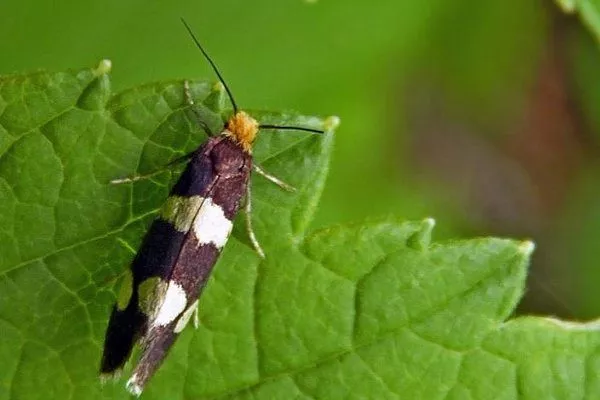
The raspberry bud moth is easy to recognize – it's a small insect, distinguished primarily by its yellow head. Its coloration alternates between yellow and black stripes. The adult caterpillar measures 9 to 12 mm and has a red tint.
The insect can survive the winter, so if it's not eliminated immediately, the pest will continue to ruin the harvest the following season. The caterpillar emerges as early as early March, with the arrival of the first warm weather, and the butterfly emerges with the appearance of the first flowers.
Raspberry and strawberry weevil
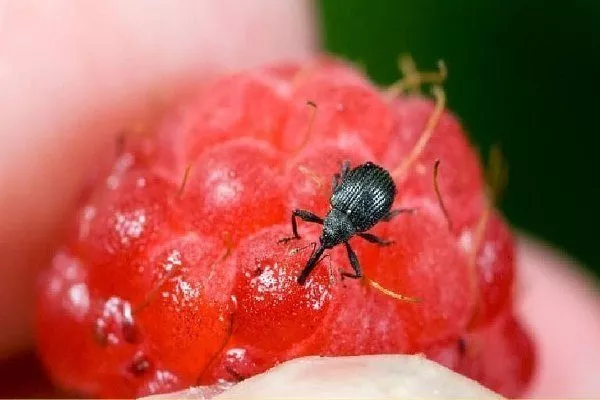
A small, black, long-nosed beetle attacks raspberries during the flowering stage. Its elongated beetle allows it to extract precious nectar. After its activity, the berries may not appear. The larvae are most active during a short period from May to June.
Early varieties are at risk:
- raspberries;
- strawberries;
- blackberries;
- dogwood.
It's best to get rid of the pest while the plant is still in bloom, as the larvae are weakened and not fully formed. Signs of the beetle's presence include small punctures and black spots on the leaves and buds.
Ticks
Mites attack shrubs in all regions, wherever berries grow. The leaf-bud mite prefers temperate climates, with greenhouses and small hotbeds at risk. The mite thrives in damp and humid conditions, so protected plantations require adequate ventilation.
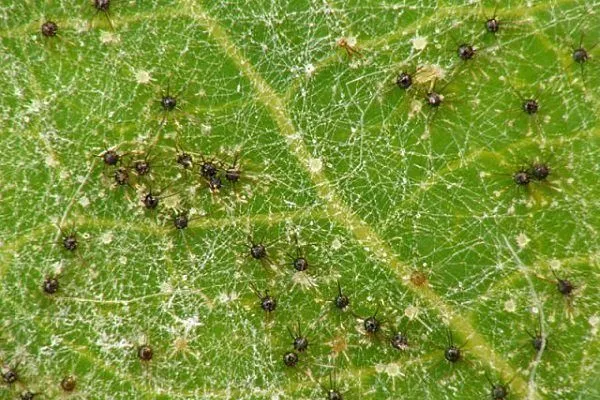
The insect is difficult to detect; its activity often disguises itself as leaf mosaic. The first signs of the mite are visible by May. Small, bright specks appear on the leaves. The result of its activity:
- Leaves and fruits noticeably decrease in volume.
- Leaves begin to wither and fall as early as July.
- If left untreated, the bush dies by August.
The main danger of spider mites is that they can be carried around the garden by the wind. Eliminating them in one area will only cause them to reappear in another. In this case, a comprehensive pest control program is necessary.
Raspberry fly
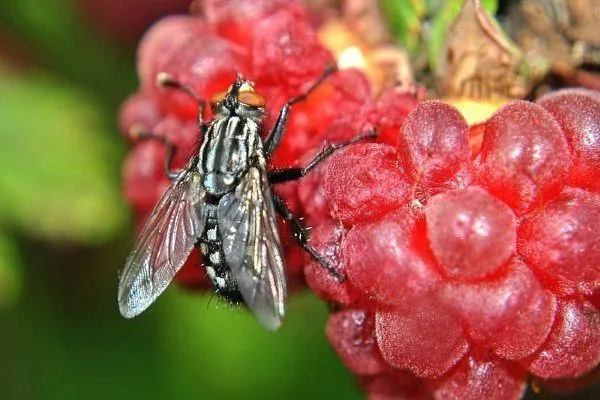
It often appears near young berry bushes. In appearance, it resembles a common midge, with its body no more than 7 mm long. It first attacks the stem of the young plant, leading to the death of the entire bush. After the young plant is destroyed, it lays 5 mm-long larvae on areas of the mature plant.
The insect can withstand significant temperature drops while dormant, so it's important to combat the pest immediately. For best results, use chemical pollination and medicinal treatments before flowering.
Raspberry stem or shoot midge
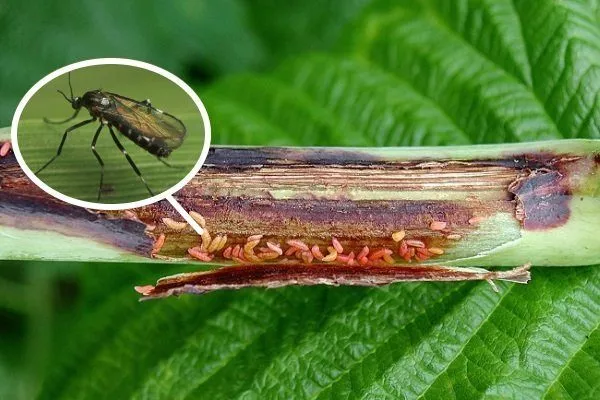
It's difficult to notice this pest due to its small size (1-2 mm). Therefore, the problem can only be recognized by the plant's external signs of illness. The pest's main characteristic is that it lays eggs in areas where there is minor damage. Often, the stem is at risk, leading to the death of the entire plant.
The insect appears in late August and can be detected by premature leaf fall. The only way to control it is to prune away the affected areas, as the insect can survive the cold.
Raspberry glasshouse
Commonly known as the "garden worm," the main difference is its blue wings. It is very similar to the raspberry moth, distinguished by its elongated body. Females have only three alternating yellow and black stripes. They are the main and most dangerous pest, as they lay over 100 larvae in the stem and soil. They appear on damaged raspberry branches.
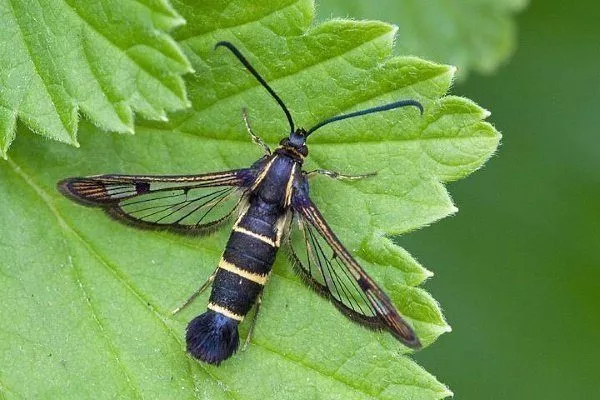
The insect usually appears in July.
Leafhopper
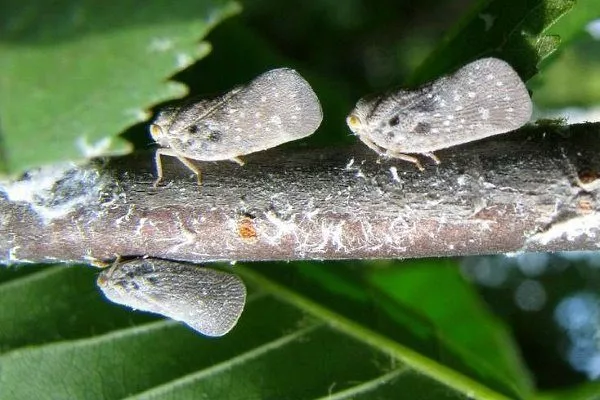
One of the most common raspberry pests is the white leafhopper. This insect can destroy entire crops and bushes in a single season. Its presence is easy to detect; a white coating appears on the leaves and fruit. The main difference is that if it appears on one crop, the entire garden will be infested within a short period.
Scientists annually sound the alarm about the increasing leafhopper population. Therefore, it is essential to prepare control measures in advance. It frequently attacks crops such as:
- apple;
- figs;
- raspberry;
- pear;
- gooseberry;
- currant.
Raspberry diseases
Raspberry diseases are no less dangerous than pests. Often, it's the bush's disease that triggers insect infestations. To avoid completely destroying your crop, it's important to know about the most common raspberry diseases.
| Name | Type of disease | Main symptoms | Period of activity |
|---|---|---|---|
| Verticillium wilt | Fungal | Curling and discoloration of leaves | All season |
| Didymella or purple spot | Fungal | Dark spots on leaves and stems | July |
| Anthracnose | Fungal | Small holes on the leaves | All season |
| Canker spot | Fungal | Gray spots on the stem | All season |
| Raspberry rust | Fungal | Yellow tint of leaves | All season |
| Root rot or late blight | Fungal | Sticky and wet stems | All season |
| Gray mold or botrytis | Fungal | Gray spots on young leaves | Rainy season |
| Root cancer or goiter | Infectious | Growth on the stem | All season |
| Raspberry leaf curl | Viral | Curling and yellowing of leaves | All season |
| Growing raspberries | Viral | More than 200 shoots on a bush | All season |
Verticillium wilt
The disease is difficult to detect due to the multifaceted nature of its symptoms. The main cause is damage to the root system. This can be caused by both the larvae of dangerous pests and the gardener's own carelessness.
The first sign of the disease is leaves curling and losing color. This can easily be confused with overwatering. Verticillium wilt is caused by a fungus. Treatment should be prompt, as the fungus can spread to healthy plants.
Didymella or purple spot
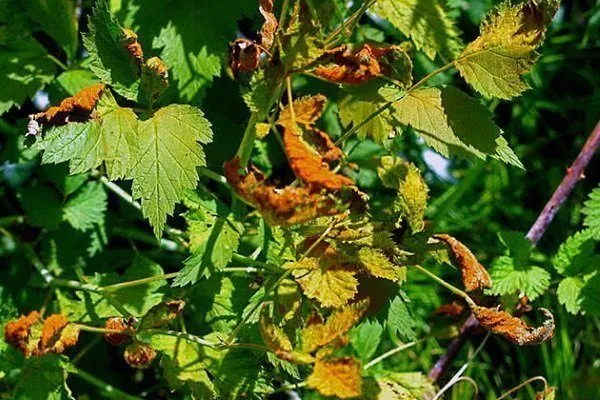
The disease is common in areas with frequent rainfall or dampness. Plants can also become infected in a protected greenhouse or hothouse. It spreads quickly, but is easy to spot. The first sign is the appearance of dark spots on the leaves, followed by spots on the stems.
Peak activity occurs in July. The disease first attacks older leaves and then spreads to younger ones. If left untreated, the disease will spread to other crops within a few months.
Anthracnose
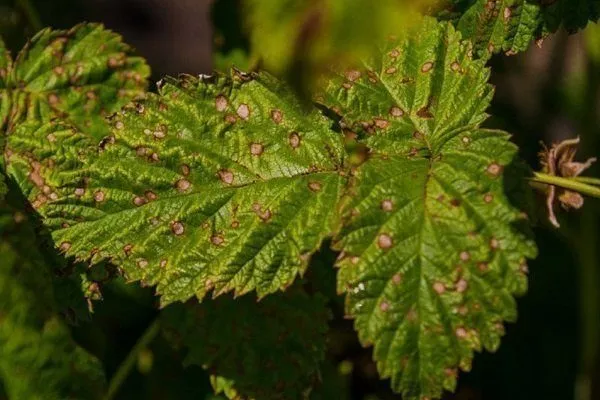
A dangerous fungus that spreads quickly through wind and insects. If the disease has been noticed on other crops, treatment and preventative measures will be necessary for all plants. The first sign of the disease can be detected visually: the appearance of small holes in the leaves indicates the presence of the fungus.
When working with plant chemicals, gardeners should wear a respirator, as inhaling the chemicals can cause an allergic reaction. Plants at risk include:
- cucumbers;
- grape;
- raspberry;
- potato;
- melon.
Canker spot
Not only raspberry bushes but also roses are at risk. Therefore, if an affected crop is growing in the area, the disease will spread. In this case, gardeners must take a number of preventative measures to stop the spread.
Canker spot manifests itself as gray spots on the stems of young plants. Over time, these spots harden, leading to infection of the entire stem and death of the plant. The only reliable solution in the early stages of the disease is to remove the affected parts and burn them.
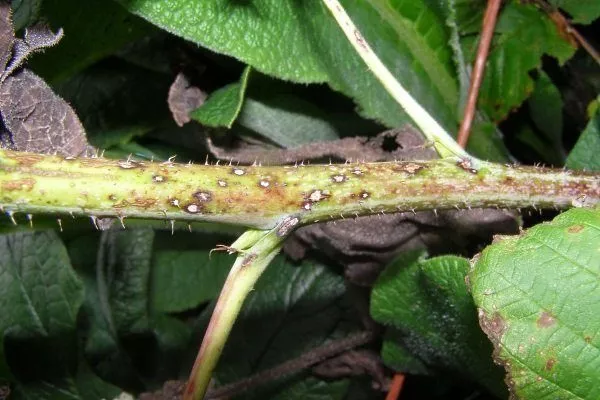
When working with an affected plant, you must wear gloves.
Raspberry rust
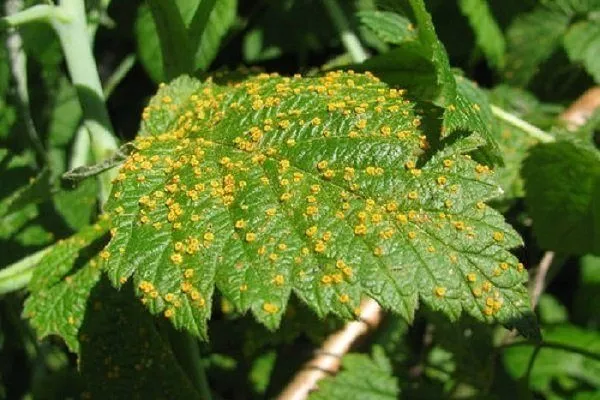
Raspberry rust is one of the most widespread diseases, affecting all areas. Ignoring it is unavoidable, as an infected bush will no longer produce a harvest. Gardeners will have to dig it up and burn it. Furthermore, the disease is contagious to other crops.
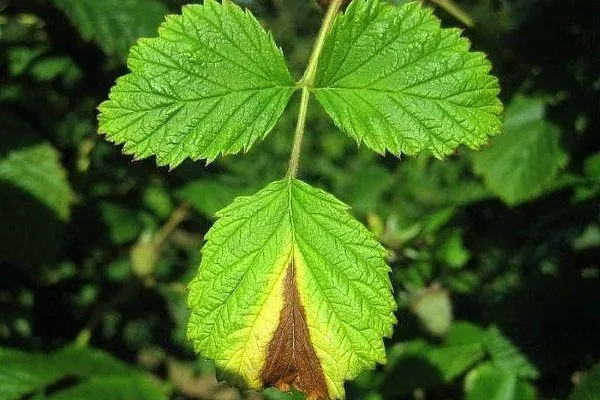
The disease is easy to identify; the first signs are visible on young leaves. They take on an unusual yellow tint. Yield and berry size decrease as the plant struggles to regenerate its leaves.
Root rot (or late blight)
Root rot is an unpleasant disease that's difficult to detect, as its symptoms are similar to a number of other illnesses. Causes include:
- Damage to roots when removing pests.
- Poor watering and over-saturation of the soil.
The main disadvantage of this disease is that it quickly destroys the plant if left untreated. It can only be detected by visual inspection of the soil. If the plant is located in a hole or lowland where rainwater collects, watering should be limited and the soil should be allowed to dry out.
The first symptoms indicating the disease are sticky and damp stems. Root rot is a fungal disease that can spread to other crops.
Gray mold (or botrytis)
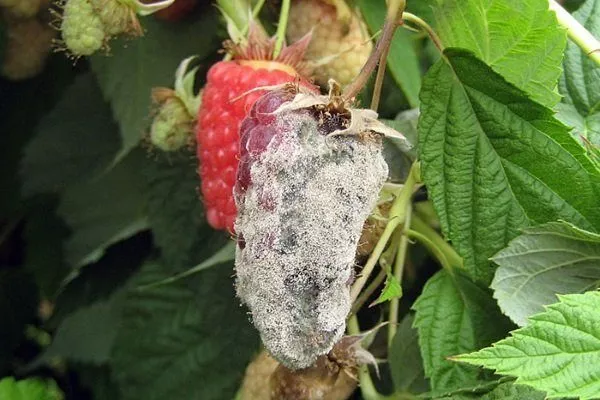
Gray mold is a fungal disease transmitted through spores from an infected plant. If there is even one infected plant in your garden, it must be treated immediately. The disease spreads quickly and often affects chrysanthemums and roses. Therefore, if you have a raspberry patch nearby, it should be treated in advance.
The main difference from other diseases is the presence of small gray spots on young leaves. It often occurs during seasonal rainfall. Removing mold is only possible with proper agricultural practices.
Root cancer (or goiter)
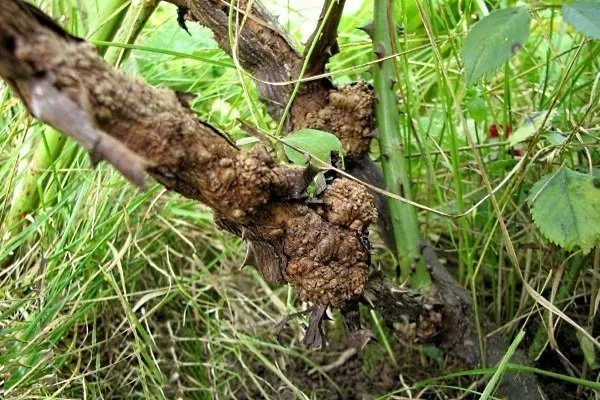
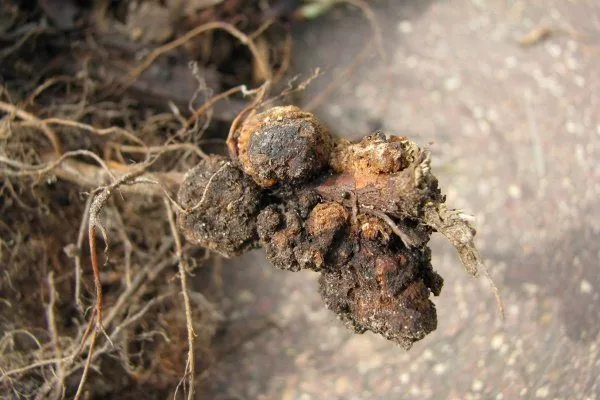
An infectious disease that annually affects various raspberry varieties. It's easy to spot; just look at the roots of the plant. The growth appears closer to the stem and, in its early stages, is small and shaped like a sawed-off egg.
The plant must be treated immediately, as the cancer is easily transmitted through tools and unwashed hands. If left untreated, the plant will die completely by the end of the season.
Raspberry leaf curl
Raspberry leaf curl is a dangerous viral disease that causes the leaves to wrinkle and curl; over time, their edges turn yellow, become dry, and become brittle.
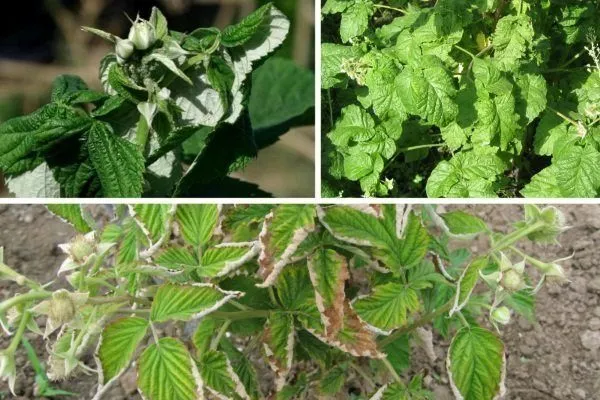
If left untreated, gardeners will have to dig up the entire raspberry bush and burn it by July. The disease easily spreads to neighboring crops, so if you value your harvest, it's best to treat it early.
The disease often appears on plants that are not properly cared for. This may be due to an unsuitable location for the raspberry patch, or a lack of watering and fertilizing.
Growing raspberries
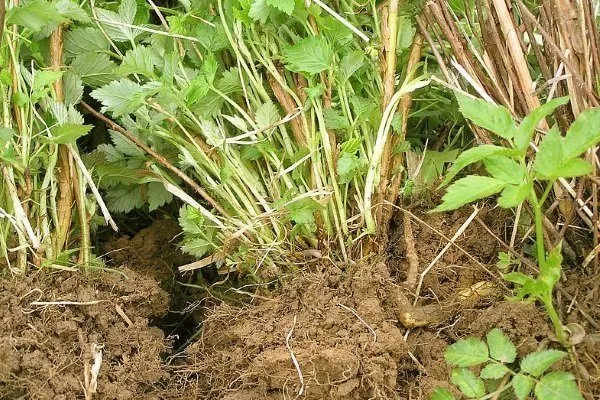
Raspberry regrowth is commonly known as "witch's broom." Identifying the disease is easy; a single young raspberry bush can produce over 200 shoots. The root system is unable to withstand this strain and provide the young shoots with all the nutrients they need.
Even if the bush survives the nutrient deficiency, the yield will be low and puny. However, bushes affected by this disease can live up to 10 years. Therefore, several important points should be noted:
- A seemingly healthy green bush will produce a minimal amount of harvest, which will lead to labor inefficiency.
- If you remove a diseased plant and do not treat the soil, the new plant will definitely inherit the disease.
How to get rid of raspberry diseases and pests?
Effective and timely treatment of your favorite plant will not only preserve the harvest but also save other crops from extinction. To achieve this, gardeners need to choose the right product to combat natural and insect threats.
Whether to choose a folk remedy or a professional one is a decision the property owner must make. However, before making a decision, it's important to familiarize yourself with all the nuances.
Chemicals
Chemicals are effective, but using them for treatment after the first fruits have appeared is not recommended. Often, poisoning from favorite berries and fruits is the result of untimely treatment.
The desire to save the plant and crop from destruction leads to the improper use of chemicals. Experts recommend using chemicals as a preventative measure even before flowering. It's best to treat the stems and soil, avoiding the foliage.
After harvesting, experienced gardeners recommend using stronger treatments to get rid of known pests. Here's a short list of effective treatments:
- Fufanon;
- Fitosporin;
- Vitaros;
- Topsin-M.
These products help eliminate fungus, larvae, and root diseases. Raspberry plants should be treated in early spring and late fall.
Folk remedies
Folk remedies are effective if the plant needs immediate help and chemicals are prohibited. Even a light spray of baking soda will get rid of a wide range of insects. And treatment with tobacco tincture will repel flies and cicadas from the raspberry patch.
- ✓ Using tobacco infusion to repel cicadas and flies.
- ✓ Treating plants with a wood ash solution to prevent fungal diseases.
- ✓ Spraying with a soda solution against a wide range of pests.
Using wood ash will prevent the formation of fungus and mold. Even a small amount of manganese can help prevent infestation and the spread of a number of common diseases.
Folk remedies are gentle on fruits, so their use won't impact the gardener's health. Many people also choose folk remedies because they are readily available and inexpensive. For example, wood ash can be found in almost any garden.
Preventive measures
Compliance with agricultural practices will help prevent the occurrence of diseases and insects:
- proper watering;
- weed removal;
- regular feeding;
- the right choice of location for raspberry patch.
This is just a small part of the preventative measures that will help get rid of 70% of all problems.
To achieve a bountiful harvest, a gardener must care for their raspberry patch and the plants growing within it. At the first sign of disease or pest infestation, it's essential to provide first aid. This can save the entire garden or orchard in the future.