
Pruning raspberries in the spring is essential—every experienced gardener knows this. Read this article to learn why you should prune raspberries during this period and how to do it correctly.
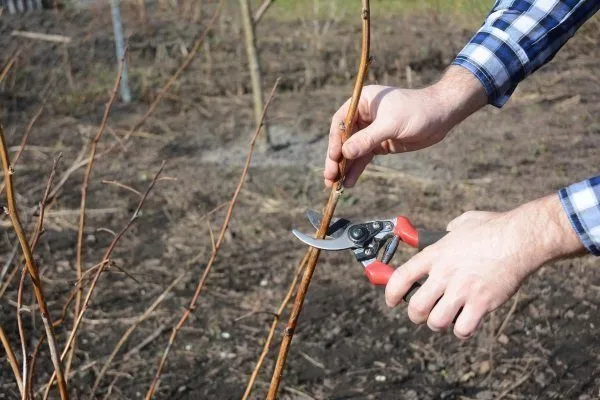
Why do you prune raspberries in spring?
Spring is a busy time for gardeners. Raspberry care begins with pruning. Raspberry canes have a two-year life cycle, so spring pruning guarantees a bountiful harvest.
Without these manipulations, the raspberry patch will become overcrowded, its dry shoots will prevent new growth from developing properly, and the plant will wither. In this situation, there's no hope of a harvest.
Spring or fall pruning: which to choose?
Pruning should be done both in early spring and fall. The best time to do this is up to the gardener. The choice largely depends on available time, individual climate conditions, and the amount of snowfall in the region.
When to prune? Choosing the month and timing
If winters are predominantly frosty and snowless, then spring pruning is carried out in March.
WITH autumn pruning Don't delay either. It's best to do this in August-September. This procedure will help with the formation of replacement shoots and improve the light inside the bush, which will contribute to greater resistance to diseases and pests.
The most important thing is to prune 3 weeks before freezing temperatures set in.
What is subject to removal?
The pruning will be carried out in several stages:
- cut off dry branches;
- remove damaged shoots;
- cut off the trunks;
- remove root shoots;
- shorten the shoots;
- tie and bend the plants to the ground.
Tools
What you will need for trimming:
- pruning shears;
- lopper;
- garden knife;
- rake.
How to prune raspberries correctly in spring?
Pruning raspberries is an important task for gardeners. By performing a few simple steps, you can ensure a comfortable harvest and prevent future problems. diseases and pests on raspberries, affecting shrubs. A few rules to help you:
- The best time for spring pruning is late March or early April.
- Carry out pruning as soon as the snow melts, while the ground is still thoroughly saturated with moisture.
- When working, use special gardening tools that do not damage plants.
- The length of the remaining shoots should not exceed 50 cm. To ensure sufficient air circulation and access to light, it is permissible to leave no more than 30 branches per 1 square meter.
- ✓ Optimal cutting height to stimulate the growth of lateral shoots: 15-20 cm from the top.
- ✓ Minimum distance between remaining shoots to ensure sufficient air circulation: 10-15 cm.
Be sure to consider the method used to plant the raspberries. With bush planting, no more than 5-6 branches are left on each plant. With trench planting, 14-15 branches are acceptable.
After pruning, be sure to maintain the stems. Otherwise, the pruning will be ineffective. To preserve and strengthen the shrub after pruning:
- cut off shoots that are frozen at the base;
- for frozen ones, remove the damaged part;
- Remove stems affected by insect pest larvae.
The video below provides a complete overview of spring raspberry pruning:
Step pruning
The main goal is to extend the fruiting period. Divide the shoots into four sections and prune the raspberries according to this pattern:
- 1st part of branches - shortened by 10-15 cm;
- 2nd part of branches - shortened by 20-30 cm;
- 3rd part of the branches are shortened by 70 cm (50%);
- 4th part of branches - 3-5 cm remain.
This pruning method will significantly extend the raspberry harvest period. Juicy berries will delight the caring gardener until August. The first shoots to bear fruit will be those shortened by 10-15 cm, followed by the berries on the second half of the branches, and so on.
| Method | Time of the event | Efficiency for crop yield |
|---|---|---|
| Stepped | March-April | High |
| According to Sobolev | May | Very high |
| Sanitary | Spring and autumn | Average |
Sobolev's pruning
To stimulate active lateral branching, pinch off the tips of the shoots. The best time to do this is May. To form 10-15 lateral shoots in the spring of the second year, shorten all overwintered shoots. This method significantly increases yield and, in some cases, allows the raspberry to bear fruit a second time.
Timing is crucial for successful double pruning. Don't delay the first stage, as new shoots may not have time to develop sufficient strength before the cold weather sets in.
The second stage should be carried out next year in May, when the raspberry leaves are fully expanded. To do this, pinch back last year's side shoots by 15 cm.
All these manipulations are necessary for the active growth of lateral branches—up to 15-20 on a single plant. When they all begin to bear fruit at once, the gardener's efforts will be rewarded.
Carry out double pruning in stages:
- Cut off weak shoots.
- Trim the tops—this step is necessary for absolutely all shoots. To ensure large, juicy fruits, trim off 15-20 cm.
- Thin out your raspberry canes. When a bush becomes dense, too many shoots grow on it, and they begin to interfere with each other. Without thinning, they won't receive the nutrients they need for development and growth. The bush will wither and fail to bear fruit.
Sanitary pruning
Sanitary pruning lives up to its name. It can be performed both at the beginning and end of the season.
Once the snow has completely melted, remove any frozen or damaged shoots. At the first sign of plant growth, remove the affected parts. In the fall, be sure to remove any branches that have already borne fruit.
Pinching the stems
Another way to increase raspberry yield is to pinch the stems. Pinch not too early, but no later than June.
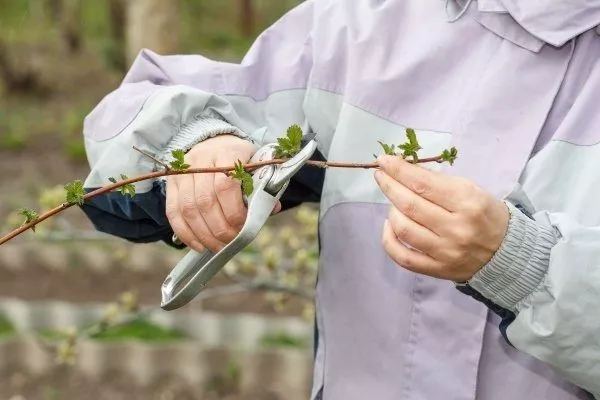
If you delay, you can seriously damage the plant, which is in the active phase.
Removing the growth
An overgrown bush doesn't guarantee a bountiful harvest; rather, it's a prerequisite for its absence. New shoots that appear over time must be removed. The more excess shoots remain, the more light and air they will deprive the main bush of, weakening it and reducing yield.
Avoid pulling or digging up excess shoots. This will damage and cause disease. Carefully trim away any unwanted growth at the soil level.
Pruning remontant varieties
Every gardener's primary goal is a high yield. The main and most impressive feature of everbearing varieties is that they can bear fruit more than once. Consider this advantage when cultivating.
There are two types of pruning for everbearing raspberries. The first is for a single harvest. This method is most often used for commercial cultivation. The result will be only one harvest, but a very abundant one. To do this:
- When the first frost arrives, cut back all bushes completely. Do not prune earlier, as any young plants that sprout during warm weather will freeze.
- In early spring, thin out young plants thoroughly.
The second method is for two harvests. Considering that everbearing varieties produce fruit on both one- and two-year-old shoots, pruning is carried out in two stages:
- After the first berry harvest, cut off the two-year-old branches that have borne fruit.
- Once the second fruiting wave has passed, carry out the usual pruning. This will prevent the annual stems from drying out, and after overwintering, they will begin to branch and bear fruit.
Pruning tree raspberries
Another name for this type of raspberry is standard. It has strong, branched branches, resembling a small tree.
If you don't take the cultivation of such plants seriously, instead of a lush tree, you could end up with an impenetrable thicket. Consequently, this "wild" forest will not bear fruit.
Standard raspberries require regular pruning. This is no different from other varieties. It's important to promptly remove shoots that have borne fruit.
You can also prune this type of raspberry using the double pruning method. The best time to do this is late May or early June. By this time, the plant will already be 1 m tall. By the end of summer, the tree will have about 5 side shoots remaining.
The second pruning is carried out the following season, in mid- to late May. At this time, lateral shoots are shortened by approximately 5-10 cm.
There's nothing complicated about caring for standard raspberries. The plant is easy to care for and produces a bountiful harvest. Along with regular raspberry varieties, it's very popular among gardeners.
Recommendations for caring for pruned raspberries
Below are recommendations for caring for raspberries after pruning. You'll need to know how to apply fertilizer, disinfect the shoots, and tie the raspberries to a trellis. All of this will help you get a bountiful harvest.
In his video, a gardener explains how to care for raspberries after pruning:
Introduction of fertilizers
March is the best time to apply the first fertilizer. Depending on the soil composition and condition, gardeners use different fertilizers.
If the soil is relatively balanced, any general-purpose complex fertilizer will do as the initial feeding. The situation is different in problem areas. For example, if raspberry leaves turn yellow, it means the soil is deficient in nitrogen. In this case, additional nitrate diluted in water is applied.
The next critical period, when it's worth paying special attention to the condition of the plants, is the flowering and fruit set period. A second feeding is performed at this time, aimed at strengthening the bush during fruit set. A mixture of potassium sulfate and superphosphate in specific proportions is ideal.
Gardeners perform the final, third feeding in the fall, after cutting back the shoots. This requires the same fertilizers as the second feeding, only in smaller quantities.
Don't forget about organic fertilizers, which are essential for any raspberry variety. Just like any other fruit-bearing shrub, organic fertilizers should be applied very carefully.
This is done no more than 1-2 times every 3 years. Any manure the gardener has on hand will do.
Disinfection of shoots
As soon as the first buds on the raspberries begin to awaken, they should be treated against numerous insects and diseases.
Bordeaux mixture is a panacea for combating these pests. At the very beginning of spring, plants are sprayed with a one percent solution. To prevent infection from neighboring plants, they are also treated along with the raspberry bushes.
Spraying is repeated a little later, when the buds have fully awakened. During active flowering and fruit formation, the raspberry patch is carefully inspected, and any affected parts are removed.
To prevent insect larvae from remaining on plants and going into the soil during the winter, a final treatment with Bordeaux mixture should be carried out in the fall, after the last harvest.
Rejuvenation of an old raspberry patch
Raspberry cultivation in one location is limited. The optimal period is 10 to 18 years, depending on the soil composition and condition. Over time, the soil becomes depleted, yields decline, and the bush begins to suffer.
The time is coming when it's time to rejuvenate your raspberry patch. It's best to start in the fall.
The essence of rejuvenation lies in the gradual, methodical removal of weakened, old bushes. To do this, carefully remove old plants by trimming the roots.
Fill the remaining holes with nutrient-rich soil and water. Next spring, don't forget to fertilize the entire raspberry patch.
This season, the bushes' two-year-old shoots will bear fruit. New shoots will emerge in the fall in place of the old ones. A year later, replacement shoots will emerge, which will begin bearing fruit after another year. Ultimately, there won't be a complete lack of fruit, but a completely new bush will emerge nearby.
Tying raspberries to a trellis
As noted above, raspberry care requirements depend on the initial planting method. Trellis support is ideal for trench-planted raspberries.
Raspberries are tall shrubs. Support is essential for their successful growth, as the plant's shoots are quite thin and flexible.
They often can't support their own weight and bend low to the ground. Because of this, raspberry fruit is often susceptible to rot. Only low-growing varieties of this bush can be grown without staking. This measure is necessary for all other varieties.
Trellis support for raspberries has many advantages:
- With the help of trellises, beautiful beds can be easily formed.
- The lower branches, leaves, and berries don't get dirty. They're also safe from slugs, snails, and frogs.
- Trellis tying helps create straight beds with open spaces between them. This arrangement promotes good air circulation and adequate sunlight, which in turn prevents fungal diseases.
- Access to plants remains free, making them much easier for gardeners to care for.
- Harvesting, as well as preparing for the winter period, is not difficult.
The structure is assembled on site like this:
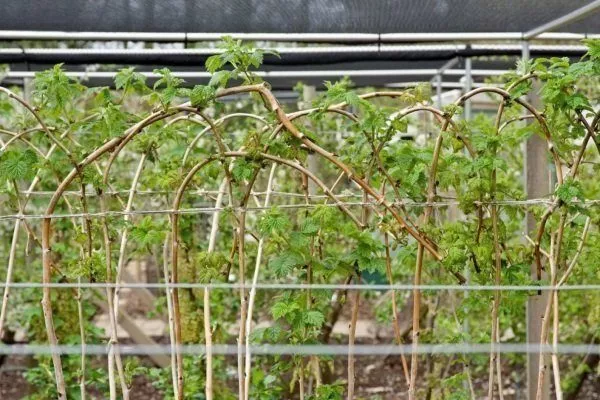
- On both sides of the row of bushes, install poles secured to posts.
- Tie the plant stems to the supports. This can be done with twine, for example. This trellis is quite simple to make, but its design can be improved. As in the first option, install the support on one side of the row of shrubs, but not at the edge, but 30-40 cm away from it.
- Bend the branches toward the trellis and then secure them in place. This will prevent the mature shoots from interfering with the growth and development of the younger shoots, which will benefit the raspberry patch.
Mistakes that cost gardeners their harvest
Only those who do nothing make no mistakes. Gardening is no exception to this rule.
The most common mistakes:
- Reluctance to trim strong shoots. Many believe that by removing it, they're ruining the harvest. It's important to remember that without proper pruning, the raspberry bush will become diseased, the berries will become small, and there will be no harvest at all.
- The shoots that need to be trimmed are removed only superficially. New gardeners often start pruning from the outer branches. They remove young shoots, but only the outermost branches, not the inner ones. As a result, the raspberry bush grows excessively, yields drop, and diseases appear.
- The intertwined branches are left. If you don't prune branches that touch each other in time, the risk of plant disease will increase significantly.
- Incorrect pruning. Some gardeners don't prune shoots, but simply trim them back slightly. They remove dead branches and leave the rest. However, sanitary pruning alone isn't enough. Regular formative pruning is essential, as it directly affects the quality and quantity of the future harvest.
- The buds are damaged during pruning. Hasty, inexpert actions can easily lead to disastrous results. To avoid this, it's essential to strictly adhere to a proven pruning scheme. First, remove the largest branches, then the smaller ones.
Pruning times in different climate zones
Differences in raspberry pruning techniques are due to climatic conditions:
- IN central regions of the Russian Federation and in Moscow region You don't need to trim young shoots for the winter. To ensure the shrub survives the winter without any problems, simply tie the shoots and cover them. Snow is the best natural insulator in this case.
- Autumn pruning in Siberia — is a must. The climate here is harsh, with cold winters. Therefore, it's much easier to carefully cover a pruned shrub, preserving it until the spring thaw.
- Gardeners Krasnodar Krai They begin pruning their raspberry patches only in late autumn. Thanks to favorable climate conditions, they have time to harvest another late crop. Although autumn raspberries are smaller and there are very few of them, their mere presence prolongs the feeling of summer and brings joy.
Raspberries are easy to care for and produce fruit under any conditions. However, to ensure a good harvest, they require care both in the fall and spring. One of the most important conditions for growth and high yields is timely pruning.