
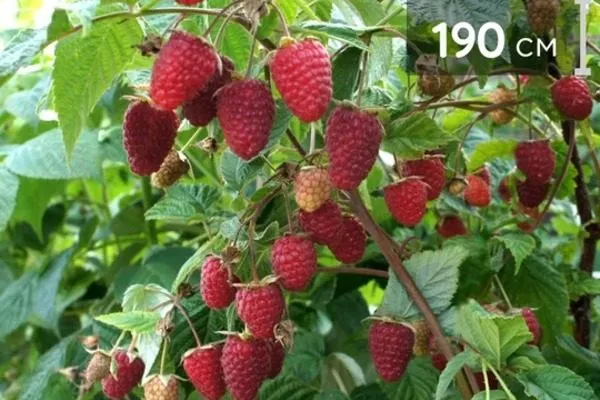
The Nizhegorodets raspberry belongs to the group of everbearing varieties with high fruiting rates. A distinctive feature of this variety is its ability to easily tolerate dry periods without frequent watering. It has decent frost resistance, is easy to care for, and doesn't require pollinators. However, to achieve the best results, it's important to pay attention to the varietal requirements.
History of selection
At the Shkolny Sad nursery, professional breeders, led by director Vladimir Aleksandrovich Shiblev, created a unique raspberry variety named Nizhegorodets. I. V. Kazakov and S. N. Evdokimenko also contributed to the development of this variety.
The Nizhegorodets raspberry has successfully passed state-approved trials. The application for these trials was submitted in 2009, and the variety was registered in the Russian State Register in 2011.
Introduction to the variety
The Nizhegorodets variety stands out for its high drought tolerance. Its moderate heat tolerance, resistance to overcooking, and resistance to various diseases and pests make it competitive in the market. Furthermore, Nizhegorodets raspberries have good immunity to raspberry mites and fungi.
Growing regions
The variety was named after the Nizhny Novgorod region, where it was developed, and therefore its natural habitat is the Volga-Vyatka region. The originator claims that the Nizhegorodets raspberry can be successfully grown in a variety of climates, although this information is not included in the Russian State Register.
Leaves and bush
The Nizhegorodets raspberry variety is distinguished by its wide-spreading bushes, which have the following characteristics:
- the bush grows to 150-190 cm, and sometimes more;
- branches tend to droop;
- the fruiting part reaches approximately 50% of the total height of the bush;
- the color of young stems is deep purple with a light waxy coating and no pubescence;
- in the second year of life, the shoots become straighter and acquire a light brown color;
- the thorns on the shoots are located in sufficient quantity, but the coverage is more intense in the lower part of the stem and decreases towards the top and middle part;
- the thorns have a hard and elastic structure, are medium in size, and are colored in light purple tones with a greenish base;
- medium sized flowers;
- The roots are fibrous formations.
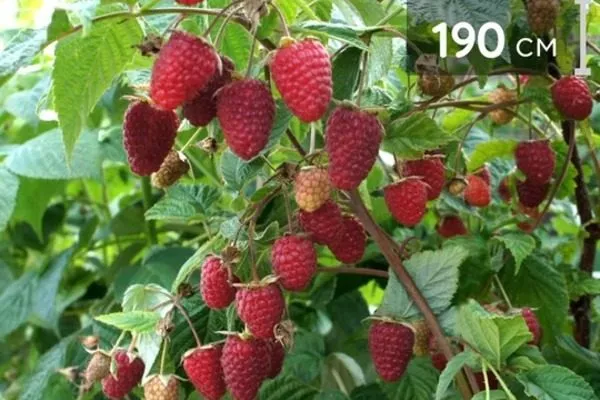
This raspberry variety has an average ability to produce shoots, with a maximum of 7 to 9 stems per bush. Root suckers are few in number.
The leaves of the Nizhegorodets raspberry variety are distinguished by their bright green hue and the following characteristic features:
- their sizes are average;
- the surface of the leaves is slightly hairy;
- they have a slight pubescence;
- the edges of the leaves are slightly serrated, the sharpness is medium;
- leaf blades are slightly curved.
Fruits and their photos
The berries have a bright shine, easily visible pubescence, and an average weight of 5-6 g, with the largest specimens reaching 12 g. Key features of these berries:
- intense dark ruby red hue;
- the shape resembles a wide conical one;
- slight pubescence of the surface;
- soft consistency of the pulp;
- fairly high density;
- drupes with a uniform structure, firmly attached;
- an aroma with a sweet and sour taste and a recognizable raspberry scent, more intense and pronounced in sunny weather.
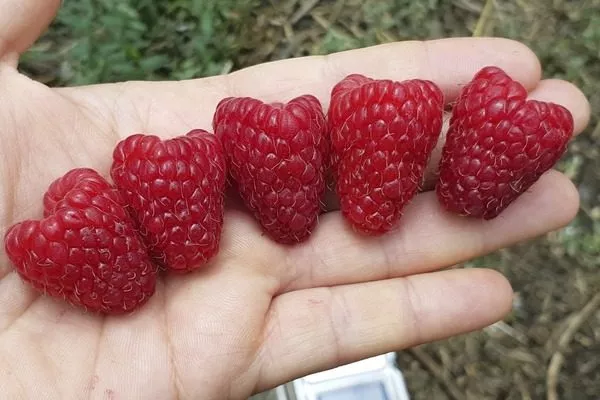
With 5.1% sugar and 1.5% acid, fresh Nizhegorodets raspberries have a flavor profile rated at 3.9 by tasters. These fruits are versatile and suitable for both direct consumption and a variety of culinary processing, from canning to freezing and drying.
Frost resistance of the variety
The variety is highly frost-resistant and can withstand temperatures down to -30°C, although in northern regions there may be problems with shoot freezing.
Pollination and fruiting
In terms of pollination and fruiting, the variety is self-pollinating, making it easier to care for. If there is a shortage of bees and other pollinating insects, they can be attracted by spraying the bushes with a honey-water solution.
The Nizhegorodets raspberry is a remontant variety, so it produces fruit not only on young shoots but also on stems from the previous year. For an optimal harvest, it is recommended to harvest only from the current season's branches and remove any branches that have yielded fruit in the fall.
Productivity
Nizhegorodets is a representative of the early everbearing class. The first ripe berries appear after June 20, and fruiting continues until late autumn.
The timing and duration of the harvest depend on growing conditions: if last year's shoots are left, the yield will be higher than if they are removed.
The productivity of the Nizhegorodets raspberry is impressive:
- 18.3 tons of berries can be collected per hectare;
- from one bush – up to 5.5-5.8 kg.
The berries of this variety form along the entire length of the branches and are colored evenly, which is an undoubted advantage.
Storage
The harvest is carried out as the berries ripen, with them reaching maturity almost simultaneously. They remain on the bush for two weeks without risk of falling off.
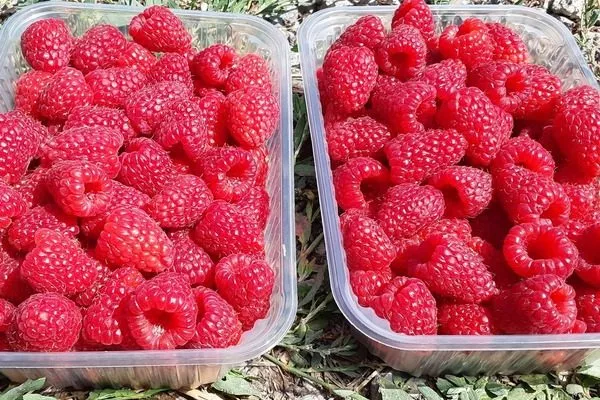
Freshly picked Nizhegorodets raspberries have a limited shelf life – they last about one to one and a half weeks in the refrigerator. Storage requirements:
- It is recommended to place the berries in small containers in one or two layers and lightly cover them.
- It is important to initially select only healthy and dry fruits.
- At room temperature, Nizhegorodets raspberries can be stored for no more than 6-9 hours.
- If berries are exposed to direct sunlight, their shelf life is significantly reduced.
Features of cultivation
It's recommended to begin growing the Nizhegorodets raspberry variety in the spring. In central Russia, the optimal time for planting is late April or early May, while in the south, this process begins after March 20. In northern regions, it's best to wait until May 15-20 to plant before bud break.
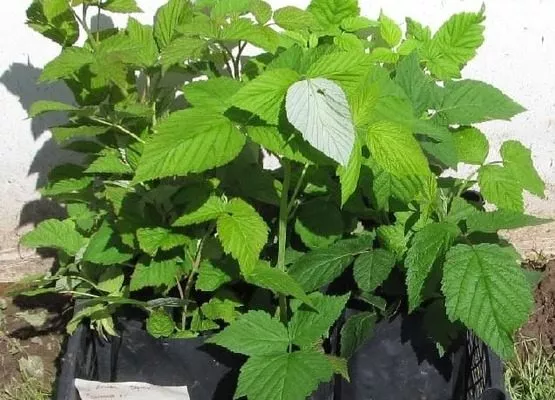
To plant raspberries, you need to choose a location that meets a number of criteria:
- excellent lighting;
- protection from cold winds;
- maintaining the required distance from the groundwater level;
- calm air flow;
- The soil should be moderately moist, light and rich in nutrients.
Planting the Nizhegorodets raspberry variety in the shade can delay fruit ripening and reduce their number, as well as increase the likelihood of plant diseases.
Preparation of the plot for the Nizhegorodets raspberry begins in the fall:
- The soil must be thoroughly cleared of weeds and dug to a depth of one or two spade depths.
- Before planting, it is important to fertilize the soil: per 1 square meter of area, it is recommended to add 2.5 10-liter buckets of peat, 200-250 g of superphosphate and potassium sulfate (or the same amount of other complex mineral fertilizers).
Subtleties of planting work:
- A couple of weeks in advance, dig holes in the area measuring 40-50 x 40-50 cm and 40-45 cm deep. The holes should be spaced 65-75 cm apart between bushes and 150-190 cm apart between rows.
- Carefully place the seedlings in moistened holes, positioning the root system so that the root collar remains at the soil surface level, not covered by soil.
- After planting, cut the raspberry stems to a height of about 17-22 cm and water them.
- After watering, loosen the soil around the bush slightly and fertilize with natural mulch.
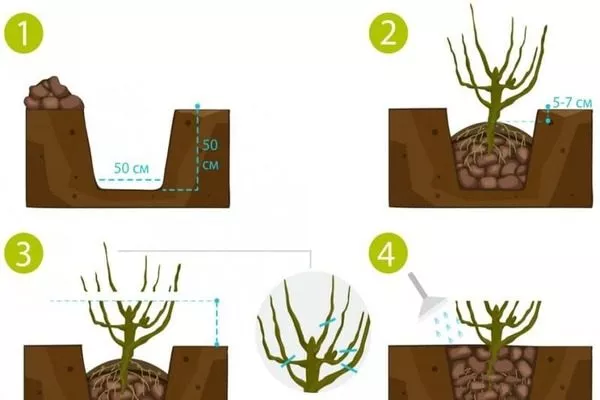
For successful fall planting, the soil should be prepared in the spring by sowing green manure crops such as mustard, rye, and lupine. It is recommended to dig these plants into the soil two months before planting. The remaining raspberry planting procedures are the same as in the spring.
Rules for care measures
Nizhegorodets isn't considered particularly demanding in terms of care, but without following the varietal requirements, it's impossible to achieve maximum sweetness, large fruit, and increased yield. Consider the following:
- SupportNizhegorodets bushes are tall and have a wide crown, so supports are needed to support them along the rows. Install stakes every 3 meters into the ground and secure 2-4 rows of wire to these stakes, 50 cm above the ground and at the same intervals.
- Moisturizing. For normal raspberry development, watering once a week is sufficient. It's important to maintain a balance: avoid waterlogging while ensuring adequate soil moisture down to the root system (30-40 cm).
Typically, 15-22 liters of water are used per bush. During drought conditions, the frequency of watering may be increased. During flowering and early fruit formation, and in hot, dry weather, it is recommended to water every 4-6 days.
The most effective watering method is using a drip irrigation system, which directly moistens the soil around the plant. This helps conserve moisture and ensures uniform soil penetration.
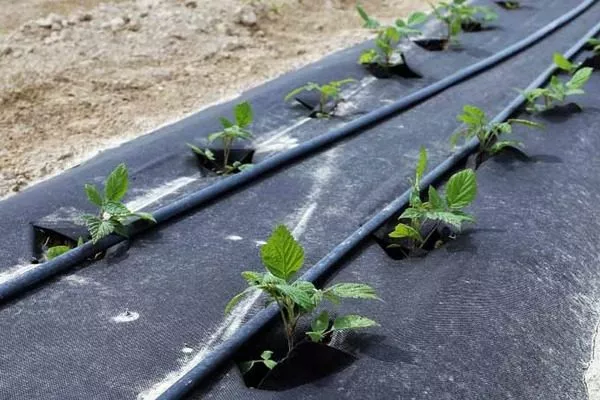
- Mulching. The use of soil mulching is also justified, since it reduces the need for frequent watering and helps to retain soil moisture for a longer period of time.
- Formative and pruning activities. Two pruning methods are used for this variety: one is similar to the usual summer pruning, when two-year-old shoots are removed in the fall and one-year-old shoots are left for the winter; the other method is a complete autumn pruning of all shoots.
Choosing the second method makes it easier to prepare the bush for winter and reduces the risk of pests and diseases, since the entire above-ground part of the plant is absent. - Fertilizer. By adding mineral and organic components at planting time, you can ensure sufficient soil fertility for the next two to three years. After that, you'll need to regularly enrich the soil annually:
- For comprehensive soil nutrition, use superphosphate or nitroammophoska;
- potassium magnesium sulfate can be used as an additional source of potassium;
- It is especially recommended to use a mullein solution for this variety;
- During the growing season, fertilizers should be applied two to three times.
Diseases and pests
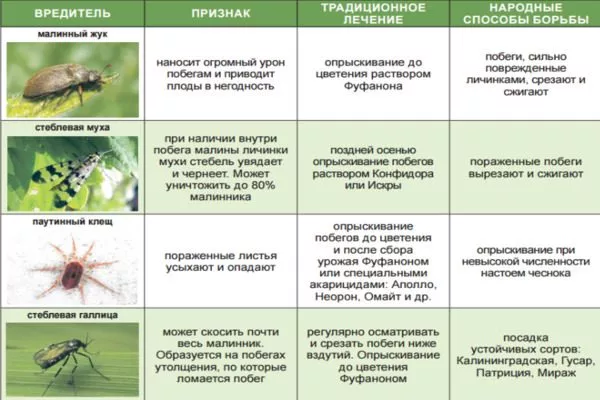
If you choose a suitable growing site and follow all care recommendations, fungal problems are unlikely. To prevent them, it's recommended to use Bordeaux mixture, spraying it twice a year—before budding and after harvest.
Nizhegorodets raspberries are more frequently affected by viral diseases, such as mosaic and leaf curl. Affected bushes are impossible to control and must be destroyed. To avoid such problems, it's important to disinfect gardening tools and control the population of sucking insects.
Aphids are the most dangerous insect pest. Various chemicals are used to control them:
- Aliot;
- Aktara;
- Biotlin;
- Tanrek.
In addition, there may be a problem with shoot gall, against which the following preparations are effective:
- Karate;
- Karbofos;
- Calypso;
- Mospilan.
To destroy almost all types of pests, you should use products with a broad spectrum of action, for example:
- Actellic;
- Fitoverm;
- Fufanon Nova.
Preparing for winter
To ensure the Nizhegorodets raspberry survives the winter cold without problems, it is recommended to completely remove all shoots. Do this at ground level, avoiding stumps, as they can become a haven for pests and a source of disease when decomposed.
If you grow Nizhegorodets like regular summer raspberries, the remaining shoots for the winter should be pressed down to the ground so that they are protected by snow cover.
For this it is necessary;
- remove leaves from the stems;
- stack them on top of each other;
- secure with the bottom wire of the fence.
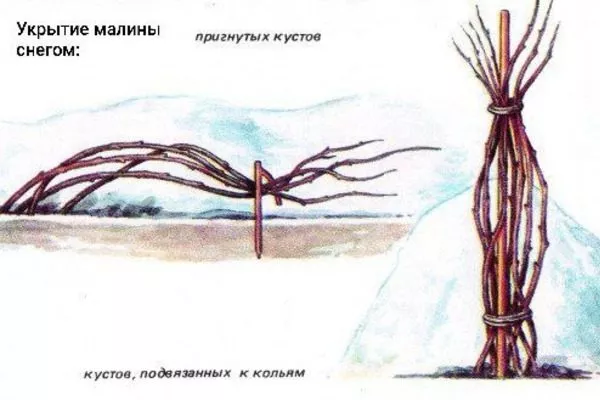
This process must be completed before the onset of stable frosts, while the stems have not yet lost their flexibility.
Reproduction
Gardeners prefer cuttings for propagation. This process uses both fresh and mature cuttings. When pruning, it's important to ensure they have 2-4 leaves. The lower part of the cutting is then trimmed at a 45-degree angle and placed in a Kornevin solution for a day to stimulate rooting.
After this, the cuttings are transplanted into soil or special plastic bags in a greenhouse. It's important to monitor the soil's moisture level to ensure it remains slightly moist.
Positive and negative qualities
One of the key advantages of this raspberry variety is its ability to quickly recover from damage. Furthermore, the variety offers a number of other benefits:
However, the Nizhegorodets variety also has its imperfections:
Reviews of berries
The Nizhegorodets raspberry is a high-yielding, everbearing variety registered in the Russian State Register. It can be grown in various climate zones and requires little maintenance, although staking is recommended. Nizhegorodets berries can be used for a variety of purposes.