
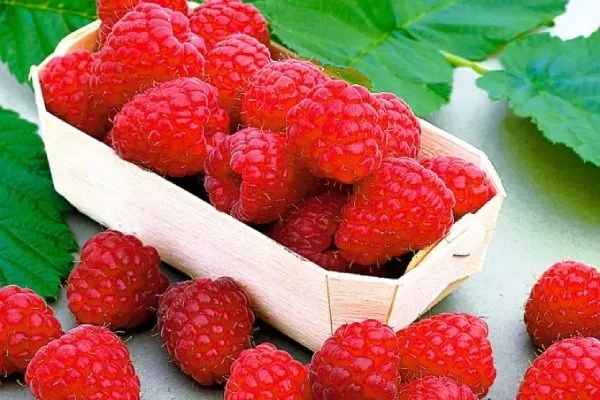
The Nagrada raspberry is a popular variety cultivated by many gardeners in our country. It boasts numerous advantages, guaranteeing a bountiful harvest and large, tasty fruits. With proper and timely care, the bushes are rarely susceptible to diseases and pests, and they develop more quickly.
History of origin
The variety was developed in the early 1970s by Russian breeders. It was created by crossing two varieties—Lloyd George and Kolkhoznitsa. The work was carried out by M. Ya. Nefedova, N. P. Zernovoy, N. A. Bartenyeva, and A. F.
Introduction to the variety
Raspberries are considered one of the most delicious and healthy berries, so they can be found in almost every garden plot. Today, there are a huge number of different varieties, among which the Nagrada is especially popular among gardeners.
Ripening time
It has a medium ripening period. Fruiting begins in the first half of July and lasts from three weeks to one month.
Growing regions
This variety is recommended for cultivation in all regions of the Russian Federation, but does not thrive in Siberia and the Far East. It is successfully grown in Ukraine.
Productivity
Berries appear on the plants in the second year of vegetation. The hybrid is characterized by high yields, reaching up to 3 kg per bush.
The bush, berries and their taste
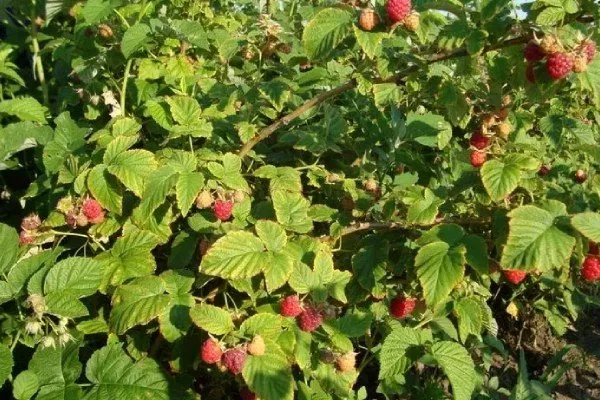
It is characterized by moderately spreading plants of medium height, which reach a height of 150 to 200 cm. Other features of the culture:
- Escapes – Thick and strong, they bend easily. They are green in spring and turn a reddish hue in autumn.
- Leaves - medium sized, green.
- Spikes – dark purple, not sharp.
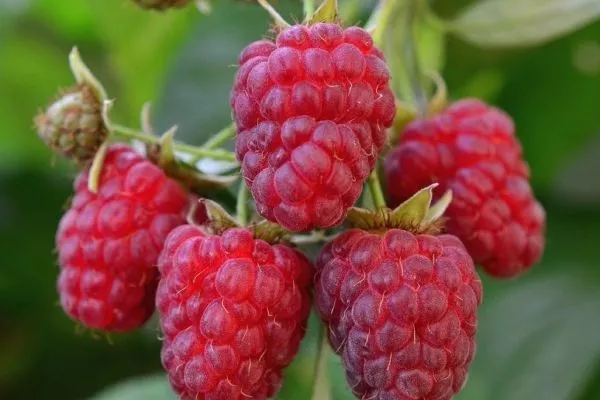
- Fruits – dark red, oval-conical.
- Weight - from 2.6 to 3.5 g.
- Pulp – dense and juicy.
- Taste - sweet and sour.
- Aroma – expressed.
- ✓ The shoots change color from green to reddish in autumn, which is a unique feature of the variety.
- ✓ The thorns are blunt and dark purple, making harvesting easier.
Basics of growing raspberries in your garden
Growing this crop doesn't require any special agricultural techniques. This variety is easy to care for.
Selecting a site and preparing the soil
For successful growth, choose a site with good lighting and slightly acidic soil with a pH of 5.5-6.5. A gently sloping southeasterly location that is not prone to standing water is preferred.
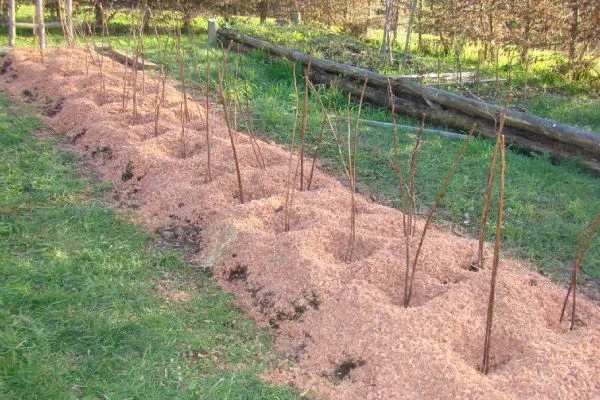
Plant in the fall or early spring. Space seedlings in rows approximately 40-50 cm apart, with row spacings of 1.5-2 m. You can also stagger the plantings, spacing them 50-70 cm apart. After planting, remove weeds and loosen the top layer of soil. Provide moderate watering and fertilization.
Is pruning necessary?
Sanitary pruning, which includes removing diseased and broken branches, should be performed at any time of year. Delaying this procedure can lead to disease outbreaks.
Begin seasonal pruning at the end of the growing season, after harvest, removing spent fruiting shoots. Thin out shoots and trim the tops to 1.5-1.7 m.
Watering and fertilizing
Regular and proper watering is key to a bountiful harvest. This variety requires consistently moist soil, especially during flowering and berry ripening. Follow these recommendations:
- Water the plants once a week. The soil should be evenly moistened to a depth of 30-40 cm.
- Use a drip irrigation system – it ensures even distribution of moisture and prevents over-watering or over-drying of the soil.
- Avoid getting water on leaves and fruits, as this can lead to fungal diseases. Apply water at the roots.
- The best time for the procedure is morning or evening hours, when the sun is not so active and moisture evaporation is minimal.
Fertilizing helps improve plant growth and increase yields. Fertilization should be regular and balanced. Consider the season:
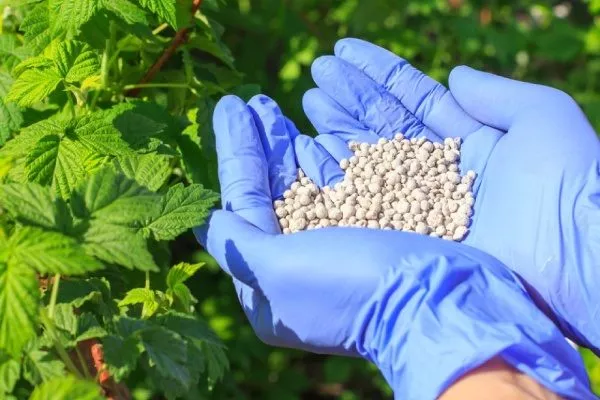
- Spring. After the snow melts, apply nitrogen fertilizer, such as ammonium nitrate, at a rate of 20-30 g per 1 square meter. This will stimulate the growth of young shoots.
- Summer. During flowering and berry formation, plants need potassium and phosphorus. Use complex mineral fertilizers (such as superphosphate and potassium sulfate) or organic fertilizers (mullein infusion in a 1:10 ratio).
- Autumn. After harvesting, apply organic fertilizers, such as humus or compost, at a rate of 4-5 kg per 1 square meter. This fertilizer will strengthen the bushes and prepare them for winter.
During the growing season, fertilize with microelements (boron, manganese, magnesium), which you apply as foliar feeding.
Frost resistance and preparation for winter
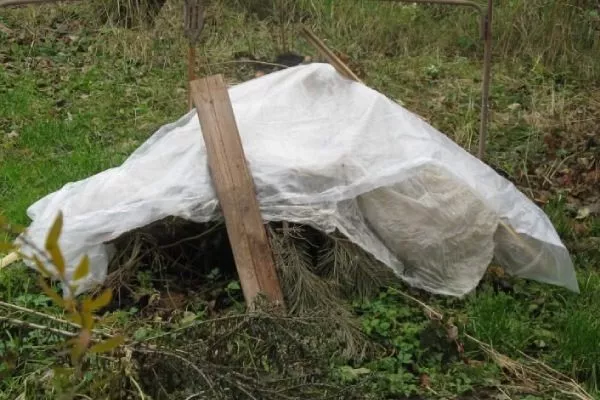
The Nagrada plant has a moderate winter hardiness. In the climate of central Russia, no additional shelter is required. When preparing for winter, properly distribute fertilizing throughout the seasons. Avoid nitrogen supplements completely during the second half of the growing season.
After the first frost, remove the bushes from the trellises and tie them into bundles. This prevents snow and wind from stressing the stems, even when uncovered.
Pest resistance
The hybrid is resistant to viral diseases and moderately resistant to fungal infections. However, it can be susceptible to attacks from raspberry mites and gall midges.
Breeding Options Awards
Gardeners prefer to increase the number of seedlings using cuttings. This method guarantees a high chance of success. Cuttings come in different types, and each type requires specific steps:
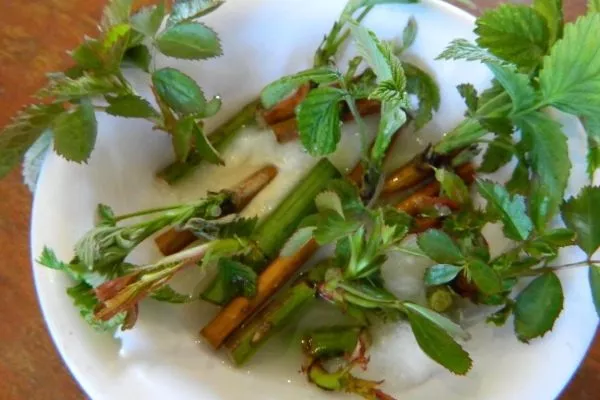
- Green cuttings. Harvest in early summer from young, two- or three-year-old raspberry bushes. Cut green shoots at the base and divide into 7-10 cm long pieces. Place the cuttings in a growth stimulant solution, such as Kornevin (1 teaspoon of powder per 1 liter of water), for 12 hours. Use a fresh solution.
Transplant the cuttings into loose soil, spacing them 15 cm apart, and cover the bed with plastic wrap. Water regularly. Two weeks after planting, fertilize the cuttings (dilute 1 liter of mullein in 10 liters of water and apply the solution per 2 square meters).
Transplant the young plants to their permanent location after two months (or a little sooner), digging them up with the soil. Berries will appear in the second year.
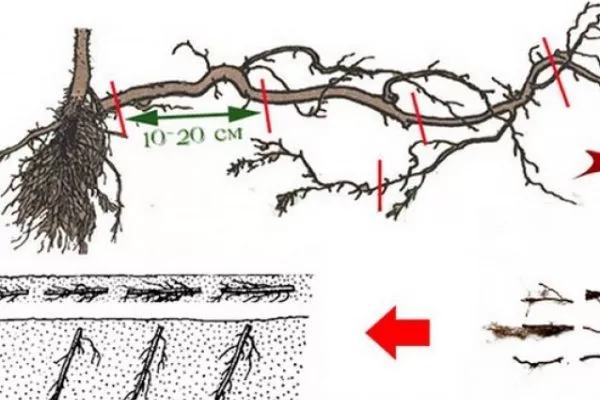
- By root cuttings. In the spring, before transplanting the bushes to a new location, trim the roots to facilitate adaptation and stimulate the growth of lateral roots. Trimmed roots longer than 10 cm and thicker than 2 mm can be used for propagation if they have lateral branches.
Mix equal parts peat and sand and fill 20 cm deep boxes with the mixture. Make grooves up to 5 cm deep. Place the root cuttings at the bottom and cover them with a layer of soil. Place the boxes in the greenhouse and cover with plastic film. Plant the young seedlings outdoors in late May, when the weather warms up. - Lignified cuttings. In the fall, after the leaves have fallen, prune the raspberry shoots. Divide healthy, woody stems into 30-cm pieces. Store the prepared cuttings in damp sand, wrapped in cloth or paper, in a cellar.
In February, renew the bottom cut and soak the cuttings in water for 12 hours. To stimulate root growth, place them in a honey solution (1 teaspoon per 1 liter of water). Roots will appear within a month, and when they reach 1 cm, transplant the cuttings into plastic bottles filled with soil.
Plant the cuttings in deep holes and moisten the soil regularly. Roots will form and leaves will emerge within 3 weeks. In May, plant the cuttings in open ground at a depth of 25 cm.
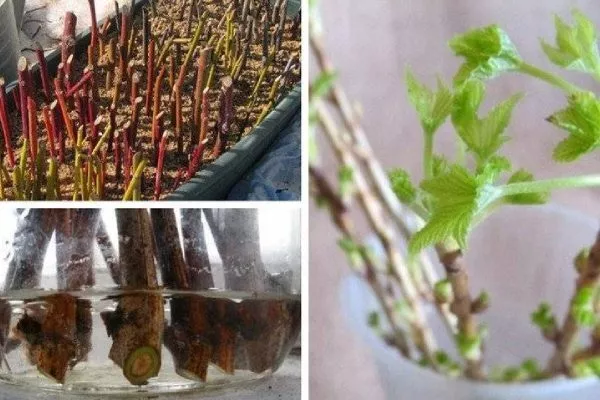
If everything is done correctly and healthy planting material is used, the likelihood of successful survival and normal plant growth is very high.
Review of reviews
The Nagrada raspberry is suitable for cultivation even by novice gardeners, as it requires minimal attention. The plants grow and fruit well, delighting with abundant harvests and high-quality fruit. This can only be achieved with timely and proper care.