
Meteor raspberries are quite common in our climate. To ensure a high yield, you need to know how to care for them and control pests and diseases.
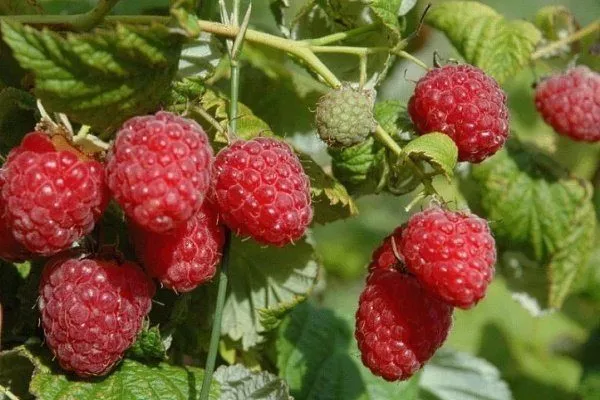
Raspberry variety "Meteor"
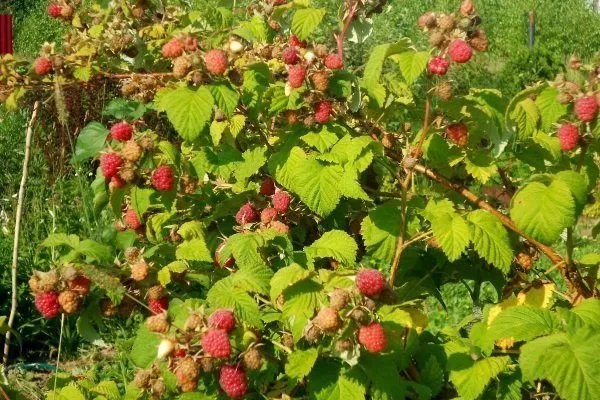
The Meteor raspberry will not disappoint gardeners with its fruitfulness
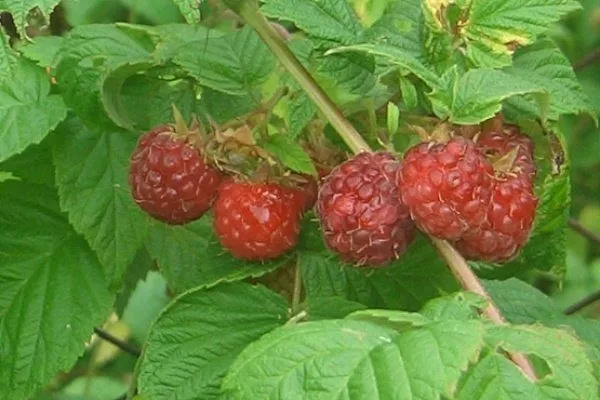
The Meteor raspberry variety is quite unpretentious and does not require much effort to care for.
Description of the Meteor raspberry variety
Several raspberry varieties were developed in the 20th century. One of them is "Meteor." Its history began in 1987, when two varieties were crossed—one Russian and the other Bulgarian. The agronomist Kazakov was the author of this selection.
- ✓ Optimum soil pH for Meteor raspberries: 5.5-6.5.
- ✓ The distance between rows should be at least 1.5 m to ensure sufficient ventilation.
This variety has the following characteristics:
- the berry is very frost-resistant and can be grown in cold regions;
- Raspberries have a hard time surviving the thaw, so you need to keep an eye on the berries during this period;
- even a small raspberry patch will bring its owners a large harvest of juicy and tasty berries;
- "Meteor" is very unpretentious in care and can reproduce on its own;
- tall bushes need to be tied up so they don't break;
- The berry is very rarely susceptible to diseases.
Characteristics of fruits
All berries of the Meteor variety have the following characteristics:
- In good climatic conditions, the fruit weight can reach 5 g. But even without a favorable climate, the berry weight is good, about 3 g.
- The raspberry pulp is dense, so it can be easily transported without leaking.
- Raspberries are usually bright red, almost a beautiful ruby color.
- The shape resembles a ball flattened at the top.
- The berries have a very memorable taste thanks to their slight sourness.
- Raspberry "Meteor" has a very pleasant smell.
- A slight waxy coating does not affect the taste at all.
- The sugar content does not exceed 9%, and the acid content 2%.
- Raspberries also contain vitamin C. Every 100 g of berries contains approximately 30 mg of the vitamin.
Productivity and fruiting time
"Meteor" ripens very quickly, yielding up to 2 kg per bush. Therefore, this variety can be grown not only in private gardens but also on agricultural farms. It yields approximately 70 centners per hectare in a single summer.
This raspberry variety is also distinguished by its early ripening. In favorable climate conditions, the first harvests can be collected as early as mid-June. In poor climates, the first berries will appear in July. To maintain a high yield, it is necessary to weed the soil around the bushes and loosen the soil slightly.
When this variety was being developed, it was crucial to obtain a winter-hardy raspberry so that it could survive winters not only in central Russia.
Winter hardiness
The Meteor variety of raspberry bushes can withstand the low temperatures often encountered in the Asian part of Russia. Winter temperatures there typically range from -30 to -50°C. The plant can withstand harsh climate conditions and survive the winter. This is why raspberries are grown and eaten in the north during the summer.
Advantages and disadvantages of the variety
The Meteor has both its pros and cons. The pros include the following:
- brings a very early and abundant harvest;
- The berries are very tasty and easily transported, so these raspberries can be easily sold and transported over various distances;
- The bushes are absolutely unpretentious in care - they can be fertilized with mineral substances several times and this will be enough;
- Raspberries can reproduce almost independently - by cuttings and self-pollination;
- This variety has very few thorns, making the fruits easy to pick;
- The main advantage of "Meteor" is its frost resistance.
All of the above advantages have stood the test of time, but over its more than thirty-year history, raspberries have also developed some disadvantages:
- if the bush is very tall (more than 2 m) it must be tied up, otherwise it will fall and break;
- During a thaw, the root system can be severely damaged, and the berry can even die;
- In the last 10 years, new varieties have appeared that are superior to Meteor in some parameters;
- Sometimes raspberries of this variety contain a lot of sugar, which can affect the development of diabetes.
A brief overview of the Meteor variety can be seen in the video below:
Meteor has its own growing characteristics that every gardener must adhere to.
Features of cultivation
At first glance, all fruit and berry bushes look the same. They grow and yield similarly. But in reality, each bush has its own unique cultivation characteristics. "Meteor" is no exception.
Landing features
The first distinctive feature of the Meteor is its planting pattern. While other raspberry varieties can be planted any time of year, the Meteor is only suitable for spring. If planted in the fall, there's a high chance it won't survive the thaw.
Read our article about it, How to plant raspberries in spring.
It's also important to choose the right planting site and prepare the soil. All other planting criteria are the same as for other varieties of this berry:
- Make a 30x30 cm hole. The trench should be the same size if the gardener has chosen the trench planting method. The distance between bushes should not exceed 80 cm.
- When the raspberries are planted in the soil, fertilize them with organic matter.
- Pay attention to the root collar. It should not be covered with soil, but it should not be exposed to the surface.
- After planting, water the bushes. The amount of water is calculated based on the number of linear meters.
- After watering, form a covering material from mineral fertilizers around the bush.
- Finally, trim the seedling shoots so that they are no higher than 30 cm from the ground.
Features of watering
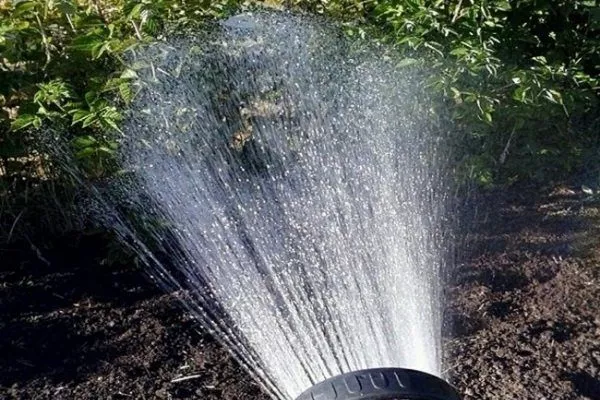
If the area where raspberries grow receives little rain, the berries need to be watered regularly. This should be done both at the beginning of flowering and when shoots emerge. The standard rate for a raspberry patch is three buckets per square meter.
Features of pruning
It is recommended to prune raspberries according to the schedule - after harvesting (autumn pruning) or until the buds appear (spring pruning). Create a sanitary pruning schedule and follow it. Remove weak, thin, and diseased branches. This will prevent defects from spreading throughout the raspberry patch.
Raspberries should be pruned after each harvest by approximately 15 cm. After winter, it is necessary to remove frozen tops and trim about 10 cm.
Features of feeding
To ensure raspberries grow well and thrive, apply organic fertilizer three times a year at a rate of approximately 5 kg per square meter. Fertilizing in the spring is essential. In this case, ammonium nitrate is used as the fertilizer. In late summer, when the berries are preparing for winter, other fertilizers are applied, making sure they contain phosphorus and potassium.
Manure and chicken manure, diluted with water at a ratio of approximately 1:5 and 1:10, can also be used as fertilizer.
Features of reproduction
Meteor is propagated either in late fall or early spring. It is recommended to use mature bushes aged 4-5 years. It is important to ensure that diseased bushes are not used. This berry variety can be propagated in several ways:
- Root shoots. In this case, separate the shoots from the rhizome and replant them. Then trim them back to about 30 cm in length.
- By root cuttings. In the fall, dig up and select the strongest roots. They will survive the winter in containers in a cool place. They can be planted in the spring.
- By dividing the bush. Dig up the bush and divide it into several parts. Replant each part in a new location. This can be done in any season.
Features of preparation for winter
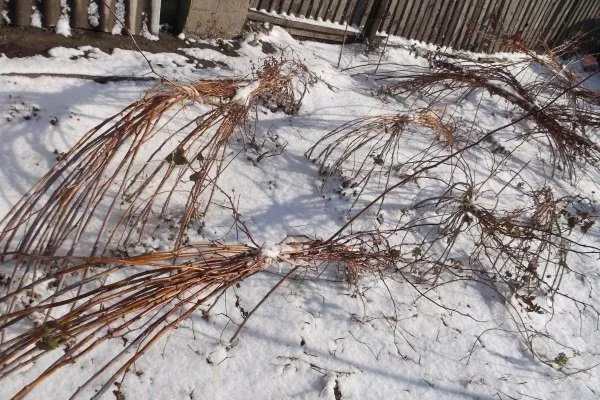
To ensure the frost-hardy shrub survives the winter and spring frosts, it needs to be prepared. Tie the shoots and bend them to the ground. But this must be done before the first frost, otherwise the stems will break and the berries will die.
An equally important feature of this raspberry variety is that it is quite resistant to all diseases and does not die from the effects of pests.
Resistance to pests and diseases
The Meteor raspberry is fairly resistant to many diseases and pests. However, there are some problems that the Meteor raspberry cannot handle.
- ✓ Healthy leaves are bright green and free of spots.
- ✓ A sign of good hydration is the elasticity of the stems.
Purple spot
Purple spot can destroy up to 80% of raspberry bushes. It appears on the stems as fuzzy, purple spots. If a bush is infected, it must be dug up and burned.
For prevention, treat the bush with the following products:
- Bordeaux mixture;
- copper oxychloride;
- pharmaiod in proportions of 1 teaspoon per 10 liters of water.
An effective method is to grow raspberries on a trellis – the bush is ventilated and nothing falls on it from other plants.
Shoot gall midge
Shoot gall midge is caused by an insect whose larvae form growths on stems, which destroy the shoot from the inside and easily break from the outside. The growths impede the flow of sap, causing the plant to die.
Using a magnifying glass, inspect each stem for affected shoots, cut them off, and burn them. In the fall, dig up the soil; this will also affect the larvae's future survival. Chemicals won't get rid of the pest.
Spider mite
It appears on the underside of leaves and sucks out their sap. White spots appear on the leaves, and subsequently, chlorophyll levels decrease, leading to reduced yields.
To prevent spider mites from appearing on raspberries, regularly remove weeds and avoid planting bushes too close together. As for fertilizer, a 6-7% urea solution will help. Spray raspberries with this solution in the spring, before the first buds appear, and in August. The recommended dosage is approximately 15-20 g per 10 liters of water.
Growing raspberries
This is a viral disease, also known as dwarfism or witch's broom. It is spread by cicadas. There is no cure for the overgrowth. The plant is dug up and burned.
If a bush is affected by this disease, short shoots with numerous leaves will grow on it instead of several healthy stems. As a result, the bush will develop clumps of shoots and no berries at all.
As a preventative measure, raspberry bushes are treated against cicadas (Aktellika, Atorina, Fitoverm, etc.).
Gardeners' reviews
Meteor raspberries require high-quality care to produce a bountiful harvest. Monitor for potential raspberry diseases and pests, and ensure timely treatment.