
Maria is the name of an early-ripening raspberry variety. It is particularly well known among Ukrainian gardeners due to its local origins. It is prized for its excellent yield, drought and frost resistance, and exceptional berry flavor. It is suitable for both private and commercial cultivation.
History of selection
Maria is a product of Ukrainian selection, born in 1986. It was bred by the Krasnokutsk Experimental Station at the Institute of Horticulture of the Ukrainian Academy of Agricultural Sciences.
Introduction to the variety
This variety of berry is popular not only in its native land but also in Russia. Due to its resistance to cold and drought, it is grown almost everywhere in Russia. However, in the south, it produces low yields due to its poor heat tolerance.
Bush
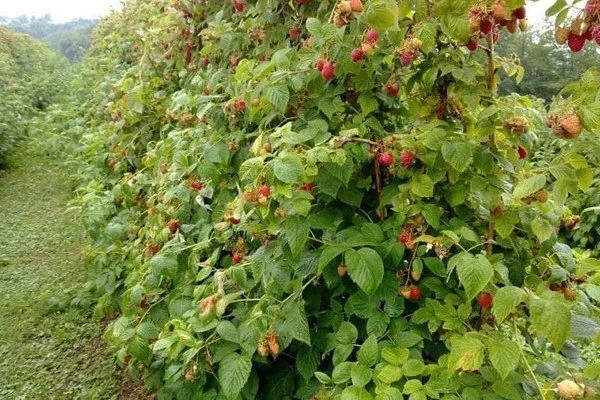
Plants of the Maria variety are quite tall but not spreading. Gardeners rate their growth vigor as medium. The bushes have the following characteristics:
- height - 1.8-2.2 m;
- erect shoots with light brown bark;
- many small and soft thorns located along the entire length of the shoot;
- large, light green leaves with a wrinkled surface and slight pubescence;
- small white flowers that appear in late April or early May.
Fruit
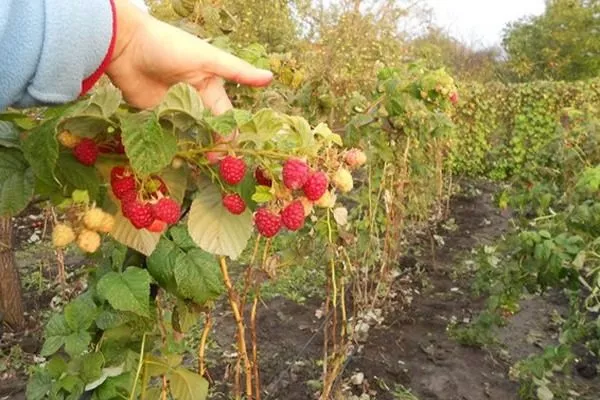
The Maria raspberry variety is renowned for its attractive appearance and excellent quality. Its fruits have the following characteristics:
- medium or large size;
- weight - 4-7 g (the first ripe berry is always larger, its weight reaches 9 g, and with enhanced agricultural technology - 12 g);
- dense and strong structure;
- correct obtuse conical shape;
- scarlet color;
- slightly pubescent skin without a glossy sheen, elastic and quite strong;
- the pulp is tender and juicy, melts in the mouth, and is very aromatic;
- small bones.
The harvest has a versatile purpose. Fresh raspberries make a wonderful summer dessert, rich in vitamins and other nutrients. Housewives use them to make jam, preserves, compotes, wine, and liqueurs. The berries are suitable for drying, freezing, and canning.

Frost resistance
The variety has excellent frost resistance:
- its plants can withstand temperatures down to -34°C;
- winter hardiness zone - 3.
Pollination
This berry variety doesn't require additional pollination. It's self-fertile. However, if you plant a bush of another variety with a similar flowering period next to it, you'll harvest many more berries, and their quality will only improve.
Features of fruiting
Maria is a record-breaker for early ripening. Berries ripen on the bushes in early June. This variety outperforms other early varieties of the crop in terms of fruiting time:
- Lyachka - for 1 week;
- Glen Fine - for 4-5 days;
- The phenomenon lasts for several days.
Raspberry bushes of this variety produce fruit within one month. They ripen evenly, with both old and young shoots bearing fruit. Harvesting occurs in three stages. In regions with harsh climates, the berries ripen later, in July.
Productivity
Maria is considered a high-yielding variety. Its characteristics are as follows:
- 1 raspberry bush yields from 2 to 4 kg per season;
- Farmers harvest up to 4000 kg from 1 hectare of plantings in the case of industrial cultivation of raspberries.
Storage of the harvest
The dense structure of the berries allows them to be stored and transported well. Maria fruits do not bruise, leak, or darken during long-distance transport.
Landing rules
To grow the Maria variety at your dacha, set aside a plot of land with the following characteristics for raspberry bushes:
- solar;
- smooth;
- protected from drafts and north winds;
- with groundwater levels of 1.5 m or more;
- with fertile soil, loose, with neutral acidity.
Prepare it for growing raspberries in advance, in the fall:
- Clear it of debris and plant debris.
- Carry out deep digging of the soil.
- Carefully remove the roots of perennial weeds.
- Add organic matter (manure, humus, compost). Apply 5-6 kg per square meter. It's also a good idea to add wood ash.
Before planting, preferably in the spring, dig the area designated for the berry crop again. To improve the soil structure, add rotted sawdust, sand, and peat.
Plant raspberries in rows, installing tall supports at the ends of each row and stretching wire between them. Follow the pattern:
- distance between bushes - 0.7-0.9 m;
- The distance between rows is 1.5-2 m (increase it to 2.5 m for industrial cultivation of the variety).
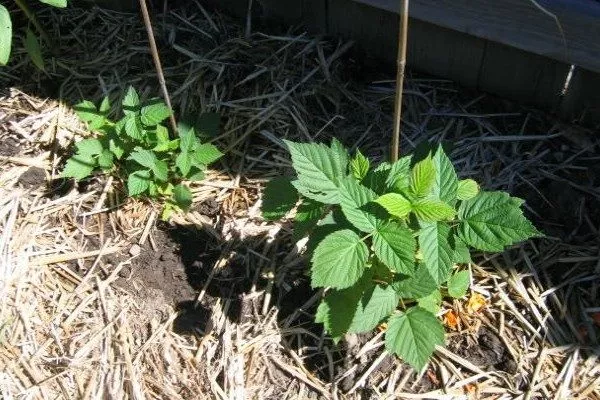
After planting the raspberry bush, water the trunk circle generously and sprinkle it with mulch (sawdust, hay, non-acidic peat).
Care tips
To ensure successful rooting of the seedling, its further growth and fruiting, provide it with proper care, which includes the following measures:
- WateringYoung plants require regular soil moisture. To ensure successful rooting, moisten the soil not only at the surface (7-12 cm), but also down to the roots (35-45 cm).
During the first 4 weeks after planting, water the bushes twice a week. Use 10 liters of water per seedling. In dry weather, use up to 15-20 liters. Water the seedlings at least 3 times a week.
Water mature bushes at least once every 7 days. Use 30 liters of water per bush. During hot and dry periods, water more frequently. Although Maria is drought-resistant, a lack of moisture will negatively impact the quality and quantity of the harvest. - MulchingTo retain soil moisture for a long time, use organic mulch. Place peat, hay, and sawdust in a 7-10 cm layer around the tree trunk.
- Loosening the soilLoosen the soil regularly and shallowly. Remove weeds while doing this. Loosen and weed after every rain or watering to prevent the formation of an air-tight crust on the soil.
- Trimming. This variety requires mandatory pruning after planting. Shorten shoots to 40-45 cm in length, leaving 3-4 buds on each. Remove dead, damaged, or overgrown branches annually. Thin out and shape the bushes.
- Top dressingWhen planting this variety in fertile loam, you won't need to apply fertilizer until the bush is 4-5 years old. After that, fertilize the raspberry bush several times a year.
In early spring, fertilize with a nitrogen-rich fertilizer. During flowering and fruit set, use a universal fertilizer rich in potassium, calcium, and phosphorus. During the summer, apply a 1:10 dilution of mullein or bird droppings (1:15) once a day.
Preparing for winter
The Maria variety is frost-hardy. In warm or temperate climates, it overwinters well without cover. Snow cover is sufficient to protect it from frost.
If you're growing a variety of berry crop in the north, be sure to build a shelter for your raspberry bush to ensure it survives the winter safely:
- In the fall, untie the branches from the wire (if you are growing the variety without support or tying it to a trellis, skip this step).
- Pin the shoots to the ground.
- Cover them with agrofibre.
- After the snow falls, throw a thick layer of it on top of the agrofibre.
Diseases and pests
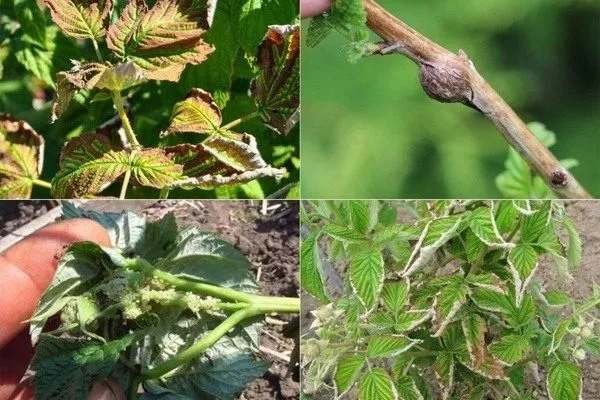
The Maria raspberry is resistant to most berry diseases and pests. However, if cultivation practices are not followed, its bushes are susceptible to white spot, anthracnose, gray mold, and other infections.
To treat, remove all infected shoots and treat the raspberry bushes with Bordeaux mixture, colloidal sulfur, and nitrofen. Water the soil under the bushes with Topaz. To prevent disease, use Fitosporin-M.
The following pests pose a danger to raspberries:
- gall midge;
- spider mite;
- weevil;
- raspberry beetle;
- stem fly.
To prevent insect infestations, loosen the soil under the bushes and mulch it. Use folk remedies such as wood ash, pepper infusion, and ammonia solution. For treatment, use insecticides (Decis, Karbofos, Fufanon).
Reproduction
Maria produces no more than five replacement shoots per year, so it reproduces slowly. To solve this problem, prune the bush's roots with a spade. Damaging them will stimulate the plant's ability to produce shoots.
Propagate the variety by dividing the bush. Follow these steps:
- Remove the central part of a mature, strong plant.
- Divide it into several parts so that each has well-developed roots.
- Transplant the divisions to a new location.
It's also possible to propagate the Maria raspberry using cuttings. Follow these step-by-step instructions:
- In autumn, cut cuttings with 2-3 buds.
- Bury them horizontally.
- Cover the cuttings with peat or straw.
- Remove the mulch in spring. 50-60% of the cuttings will root.
What are the advantages and disadvantages?
This variety has earned numerous accolades for its impeccable classic flavor and berry aroma. Among its other virtues, experienced gardeners highlight the following:
The variety also has several disadvantages:
Gardeners' reviews
The Maria raspberry is a productive, early-ripening variety. Gardeners appreciate it for its uniform ripening, winter hardiness, robustness, and good transportability. But most of all, it is prized for its excellent berry flavor and its tender, aromatic, and juicy flesh.