
The Malinovaya Gryada raspberry stands out for its high frost resistance and excellent adaptability to a variety of climates. This everbearing variety produces two harvests per season, producing large, sweet, and aromatic berries. It is disease-resistant, easy to care for, and easy to transport, making it popular.
History of selection
Breeding work began in the 1970s in Novosibirsk at the Institute of Cytology and Genetics of the Siberian Branch of the Russian Academy of Sciences. The goal of the research was to develop varieties resistant to Siberia's harsh climate, able to withstand severe frosts and short summers.
As a result of painstaking work, the Malinovaya Gryada variety was created, officially registered in 1992. It was developed by crossing various raspberry varieties, including the Lyubava variety.
Testing of the variety in experimental plots confirmed its high yield, frost resistance, and disease resistance. By 2000, it was recommended for mass cultivation and soon became widely used in agriculture.
Regions for cultivation
This variety is suitable for growing in various climate zones across Russia – from Siberia and the Urals to the Central Federal District, the Northwest, and the Far East. It tolerates severe frosts well and is adapted to a short growing season, making it ideal for regions with harsh climates.
However, when planting, it's important to consider the climate and soil conditions of a particular location. For example, in Siberia and the Urals, extremely low winter temperatures should be taken into account, while in Central Russia, potential summer droughts and high humidity are a concern.
Description of raspberries
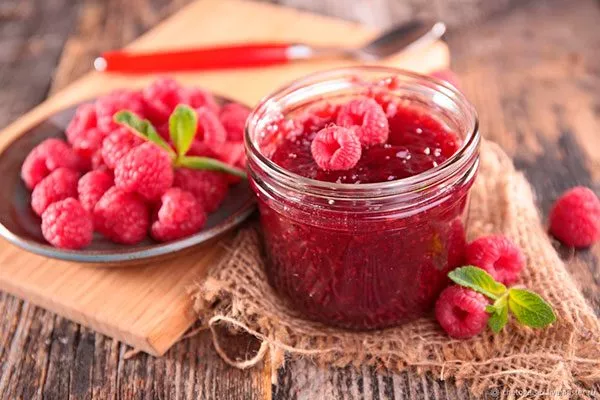
The Raspberry Ridge is characterized by a mid-early ripening period and universal use. The berries have a rich flavor and are suitable for both fresh consumption and processing.
They are used for such products:
- jam;
- jams;
- frosts;
- other homemade preparations.
Key Features:
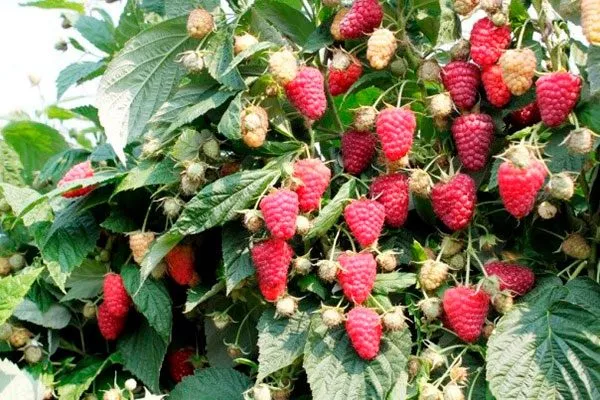
- bushes of medium height, spreading, with developed shoot-forming ability;
- annual shoots are light brown, covered with sparse small thorns;
- the foliage is large, dark green, the flowers are medium-sized;
- The variety is resistant to low temperatures and most typical diseases.
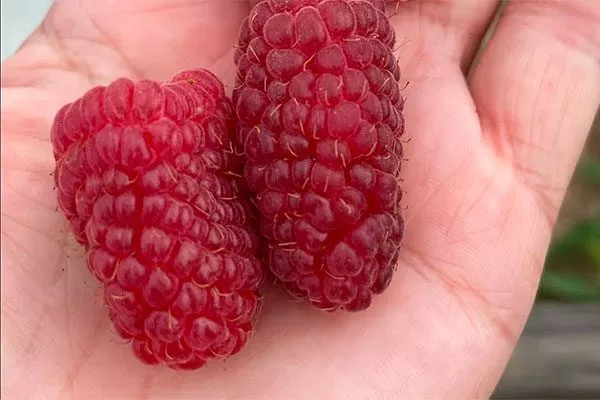
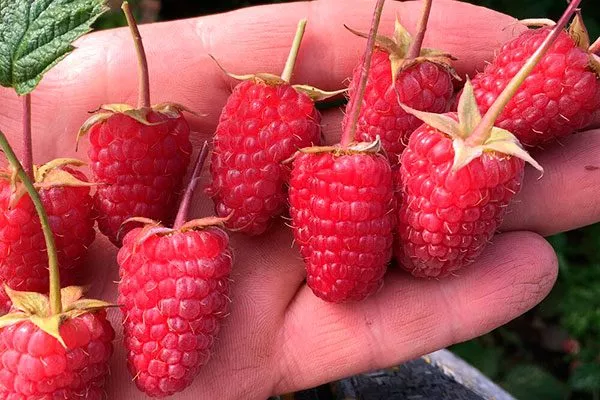
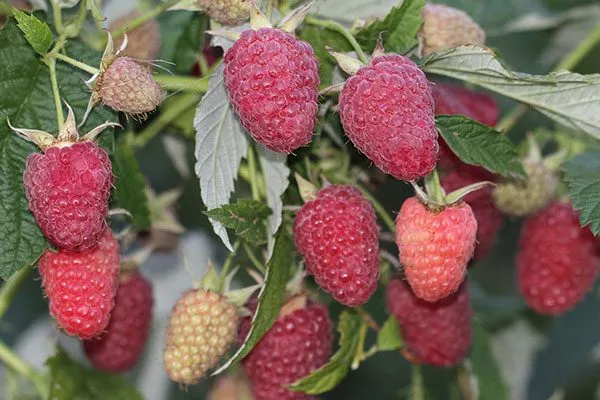
Everbearing raspberry with large, oblong, dark-red berries weighing from 5 to 8 g. The fruits have a distinct sweet taste and pleasant aroma, containing up to 7.5% sugar.
Characteristics
This plant boasts a number of advantages, which have earned it widespread recognition among gardeners. It boasts numerous positive attributes, is easy to care for, and adapts well to a variety of climates.
Frost and drought resistance
This variety is frost-resistant and can withstand temperatures down to -30°C. Even if the berries are exposed to temperatures as low as -4°C in the fall, they will retain their shape, flavor, and aroma, without losing their nutritional value.
In southern regions, the plant can be left uncovered for the winter. In the Moscow region and the Urals, natural snow cover is sufficient, but due to unstable weather in the northern regions, gardeners often additionally cover the bushes with spunbond. Mulching the shoots is recommended when mowing in the fall.
Pollination and fruiting method
The Malinovaya Gryada variety is self-pollinating and blooms in May. With a two-year cultivation cycle, the first berries appear as early as June on the previous year's shoots. If grown as an annual, the harvest begins in August—the exact timing depends on the region's climate.
In areas with early autumn frosts, an annual cultivation scheme is recommended, which allows the plant to fully produce its harvest before the onset of cold weather.
Productivity
A single raspberry bush can yield 5 to 6 kg of fruit per season. Most of the berries are concentrated in the upper portion of the shoots, making mechanical harvesting easier. On commercial plantations, an average of 15 tons of berries are harvested per hectare, and under favorable conditions, productivity can reach 20 tons.
Storing berries
The Malinovaya Gryada raspberry variety has a dense skin and separates easily from the stem, making it easy to pick and resistant to damage. These qualities also make it easy to transport, without bruising or losing juice, even during long-distance shipping.
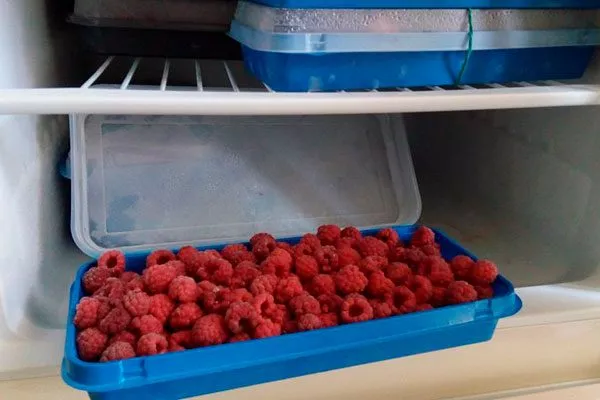
After harvesting, it is recommended to cool the harvest immediately by placing the berries in shallow containers and storing them in a refrigerator at approximately +5°C. This variety boasts excellent shelf life – fresh berries retain their marketable appearance for up to 7 days, making it particularly advantageous for commercial cultivation.
Landing rules
Before planting, it's important to select a high-quality seedling, determine a suitable site for the bushes, and familiarize yourself with the recommended layout. It's important to follow certain requirements.
Selecting a seedling and planting time
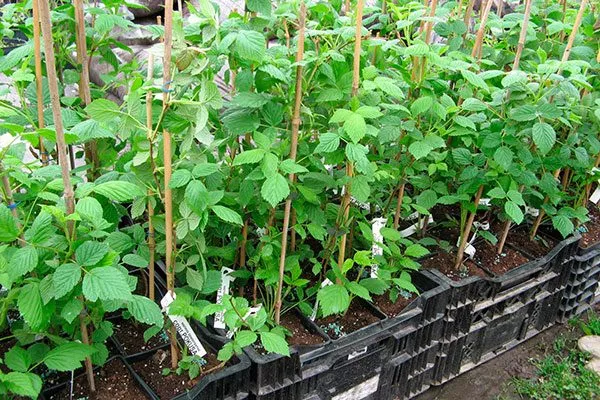
To ensure consistent harvests, it's important to use healthy, high-quality planting material. Helpful tips:
- The safest way to purchase seedlings is from specialized nurseries, where varietal purity is guaranteed.
- A good plant has a stem as thick as a pencil, live buds and a well-developed root system.
- Seedlings in peat pots can be planted throughout the warm season. If the roots are exposed, planting is best done in the fall in southern regions, and in temperate climates, early spring, after the snow melts.
Site selection and preparation
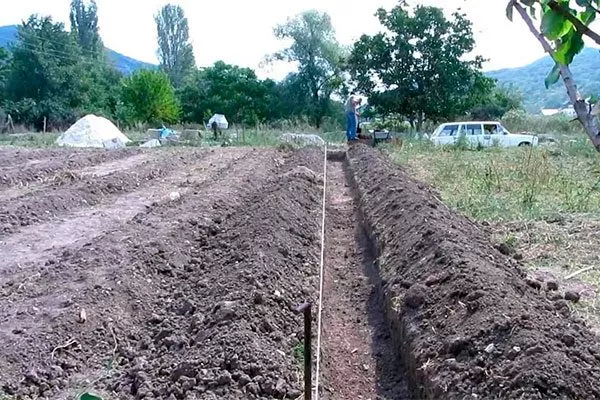
To plant raspberries, choose a sunny location protected from drafts. It's important to choose a site with good drainage—stagnant soil negatively impacts plant development, so lowlands and marshy areas are not suitable.
Basic requirements:
- The optimal soil pH for raspberries is 5.5-6. Higher pH levels impair the absorption of micro- and macronutrients, leading to nitrogen deficiency and reduced yield.
- Soil fertility directly affects the quality and quantity of the harvest.
- Raspberry Ridge responds best to organic fertilizers – apply them during autumn digging, enriching the soil with natural nutrients.
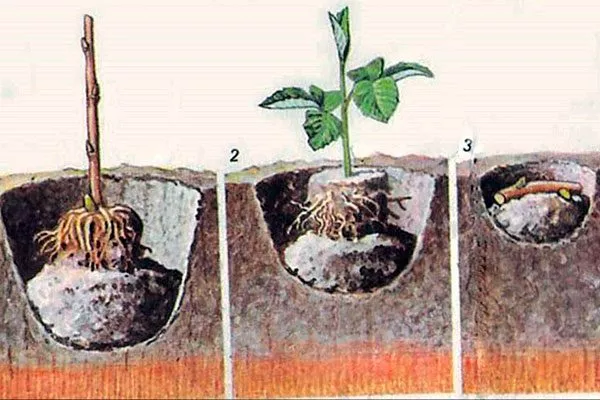
Planting diagram and process
The distance between planting holes should be approximately 60 cm, and the depth is determined by the branching and structure of the plant's roots. Fill each hole with 10 kg of fertile soil enriched with complex mineral components.

Follow the rules:
- When creating a strip planting scheme, leave at least 1.5 m between rows to ensure good ventilation and ease of maintenance.
- If you plan to harvest the crop mechanized with a combine, increase the row spacing to 2 m.
- When planting, carefully straighten the roots, and after installing the seedling, mulch the soil around it.
Care instructions
To achieve a high yield, systematic and comprehensive plant care is essential. It's important to follow simple agricultural practices. Even novice gardeners can easily master these.
Watering
For commercial raspberry farms, use drip irrigation, which allows for precise humidity control and provides the plants with the required amount of water. In garden plots and homesteads, irrigate the soil as it dries out.
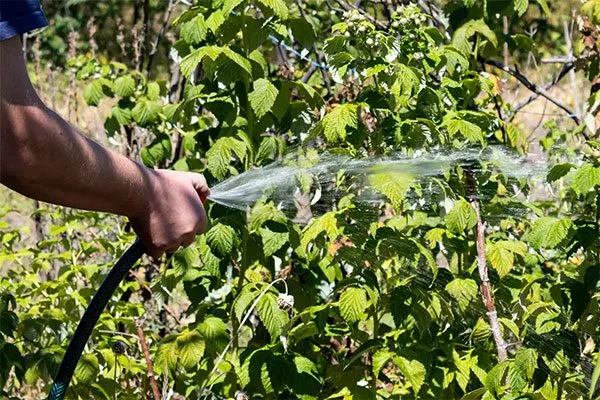
On hot summer days, water more frequently to prevent the roots from drying out. Each bush requires at least 9 liters of water per watering. Regular watering, especially during berry set, helps improve productivity.
Trimming
This variety is recommended for growing as a remontant one. For the Raspberry Ridge, follow these guidelines:
- After fruiting on the second-year shoots has finished at the end of June, cut them out, allowing the one-year shoots to develop freely and produce a good harvest in August.
- If you plan to get one harvest from the current season's shoots, cut off all fruiting branches at ground level in the fall.
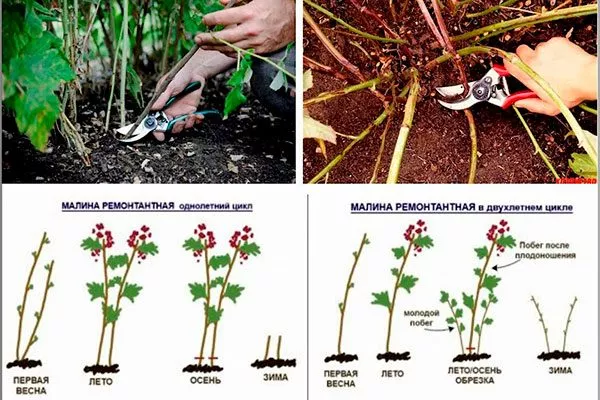
In temperate climates, perform this type of pruning in the spring, which helps retain snow around the bushes. In regions with wet, snowless winters, prune to prevent the proliferation of insect pests. Regular sanitary pruning is also necessary throughout the season.
Top dressing
Begin fertilizing the bushes in early spring of the third year after planting. Nitrogen-containing fertilizers are especially important for vigorous growth. The best natural options are diluted mullein (in a ratio of 1:8) or chicken manure (1:25).
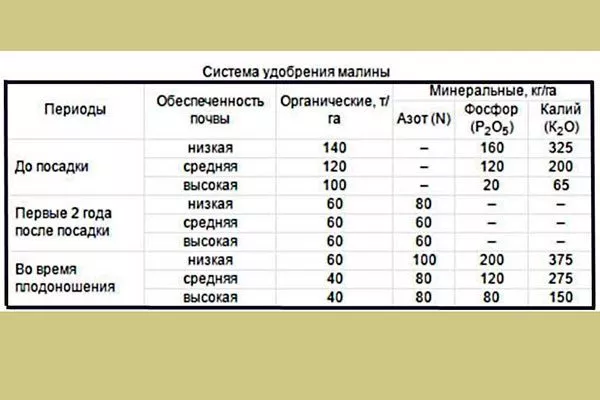
Before flowering and during fruit formation, apply foliar micronutrient fertilizers once a week. To increase berry sweetness, apply fertilizers with increased phosphorus and potassium levels in July.
Diseases and pests
The Raspberry Ridge variety is highly resistant to diseases and has a good ability to recover from insect damage.
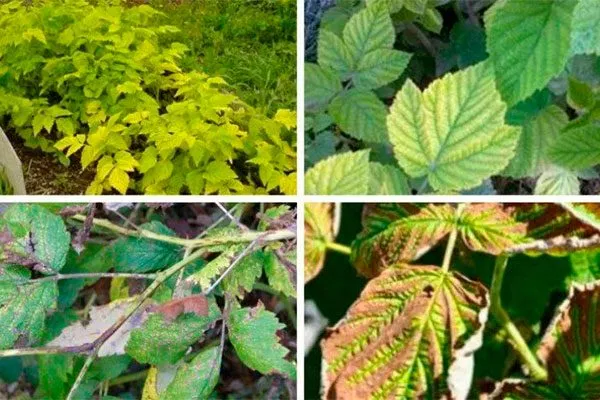
With proper agricultural practices, the risk of anthracnose, purple spot, rust, and gray mold is minimal. This allows the variety to be grown without the use of chemical pesticides, making it environmentally friendly.
Important recommendations:
- In unfavorable climates with cold and prolonged rainfall, spray the bushes and soil with a 3% Bordeaux mixture solution as a preventative measure. This treatment is also recommended if fungal diseases are detected near the plantings.
- Physiological chlorosis can occur due to high humidity combined with cool weather, overly alkaline soil, or magnesium and nitrogen deficiencies. Once these factors are eliminated, plants quickly recover.
- To protect against insect pests, spray the bushes with a soapy solution about every two weeks. Additionally, you can plant herbs around the perimeter of the planting—dill, fennel, garlic, and basil—their essential oils repel slugs and other pests.
Preparing for winter
Sometimes, the roots of the Raspberry Ridge can be damaged by snowless frosts in December. Therefore, for the winter, cover the rows with pruned shoots with a layer of mulch—peat or humus.
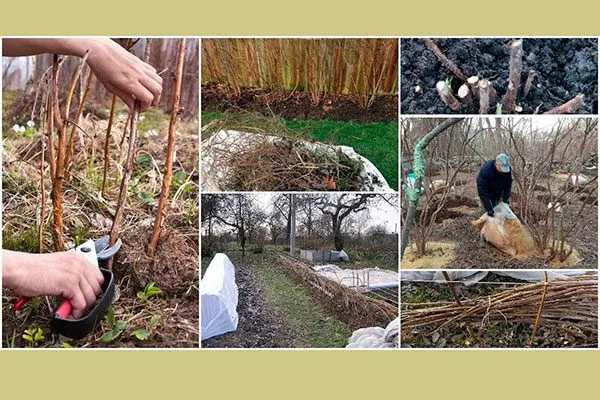
When growing commercially, avoid pruning branches in the fall, as this promotes the accumulation of a thick snow cover. This will ensure the soil retains the necessary moisture in the spring. Prune last year's shoots immediately before the growing season begins, in March, cutting them at the base.
Harvesting
Everbearing raspberries ripen gradually—up to 20 berries can ripen on a single branch at a time. You can pick the ripe berries, make jam, and then return a week later for more ripe ones.
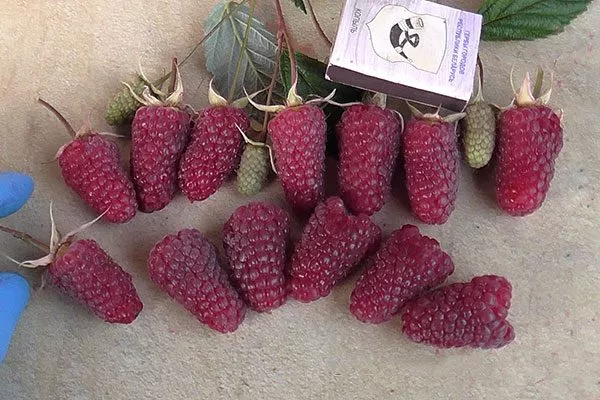
Harvest in dry weather. For transport, pick the berries slightly unripe and firm, and store at temperatures between 0 and 5°C for several days.
Reproduction
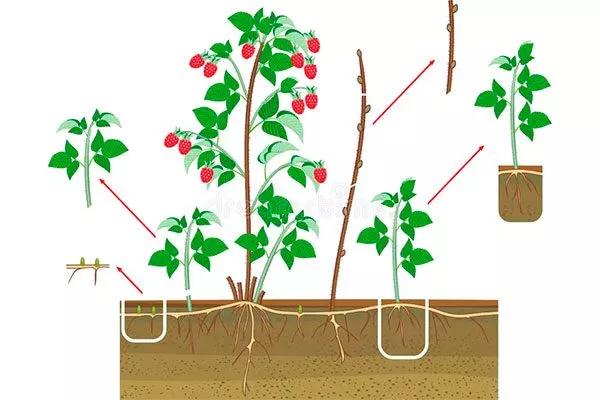
The easiest way to increase the number of raspberry seedlings is to separate root suckers or young shoots in the spring. Basic requirements:
- Vegetation develops from adventitious buds on a horizontal rhizome, which can extend 3-4 meters from the parent plant. These buds awaken and produce young shoots, which eventually develop their own root system. By digging up these shoots, you'll obtain a large number of healthy seedlings.
- For propagation, select shoots approximately 10 cm tall. Carefully dig up the roots with a shovel, and immediately transplant into containers with drainage holes and fertile soil.
- To plant seedlings, prepare a soil mixture of sand, humus, peat, and black soil. Alternatively, you can use a ready-made soil mixture made with peat and vermicompost. Add Osmokot complex fertilizer to the soil at a dose of 4 g per 1 liter of substrate to nourish the seedlings.
Similar varieties
The Malinovaya Gryada variety is often compared to Karamelka, another everbearing raspberry bred at the Shkolny Sad nursery two years earlier. Karamelka yields approximately 5 kg per bush, with berries weighing between 6 and 12 g.

This variety is suitable for both commercial plantations and private gardens. According to reviews, Karamelka's berries have a sweeter flavor, while its aroma is bright and rich, similar to Malinovaya Rida.
Pros and cons
Reviews
The Malinovaya Gryada raspberry combines good productivity and resistance to adverse conditions. The berries are firm and rich in flavor, and the bushes quickly recover from damage. Thanks to its versatility and ease of care, this variety deservedly holds a leading position in gardens and plantations.