
The Kirzhach raspberry is a variety favored by many gardeners. The berries are renowned for their excellent taste and attractive characteristics. The bushes themselves require little care, and growing them is quick and easy.
Description of the variety
The long-established raspberry variety Kirzhach has been around for over two decades. It was developed by renowned breeder V. V. Kichin, a professor at the All-Russian Institute of Selection and Technology of Horticulture and Nursery.
The then-famous varieties Moling Promise and Carnival were used for the crossbreeding. In 1994, the variety was added to the State Register of Russia. The plant was bred specifically for the Northwestern and Volga-Vyatka regions. It can withstand sudden winter thaws, but does not tolerate Siberian frosts well.
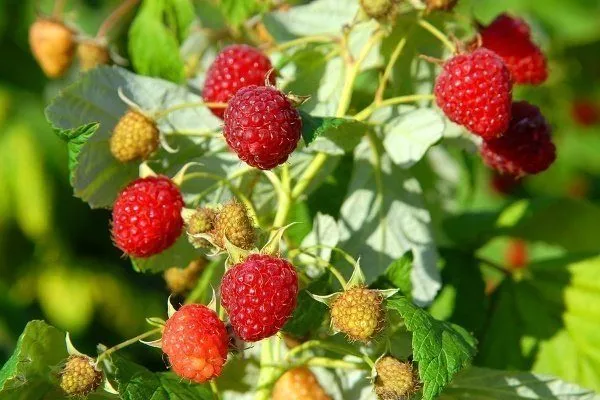
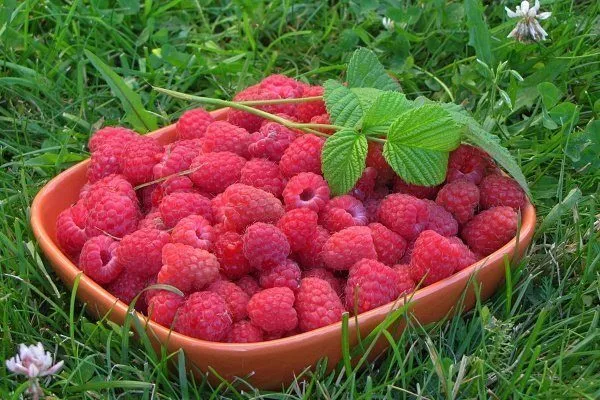
This variety is characterized by high yields and undemanding soil conditions. This mid-early variety delights gardeners with its sweet-tart berries, which have a distinctive raspberry flavor. The berries are conical, wide at the base, and weigh 2-3 grams. The flesh is firm. Its advantages include good shelf life and its appearance remains intact during transportation.
This is a vigorous plant, capable of growing up to 2.5 meters tall. Young green shoots grow upright. The berries ripen during the summer. Compared to fashionable everbearing, large-fruited, and early-ripening varieties, this raspberry variety is less demanding. The plant produces a good harvest in all weather conditions. On average, a single bush yields about 3 kg of berries.
We recommend reading this article, which will tell you about popular raspberry varieties.
Preparing for landing
Raspberry planting in the fall is done in the south in late September or early October. In the north, gardeners recommend planting in the spring to prevent the plants from freezing when the early frost sets in. In temperate climates, it's best to plant in the fall, but spring is also acceptable.
- ✓ The optimal soil pH level should be between 5.5-6.5 to ensure better absorption of nutrients.
- ✓ The soil must have good drainage to avoid waterlogging and root rot.
Be sure to select a sunny site. Avoid shaded areas with strong winds. Sandy and loamy soils are especially suitable for raspberries. Avoid planting in lowlands, on steep slopes, or on open hillsides.
Before planting, soak the cuttings in a solution to prevent disease. It's important to prune weak shoots to promote faster growth. Planting is best done while the soil is still moist—in spring or fall after rain.
The best predecessors for raspberries are carrots, garlic, beets, and onions. It's not recommended to plant them where tomatoes or potatoes were previously grown. The main preparation is to dig the soil and apply fertilizer.
Planting diagram and process
Because Kirzhach is often susceptible to root cancer, bushes are planted as far apart as possible. Ideally, leave 25-35 cm between bushes in a row and 45-55 cm between rows. If you have a large garden plot, it's advisable to increase each of these distances by an additional 10-15 cm.
How to prepare for planting raspberries:
- Three weeks before planting, dig holes measuring 45x100 cm.
- A layer of compost or rotted compost is placed at the bottom of the holes.
- Add double superphosphate on top, sprinkle it with fertile soil, and make a mound.
- Place the cutting, carefully spreading the roots. Fill with the remaining soil, compact it, water, and mulch with sawdust, humus, or dry straw.
If the bushes are planted densely, it will be difficult to get to them when harvesting.
Caring for Kirzhach
The Kirzhach raspberry is an easy-to-care-for variety. Even if left unattended, it will still produce fruit. However, to ensure high yields and enhanced flavor, it's advisable to follow simple care guidelines, including watering, fertilizing, pruning, tying, and preparing for winter.
Watering
Proper watering will ensure a bountiful harvest of aromatic fruits. This procedure depends on the growing area's climate and summer weather:
- During dry weather, shrubs are watered approximately once every 10 days. Particular attention is paid to watering during the flowering period.
- In early spring, it is not necessary to water plants abundantly, because at this time the soil is saturated with melt water.
- At the end of May and the beginning of June, watering is simply necessary, since this is what determines the yield of the entire season.
| Irrigation method | Efficiency | Recommended frequency |
|---|---|---|
| Drip | High | Once every 7 days |
| Sprinkling | Average | Once every 10 days |
| Surface | Low | Once every 5 days |
When watering, it's important to remember that raspberries' root system extends not only along the soil surface but also to a depth of up to 30 cm. Therefore, it's important to saturate the soil to this depth. When planting in rows, a 10-meter row requires approximately 200 liters of water.
Processing
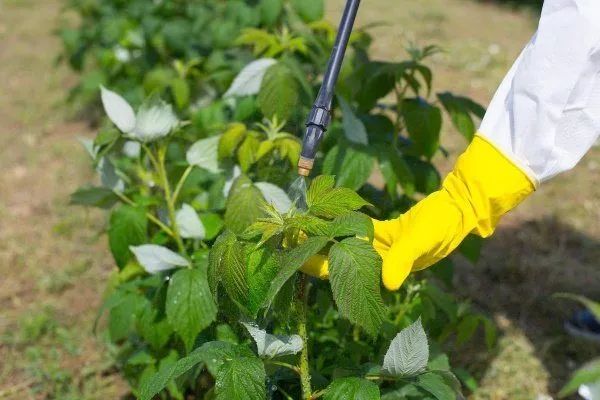
Treatment is carried out before flowering, during fruit set, and at the beginning of fruit formation, using a foliar mineral complex containing potassium, calcium, a small amount of nitrogen, and microelements. The taste, density, and juiciness of the berries, as well as their ability to accumulate sugar, are directly dependent on this mineral treatment.
Fertilizer
Proper fertilization with organic and mineral fertilizers will ensure a bountiful and high-quality harvest. Beginning gardeners should know that fertilization should be done alternately.
When loosening the soil around bushes in the spring, add mullein at a rate of 8 kg per square meter of soil. Urea is added annually in the spring: 20 g dissolved in 10 liters of water. This solution stimulates plant growth and enhances its protective functions.
It's equally important to treat the bushes during the flowering period. For this purpose, we recommend using boric acid: dissolve 20 g in 10 liters of water. During the fruiting period, treat the bushes with nitrophoska: dilute 20-30 g in 10 liters of water. Pour the solution under the bush.
Preparing the soil for winter should also be accompanied by fertilizing - add a solution of 10 liters of water and 25 g of superphosphate dissolved in it or 10-15 g of potassium chloride.
Pruning and garter
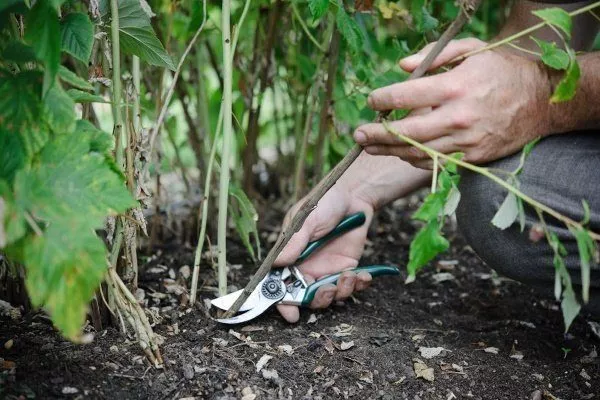
Branches are pruned in spring and autumn: dry, diseased and weak branches are removed, damaged or dead branches are removed.
It's advisable to tie up the bushes, as they can grow tall. This will prevent the branches from sagging when they break under the weight of ripe berries.
Preparing for winter
The Kirzhach raspberry does not tolerate frost well, so it's important to properly prepare the bush for winter. In the fall, before the onset of frost, mulch the soil. Hay, sawdust, pine needles, or shredded bark can be used as mulch. The layer of this material should be at least 20 cm thick.
To protect the root system from freezing, raspberry canes are bent back and tied at ground level for the winter. Trellis are also used for this procedure. The bottommost wire is secured 30-50 cm above the ground. The bent canes are tied to this row.
If your region experiences harsh winters, simply bending the branches won't be enough. In this case, you'll need to build special barriers to protect the plants from strong winds and heavy rainfall, or use a covering material. Protective structures are made of cellular polycarbonate or moisture-resistant plywood.
Reproduction
Raspberries are propagated by green or root cuttings. If a gardener decides to propagate the bush using green cuttings, it's best to do so in the summer:
- Cut the cuttings at the very root.
- Shorten the planting material to 7-10 cm.
- Soak the roots in a root stimulating solution for 12-15 hours. Use root stimulators such as Kornevin, Heteroauxin, indolebutyric acid, and others.
- The cuttings are planted in a greenhouse or under film, maintaining an optimal temperature of 22-25 degrees and a constant level of air humidity.
- It's advisable to install a misting system. If this isn't possible, ensure the cuttings are constantly watered.
Full rooting is expected within 30-35 days. After this, the plants, along with the greenhouse soil, are planted in their permanent location.
Spring is considered the best time to propagate by root cuttings. A root cutting is a portion of the root system with a lateral branch. Once separated, it is planted immediately. However, it is best to do this during warm weather, when the air temperature reaches 22-25 degrees Celsius. Water the root cuttings regularly for the first few weeks. Full rooting in the soil is expected within 20-25 days.
Diseases and pests
The Kirzhach variety is resistant to spider mites and anthracnose. However, raspberries are susceptible to other diseases and pests, so it's important to be aware of them to prevent them in time:
| Disease/pest | Causes and symptoms | Treatment/Prevention |
| Purple spot | The cause of the disease may be too closely spaced plantings, high air humidity, proximity to groundwater, and oversaturation of the soil with nitrogen.
This is a fungal disease that spreads across the entire plant in dark spots. The shrub begins to wither, as the disease prevents it from receiving proper nutrition and developing. | The diseased plant is cut out. In late autumn, during leaf fall, the plant is treated with pharmaiodine – 3-5 ml of iodine per 10 liters of water. |
| Raspberry blossom weevil | This is a black, elongated beetle that causes significant damage to raspberry plants. Sometimes it can destroy 50-80% of buds. Females lay eggs in the buds and gnaw at the stems. The buds wither and fall off. | When buds appear, before they open, spray with a garlic infusion as a deterrent: crush 500 g of cloves, place in a 3-liter jar, cover with warm water, and let steep for 5 days in a dark place. Strain. Dissolve 60 ml of the infusion in 10 liters of water, add 50 g of crushed laundry soap, and spray the bushes. Repeat the treatment 2-3 times daily. |
| Root cancer | The main reason for raspberry infection is failure to comply with agricultural conditions.
The first symptoms of the disease appear as dark swellings on the roots. These growths can be the size of a walnut. Raspberry bushes weaken, growth and development slow, and the berries become small. | Prevention of root cancer begins with purchasing healthy and strong seedlings. |
Advantages and disadvantages of the Kirzhach raspberry
The Kirzhach raspberry variety has both advantages and disadvantages. Experienced gardeners note that this variety is well suited for home growing. The fruits, although small in size, have excellent flavor.
The main advantages of the variety:
- Unpretentiousness. The variety thrives in any soil.
- High-quality berries. The fruits are tasty, firm, and easy to transport. For these reasons, this variety is suitable for commercial use.
- Easy to care for. This variety is undemanding. However, with the right approach, you can achieve maximum yields.
- An incredible aroma. Kirzhach smells like wild raspberries, prized by berry lovers.
What are the disadvantages of this variety:
- Small berries. Compared to recently bred varieties, the Kirzhach raspberry fruits are small.
- Poor winter hardiness. This variety is recommended for cultivation in southern regions. In the north, special winter protection will be required.
Gardeners' reviews of the variety
Gardeners generally have positive reviews about the Kirzhach raspberry.
The Kirzhach raspberry is an easy-to-grow plant, producing abundant fruit even without care. However, with regular watering, fertilization, and cultivation, the yield can be increased, resulting in a large harvest that can be used for personal consumption or for sale.