
The Lyachka raspberry is a subshrub of the Rosaceae family and the Rubus genus. It is characterized by frost and drought resistance, temperature fluctuations, and excellent fruiting. It is suitable for cultivation in both home gardens and large agricultural complexes—it is transportable and has a long shelf life.
History of selection
The Laszka variety was developed in Poland. It was bred by Polish botanist Janusz Danek, who introduced this new variety in 2006, naming it after the town of Laszka. Various spellings of this variety can be found in various sources:
- Lyashka;
- Lasha;
- Lyashko;
- Lyapshko;
- Lachka.
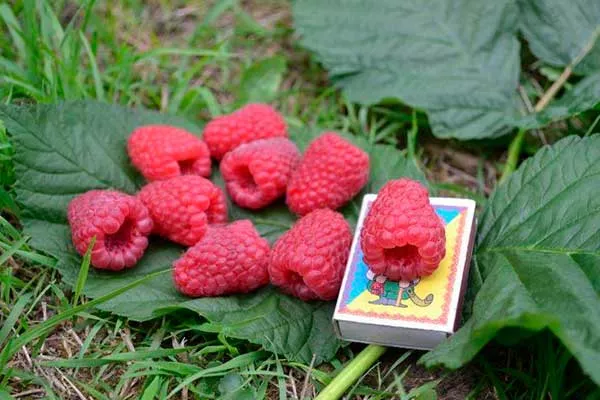
Since its introduction in Poland, the Lyachka variety has gained popularity throughout Europe. In 2009, it was registered in the Ukrainian variety catalog. Since then, this raspberry variety has become available for cultivation in Belarus, Moldova, and Russia.
Description of the bush
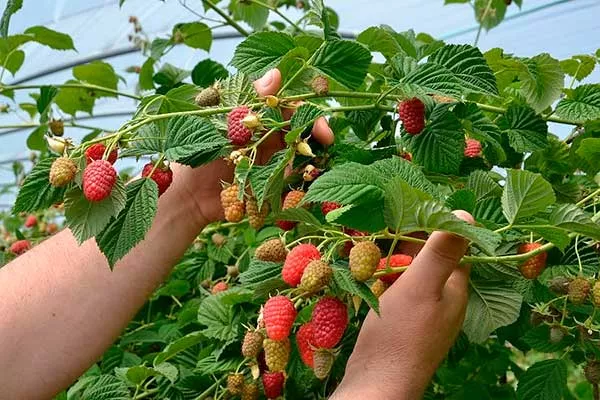
The subshrub is characterized by tall, tree-like growth, so Lyapshko reaches 250 cm in height. It also possesses other varietal characteristics:
- shoots of an erect type with a very strong and elastic structure;
- There are a large number of thorns on the branches, but they are small;
- the edges of the leaf blades are pubescent and serrated, and the shape is classic oval;
- the foliage is bright green;
- the root system is located in the surface layers of the soil, it is fibrous, but with a small number of shoots;
- the central root goes deep to 50-60 cm, the shoots do not spread over long distances, as they are intertwined into a single ball;
- the bark is green when young, but turns brown in the second year of shoot life;
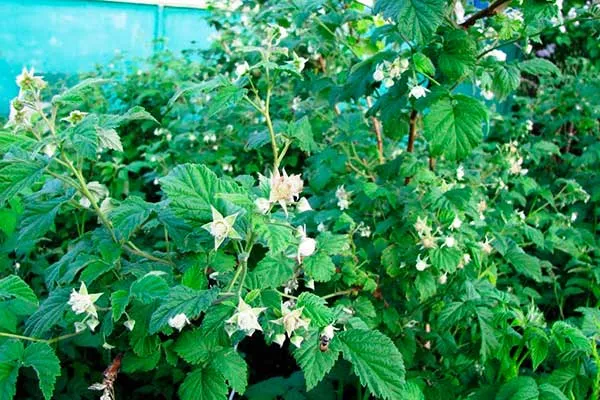
- The flowers are snow-white and small, located in a racemose inflorescence of 8-12 pieces.
Berries and their taste
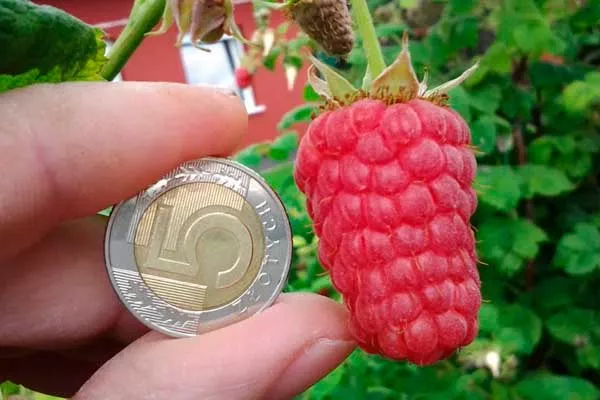
The drupes are quite large – their length varies from 3 to 5-6 cm, and their weight is 6-8 g, and sometimes more.
Other characteristics:
- the shell of the drupes is orange-red, juicy and fleshy;
- the surface of the fruit is slightly pubescent;
- the shape is oval, but some specimens grow like a triangle with an elongated end;
- the main color of the berries is deep red;
- the pulp has a pleasant, compact texture and is juicy.
The flavor of fully ripe fruits is characterized as sweet with a slight tartness. Due to the dense flesh, the berries retain their shape well, making them ideal not only for eating fresh but also for freezing and making jams and compotes.
Ripening time
The Lyashko raspberry is distinguished by its everbearing nature, allowing it to produce a harvest not just once, but several times throughout the season. The first ripe berries appear on the bushes quite quickly. The harvest season begins in June-July (the exact time depends on the current weather and climate conditions) and lasts until the first autumn frosts.
Productivity
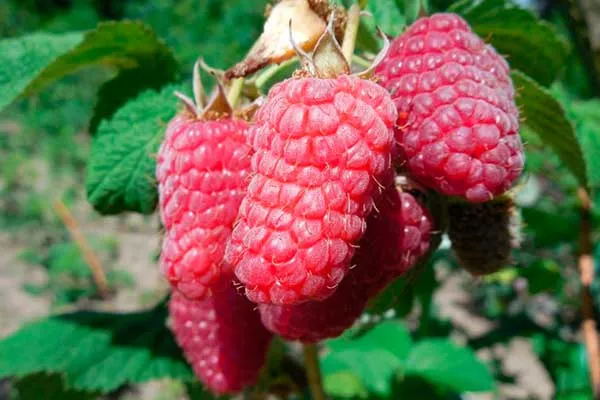
The raspberry bush is quite productive. This variety begins bearing fruit the following season after planting. It boasts a long fruiting period—the harvest is gradual, throughout the summer. Even by early autumn, ripening berries can still be found on the bushes.
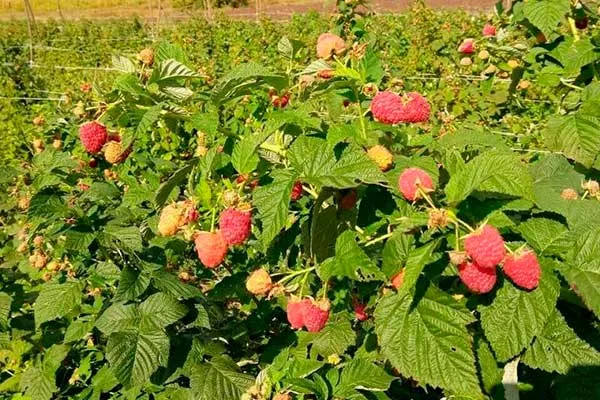
The average yield per bush ranges from 3 to 5-6 kg, and on an industrial scale can reach 20 tons per hectare. This yield is possible with proper agricultural practices and plant care.
Regions suitable for cultivation
Lachka prefers temperate continental climates, typical of central Russia. This variety requires adequate precipitation, especially in the form of snow in winter, at temperatures ranging from -8 to -12 degrees Celsius, and higher humidity in summer.
Pollination
Raspberries are capable of producing fruit without any interference with pollination, as they are fully self-fertile. However, to increase the yield, pollination by bees is essential. They transfer pollen from one flower to another, which promotes more efficient fruiting.
Features of cultivation
To successfully grow Lyapshko raspberries, it's important to ensure sufficient sunlight, otherwise the berries will be too sour. Also, consider other varietal requirements:
- When planting raspberries, take into account the required spacing between rows - it should be at least 150 cm, and within one row a distance of 50 cm is maintained.
- Planting the Polish raspberry variety doesn't require any special techniques compared to other varieties. The bushes prefer loose, moist soil that allows the roots to receive sufficient oxygen.
- Avoid stagnant water, as excess moisture negatively affects the health and fruiting of the plant, so the site should not be located in a lowland.
- The lyachka is particularly demanding of the chemical composition of the soil and requires a large amount of nutrients, so the shrubs are fed, often using fertilizers with a high nitrogen content when planting.
- ✓ The optimal soil pH level for Lyachka raspberries should be within 5.5-6.5.
- ✓ The distance between rows should be at least 2 meters to ensure sufficient ventilation and access to sunlight.
Selecting a site and preparing the soil
Selecting a site for raspberry cultivation requires special attention. Ideally, it should be large and sunny, with natural protection from gusty winds and cool air currents an added advantage.
Other features:
- Prepare metal structures to support plants in advance.
- Place seedlings in double rows, oriented north to south.
- To plant raspberry seedlings, dig holes measuring 40-50 x 40-50 cm. Form a small mound at the base of the hole, and place the young bush on it. Gently spread the root system, ensuring the plant's growth level is 4 cm above the soil surface.
- After planting, carefully compact the soil and thoroughly water the seedlings.
Subsequently, apply mulch around the plants using prepared compost, sawdust, or straw. This helps maintain optimal moisture levels, protects plants from sudden temperature fluctuations and drought, and provides an additional source of nutrients for the soil.
Trimming
When planting, perform an initial pruning, shortening branches directly at the base. This promotes rapid root strengthening and establishment and protects the upper part from fungal diseases.
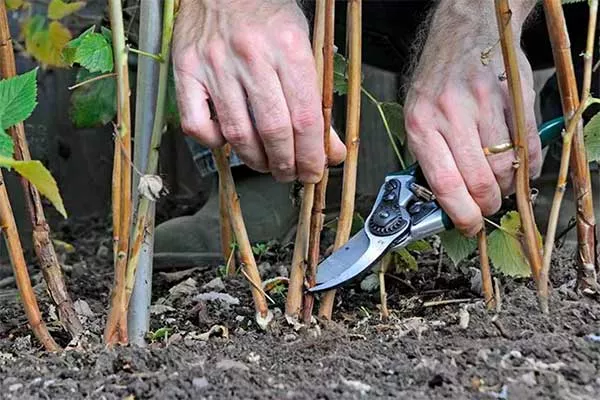
Further procedures are carried out according to the following scheme:
- During the first year, in April-May, remove weak branches. This allows you to optimize planting density in the area, limiting their number to 10-13 per square meter.
- The next pruning should be done immediately after harvesting (usually in August-September). During this period, remove branches that are already two years old, leaving only young shoots up to 12 months old. Additionally, thin out green shoots, maintaining a distance of 15-18 cm between them.
- In the second year, to stimulate the plant to awaken more quickly after the winter period, lift and prune the tops by 15 cm. After this, tie the shoots to the support with wire or rope.
Watering and fertilizing
Raspberry care includes moderate irrigation, which should be adjusted to the current temperature. Too much water can be harmful, while too little moisture reduces the quality of the harvest. With natural precipitation, irrigation is not necessary. During budding and ripening, the bush especially needs water. A drip irrigation system is optimal.
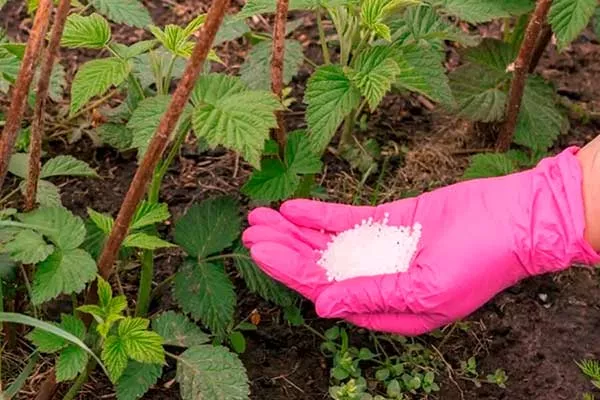
Sprinkler irrigation is often combined with fertilizing. In early spring, organic and inorganic fertilizers with a high nitrogen content are used to stimulate the growth of green parts. For this, dissolve 1.5-2 tablespoons of urea in 10 liters of water. Raspberries also require standard mineral complexes.
Frost resistance and preparation for winter
The Lyachka variety thrives in cold climates thanks to its resistance to low temperatures. These shrubs can easily withstand temperatures as low as -30°C (-22°F), but to prevent potential problems, take additional protective measures.
- Prune old and diseased shoots at the end of October.
- Place a 10-15 cm layer of mulch around the bushes to protect the roots from frost.
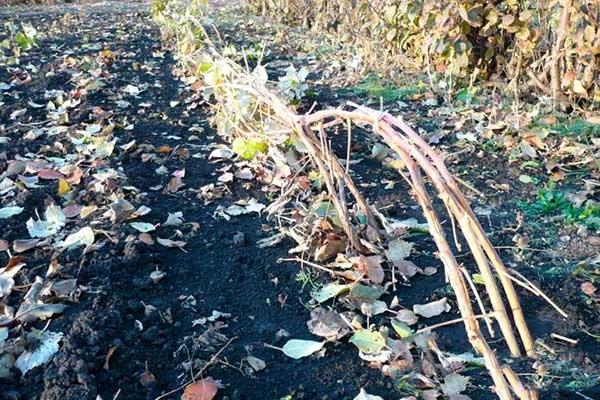
- Bend the shoots to the ground and secure them before severe frosts set in.
To ensure successful wintering, do the following:
- Loosen the soil around the shoots.
- Apply necessary fertilizers to maintain the health of the bush.
- Cut off old and diseased shoots and burn them to prevent the spread of diseases.
- Finish the process of mulching the soil around the bush to retain moisture and heat.
During severe frosts, bundle the shoots and press them into the soil. Cover them with non-woven material or sprinkle them with a thick layer of snow.
Diseases and pests
Lyashka is highly disease-resistant—thanks to its natural genetic makeup, it's resistant to many fungal infections. Simple preventative steps are all it takes to maintain health and immunity:
- select seedlings with special care when planting them;
- trim and thin out the bushes from time to time;
- avoid excessive soil moisture;
- Treat plants with chemicals at the right time: in the spring before flowering and in the fall after harvesting;
- If signs of disease appear, promptly remove the affected parts of the plant.
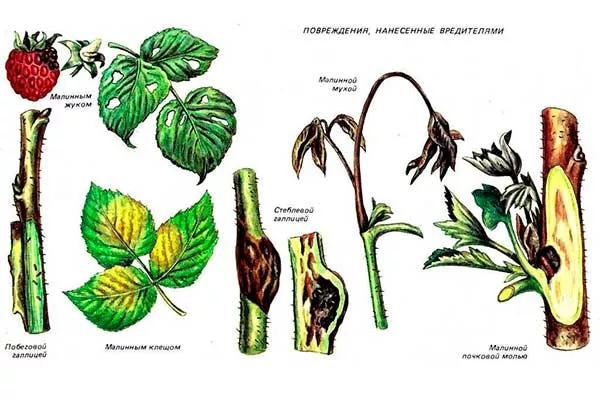
Among the pests for Lyachka, the most dangerous insects are:
- Raspberry beetle, which damages young leaves, buds, and flowers. Preventative measures include fertilizing with organic matter and wood ash, thinning bushes, removing weeds, and loosening the soil.
If a beetle is found on a plant, effective remedies include Alatar, Kinmiks, Fufanon, Karbofos, and Iskra. Alternatively, folk remedies can be used, including infusions of tansy, potassium permanganate, tobacco, and baking soda. - Raspberry fly, This pest damages plant stems. To combat it, use both chemical and biological insecticides, as well as traditional methods. In addition to insecticides used against the beetle, you can purchase Fitoverm and Agravertin. It is important to immediately remove and destroy infected shoots.
- Raspberry-strawberry weevil. Its larvae can significantly reduce crop yields and damage the leaves of cultivated plants. Pest control options include Entonem-F and Nemabact, as well as effective folk remedies such as hot pepper decoction, mustard juice, and ammonia and tansy flower tincture.
- Gall midge – A pest that damages young shoots. Dandelion infusion, onion peel decoction, and tansy and wormwood sprays are effective in controlling it. Dry mustard mixed with water can also be used. Chemical control options include Arrivo, Iskra M, Calypso, Confidor, or Karate.
Reproduction
Lyachka bushes are distinguished by their high productivity of root suckers, which allow for the rapid production of healthy young plants. To achieve this, the suckers are transplanted when they reach a height of 20-25 cm.
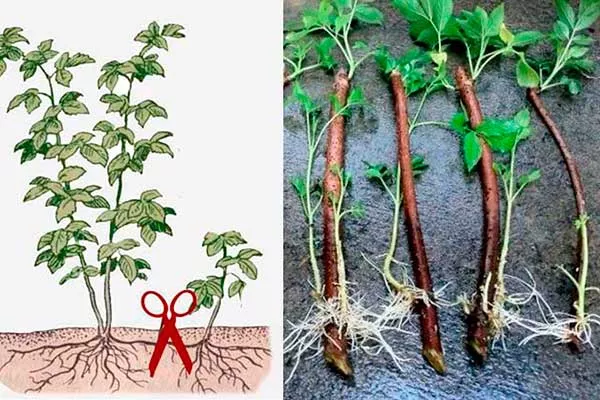
Some garden plot owners use rooting green cuttings or dividing the bush. These methods are not used often, but they are quite effective when planting material is limited. Pre-prepared seedlings are also purchased from specialized nurseries, where they are grown for sale.
Storage of the harvest
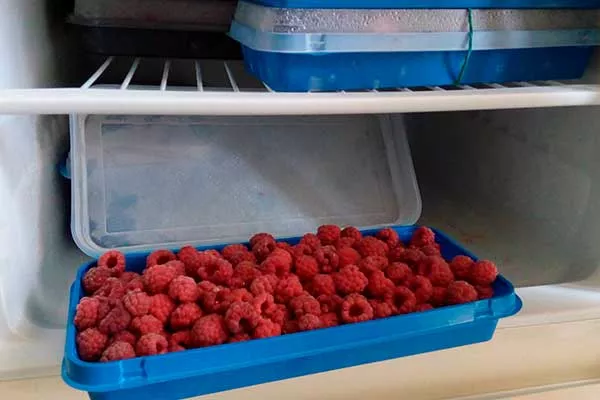
To prevent raspberries from wilting, store them at room temperature for no more than 8 hours. To preserve the harvest for 7-9 days, place them in a cool place, preferably the refrigerator.
Advantages
This raspberry variety has truly unique characteristics, thanks to which experienced gardeners have identified a number of positive aspects:
Flaws
The Lyachka raspberry has excellent characteristics, but experienced gardeners have also identified some shortcomings in this variety. According to their assessment:
Reviews
The Lashka raspberry, as it's also known, is characterized by excellent fruit quality, hardiness, and strong immunity. Gardeners recommend replanting raspberry bushes every 5-6 years, as yields begin to decline sharply after this period.