
When choosing raspberry varieties for the Moscow region, the primary consideration is the local climate. In addition to the standard varieties suitable for growing in this region, you can find varieties with any preference—large-fruited, sweet, with black or yellow berries, with giant fruits, and so on.
How to choose a raspberry variety for the Moscow region?
Although summers in the Moscow region are warm, growing garden crops here carries certain risks. To minimize the impact of adverse climatic and weather factors, it is necessary to plant varieties suitable for the region.
- ✓ Resistance to recurrent frosts, which can damage flowers.
- ✓ Ability to withstand summer rains without reducing yield.
- ✓ Adaptation to poor soils with the need for additional feeding.
Conditions in the Moscow region:
- Cold winter. Temperatures here drop to -30°C. There have been years when the thermometer has frozen at -45°C.
- Risk of recurrent frosts. They damage raspberry flowers and reduce its yield.
- Summer rains. They often cause diseases and reduce crop yields.
- Poor soils. Raspberries prefer fertile soil, something most of the region cannot boast. Raspberry bushes require fertilizing.
When choosing a variety for planting in the Moscow region, consider its tolerance to adverse growing conditions. Frost-hardy varieties with good immunity are recommended. They also shouldn't be too late-ripening to ensure a good harvest during the relatively short summer.
The best varieties
Over forty raspberry varieties are recommended. They differ in ripening time, yield, color, flavor, fruit size, winter hardiness, and other characteristics.
| Name of the variety | Disease resistance | Pest resistance |
|---|---|---|
| Hussar | High | Average |
| Kuzmin's news | Average | High |
| Bryansk | Low | Low |
Early
| Name | Ripening period | Disease resistance | Frost resistance |
|---|---|---|---|
| Hussar | Early | High | High |
| Kuzmin's news | Early | Average | High |
| Bryansk | Early | Low | High |
| Kirzhach | Average | High | Average |
| Peresvet | Average | High | High |
| Samara dense | Average | Average | High |
| Moscow Giant | Late | High | Average |
| Bogatyr | Late | High | High |
| Hercules | Remontant | High | Average |
| Patricia | Remontant | Average | Average |
| Tarusa | Remontant | High | High |
| Orange miracle | Remontant | Average | Average |
| Yellow giant | Remontant | High | High |
| Cumberland | Average | High | High |
| Bristol | Average | High | High |
| Caramel | Remontant | High | High |
| Fairy tale | Remontant | High | High |
| Pride of Russia | Average | High | High |
| Brilliant | Average | Average | High |
| Lazarevskaya | Early | Low | Average |
| Crane | Late | Average | High |
| Monomakh's Cap | Remontant | High | Average |
| Octavia | Average | High | High |
| Firebird | Remontant | High | Average |
| Diamond remontant | Remontant | High | High |
| Raspberry Ridge | Remontant | High | High |
| Atlas | Remontant | High | High |
| Penguin | Remontant | High | High |
The berries ripen on them in the second half of June, when nothing has yet ripened in the gardens and berry patches.
Hussar
A variety with vigorous, spreading bushes. Its berries received a 4.2 out of 5 rating from tasters and are suitable for all purposes—eating them fresh, making jams and compotes, and freezing. Moreover, these raspberries retain their flavor when frozen.
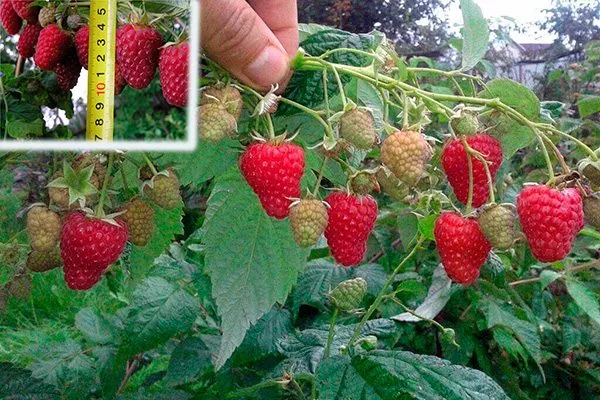
The bushes reach 2.7 m in height. Two-year-old shoots are straight, covered with thorns at the base. The fruits are large, averaging 3.2 g in weight, and bluntly conical in shape. The sugar content is 10.8%. The yield is 83.6 c/ha.
Kuzmin's news
This dessert variety is cold-resistant, frost-hardy, and hardy. Two-year-old shoots droop heavily, with moderate pubescence.
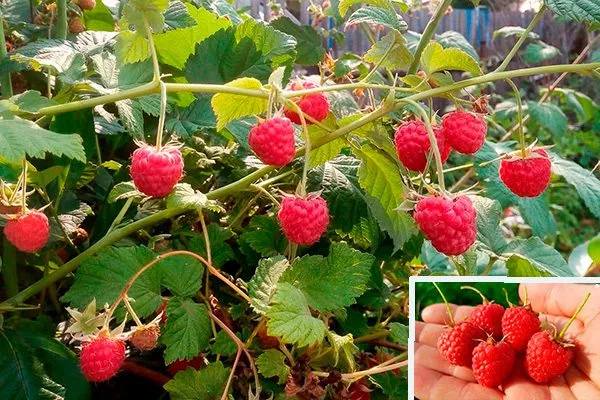
The fruits are red, blunt-conical or elongated. This variety consistently receives the highest score for flavor—5 stars. It also has a very pleasant raspberry aroma. Yields are 50-70 centners per hectare. One bush yields 1.5 kg of berries.
Bryansk
Unpretentious and recommended for beginner gardeners, this variety is frost-hardy and self-fertile, but is often susceptible to pests. It has vigorous bushes with upright shoots and drooping tops.
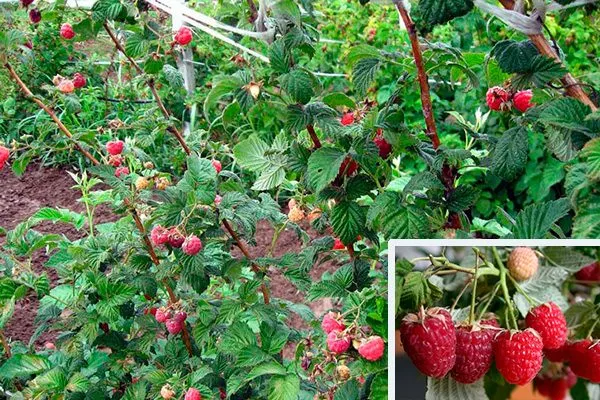
The fruits are large and ruby-colored. The average weight is 3 g. The taste rating is 4.7 points. The shape is round or obtusely conical. This variety is in demand throughout Russia and even in neighboring countries. Yields range from 50 to 80 centners per hectare.
Medium mid-late
For late cultivation in this region, mid-season and mid-late varieties are recommended.
Kirzhach
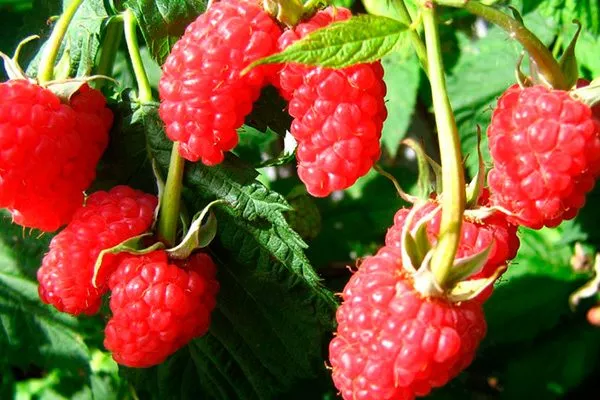
This variety was bred 20 years ago and produces well in the Moscow region. The bushes are vigorous, with 20-25 shoots per square meter. The berries are raspberry-colored, weighing 2.2-3 g. The yield is 67-100 c/ha. It has a dessert-like flavor, with a tasting score of 4.3.
Peresvet
A frost-hardy variety with a mid-late ripening period. Resistant to anthracnose and raspberry mite. The bushes are tall, with hard thorns running along the entire length of the stems. The fruits are dark red, with dense, sweet-tart flesh. Weight: 2.5-3 g. Tasting score: 4.7. Yield: 4.4 c/ha.
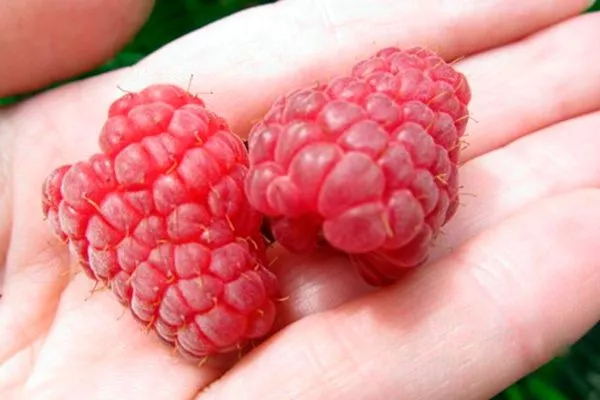
Samara dense
The parent varieties are Novost Kuzmina and Kaliningradskaya. They ripen mid-late. They are very frost-hardy, surviving even the coldest winters in the Moscow region. The variety has moderate resistance to purple spot.
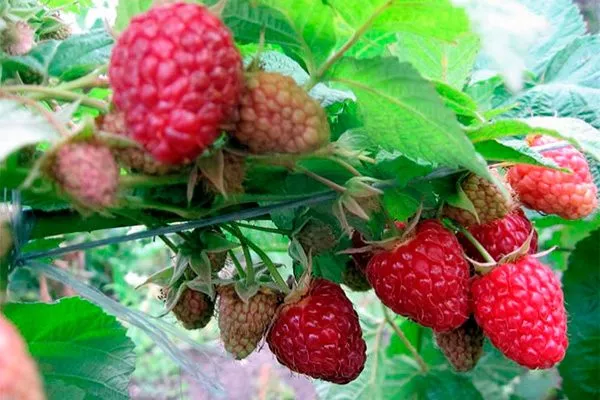
The bushes are tall and spreading. The stems are covered with dark spines along their entire length. The fruits are large, conical, and raspberry-colored. The average weight is 2.6-3.3 g. The flavor is pleasant, dessert-like, and the flesh is aromatic. The berries transport and store well. Yield is 70-80 c/ha.
Fruitful
When choosing a raspberry variety, yield is one of the most important agronomic factors. This is especially important when cultivating the crop on a large scale. Newly bred varieties with large berries are currently gaining ground.
Moscow Giant
The bushes are large, with stems reaching 2-3 meters in height. They require regular pruning to prevent overcrowding. Suitable for all regions, they grow well even in Siberia.
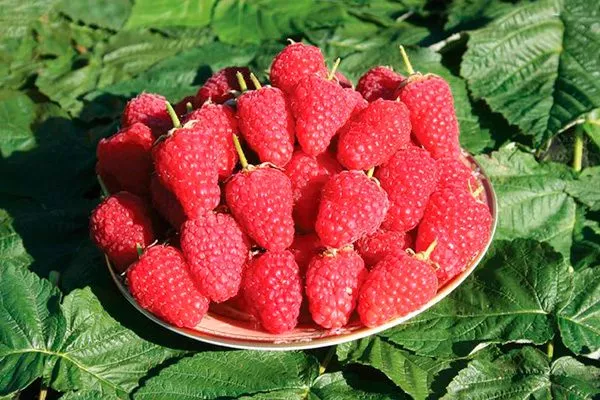
A single fruit can weigh up to a record 30 g. They are conical, dense, and have a shiny surface. The flesh is sweet and juicy, with a rich aroma. The seeds are very small. One bush produces up to 10-12 kg of berries. Suitable for large farms. This is a semi-everbearing variety.
Bogatyr
This standard variety will grow to 1.8 m or more in height. It requires no support. Its stems are strong and won't bend under the weight of its berries.
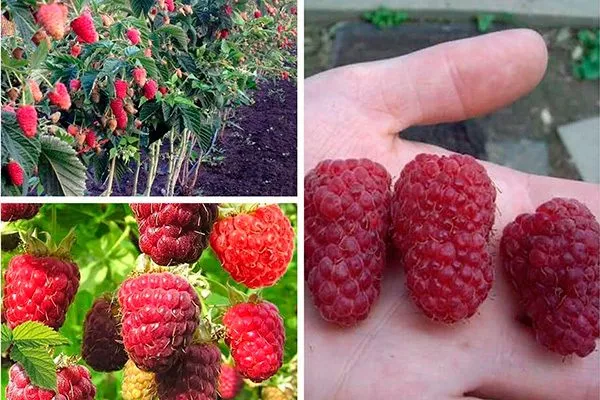
The berries are collected in clusters. Their average weight is 20 g. They have a sweet and sour dessert flavor, an elongated shape, and a red color. They are suitable for all-purpose cultivation and store well. The variety is frost-hardy and productive. It does not tolerate acidic soils. Yields are 100-105 c/ha.
Large-fruited
After an English scientist discovered the L1 gene, which is responsible for large berry size, large-fruited varieties with gigantic berries began to appear around the world. Their berries weigh four or even five times more than regular ones—12-23 g.
Hercules
A remontant raspberry with a long fruiting period, lasting from August until frost. The bushes are loosely spreading. The shoots are small—3-4 per bush. More than half the length is in the fruiting zone. This variety is in demand among large farms.
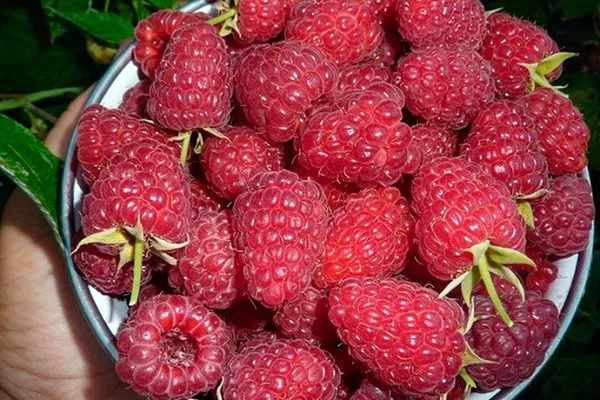
The berries are red, truncated-conical. The average weight is 6-7 g, with a maximum of 10 g. The flesh is sweet and sour, firm, and aromatic. One bush produces 2-2.5 kg of berries. The yield is 93 c/ha. The berries can be transported, processed, and eaten fresh. The variety is resistant to most diseases and pests.
Patricia
A very popular large-fruited variety that bears fruit on second-year shoots. It has a strong immune system, and yields remain consistent even with disease. Its frost resistance is average; in the Moscow region, bending the shoots over for the winter and then covering them with snow is recommended.
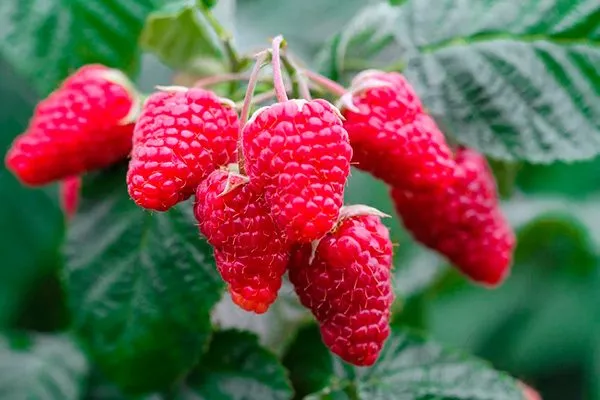
The bushes are medium-sized, semi-spreading, producing 6 to 10 replacement shoots and 5 to 7 root suckers each year. The fruits are truncated-conical, red, and sweet. They weigh 4-12 g. Yields up to 100-120 c/ha. One bush produces about 5 kg of berries. A drawback is their weak resistance to late blight.
Tarusa
This domestically bred variety became the first "raspberry tree." It has thick, rigid shoots. It requires no support and does not produce numerous suckers. It can withstand temperatures down to -30°C. The bushes grow up to 1.8 m tall. It ripens around mid-July and produces fruit until August.
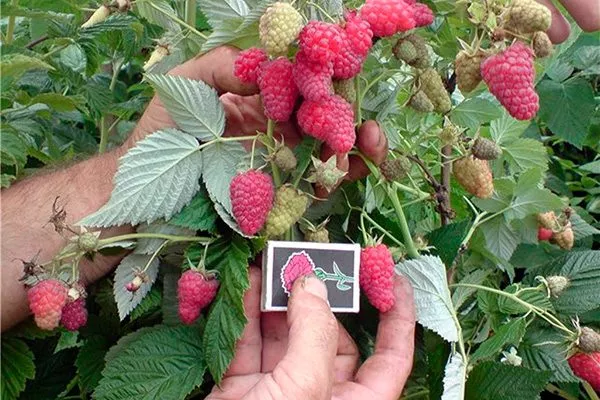
The fruits are bright red and aromatic. They weigh 4-12 g. They separate easily from the fruit bed. They are suitable for transportation and storage. Yields are up to 200 c/ha. Before wintering, it is recommended to bend the shoots to the ground so that they can be covered with snow later.
Yellow-fruited
Yellow raspberries are rare in Moscow region gardens and vegetable patches. They tend to be difficult to transport and are unsuitable for processing. However, yellow berries are recommended for dietary purposes, as they are low in acidity and contain few anthocyanins, which can trigger allergies.
Orange miracle
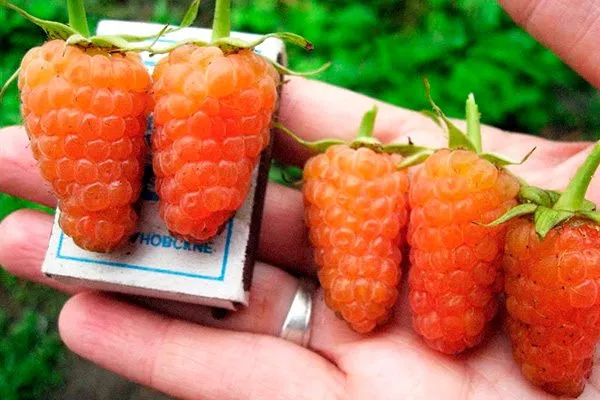
A remontant raspberry with vigorous, moderately spreading bushes. The berries are bright orange with a glossy surface. The average yield is 5.5 kg per bush. The pulp is sweet and sour, aromatic. Sugar content is 3.6%. Tasting score: 4. Moderately resistant to heat, drought, pests, and diseases.
Yellow giant
This is the most popular yellow raspberry—the one most often found in garden plots and nurseries. This frost-hardy variety thrives in temperate climates, including Siberia and the Urals.
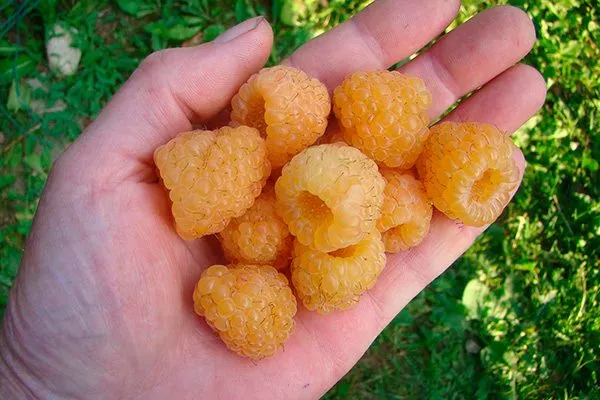
This variety was created by crossing the Ivanovskaya and Maroseyka varieties. It exhibits remontant characteristics: if the autumn is warm, berries appear on one-year-old stems. Ripening time is mid-early.
Specifications:
- The height of the bushes is 2 m.
- The fruits are juicy and large, round or obtuse-conical in shape.
- Colour: bright yellow with a light orange blush.
- Weight: 4-8 g.
- The yield of berries per bush is 3-4 kg.
The berries become bruised during transportation. The variety is prone to suckering. The shoots are covered in thorny spines. The berries' flavor deteriorates during prolonged droughts and prolonged rains.
Black chokeberries
Black-fruited varieties are rare in gardens. And that's a shame, as black raspberries are very healthy and easy to grow, as they're undemanding and hardy. They have a more delicate and sweet flavor, without the tartness.
Cumberland
One of the oldest black-fruited varieties. The bushes are vigorous, with arching stems. Frost-resistant, it can withstand temperatures down to -40°C. It is a mid-season variety. Fruiting is prolonged. The bushes reach 2 m in height. Long shoots require staking.
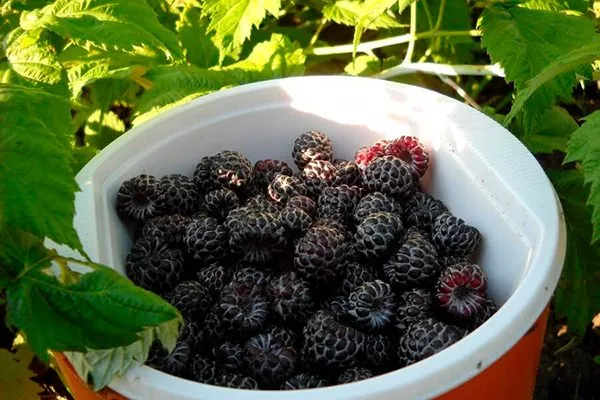
The fruits have tender flesh and a subtle aroma. There are 10-15 clusters per stem. They weigh 2-2.5 g. The flavor is sweet, with a hint of blackberry. The berries travel well in transportation. A single bush yields 2.5 kg of berries.
Bristol
This mid-season variety is considered one of the best among black chokeberries. It is resistant to fungal diseases and ripens evenly. Fruiting occurs in July and August. The bushes grow to a height of 2.5-3 meters and can withstand temperatures down to -34°C. In the Moscow region, it can overwinter without cover.
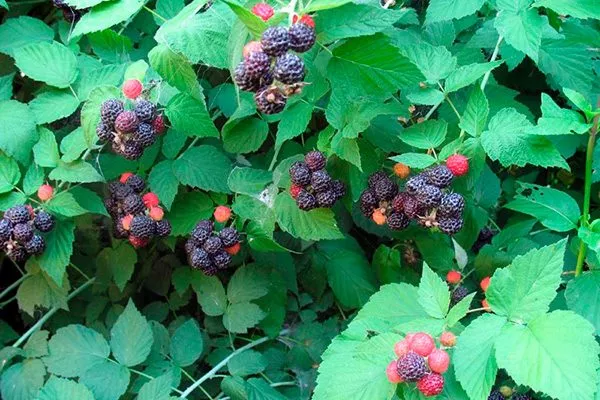
The berries are round, firm, and elastic, resembling blackberries in appearance. The flavor is sweet and rich, with a slight tartness. Weight: 5 g. A bush yields 5-7 kg of berries. Tasting score: 4.7.
The most delicious and sweet varieties of raspberries
One of the most important criteria when choosing a variety is flavor. Hobby gardeners most appreciate raspberries with a sweet, balanced flavor. They are delicious both fresh and in preserves.
Below are varieties that, while having excellent taste, have ideal agronomic characteristics and are suitable for the Moscow region.
Caramel
This everbearing variety is considered the tastiest of them. It's relatively new, added to the State Register in 2016. It's recommended for temperate climates. The bushes are upright, reaching a height of 1.5-1.7 m. The shoots are thorny. It's frost-hardy and doesn't require winter shelter. The berries ripen before frost.
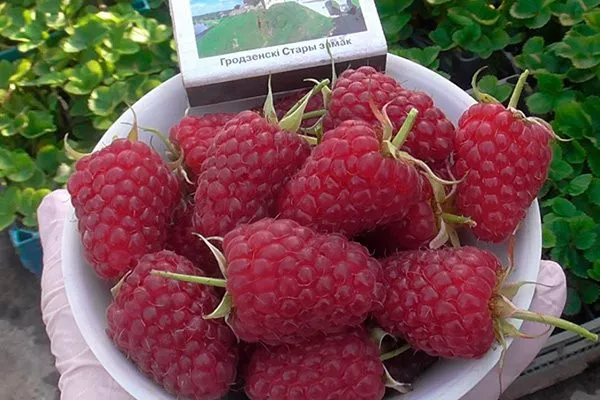
The berries are large, red, shiny, and broadly conical. The average weight is 6 g, with a maximum of 12 g. The berries are easily separated from the berry bed, do not soften, and are suitable for transportation. The flavor is reminiscent of wild raspberries. The tasting score is 4.6. Yield is 15 c/ha. One bush produces approximately 5 kg of berries per season.
Fairy tale
A new large-fruited standard variety and a subset of the Tarusa raspberry. The fruits ripen in early July and continue to bear fruit until autumn. This variety has an extended fruiting period, although it is not everbearing. The bushes grow to a height of 1.8-2.2 m. The thick, spreading shoots are thornless and require no staking.
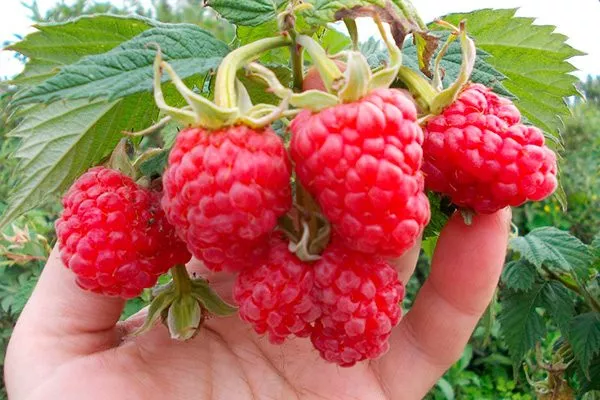
The fruits are red and shiny, weighing 10-15 g each. They do not fall off, transport and store well, and are resistant to rot. Yields reach up to 140-180 c/ha. Without shelter, they can withstand temperatures down to -25°C. The variety is drought-resistant, but yields drop with water shortages.
Winter-hardy and unpretentious varieties of raspberries
In the Moscow and Moscow region, with their unpredictable winters, frost-hardy varieties that can safely survive temperatures down to -30°C and below are especially prized. In addition to the frost-hardy varieties mentioned above—Novost Kuzmina and Bryanskaya—there are also several others in demand in this region.
Pride of Russia
This variety is not only winter-hardy but also produces large fruits, making it a favorite among gardeners in the Moscow region. The hybrid was bred in 1992 and has been popular in the central part of the country ever since. It is a non-remontant variety with a mid-season ripening period. The stems are thornless.
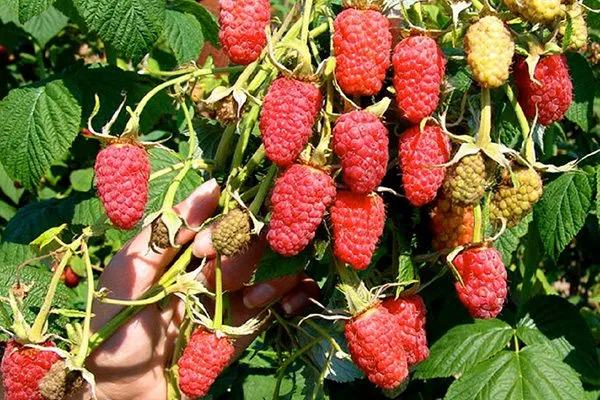
The berries ripen unevenly, beginning in the first ten days of July and ending in August. The red fruits are borne in clusters, have an elongated, obtuse-conical shape, and small seeds. They weigh 12-18 g. The flesh is juicy, sweet and sour, with a raspberry aroma. Yield is 200 c/ha or 4-5 kg per bush.
Brilliant
This cold-hardy, mid-early variety was bred in Siberia and adapts well to temperate climates. It's versatile; the berries can be frozen and dried. Fruiting lasts from early July until August. The bushes are highly spreading, reaching a height of up to 1.5 m.
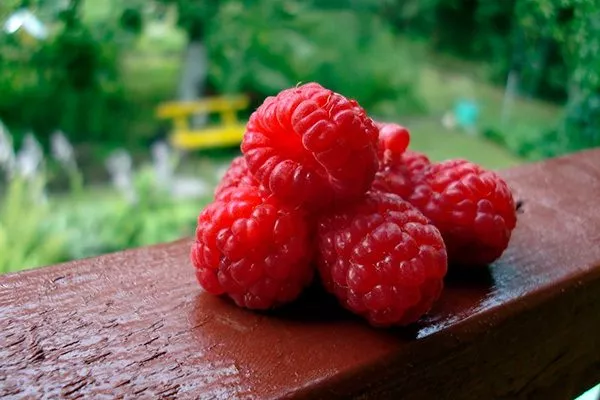
The fruits are deep red, large, and sweet, with a slight tartness. They are hemispherical in shape and weigh 4-6 g. They are frost-hardy down to -40°C. They are drought-resistant and easy to care for. Yield is 35 centners per hectare. A drawback is their lack of resistance to viral diseases.
Common raspberry varieties
There are raspberry varieties that are unremarkable—all their characteristics are average. But they certainly have advantages that make them popular among gardeners, such as disease resistance, low maintenance, and so on.
Lazarevskaya
An early-ripening variety with medium-sized bushes. Height: 1.5-1.8 m. Branches are thin, moderately spreading, and covered with thorns. General-purpose. Average winter hardiness and drought tolerance.
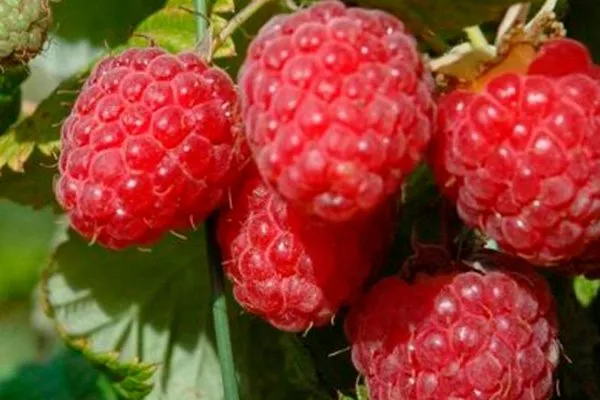
The berries are light red, pointed-conical, weighing 2.5-3 g. The flavor is sweet, with a faint raspberry aroma. Tasting score: 4.1. Yield: 80 c/ha. Cons: poor transportability and shelf life. The variety is susceptible to raspberry beetle and mite.
Crane
A late, all-purpose variety. The bushes are compact and medium-sized, reaching up to 2 m in height. The shoots are covered with thorns along their entire length. Yields are 80-90 centners per hectare, or 1.5-2 kg per bush. Fruiting occurs from August to October. Frost resistance is above average.
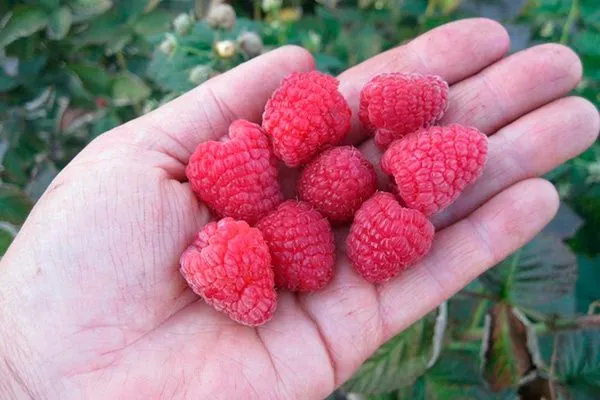
The berries are ruby-red, sweet and sour, with firm flesh and a distinctive aroma. Weight: 2.7-3.5 g. Tasting score: 4.7. Fruit shape: obtuse-conical.
Standard raspberry varieties for the Moscow region
Standard raspberries resemble small trees in appearance. They can reach a height of 2 meters. Large clusters of berries hang from the side shoots of the raspberry tree. Standard varieties produce berries with a vibrant flavor and aroma, and they do not fall off after ripening.
Monomakh's Cap
A large-fruited variety with a dessert flavor and everbearing fruiting. The bushes grow up to 1.5 m tall. They form up to five thick shoots with drooping tips. The lower parts of the shoots have thorns. The formation of suckers is weak, and winter hardiness is average.
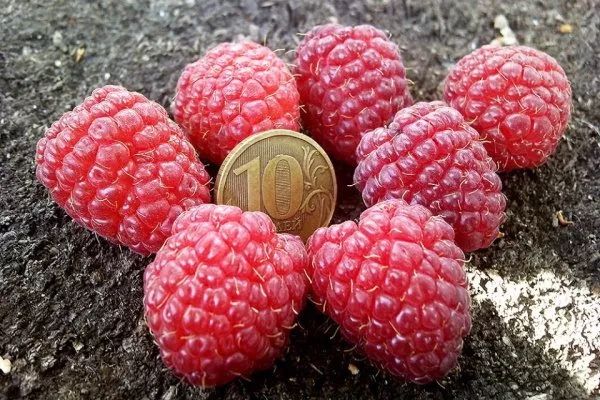
The fruits are red, aromatic, and pyramidal in shape, weighing 7-20 g. The flavor is sweet with a slight tartness. Yield is 150 centners per hectare, with 4-5 kg harvested per bush. A disadvantage is that it is sensitive to water stress. It is recommended to grow this variety as an annual crop, cutting the stems back to soil level in the fall.
Octavia
A single bush yields 3-3.5 kg of berries. The yield in commercial cultivation is 200-220 c/ha. This versatile variety can be grown for home use, for sale, for preserves, and for freezing. In Europe, this variety is actively cultivated by large farms. In the Moscow region, it bears fruit in late July-early August.
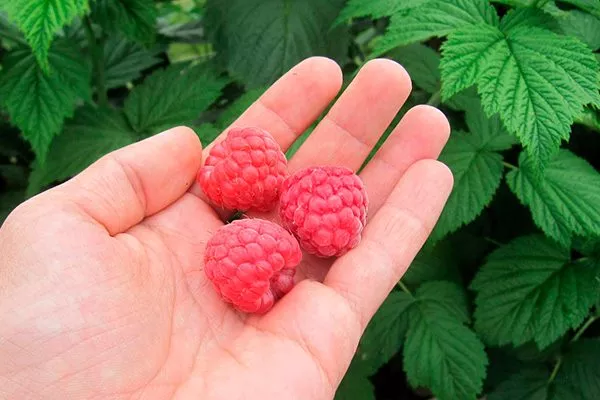
The bushes are vigorous, reaching up to 2 m in height. They require trellis support. The fruits are pale red, without gloss, weighing 5-6 g. They do not fall off or rot, even during prolonged rains. They are moderately transportable. The flavor is rich raspberry, without excess acidity.
Everbearing raspberry varieties for the Moscow region
Everbearing varieties, unlike regular varieties, bear fruit not only on last year's shoots but also on one-year-old ones. These raspberries produce fruit from late July until September-October. Many everbearing varieties grow well in the Moscow region, easily withstand winters, and produce decent yields.
Firebird
This is a high-yielding variety with loosely spreading bushes reaching 1.5-2 meters in height. The stems are covered with soft spines. A drawback is its lack of heat resistance. However, in the Moscow region, this drawback is not particularly critical.
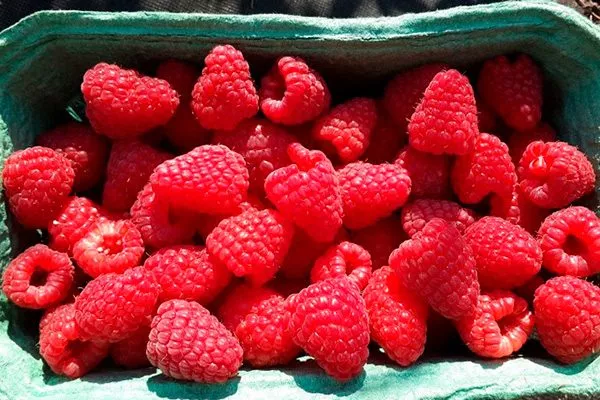
The fruits are large, weighing 4-5 g, and conical in shape. The flavor is sweet and sour, and the flesh is juicy. Up to 2.5 kg can be harvested per bush. Yield: 90 c/ha.
Diamond remontant
A hybrid with medium-sized, spreading bushes and a long fruiting period. Berries ripen from August until frost. This variety is frost-resistant, heat-tolerant, and highly resistant to frost.
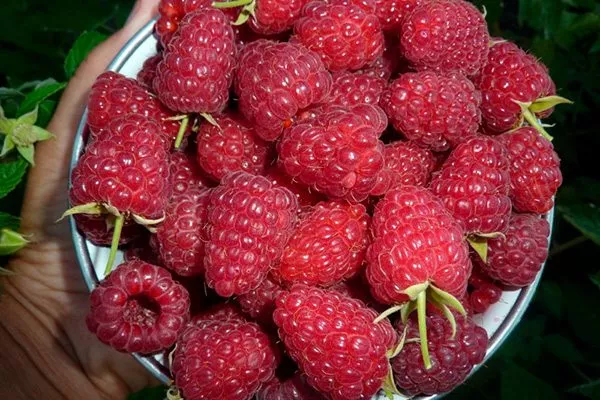
The berries are ruby-red, glossy, and conical in shape. They weigh 3.5-7.2 g. The fruit, while remaining on the vine, retains its marketable appearance for a long time; they are easily separated from the receptacle and transport well. A drawback is that it does not tolerate even slight shade. Yield: 75-80 c/ha.
Interesting remontant raspberry varieties
There are varieties that, in addition to long-lasting fruiting, boast other interesting characteristics or advantages—large fruits, a very sweet flavor, increased yields, and an unusual bush appearance. These are the ones that attract the attention of amateur gardeners.
Raspberry Ridge
This large-fruited variety grows on low bushes, reaching 1-1.5 meters. The first berries ripen on last year's shoots in June, and on one-year-olds, in August. Fruiting continues until late autumn. A distinctive feature of this variety is the concentration of berries on the upper half of the stems, making them easy to pick.
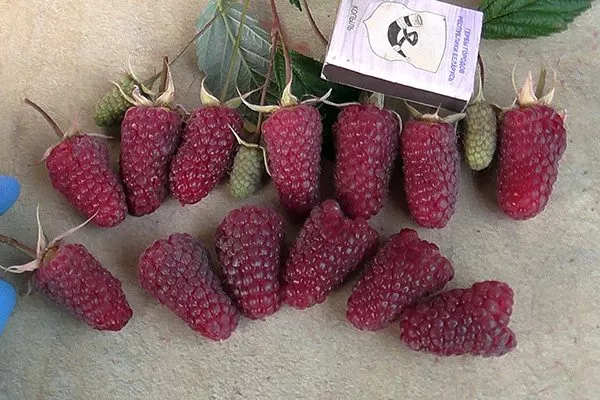
The fruits are collected in clusters of 20-25 berries. The shape is conical. The average weight is 6 g, the maximum is 14 g. One bush produces up to 6 kg of berries. The tasting score is 4.5. The fruits are juicy but firm, store well, and transport well. The bushes withstand frosts down to -30°C. The variety is drought-resistant. Yield is 150-160 c/ha.
Atlas
This variety is hardy and adapts to harsh conditions. It is drought and disease resistant. Fruiting begins in late summer and continues until frost. A bush produces 2-2.5 kg of raspberries per month. The bushes grow to a height of 2 m and do not require staking.
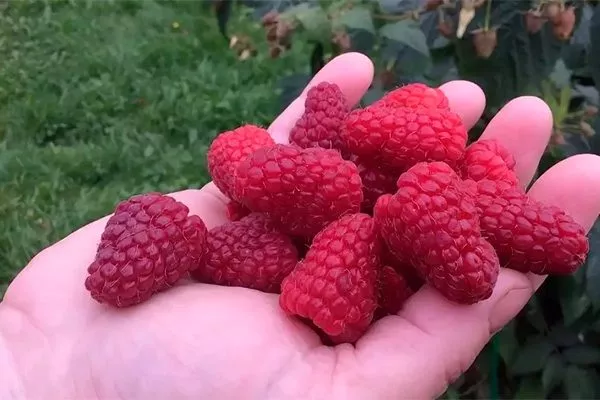
The berries are red, large, uniform, and have a dense structure. They weigh 5-11 g. They are easily separated from the berries when picked. The flavor is sweet with a slight tartness. The flesh is tender and juicy, with small seeds. A disadvantage is their tendency to fall off early. The berries are suitable for transportation. Yield: 170 c/ha.
Penguin
This variety grows firmly on the ground and doesn't require trellises or other supports. It has a thick stem and lush side shoots. Its shape resembles a small fir tree. It reaches a height of up to 1.5 meters. It is recommended for cultivation in the Moscow region and throughout Russia. In the Moscow region, the berries begin to ripen in mid-August.
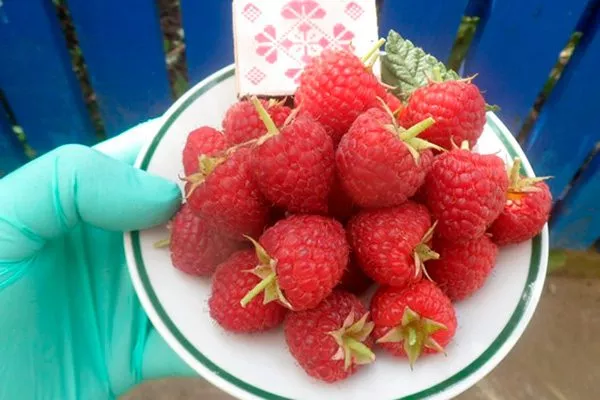
The variety is grown using a one-year cultivation method: in the fall, all stems are mown down and destroyed. Average fruit weight is 4 g, with a maximum of 7 g. Ripe berries are dark crimson. Yield is 120 c/ha. The tasting score is 3.7. There is no raspberry aroma. Nevertheless, many gardeners consider Penguin to be one of the most delicious everbearing varieties.
Growing and caring for crops in central Russia
The yield and fruiting of raspberries directly depend not only on the variety and its characteristics, but also on the quality of care and compliance with agricultural practices.
Recommendations for growing raspberries in the Moscow region:
- The planting method depends on the number of seedlings. If there are few of them, a pit option will do; if there are many, a trench option will do.
- The depth of the holes and trenches is 30 cm. The bottom should have a drainage layer (3-4 cm) and nutrient-rich soil (2-3 cm). Before planting, water the holes at a rate of 2 liters per square meter.
- For the prevention of pests and diseases. Fruiting stems are cut low. Shoots and suckers are thinned regularly.
- The best time for planting raspberries in the Moscow region is September and October. But it’s also possible in spring – at the end of April.
- It is recommended to plant the crop in a well-lit place. Preferably on the south side of the fence.
- To ensure that the soil in the raspberry patch is evenly moistened. It is advisable to connect it to drip irrigation.
Reviews
When choosing the best raspberry varieties for growing, it's important to consider the purpose of the berry garden—whether for sale or for home consumption. If you're growing raspberries for sale, choose "commercial" varieties, which are productive, easy to transport, and produce attractive berries, but less tasty. If you're planning to grow raspberries in the Moscow region for yourself, pay attention first and foremost to their flavor, frost hardiness, and disease resistance.