
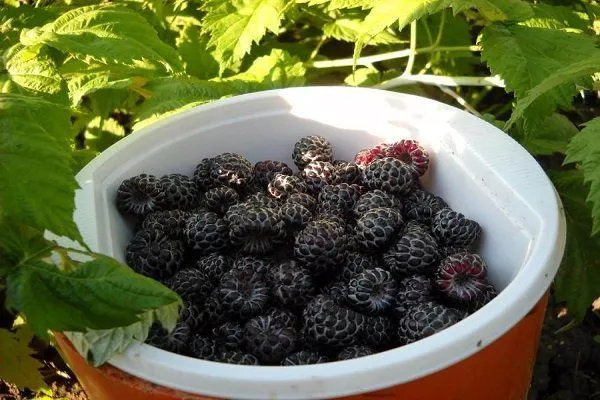
The Cumberland black raspberry remains a rare plant in our country to this day. The bush has a very unusual appearance, and many confuse it with a blackberry. Besides its beauty, the berry is prized for its flavor and medicinal properties. Despite its limited distribution in Russia, the Cumberland raspberry is winning the hearts of gardeners thanks to its ease of cultivation and deserves a place of honor in every garden.
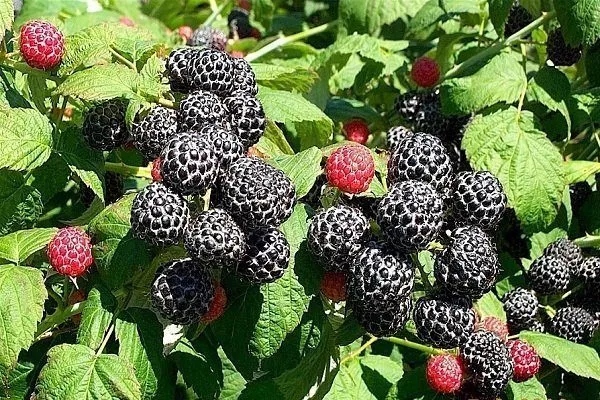
Raspberry Cumberland
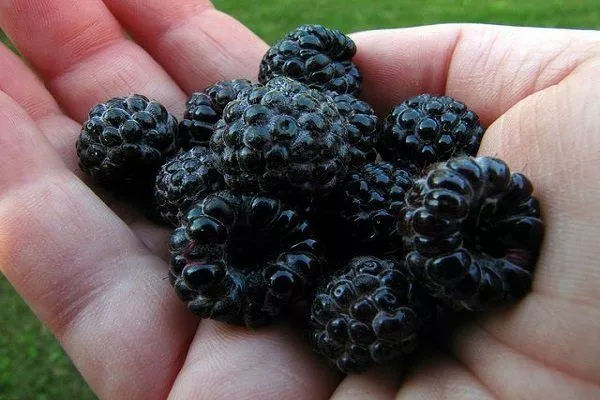
Cumberland raspberries have a sweet and sour taste.
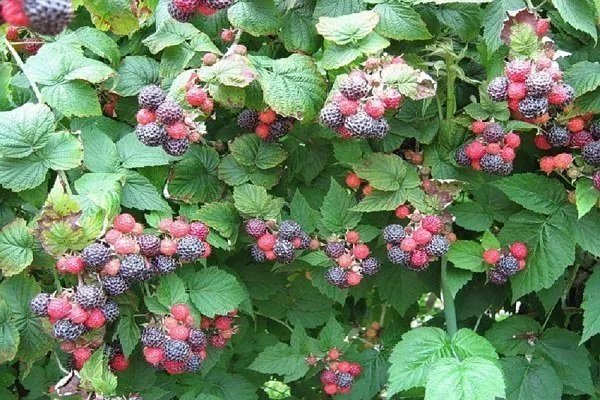
The height of the raspberry bush is about 2.5 m
The history of the variety's creation and its appearance in our gardens
The Cumberland raspberry resembles a blackberry in appearance. Native to North America, this variety is not considered exotic; Americans have been cultivating the bush for many years.
The plant was created in 1888, and was brought to Russia 90 years later. However, despite the variety's relatively long presence in our region, gardeners are in no hurry to cultivate it on an industrial scale.
Gardeners' reviews claim that this is due to their love for their own raspberry varieties, and Cumberland is considered a foreign plant that deserves a special place in the garden, but nothing more.
What are the characteristics of the Cumberland raspberry?
The Cumberland black raspberry is a highlight of any garden, often grown not for its large harvest but for its decorative value. The bush is very strong, resilient, and tall. It produces a prolific crop of berries, all of which are small in size but have excellent flavor.
The main external characteristics of the variety:
- height about 2.5 m, and sometimes 3 m;
- not a spreading bush, young shoots grow straight up, but with age they bend, forming an arch;
- stem thickness is 3 cm, the distance between internodes on the stem is minimal, the stem has thorns;
- At an early age, the shoots are bright green in color, with a slightly visible purple film covering them; with age, the branches turn brown;
- the leaves are compound, large, 5 leaf blades are collected on one branch, serrated on the sides, smooth to the touch;
- the root system is fibrous, although it has several taproots that help to carry out the fruiting process during drought;
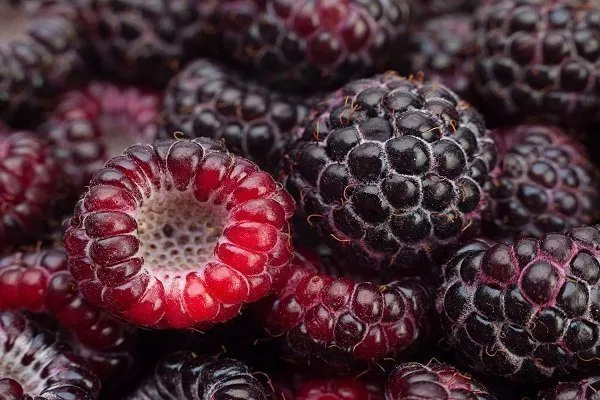
- one berry weighs about 2 g, is small in size, when unripe the young berry is light pink in color, gradually it turns red and then black;
- the fruits have a sweet taste with a slight sourness, they contain a large number of seeds;
- Based on taste characteristics, the berries deserve a rating of 4 to 5 points.
Cumberland raspberries are very easy to distinguish from blackberries: during harvest, raspberries easily detach from the stem, while blackberries have difficulty doing so. Blackberries can only be harvested with the stems attached.
Why do gardeners love black raspberries?
The Cumberland black raspberry is characterized by a mid-season ripening period and high yield. Each bush produces approximately 10 clusters with 10-15 berries annually, resulting in a yield of 1 kg per bush. Fruiting lasts for 12-15 years.
The main characteristics for which gardeners love the Cumberland raspberry:
- This cold-hardy variety tolerates severe frosts well. It can survive temperatures as low as -30 degrees Celsius, although some sources indicate temperatures as low as -40 degrees Celsius.
- Strong immunity. Cumberland raspberries are virtually disease-resistant. Pests also aren't particularly fond of this variety.
- The roots don't spread too widely. This allows the Cumberland raspberry to save a lot of space for other plants and crops.
- The berries are valued for their taste and medicinal properties.
- The plant grows well in any climate and in different weather conditions.
- The first harvest can be obtained in the 2nd year after planting, the maximum yield is in the 3rd year.
- The raspberry bush has a medium ripening period, beginning to bloom in early summer, making it frost-resistant. Flowering lasts about 30 days, and the berries are harvested in mid-summer.
- Raspberries do not produce a harvest several times during the season; they bear fruit once, but the fruits do not ripen at the same time, so the harvest is delayed.
- Ripe berries do not fall to the ground.
- Thanks to their strong skin, raspberries are easy to transport and store.
- The plant is not particularly demanding regarding soil, so it can take root in any soil.
- The berries are suitable for consumption not only fresh, but also for winter preparations.
- This raspberry variety is considered an excellent honey plant; it attracts insects to the garden, which significantly improves pollination.
- Birds are not interested in berries, so there is no need to worry about their safety.
In addition to the obvious advantages of the Cumberland raspberry variety, the plant has a number of disadvantages:
- A spiny stem resembling a rose.
- The bush is very dense with numerous branched branches, small distance between internodes.
- There are a lot of seeds in the berries.
Preparing for landing
The first thing to consider is choosing a planting site. The area should be open, sunny, and wind-free. Avoid planting Cumberland after red raspberries, potatoes, and tomatoes. The soil for planting should be prepared in advance; it should be moist and nutritious.
- ✓ The optimal soil acidity for Cumberland raspberries should be within the pH range of 5.5-6.5.
- ✓ The distance between bushes when planting should be at least 0.7 m, and between rows - 1.5 m to ensure sufficient ventilation and lighting.
Planting season
Cumberland raspberries are available plant in spring You can plant raspberries in the fall, but it's best to do it in the spring. The key is to do it before the sap starts to flow and ensure the soil is warm enough. Suitable temperatures range from 10 to 12 degrees Celsius. Plant the raspberry seedlings in April; this will allow you to monitor the seed maturation and plant growth.
If you decide plant raspberries in the fallIf you're planning to plant a shrub, do it in September. The shrubs root well in the soil, although complications are not uncommon. This season is suitable for regions with moderate and warm climates. In the spring, the snow melts, and the plant continues to grow undisturbed.
Place for raspberry patch
The following parameters are suitable for planting Cumberland raspberries:
- the area should be the brightest and sunniest; the plant will not grow and develop in a shaded area;
- the planting rows should be facing south, then the plant will receive more sunlight;
- select the most fertile types of soil, but do not forget that the variety can adapt to life in any soil;
- Provide protection from the winds, as they can easily dry out the soil and break the bushes. It is better to plant the plant next to a fence; it is impossible to completely isolate the bush from the winds, otherwise the raspberries will begin to rot;
- Follow crop rotation rules, try not to plant raspberries next to blackberries, as they have the same diseases that will spread from one bush to another;
- the soil should be moderately acidic, look for the presence of clover or bindweed, the place where these plants grow is also intended for raspberries;
- absence of groundwater is mandatory;
- choose a sunny area, but not in direct sunlight, otherwise the bushes will burn;
- Before planting, clear the area of excess grass, otherwise the formation of fungal spores on the bush cannot be avoided.
If the wrong site is chosen for planting Cumberland raspberries, no amount of fertilizer, additional lighting, or soil loosening will help the plant, and the yield will be low or nonexistent.
Watch the following video to learn about the Cumberland raspberry's yield and growing techniques:
Fertilizing the area
With proper care, raspberries will produce fruit for about 14 years. To ensure regular harvesting, the planting site must be carefully prepared. To do this, follow crop rotation guidelines:
- 1st year Plant green manure.
- 2nd year - garlic, carrots, lettuce, marigolds or calendula.
- 3rd year – fertilize the soil and plant the raspberry seedling.
When planting in the fall, prepare the soil in the spring: remove the roots of perennials and fertilize the soil with organic matter. Apply 3 buckets of manure per 1 square meter. Raspberry bushes should be planted exclusively in loose, nutritious soil.
If you decide to plant the seedling in the spring, add a sufficient amount of organic matter in the fall. Use humus, decomposed manure, or compost as fertilizer. Maintain a rate of 15 kg per square meter.
Buying seedlings
It's very difficult to find a whole, healthy Cumberland raspberry seedling at the market, especially since this plant isn't particularly common in our region. Often, the seedlings show signs of disease.
Pay attention to whether the root system is open or closed: open roots perform much better during planting, while closed roots rarely germinate quickly. If the root system is open, planting can be done in the summer.
Raspberry planting instructions
Without proper planting, it's impossible to grow Cumberland raspberries. You need to follow a clear algorithm and simple rules.
Cumberland raspberry planting algorithm:
- The variety's root system is fibrous, so it requires plenty of space to plant, otherwise it will break. Dig holes measuring 0.5 x 0.5 m.
- If the seedling's root system is exposed, inspect it more carefully. Trim off any unhealthy, damaged, or weak parts. Leave the healthy, non-dried seedling.
- Dip the root in a clay slurry with mullein infusion.
- Fertilize the soil in the prepared hole. You can add ash (4 cups) and 1 bucket of rotted compost.
- Fill the hole with water – this is an important process before planting.
- Sprinkle fertile soil on top, and then thoroughly loosen the entire contents.
- Plant the seedling on the resulting mound after applying fertilizer.
- Spread out the root system. Cover the bushes with soil and compact it firmly around the seedling.
- Water the bush with 2-3 buckets of water and mulch. Straw or peat can be used as mulch.
How to grow Cumberland raspberries?
Any berry bush will produce a large harvest only with high-quality and regular care. Without proper care, good results are impossible.
Watering frequency
Watering frequency also depends on many natural factors. These include:
- soil characteristics;
- raspberry patch;
- weather.
Sandy soils in sunny, open areas require more frequent watering than shady areas.
For the first couple of years, you should water the plant, avoiding drought or overwatering. The plant will begin to retain moisture. During the first few years of the plant's life, up to three years, regular watering is essential. The rest of the year, water only as needed.
Trimming
Raspberries don't need any shaping for the first few days after planting. Allow them to grow before pruning. The first pruning is done in the summer, when the plant reaches 2 meters in height. Lateral branches are trimmed to allow axillary buds to sprout. The pruned branches should be allowed to grow and strengthen before frost sets in.
This is the second time they are holding it pruning raspberries in autumnNew lateral shoots are shortened to 0.5 m. Also, in the fall, completely remove any weak or broken branches. For subsequent seasons, leave only 5-7 thick and large branches.
For information on pruning Cumberland raspberries, watch the following video:
Tying up shoots
Cumberland raspberries grow very quickly, reaching a height of 2-3 meters. Immediately after planting, the seedling should be supported; this will significantly simplify harvesting and make the raspberry patch a decorative corner in any garden.
The most effective and efficient method of staking is a trellis. It is installed a year after planting the Cumberland black raspberry. Here's the staking procedure:
- Insert posts every 8 m along the planting site.
- Tie the posts together with wire in 3 or 4 rows. The first row will be at a height of 0.5 m, the second at the same distance from the first, and so on.
- Also tie the shortened shoots with wire.
You don't have to prune the bush; over time, the raspberry bush will grow to 3 meters and bend naturally. You'll need to insert some rods to support the bush. This will create a beautiful arch of berries and plants.
Soil fertilization
Cumberland raspberries require fertilizing. Fertilizer should be applied three times per season (fertilizing should be followed by watering to ensure better absorption of the nutrients into the soil):
- Before flowering (rarely before planting).
- During the beginning of ovary formation.
- After the crops have ripened and are collected.
Organic fertilizers can be alternated with mineral nutrients, which are equally important for Cumberland raspberries. This method will have a positive effect on plant growth, ripening, and fruiting. Fertilizer infusion options:
- 15 g urea + 30 g superphosphate. Mix these ingredients and add warm water, stir, and let it steep. This solution is only suitable for mature plants.
- Mullein solution. It consists of manure mixed with water in a 1:12 ratio.
- Boric acid: 10 g per 1 liter of water. Pour the resulting mixture onto the soil, being careful not to damage the leaves and stems. Use approximately one month before berry harvesting.
There's no prohibition on using ready-made raspberry dressings; they can be purchased at a market or store. Just be extremely careful, as not following the instructions for consistency can cause burns or damage to the raspberry bushes.
Mulching
Mulch is a special layer that serves several functions: protecting against weeds, insulating the garden bed, and retaining moisture in the soil. For best results, the layer can be made from a combination of several materials:
- leaves and dry grass;
- peat;
- hay;
- humus.
Dried mulch materials promote good root aeration, allowing them to breathe better. Heavier mulches will provide protection from precipitation and low temperatures.
Preparing for winter
This raspberry variety is considered cold-hardy, surviving temperatures from -30 to -40 degrees Celsius. In the south, where winter conditions are warm and extremely favorable, Cumberland raspberries are grown without special cover. However, in this case, it's best to use a thick layer of mulch. If the plant's stems and shoots deteriorate during winter, the rootstock will certainly survive, and the bush will sprout again by spring.
When growing in colder climates, remove black raspberries from their staking and secure them firmly to the ground, securing them in place with wire. This year's new shoots bend much more easily than second-year canes.
If winters in your region are snowy, the snowdrifts will thickly cover and insulate the plant. If there's no snow, you'll need to cover the bushes with non-woven fabric. The key is to ensure it's adequately insulated. Agrofibre can be used; this material has proven itself to be excellent for this purpose.
Harvesting and freezing
Cumberland raspberries are very juicy and delicious, and don't fall off the branches immediately after they're fully ripe. The berries have strong stems that hold them in place, but they detach easily.
Over the course of a season, you can harvest around 10 kg of berries, sometimes even more, depending on growing conditions. The harvest also preserves well when frozen, becoming much more nutritious, with all the valuable nutrients absorbed into the flesh. They also keep for a very long time when frozen.
When freezing berries, try to maintain a temperature of -18 degrees Celsius. This temperature is maintained in the freezer compartment of a standard refrigerator.
Propagation of Cumberland raspberries
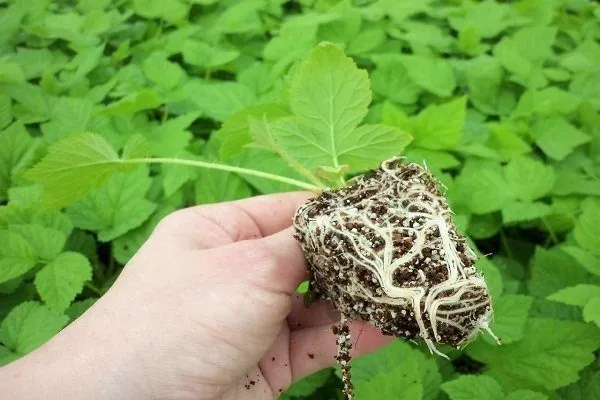
Cumberland raspberries can be propagated in four ways. The most popular is by seed, but other methods are also effective: layering (horizontal), rooting the tops, and green cuttings. Let's look at each in turn.
Rooting the top
Propagating a variety by rooting the tops is one of the rarest and most labor-intensive processes. Only an experienced gardener can use this method; understanding all the nuances will be very difficult for a novice gardener. Extreme care is essential, as this method often damages the plants, and rooting is difficult.
Algorithm for propagation by rooting the top:
- Gently bend the plant stem down, pressing it toward the ground. The key is to make sure it's in a tight, even position.
- Cover it with soil and secure it in place. The tip of the stem should stick out a few centimeters (about 15 centimeters) from the ground. For added security, you can pin it down.
- To promote faster root formation, cut the plant below the bud.
- In the spring, carefully separate the emerging shoots from the mother plant and move them to a new location.
Propagation by rooting the top is one of the least relevant methods, but it is worth considering as one of the options for propagating raspberries.
Horizontal layering
Propagation by horizontal layering is not the easiest method, but it is effective.
Algorithm for propagating raspberries by horizontal layering:
- In the spring, trim all the plant's branches to a length of 15 cm. They will grow and develop throughout the summer, and by the fall—by mid-September—the bush will have acquired fairly strong and powerful shoots.
- Place them in specially prepared places, furrows, and that is where they will grow.
- Fix them in three places; when the plant grows adventitious and lateral roots, cover them with soil so that only the leaves and buds remain exposed.
- Mulch in the fall.
- In spring, the branches will become independent shrubs. Prune the branch connecting the new plant to the mother plant.
This propagation method will help create a large number of new raspberry seedlings, but using it for more than two years in a row is unfavorable—the mother plant gradually weakens and dies.
Green cuttings
Propagation by cuttings is carried out only in a properly maintained and functional greenhouse. It must avoid fluctuations in temperature, light, and humidity, otherwise propagation will not yield the desired results. A major factor in success is choosing the right time for the process. The best time for propagation is when basal shoots emerge.
Algorithm for propagating raspberries using green cuttings:
- When the shoots reach 30-40 cm in length, cut them from the mother plant. Divide them into several pieces, each with two leaves and two buds.
- Place the prepared cuttings in the preparation for root formation for 10-12 hours.
- Plant them in regular sand, leaving one leaf and one bud above the ground. This will be their permanent germination site.
Seeds
Propagation by seeds can be done twice: after harvesting (in September) and in spring in April.
Algorithm for propagating raspberries by seeds:
- In autumn, plant the seeds in the soil to a depth of 2 to 3 cm, depending on its density.
- Mulch. Statistically, more than half of the seeds will germinate by spring—60%, to be precise.
- In the spring, make small holes in the containers filled with soil. The distance between adjacent holes should be at least 5 cm, and the depth should be 1-2 cm.
- Water the holes generously and plant the seeds the next day. After sowing, move the trays to a cool room (5 degrees Celsius). Store them there for two months.
- Without stratification, the seeds will germinate the following spring. Water according to the humidity level in the greenhouse. Don't overwater the seeds, but don't let the soil dry out completely.
- After two months, move the boxes to a greenhouse or hotbed. Repeat all the necessary procedures: loosen the soil, water, and fertilize.
- In autumn, transplant the finished seedlings, 15-20 cm long, to a permanent location.
What insects attack raspberries and how to save the plant?
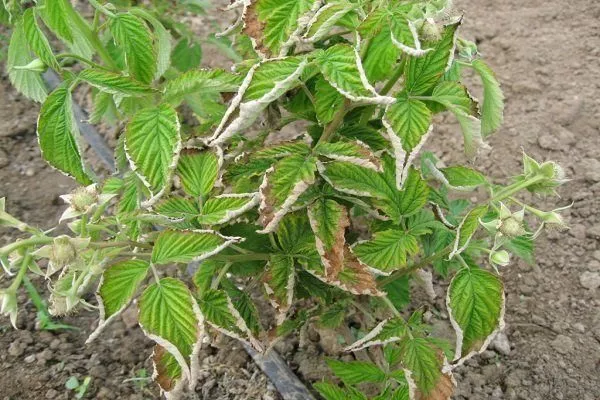
The Cumberland raspberry variety is renowned for its strong immunity, but some insects can still attack it. It's important to know which pests it's susceptible to, how they manifest, and how to properly combat them:
- Stem gall midgeThe gall midge is a small, two-winged insect. It settles on raspberries at the beginning of ripening (April-May). It lays up to 15 eggs at the base of the stem. The larvae burrow inside, feeding on the plant sap. The main symptoms are swellings on the shoots, fungal diseases, and the slow wilting of the plant.
Stem gall midge control algorithm:- Remove wilted and damaged shoots.
- Treat the bush with malathion and Bordeaux mixture.
- As a preventative measure, regularly inspect the greenhouse or open area for small insects and try to get rid of them promptly.
- Shoot aphidThis is a small insect that attacks raspberries in swarms. The first "settlers" settle on shoots or the underside of leaves. Using their proboscises, they suck water and nutrients from the plant. Over time, the raspberries wilt. During this period, the plant becomes vulnerable to most diseases. The pest is active before or during flowering. It can remain undetected throughout the spring and summer.
Algorithm for combating shoot aphids:- Destroy all damaged shoots, leaves and branches.
- Treat the plants with special products: Nitrofen or Kilzar.
- Use infusions of chamomile and yarrow as a preventative measure.
- Raspberry flyIt appears to be a common fly, distinguished by its yellow color. The abdomen is drooping, with transparent wings extending from it. The fly reaches 1 cm in length and lays its eggs at the base of the stem. The larvae pupate and cause severe damage to the lower layers of the stem. Symptoms include wilting and yellowing of the shoot tips.
Fly larvae are laid in late autumn and awaken in early spring during flowering.
Raspberry fly control algorithm:
- Destroy all unhealthy shoots, leaves and branches.
- Treat the plants with special products: Karbofos and Iskra.
- Use herbal infusions as a preventative measure.
- Spider miteSpider mites reach 2 mm in length. Males come in a variety of colors: beige, green, yellow, and others. Females lay eggs, which soon hatch into larvae, sucking water and nutrients from raspberries. The main symptoms include wilting leaves and the presence of fine webbing.
Spider mites are active throughout the entire period of berry ripening until harvest.
Algorithm for fighting spider mites:
- Burn all damaged shoots, leaves and branches.
- Treat plants with special products: Fufanon and Antio.
- Use folk remedies, for example, treatment with a solution of water and medical alcohol (96%).
- Kidney mothThe pest lives in neglected raspberry bushes. They resemble small, dipterous insects, reaching 2 cm in length. Mature individuals lay eggs, which soon hatch into larvae. This occurs in late winter, when the plant is ready to bud. In addition to damaging the buds, the larvae can also damage the stems and leaves.
Algorithm for fighting bud moth:- Cut off and burn all damaged shoots.
- In autumn, dig up the soil thoroughly.
- Spray the soil with a nitrofen solution.
What diseases are raspberries susceptible to and how to deal with them?
Cumberland raspberries rarely suffer from diseases, but it is important to know them in order to understand why ailments attack the plant and how to deal with them:
- Verticillium wiltThe source of infection is soil unsuitable for growing the plant. The main symptoms include wilting leaves and bright dark blue or purple stripes on the shoots. The first signs appear in spring or summer. Verticillium wilt is incurable, so saving the plant is impossible. The plant must be dug up immediately and burned before the disease spreads to other plants in the garden.
There are two methods for preventing the disease: regular preventative measures, including grass spraying, soil loosening and fertilization, and growing only verticillium-resistant raspberry varieties. The Cumberland raspberry variety is 50% resistant. - AnthracnoseThe disease manifests itself as follows: small (2-4 cm) red-violet or purple spots appear on raspberry leaves. These spots soon enlarge and affect young shoots. If treatment is delayed, juicy fruit should not be expected this year. The plant will die next year. The disease is most active from early spring to mid-summer.
To combat anthracnose, spray plant shoots with Bordeaux mixture (1%). Remove and burn infected branches. Spray in early or late spring. - DidymellaThe main symptoms are bright purple spots and cracks on the shoots. These are caused by pests, cold, or soil incompatibility. If left untreated, the disease will infect plants every year. The most active period is from late spring to midsummer.
The source of infection is infected plant leaves, so when digging, they should be placed as deeply into the soil as possible, or better yet, removed completely. Spraying with nitrofen in the spring or fall, according to the instructions, produces the best results. As a preventative measure, it's essential to follow all raspberry care guidelines and regularly spray the bush with Bordeaux mixture (1%). - BotrytisThe main symptoms include the appearance of dark gray or black spots on shoots. During the first year of the disease, the plant will not produce good fruit. The following year, affected shoots begin to fall off, and the plants die. Signs appear in early spring, a few days after the onset of the disease, so recognizing the disease is not difficult; the key is to catch it early.
Bordeaux mixture helps combat the disease. Remove and burn infected shoots and berries. An alternative is to use anti-rot agents. - Stem cancerThe main symptoms are gray spots that begin to appear on the leaves. These spots then multiply, and the plant dies. Signs of the disease are most often found on leaves and buds. Stem canker attacks the bush immediately after the flowering period.
To control the pest, spray the plants with Bordeaux mixture or an alternative. Burn any infected parts of the bush. You can spray several times, the last time after the berries have been picked. - MosaicThe main symptoms of the disease are the appearance of dark and light green spots on the shoots. The leaves become misshapen, the stems wilt, and the shoots die. The plant dies two years after the mosaic begins. The disease appears in early spring or midsummer.
This disease is incurable, but don't rush to uproot the raspberries; there will still be a harvest in the first year. After harvesting, you can uproot the plants. Timely plant care and careful inspection of the planting material will help prevent the disease. - Viral curlinessMain symptoms: leaves begin to dry out and lose their shape, turning a dark bronze color. Shoots become wilted, and berries become sour and small. The disease can begin during berry ripening.
Fighting leaf curl is difficult; preventing it is much easier. All plant care guidelines must be followed, and the planting material must be inspected regularly. If the disease has attacked raspberries, spray the bushes with Georg or Wisluha. Carefully combat the disease's vector—aphids.
Gardeners' reviews of the variety
The Cumberland raspberry not only boasts excellent flavor but also a stunning ornamental appearance. The berry is easy to grow, and the harvest is impressive every year. Although the variety was developed in the 19th century, it remains popular among gardeners today.