
The raspberry with the majestic name Red Queen is not everbearing, so the harvest is only once per season. Despite this, the fruiting period is long. This thornless domestic variety has a long shelf life, is easy to transport, and can withstand significantly lower winter temperatures.
Where can it be grown?
Breeders have developed the Red Queen variety, which is ideal for cultivation in the Russian Federation. This raspberry is highly adaptable to a variety of climates, including harsher regions, but in these regions it requires protective cover during the winter.
Introduction to the variety
The variety has specific growth characteristics, fruit structure, care requirements, and other aspects. The Red Queen raspberry prefers regular watering, but overwatering can lead to the development of fungal diseases.
Bush
This raspberry variety is characterized by bushy growth with little tendency to spread. The branches are very strong and thick, reaching a height of 200-300 cm. Therefore, it is important to provide support. A distinctive feature of the shoots is the absence of thorns.
Other characteristic features of the variety:
- Leaves The raspberries of this variety have a rich green hue. Their shape is either oblong or ovoid. The outer surface is smooth and slightly glossy, while the undersides are matte and lighter. The leaves can be slightly hairy.
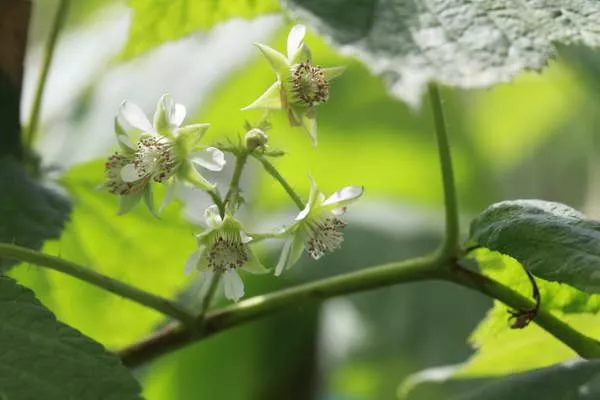
- Flowers With a pleasant white hue, they grow on long stems, forming clusters. They have a regular shape and finely haired stems.
Fruits and seeds
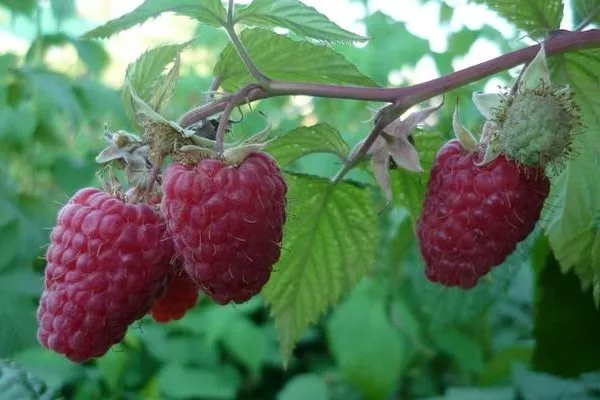
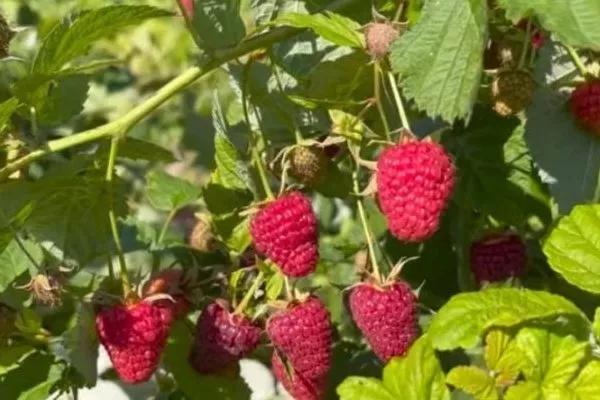
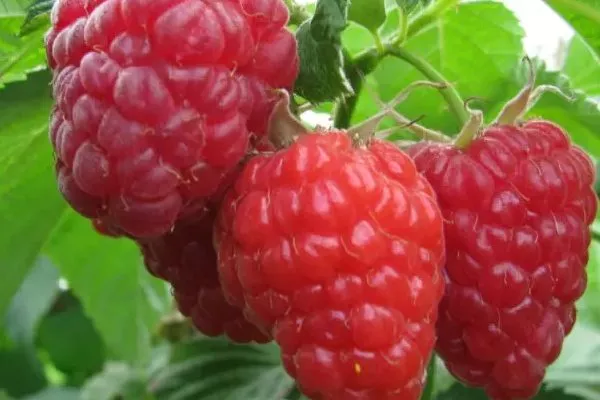
The berries of this variety are distinguished by their large size and characteristic blunt-tipped shape. Their rich, dark red hue is eye-catching. The firm and elastic texture prevents them from falling apart when picked or stored.
Other features:
- The pulp of the berries is tender, rich in juice.
- The aroma is particularly bright, and the taste is sweet and sour, pleasant.
- The average fruit weight ranges from 4 to 6 g.
- The seeds in them are very small, which makes them almost invisible when eaten.
How to use, benefits
Research conducted by Roskomnadzor revealed that raspberries are a veritable arsenal of vitamins and beneficial microelements. This variety contains vitamins B, K, A, E, and C, as well as such important elements as manganese, copper, magnesium, potassium, fiber, sodium, calcium, iron, zinc, and selenium.
The fruits have the following medicinal purposes:
- Health protector. Thanks to vitamins C and E present in raspberries, the immune system is supported, which helps prevent the occurrence of cardiovascular diseases.
- Supports brain functions. Regular consumption of raspberries may help prevent age-related brain cell degradation and memory loss.

Frost resistance
It is highly frost-resistant, allowing it to be grown across vast swathes of the country. However, to make it more resilient to winter frosts, it is necessary to properly prepare the bushes for the cold season.
Key tips for preparing bushes:
- Before the first frosts in the autumn, fertilize the plants using manure or a potassium-rich product;
- prune the bush, removing old branches that will not produce fruit next season;
- Tie young branches to a supporting structure to prevent them from breaking under the weight of the snow;
- If necessary, lay down mulching material, wrap the shoots with spunbond or sprinkle with snow.
Such careful preparation of bushes for winter guarantees their survival and ensures a harvest in the new season.
Pollination
This variety does not require hand pollination as it is self-fertile. However, planting it near other varieties can positively impact yield, as the berries will better pollinate each other.
Fruiting method
In regions with a mild climate, the first berries can be expected as early as early June. In cooler areas, ripening occurs somewhat later.
The berries ripen simultaneously, covering the bushes with their vibrant color. Fruiting occurs only once per season. Remarkably, the bushes produce berries until mid-autumn.
Productivity
This variety is distinguished by its remarkable fruitfulness. Over the course of a season, a single bush can yield between 4 and 6-6.5 kg of berries. Proper care will ensure continued fruiting, which in turn affects the harvest volume.
Storage
The fruits of this variety are distinguished by their excellent long-term storage qualities. They can be stored in a refrigerator or cellar for 10-15 days. The berries are also resistant to transportation.
Planting nuances
This raspberry variety requires minimal care, allowing it to grow in a variety of locations. However, to produce tasty, large berries and increase yield, the plant requires attention. Basic planting guidelines include the following steps:
- Buying a seedling. It is recommended to purchase it from trusted suppliers or specialized nurseries, and the seedling must be whole and not dried out.
- Selecting a suitable area for planting. Raspberries don't tolerate shade, so it's best to choose a site located a sufficient distance from buildings and trees—at least 4-5 meters. Failure to observe this rule may result in a reduced yield. Also avoid areas exposed to strong winds.
- What kind of soil is needed? For optimal raspberry growth, nutritious and well-drained soil is essential. It's recommended to provide drainage and fertilize the soil before planting. The soil should be light and well-aerated.
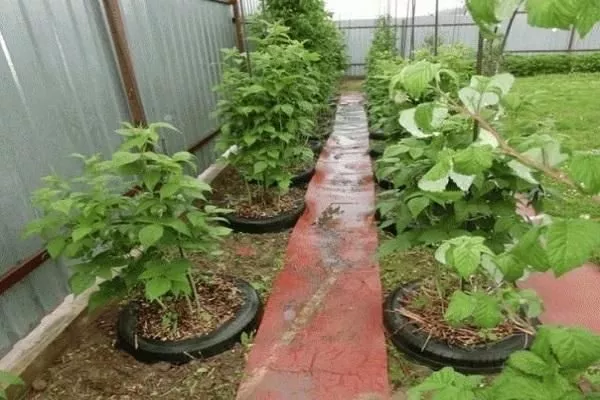
- Making holes and planting seedlings. To grow raspberries, dig holes 40-50 cm by 40-50 cm and about 50-55 cm deep. Alternatively, you can dig trenches of the same size. Then, proceed as follows:
- In the very center of each hole, form a small mound of soft soil.
- Place the seedling in the center, carefully spreading out its roots.
- Do not bury the root collars, leave them at ground level.
- To improve the quality of the soil, add peat or sea sand to the holes.
- When growing raspberries in rows, leave a distance of at least 200-250 cm between them.
- Water thoroughly and mulch.
Care instructions
Raspberry care requires special attention. Key agricultural practices include:
- Introduction of water. Raspberries require careful monitoring of moisture levels. If rainfall is insufficient, water weekly, especially during flowering and fruit ripening. The amount of water depends on precipitation and the regional microclimate.
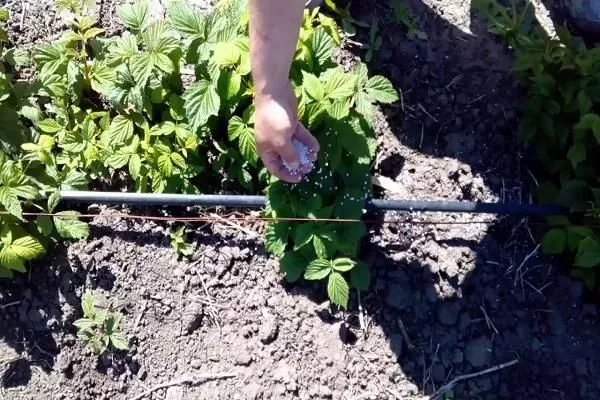
Use water from rainwater ponds or water that has been sitting for several days. Water near the roots, preferably in the morning or evening. - Top dressing. This is a key element in the agricultural process. In the spring, enrich the soil with charcoal or organic mixtures such as manure, humus, etc. Before budding, apply urea. In August, compost fertilizers are optimal. After harvest and in the fall, it is advisable to apply phosphorus-potassium fertilizers.
- Trimming. To control vine growth, prune regularly. This process is carried out in spring and fall. After winter, cut all shoots back to 95-110 cm from the soil surface. As part of sanitation, remove two-year-old stems completely, as well as weak one-year-old stems.
It's recommended to leave about 6-7 healthy shoots. In the spring, perform sanitary pruning, removing branches damaged by frost.
Diseases and pests
Gardeners may encounter certain problems in the form of diseases and pests, although honeycombs are highly resistant to them. The most common problems include the following:
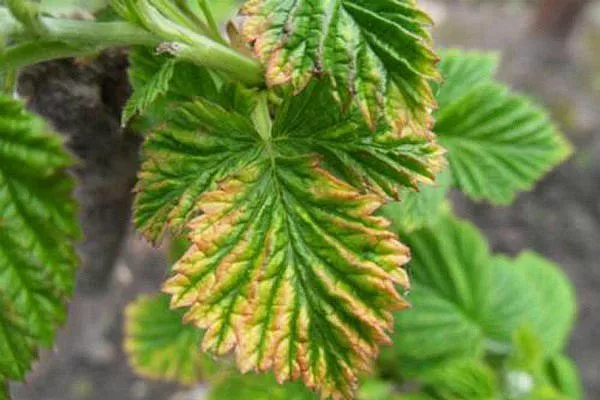
- Gray rot. This disease causes dark spots covered with a grayish coating to form on leaves and berries. It's important to immediately remove and destroy infected leaves, as well as treat the bushes with Bordeaux mixture to prevent further spread of the disease.
- Dwarfism. This disease is characterized by excessive growth of basal shoots that fail to produce fruit. This condition is incurable, but it can be prevented by eliminating pests that can spread the virus. Remove new shoots as they appear.
- Anthracnose. This disease causes leaves to develop spots with a grayish coating. To protect bushes from anthracnose, spray them with copper oxychloride in the spring.
Raspberries can be damaged not only by various diseases, but also by parasites, including:
- Raspberry beetle. It first appears on bushes in May. This pest feeds on buds, leaves, and ovaries, causing rotten berries. To control this beetle, it's important to regularly remove it from the bush by hand. Control should begin immediately after the beetles are discovered.
- Raspberry stem fly. It lays its eggs on shoots, and the larvae bore tunnels into the stems, causing them to dry out. To prevent this, treat the bushes with products such as Karbofos, Confidorm, and Iskra.
- Little bud moth. It lays eggs on buds, from which larvae emerge and feed on them. They then burrow into the stems and begin to eat the berries. To control this pest, use specialized insecticides.
- Spider mite. If it infests a bush, it will begin sucking the sap. To combat this pest, you should also use specialized insecticides.
How does it reproduce?
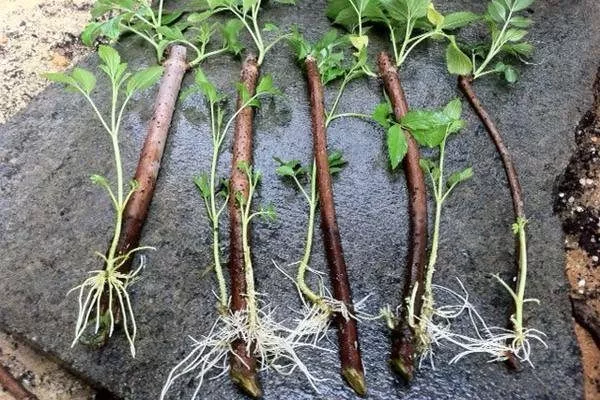
Red Queen lilies propagate easily from root suckers, a simple and well-known method among experienced gardeners. Begin propagation in the spring, when the suckers are about 12-14 cm tall.
The main stages of the procedure:
- Prepare the area for new plants by digging a hole and adding fertilizer.
- Dig up the shoot together with the lump of earth.
- Immediately transplant into a pre-prepared hole;
- Moisten generously with warm water.
Positive and negative aspects of the variety
The Red Queen raspberry boasts numerous impressive benefits. Here are a few:
Although the Red Queen variety has only a few limitations, the following factors are worth considering:
Gardeners' reviews
Analyzing the unique properties and qualities of the Red Queen raspberry, we can confidently say that it is ideally suited for cultivation in the southern and central regions. Thanks to its high productivity, this variety is ideal for both private plots and large-scale commercial production.