
The Konёk-Gorbunok raspberry belongs to a group of large-fruited everbearing varieties developed by Russian breeders. This new variety is rapidly gaining popularity among gardeners. It bears fruit twice a season, allowing for a double-sized harvest per year.
History of selection
The raspberry variety "Konek-Gorbunok" was introduced to the market only in early 2020, when it was developed by specialists at the Nizhny Novgorod nursery "Shkolny Sad," which has specialized in growing everbearing varieties since 2000. Vladimir Aleksandrovich Shiblev, the director of the nursery, is responsible for this new product, and he gave the variety its name, reflecting the small size of the bush.
Introduction to the variety
The Konyok-Gorbunok variety is designed for both amateur and commercial gardening, and is particularly suitable for cultivation in northern regions. It is characterized by good disease and pest resistance, provided proper planting site selection and comprehensive care are followed.
Bush and fruits
The Konёk-Gorbunok raspberry is a compact, low-growing shrub. It has the following characteristics:
- bushes resemble semi-ordered stems, from 50 to 80-85 cm in height;
- spikes located mainly in the lower part of the stems, in the middle and upper parts there are fewer of them;
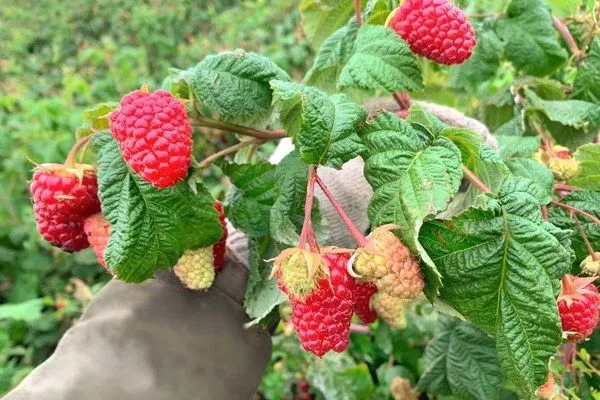
- leaves They have a deep green hue and are covered with a small amount of hairs, slightly curled.
This raspberry variety is distinguished by its strong ability to form shoots, which facilitates rapid propagation but also increases the amount of care required for the bushes.
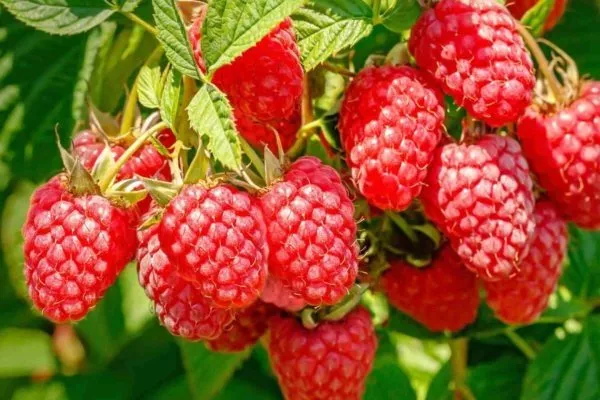
Raspberry fruits are large and have the following characteristics:
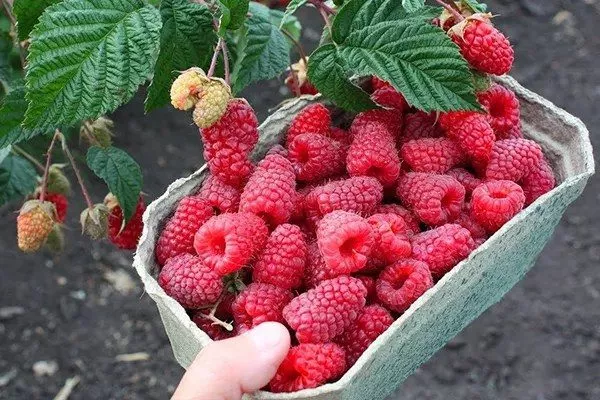
- weight the berry weight ranges from 6 to 8 g, sometimes reaching 10-12 g;
- form fruits are oval;
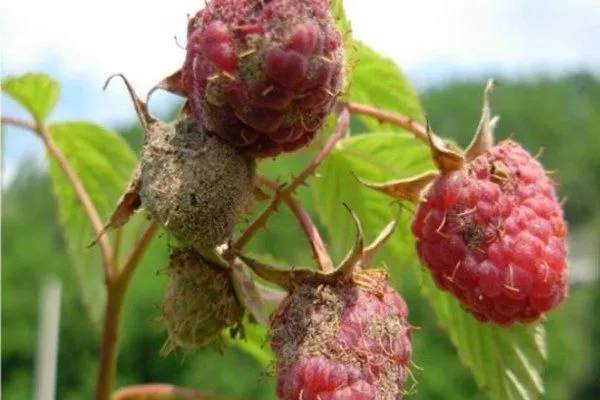
- coloring bright red, with a shiny surface;
- taste sweet;
- density high;
- drupes large and strong, tightly fitting together.
The berries ripen in clusters resembling grapes, making them easy to pick. They are highly resistant to damage and do not fall apart even when overripe. Transportability is modest—the variety may not withstand long journeys.
Where can it be grown?
This raspberry variety originates from the Nizhny Novgorod region and has adapted well to the Volga-Vyatka region. It is ideally suited to local climate conditions.
The Little Humpbacked Horse also thrives in other regions of central Russia. Thanks to its remontant nature, this variety allows for fall pruning and frost protection, making it possible to grow raspberries even in the northern and Ural regions.
Frost resistance
The Humpbacked Horse is quite frost-hardy and can withstand minor spring frosts. This everbearing variety provides a stable harvest and doesn't require a two-year growth cycle. Perhaps this is why breeders don't aim to develop raspberry varieties with increased frost resistance and a two-year growing season.
Features of fruiting and ripening periods
The Konёk-Gorbunok raspberry belongs to the category of varieties capable of multiple fruiting. This characteristic allows harvesting not only from the previous year's branches but also from young shoots, ensuring continuous and prolonged fruiting throughout the growing season.
This early raspberry variety begins producing fruit as early as mid-July, and thanks to its everbearing nature, harvesting continues until late autumn. Two main harvesting waves occur during the season, and harvesting can be done either manually or mechanically.
Productivity
The yield of this variety is:
- in the first year after planting – 1.5 tons per hectare;
- in the second year – 10 tons per hectare;
- in the third year and beyond – 20 tons per hectare, but subject to favorable weather conditions and compliance with agricultural technology.
Pollination
The Little Humpbacked Pipit is self-pollinating, with bees providing approximately 90-95% of the pollination process. If pollination isn't vigorous enough, it's recommended to increase the number of concurrently blooming plants in the area or spray the bushes with a honey solution to attract insects, using 1 tablespoon of honey per 200 ml of water.
Storage of the harvest
To prevent raspberries from wilting quickly, leave them on their stems when harvesting, especially if they are to be transported. At room temperature, they can remain fresh for no more than 6-8 hours. If they are not planned for use or processing within this period, they should be refrigerated.
Raspberries are stored in plastic containers, arranged in one or two layers and loosely covered with a lid or napkin. In these conditions, they can last up to a week. However, if there are any spoiled berries in the container, the shelf life will be significantly reduced.
Landing rules
Although the Little Humpbacked Horse is considered easy to grow, ignoring basic agricultural practices is not recommended. This approach will ensure consistently high raspberry yields.
The most important aspects:
- For successful cultivation, choose a location with sufficient light. An open, shade-free area is ideal.
- Raspberries prefer soil with a high content of loam or sand, while heavy clay soil is less favorable for them.
- Before planting, carefully prepare the beds: clear weeds, add organic fertilizers such as compost, and add potassium and superphosphate mineral compounds. This will ensure rapid establishment and full development of the plant. Before planting, the soil should be plowed again and cultivated with a cultivator.
- Proper preparation of the seedlings is also a key step in planting. It's important to ensure their root system is developed and the pruned stem length does not exceed 25-30 cm.
- Autumn, particularly late September and early October, is traditionally considered the optimal time for planting raspberries. This time is ideal for the Konyok-Gorbunok variety, which will have time to strengthen its root system and prepare for winter frosts. If for any reason autumn planting is not possible, it's best to postpone it until spring. If you plant raspberries in spring, you'll be able to enjoy a harvest later that year.
- When planting the Humpbacked Horse in large numbers, it's recommended to maintain 100-120 cm between bushes and 330-360 cm between rows. In a garden, it's sufficient to plant bushes 60-110 cm apart and 100-150 cm between rows.
- To plant raspberries, dig a hole deep and wide enough to allow the root system to grow freely. The root collar should not be buried underground, but remain level with the soil surface. Then carefully fill the hole with soil, lightly compact it, and ensure it is thoroughly moistened. Don't forget to mulch the area around the trunk.

Care tips
Care procedures are simple, but they also have their own varietal characteristics:
- Irrigation. After planting, the seedling requires regular watering—every 3-5 days. Later, when the bushes enter the flowering and fruiting period, watering becomes even more important. Please note the following:
- It's important to ensure deep soil saturation. Each bush will require at least 10-12 liters of water.
- Before the onset of cold weather, it is necessary to carry out moisture charging so that the plantings are ready for winter weather conditions.
- When growing, it is preferable to use drip irrigation.
- At an early stage, one thread will be enough, and as the bush ages, their number increases to two.
- The waterfall method is not recommended, as it can negatively affect the quality of the berries.
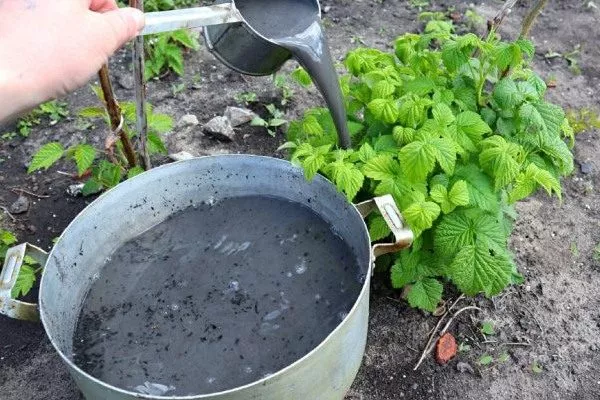
- Application of nutrients. In spring, the Little Humpbacked Horse requires additional feeding with organic matter, such as cow manure or bird droppings. If the bushes are already mature, additional nitrogen and other mineral fertilizers are necessary, which is best done in the summer.
In the fall, mineral mixtures are also used to maintain the health of the bushes, focusing on potassium and phosphorus. The best option is a ready-made complex fertilizer, such as Kemira. - Shaping/cutting. To achieve the highest yield, it's recommended to choose an annual growing cycle. This means completely pruning the bushes each year. Plants should be treated in late autumn, before severe frosts set in. Consider other rules as well:
- During the first year after planting, do not prune a one-year-old seedling, as its root system may not be sufficiently developed to survive the winter. Beginning in the following year, begin trimming the bushes completely.
- When caring for this variety, consider its tendency to spread rapidly. By the end of the first summer after planting, numerous shoots may appear around the main plant, extending up to 100 cm from the mother plant. Remove any excess shoots or replant them for propagation.
Diseases and pests
The Little Humpbacked Horse has a fairly strong immune system, but in unfavorable climatic conditions it is at risk of infection with fungal diseases, including:
- gray mold - which is aggravated by the proximity of strawberries;
- purple spot;
- anthracnose.
Factors that contribute to these diseases include excess moisture, flooding, and cool weather. To protect against fungal infections, fungicides are used, such as:
- colloidal sulfur;
- Bordeaux mixture;
- Abiga Peak;
- Cuproxate;
- Oxychom;
- Previkur Energy;
- Fast;
- Thiovit Jet;
- Fundazol;
- Horus;
- Zineb.
Among the pests that can damage the Konёk-Gorbunok raspberry, the weevil stands out. To combat it, the following products are used:
- Alatar;
- Iskra Bio;
- Kemifos;
- Ram.
The Konyok-Gorbunok variety is also susceptible to attacks by the raspberry fly and shoot gall midge. An effective treatment against these pests is Karbofos. Natural remedies can be used to prevent problems with the Konyok-Gorbunok raspberry, especially before harvest, when the use of chemicals is completely undesirable.
How to prepare for winter?
Before the onset of cold weather, the Little Humpbacked Horse should be pruned: remove all excess and diseased branches, as well as weeds around the bush. To prepare the shrub for winter and provide it with sufficient nutrients, fertilize the plants in late autumn.
If some raspberry canes were left behind during gardening, they should be carefully bent to the ground and protected with a non-woven blanket. For additional insulation and warmth, a layer of pine needles or organic fertilizer can be added on top. If the stems were completely removed, a layer of mulch is recommended to stabilize the soil temperature.
How does it reproduce?
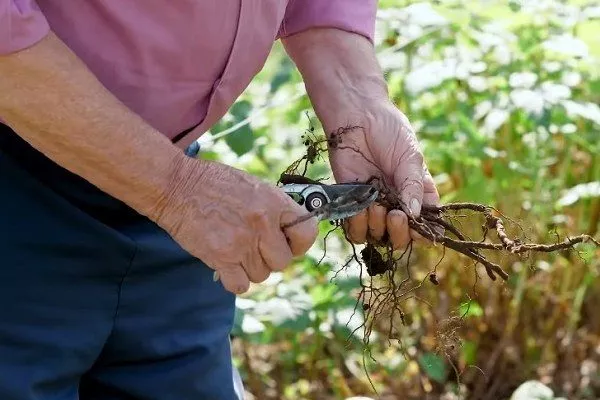
The "Konyok Gorbunok" raspberry is propagated using several methods. One is by cuttings, which involves pruning the shoots in the fall, burying them in the soil, and covering them with plastic film, with regular watering. The second method is using basal shoots, which are separated from the mother plant with a shovel.
It is noted that this raspberry variety has a high capacity for forming new shoots, which makes it convenient for gardeners, providing them with a sufficient amount of planting material.
Pros and cons
The Humpbacked Horse stands out for its ability to bear fruit until late autumn, which is a key advantage. Furthermore, the variety offers a number of other advantages:
Raspberries have many benefits, but we should not forget about some of their disadvantages:
Reviews
The Konyok-Gorbunok variety promises to become a favorite among gardeners. Even during the state testing stage, it has already proven itself to be high-quality and productive, which promises its continued popularity among gardening enthusiasts in the coming years.