
The classic raspberry flavor should balance between sweetness and a slight tartness. A tart balance can be influenced by the variety, growing conditions, regional climate, and care.
It all depends on the type of berry
When choosing a raspberry variety for planting, focus on the berries' flavor, aroma, and yield. Those who enjoy the sweet and tart flavor of the berries should choose varieties that match. However, if the right growing conditions aren't provided, the flavor can become overly sour.
- ✓ The soil acidity level preferred by the variety.
- ✓ Sunlight requirements for optimal fruiting.
"Sour" varieties of early ripening
| Name | Ripening period | Disease resistance | Frost resistance |
|---|---|---|---|
| Vega | early | average | high |
| Ruby Giant | early | high | average |
| Cascade | early | high | high |
| Novokitaevskaya | early | average | average |
| An early surprise | early | low | low |
From June 15 to 30, the following varieties are harvested:
| Name | Weight of berries, g | Berry shape | Degree of aroma expression | Yield per bush, kg |
| Vega | 3-4 | obtuse-conical | + | 3-3.5 |
| Ruby Giant | 7-11 | truncated-conical | + | 4-9 |
| Cascade | 3-3.5 | obtuse-conical | ++ | 3 |
| Novokitaevskaya | 2.5-3 | round-conical | +++ | 2-2.5 |
| An early surprise | 2.6-3.4 | elongated- conical | + | 1.5 |
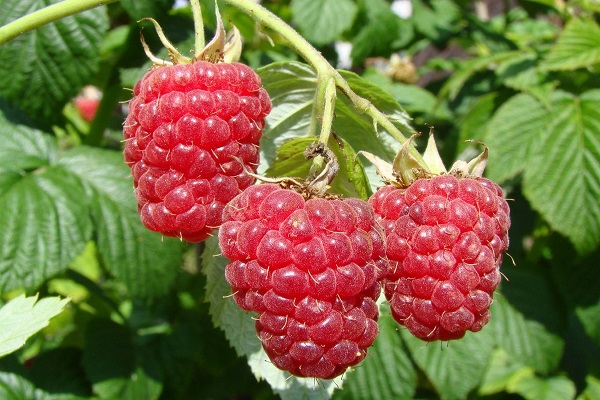
Raspberry Vega
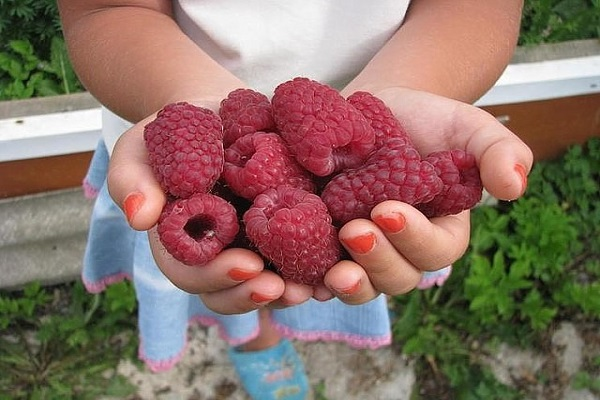
Ruby Giant
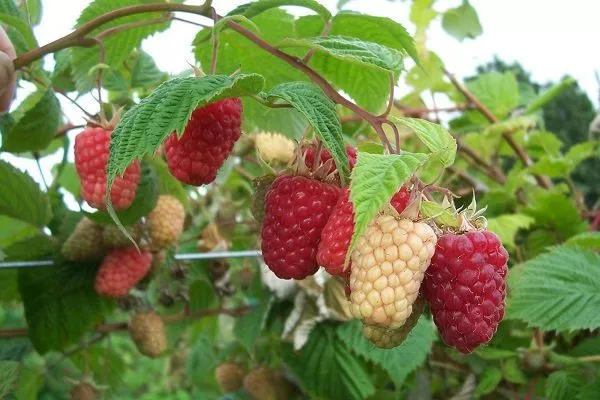
Cascade
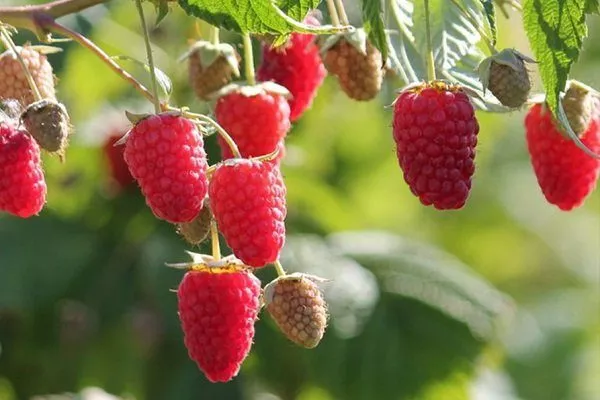
Raspberry Novokitaevskaya
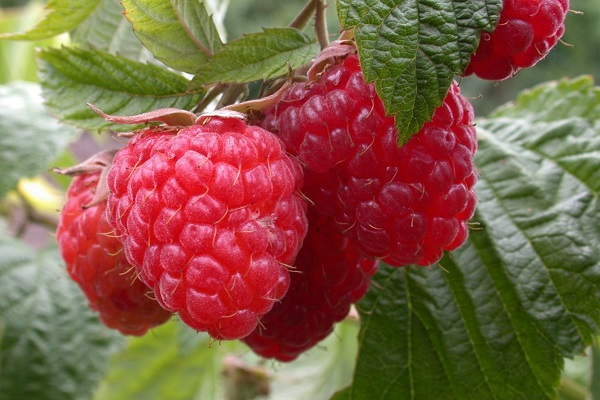
An early surprise
"Sour" varieties of mid-season ripening
| Name | Ripening period | Disease resistance | Frost resistance |
|---|---|---|---|
| Aborigine | average | high | high |
| Freemen | average | low | average |
| Kaliningrad | average | average | low |
| Cleopatra | average | high | average |
| Reward | average | high | high |
| Modest | average | low | low |
From June 20 to July 11, the following varieties bear fruit:
| Name | Weight of berries, g | Berry shape | Degree of aroma expression | Yield per bush, kg |
| Aborigine | 4-8 | conical | ++ | 4-7 |
| Freemen | 3.5-4 | conical | — | 4 |
| Kaliningrad | 2.2-3.2 | rounded | ++ | 3 |
| Cleopatra | 4-5.2 | hemispherical | + | 3.3-4 |
| Reward | 2.6-3 | oval-conical | +++ | 2.5-3 |
| Modest | 2.5-2.9 | round-conical | — | 2.2 |
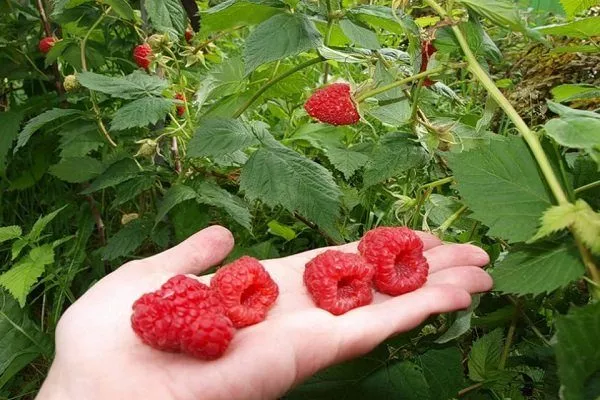
Raspberry Aborigen
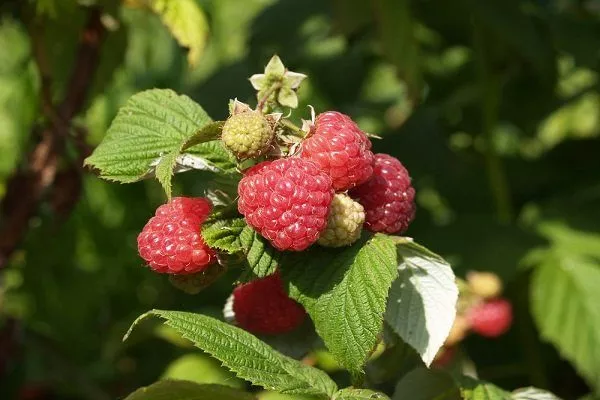
Malina Volnitsa
Kaliningrad
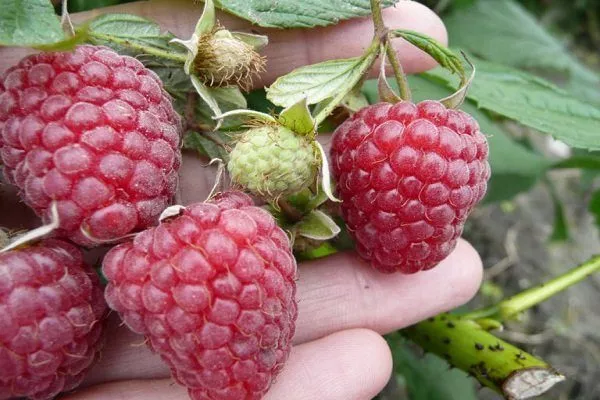
Cleopatra
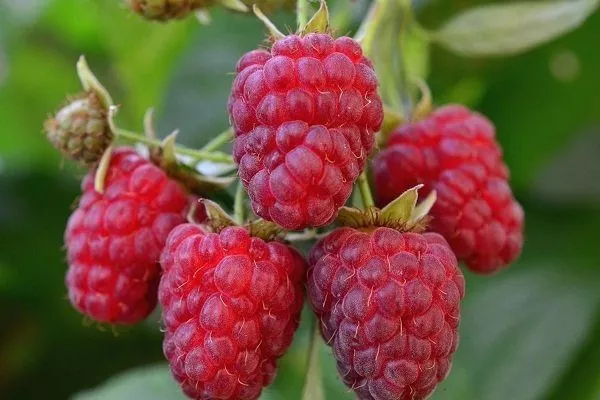
Reward
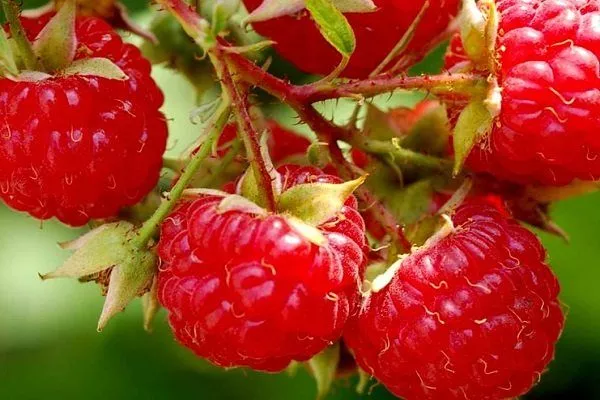
Raspberry the Modest
"Sour" late-ripening varieties
| Name | Ripening period | Disease resistance | Frost resistance |
|---|---|---|---|
| Mirage | late | high | average |
| Samara | late | average | low |
From July 20 to September 15, the following varieties bear fruit:
| Name | Weight of berries, g | Berry shape | Degree of aroma expression | Yield per bush, kg |
| Mirage | 4-6 | elongated | ++ | 3-3.5 |
| Samara | 2.6-3.3 | conical | ++ | 2.5-3 |
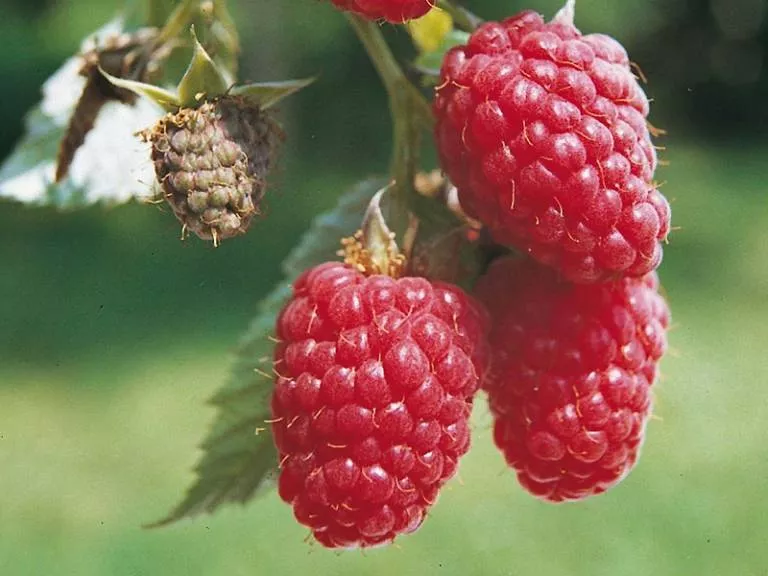
Raspberry Mirage
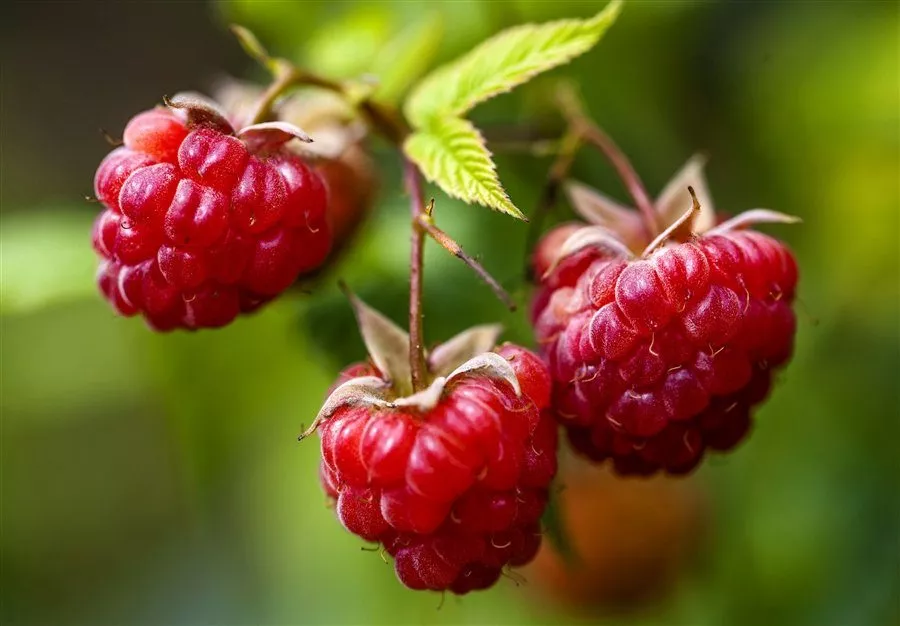
Samara
"Sour" varieties of remontant fruiting type
| Name | Ripening period | Disease resistance | Frost resistance |
|---|---|---|---|
| Atlas | remontant | high | average |
| Indian summer | remontant | average | low |
| Indian Summer 2 | remontant | average | low |
| Diamond | remontant | high | average |
| Bryansk miracle | remontant | high | average |
| Hercules | remontant | high | average |
| Eurasia | remontant | average | low |
| Firebird | remontant | high | average |
| Mulatto | remontant | average | low |
| Orange miracle | remontant | high | average |
| Ruby necklace | remontant | high | average |
These varieties produce a harvest twice during the season: in mid-July and early October.
| Name | Weight of berries, g | Berry shape | Degree of aroma expression | Yield per bush, kg |
| Atlas | 5-5.5 | elongated-conical | ++ | 2-2.5 |
| Indian summer | 2-4 | round-conical | + | 1-1.5 |
| Indian Summer 2 | 3-3.5 | round-conical | + | 2-2.5 |
| Diamond | 4-4.5 | conical | + | 2.5-3 |
| Bryansk miracle | 5-6 | elongated-conical | + | 2.5-3 |
| Hercules | 5-6 | truncated-conical | + | 2-2.5 |
| Eurasia | 3.7-4.5 | conical | + | 2.2-2.6 |
| Firebird | 4.2-6 | conical | ++ | 2.2-2.5 |
| Mulatto | 3-3.7 | rounded | + | 1.5-2 |
| Orange miracle | 6-7 | elongated obtuse-conical | +++ | 2-2.5 |
| Ruby necklace | 4.5-5.5 | elongated- cylindrical | ++ | 2.3-2.8 |
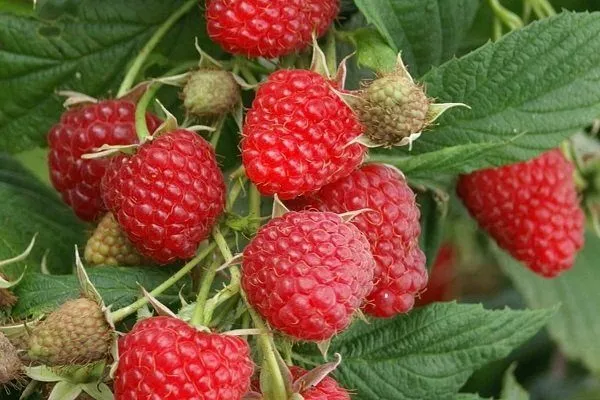
Raspberry Atlant
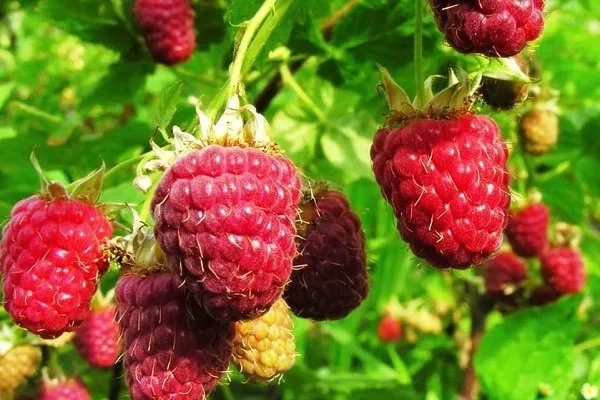
Indian summer
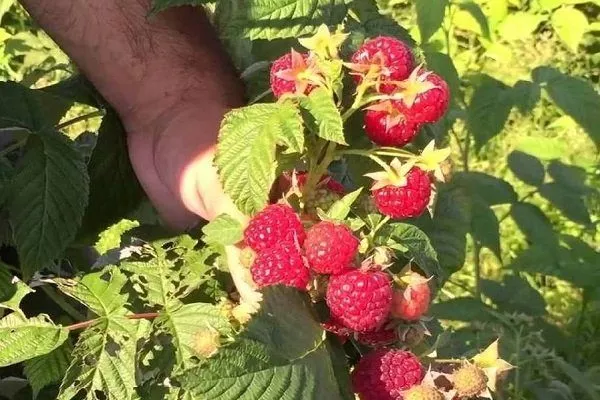
Indian Summer 2
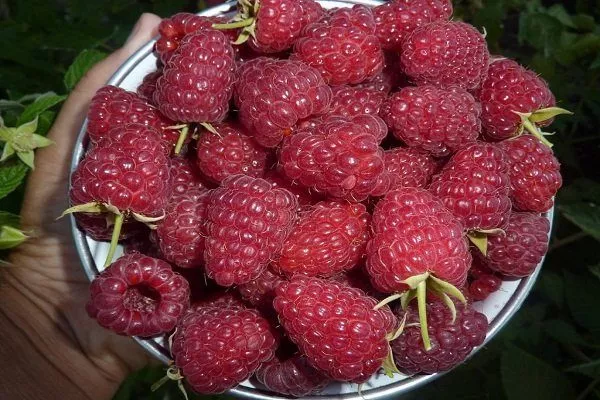
Raspberry Brilliant
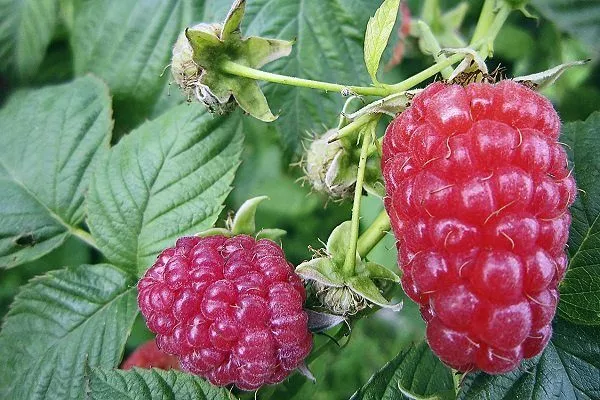
Bryansk miracle
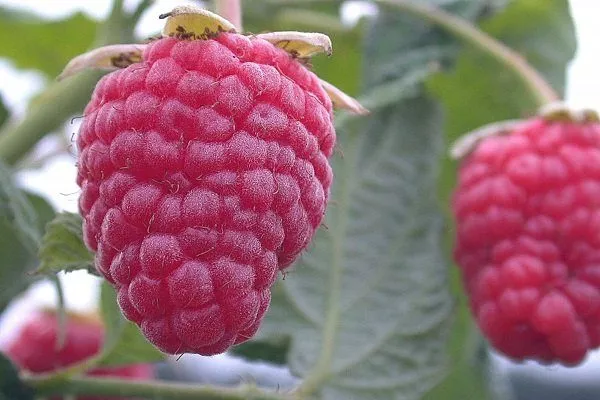
Hercules
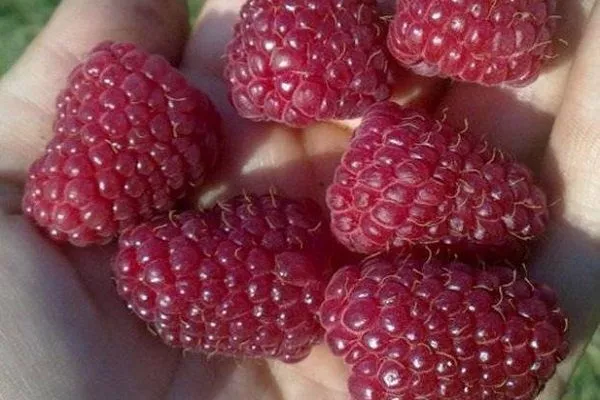
Raspberry Eurasia
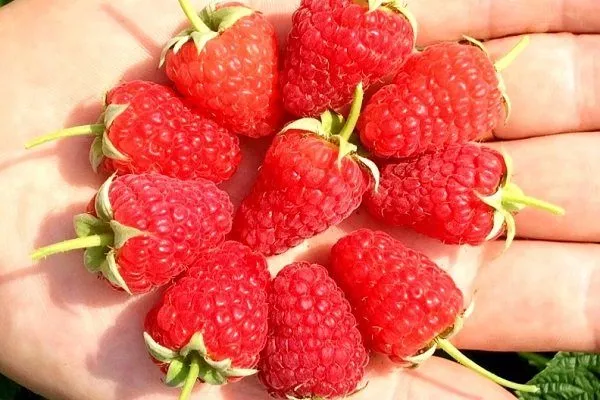
Raspberry Firebird
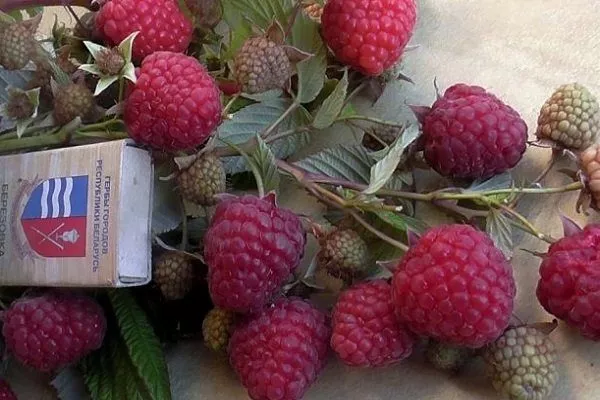
Mulatto
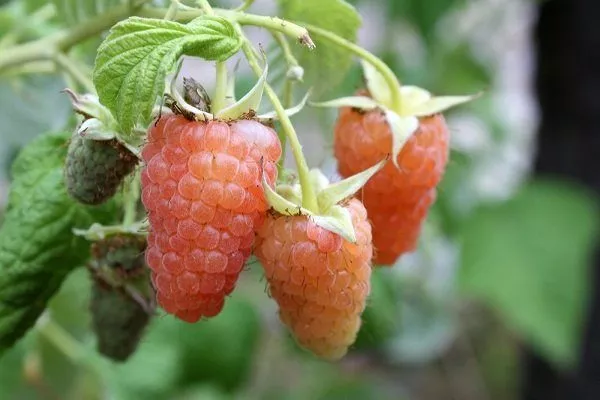
Orange miracle
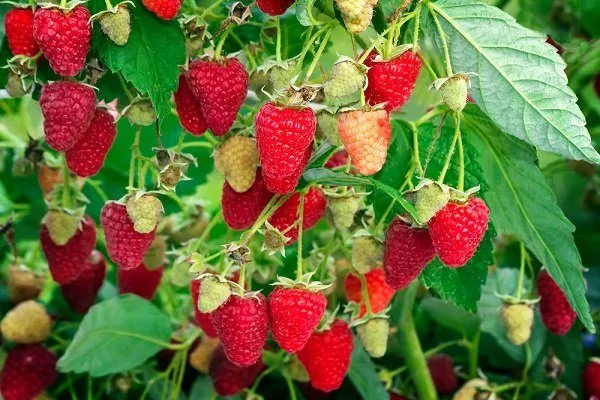
Ruby necklace
Nutrient deficiencies
Regular monitoring of your raspberry plants will help you spot nutrient deficiencies. Slow growth and changes in leaf color and shape will indicate which nutrients need to be replenished.
Prepare an infusion of herbaceous plant ash and foliage and apply it to the raspberries during the ripening period – this will increase the sugar content of the berries.
Recipe for preparing ash infusion:
- Fill the bucket 1/3 full with ash.
- Top up the volume with hot water.
- Let it brew for 2 days.
The strained infusion is ready for use and can be used for root feeding and spraying.
Nitrogen deficiency
Nitrogen is essential for proper plant development. Without it, the root system cannot develop quickly, metabolism slows, and the plant loses its ability to synthesize nucleic acids.
Caution! High doses of nitrogen can reduce plant resistance to disease and negatively affect the taste of berries.
How does nitrogen deficiency manifest itself:
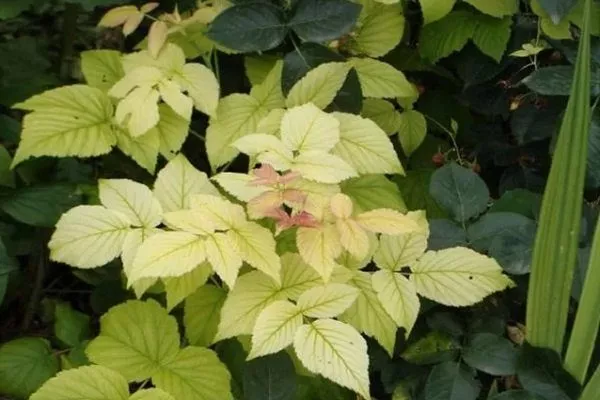
To prevent deficiency of this important element, 5-7 grams of nitrogen per 1 m² of planting area is added to the soil in several applications each season. The fertilizing schedule is as follows:
- In the first year After planting raspberries, three stages of nitrogen application are followed: when the shoots reach 10 cm in height, and the second and third - after 3 and 6 weeks, respectively.
- From the second year The same dose is divided into two parts. The first is applied when the shoots reach a height of about 10 cm, the second – four weeks later.
To prevent nitrogen deficiency, autumn pruning of raspberries creates a reserve of this element, which the plant uses the following spring.
Phosphorus deficiency
Phosphorus influences root development, increases crop yields, and improves winter hardiness. A deficiency can be identified by a change in leaf color to a darker green, then a burgundy-purple. Berries with this deficiency become soft and unevenly colored.
What does phosphorus deficiency look like:
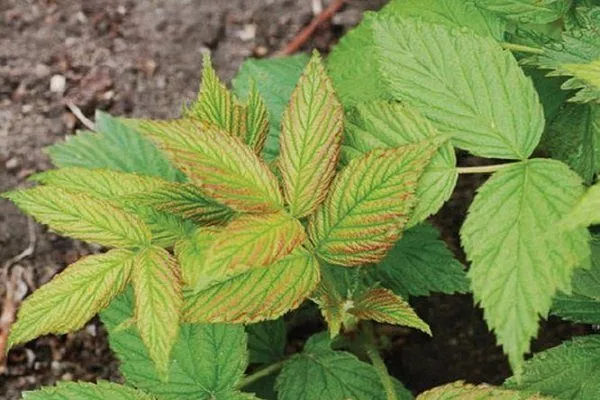
It is important to determine the acidity of the soil, because in acidic soils with a pH lower than 5.5, raspberries do not absorb phosphorus.
To make up for the deficiency, dilute 60 g of superphosphate in 10 liters of water and water at a rate of 5 liters per m².
Potassium deficiency
Potassium promotes the movement of sugars within plant tissues. It increases resistance to low temperatures, drought, and disease.
It manifests itself in older leaves. Even a slight decrease in the element leads to a sharp slowdown in shoot growth; with a more severe potassium deficiency, the tissue between the veins turns brown, and the leaf margin subsequently dies.
How is it expressed:
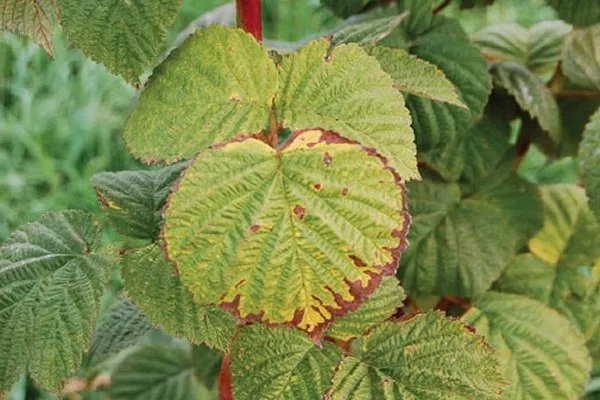
Adding wood ash helps restore potassium levels. This component can be applied dry or diluted with water. Work a 0.5-liter jar of dry ash into the soil, or dilute 1 cup of ash in 10 liters of water and pour half a bucket under each bush.
Magnesium deficiency
Magnesium facilitates photosynthesis. A deficiency of this element is often caused by excessive application of potassium fertilizers.
Signs include changes in leaf color—only the central areas of the leaf blade remain brightly colored. The rest of the leaf loses color, a burgundy border appears along the edge, and the leaf margins curl inward and dry out.
What it looks like:
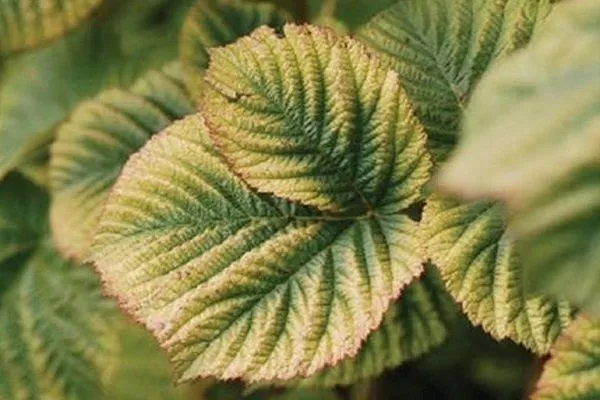
Spraying the foliage with a 1% magnesium sulfate heptahydrate solution helps. Apply at the first sign of deficiency.
Violation of the watering regime
The soil should remain slightly moist. Overwatering is harmful, as it delivers highly diluted nutrients to the plant, starving the raspberries. Underwatering prevents the absorption of nutrients from the soil.
- ✓ The soil should be slightly moist, but not waterlogged.
- ✓ Watering should be done in the morning or evening to minimize water evaporation.
Watering is done at a rate of 2 buckets of water per 1 m²: the first watering is done in the spring, during the period of active bud growth, and then once a month at the same volume. In August, watering is no longer necessary (except during droughts, when there is no rain for the entire month).
To retain soil moisture, the surface is mulched. When planting, coconut fiber can be placed in the hole to distribute water more evenly during watering.
Increased soil acidity
A soil pH of 6.0-6.8 is ideal for raspberries. Lower soil pH significantly increases the berries' sourness. Such soil is periodically deacidified with wood ash: 100-150 g of ash per 1 m² is incorporated into the soil in spring and June.
The plant will not absorb nutrients from acidic soil, so fertilizing is useless. The lack of beneficial bacteria in acidic soil reduces raspberry fertility.
Lack of light
Raspberries ripen sweeter in full sun conditions, where the plant receives 6-8 hours of sunlight per day. In shadier areas, the berries will be more tart.
Insufficient sunlight impairs fertilizer absorption. Therefore, it's necessary to thin out the bushes by removing excess growth to ensure fruiting shoots receive sufficient light.
If you choose the right variety and follow basic raspberry care guidelines, the berries will produce a harmonious blend of tart and sweet flavors. Raspberries can produce abundant fruit in the same location for 15-20 years. This is enough time to create the right conditions for the plant to thrive.
I don't like sour things, but last year my usually sweet raspberries suddenly turned sour. The cause turned out to be simple—improper watering. Thanks for the help!