
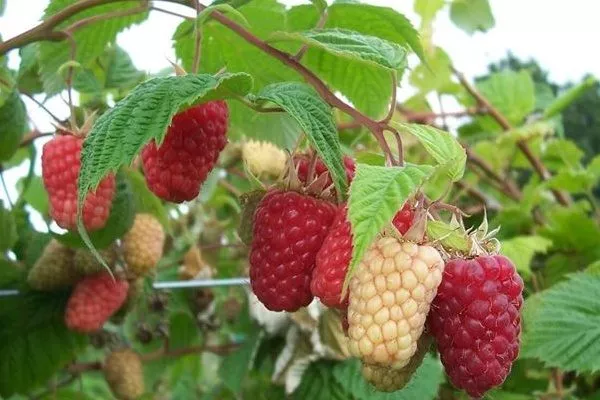
The Cascade Delight raspberry is a mid-season variety with high yields. This large-fruited raspberry was developed by American breeders. It is characterized by excellent flavor and the uniformity of each berry, which makes it particularly attractive to potential consumers.
History of selection
In 1989, the Cascade Delight raspberry variety was born. It is the result of a cross between Chilliwack and WSU 994. It is distinguished by its vigorous bushes, which were first planted in greenhouses in 1990.
In 1993, the first experimental varietal trials began, which demonstrated that the seedlings were highly viable and robust. The berries of this variety are impressive in their productivity, attractive appearance, and aroma.
For several years, a team of breeders led by Dr. Patrick Moore conducted research and refinement of the varietal characteristics. This work took place in Washington State, USA. The final variety was registered in 2002, and in 2004, it received a patent.
Introduction to the variety
Despite the many advantages and positive characteristics cited by Americans, this variety has not yet become popular among private gardeners in Russia. However, it is actively used in agricultural nurseries and has significant potential for further development.
Bush and fruits
This raspberry variety is characterized by its compact bush size and extensive root system. Its height typically ranges from 150 to 25 cm, and the trunk is often covered in thorns, although these are few in number.
Varietal characteristics:
- The bush spreads quickly, forming up to 10-13 vigorous shoots per season. These shoots are characterized by a dense and strong structure, with young shoots being light green, turning brownish by autumn.
- The leaves are large and wide, with a characteristic corrugation. Their bright green hue can take on light green hues, and the leaf teeth can be marked with a reddish-brown tint.
- During flowering, raspberry bushes produce flower stalks gathered in dense clusters. The flowers are white and quite large—up to 2 cm. They are attractive in appearance, but their fragrance is almost imperceptible.
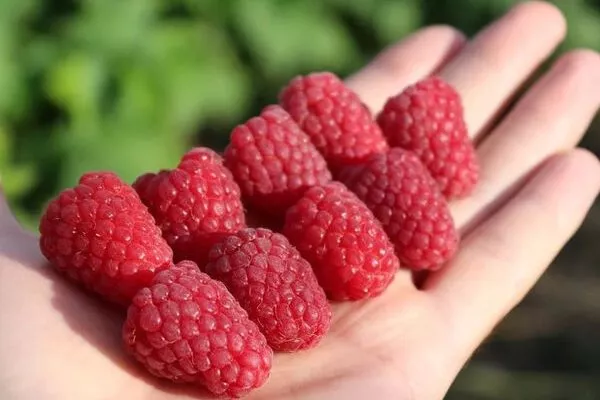
- The fruits are large, with each berry weighing between 6 and 8.5 grams, and sometimes more. The berries have an elongated conical shape and a sweet flavor with a slightly aromatic, acidic aftertaste.
- During the tasting, they received a high rating of 4.8 out of 5. Ripe fruits exude a pleasant aroma, have a dense and elastic texture, and a shiny coating.
- The seeds of this variety of raspberries are small and tightly attached to the berry, making them almost invisible when eaten.
Where can it be grown?
This variety's origins date back to the United States, where it was first bred. Its cultivation later spread to vast swaths of Russia, Ukraine, Belgium, and the United Kingdom.
In Russia, the variety has gained particular popularity in the Leningrad Region, where it is grown commercially. Commercial cultivation began in 2012.
Frost resistance
This variety is distinguished by good frost resistance, allowing it to be grown even in cooler climates than is typical. However, to prevent damage to stems and buds during the winter, it is recommended to protect the shoots by pinning them to the ground.
Features of fruiting and ripening periods
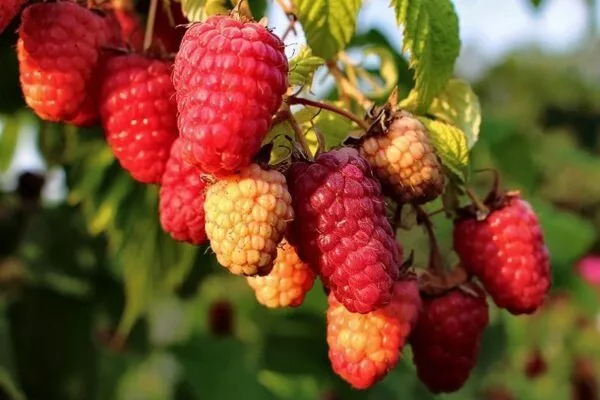
This variety begins to bear fruit only in its second year. It is not a repeat-bearing variety—its harvest ripens at the same time as mid-early varieties. The berries form in compact clusters and ripen immediately after each other.
In the southern regions, the harvest begins to ripen in the second ten days of June, while in the central and northern regions, this occurs in the second ten days of July. The fruits can be picked throughout the month. During this period, the bushes are completely covered with bright red berries.
Productivity
Just a few years after planting, a single raspberry bush can yield 3-4 kg of berries, a respectable yield for commercial cultivation. Achieving these results requires careful care. In some cases, the yield can reach 6-6.5 kg.
Storage of the harvest
This variety is resistant to damage during transportation. Even fully ripe berries can be transported without any difficulty. It's important to chill them first and store them in a cool room or refrigerator.
Landing rules
Selecting high-quality seedlings is key to successful planting. It's recommended to purchase seedlings from specialized nurseries, which guarantee their high quality and productivity. They should have a complete and undamaged root system.
Main rules and requirements:
- This raspberry does not thrive in loamy or sandy areas; acidic soils are unacceptable and must be neutralized with dolomite flour or lime.
- The optimal planting site should be open and located in the sun, where there is no possibility of exposure to cold winds and drafts.
- Preparation should begin in the fall, including weeding, tilling, and fertilizing. Fertilizers such as compost, humus, and manure can be used.
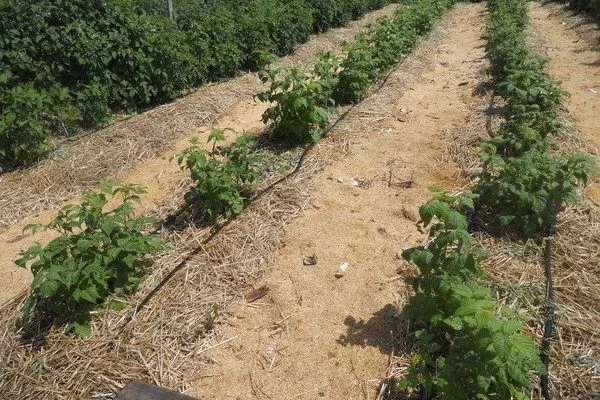
- To grow raspberries, divide the garden into rows. Space individual raspberry bushes 40-45 cm apart to prevent branches from intertwining. The spacing between rows should vary from 20 to 250 cm.
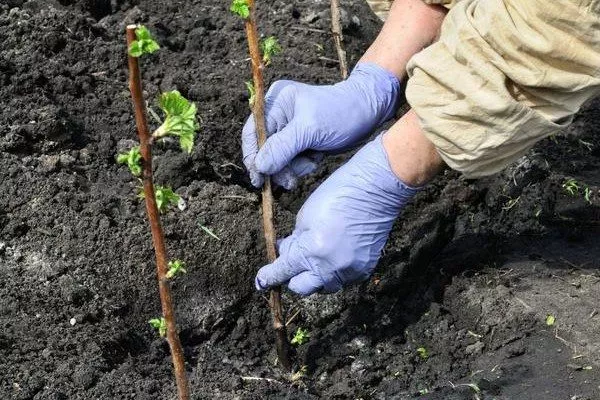
- To plant each seedling, it is necessary to make a hole 40-45 cm deep and 50-55 cm wide so that the root system is freely located in it and not damaged.
- If mineral fertilizers weren't added during soil preparation, they should be added to each hole. Approximately 2.5-3.5 grams of organic matter (compost, etc.) and 30-35 grams of superphosphate are suitable.
- After the seedlings are planted in the holes, they must be carefully filled with soil and the area around them must be lightly compacted.
The final stage is watering and covering the surface with mulch, which can be created from dry fallen leaves, peat or humus.
Care tips
To enjoy a bountiful harvest, raspberries require care and attention. Basic care guidelines include a number of important intermediate steps:
- How to water. Insufficient water can cause leaves to turn yellow and fall off, which in turn will impair the flavor of the berries, making them too sour and small. Raspberry plants should be watered regularly and generously.
- Mulching. After each watering, it's essential to cover the soil with mulch to retain moisture. Regular loosening of the soil to a depth of about 10 cm is also crucial, but care must be taken to avoid damaging the plant's root system.
- Shaping and pruning of the bush. Don't neglect pruning. It should be done in spring and fall, but each time period has its own specific requirements:
- In spring, remove dry and damaged branches from the bush, as they have become useless after the winter. The stems that will form the bush should be shortened by 10-18 cm.
- In autumn, it is recommended to trim the bushes to a height of 100 cm and remove all branches that have already borne fruit.
- To keep raspberry bushes bushy and spreading, pinching is essential in the summer. This encourages the development of lateral branches. This method of pruning should be used once the bush reaches a height of more than 10-120 cm.
- Garter. Raspberry bushes need to be supported by installing stakes at the beginning and end of the row, which are then strung with wire. Over time, as the bushes grow, their stems should be secured to the trellises to prevent them from breaking and contaminating the soil.
- Top dressing. A key aspect of growing raspberries is providing them with a regular supply of nutrients. If soil conditions are favorable, excessive fertilization is not necessary. However, if soil is less fertile, raspberries may require additional nutrition.
Diseases and pests
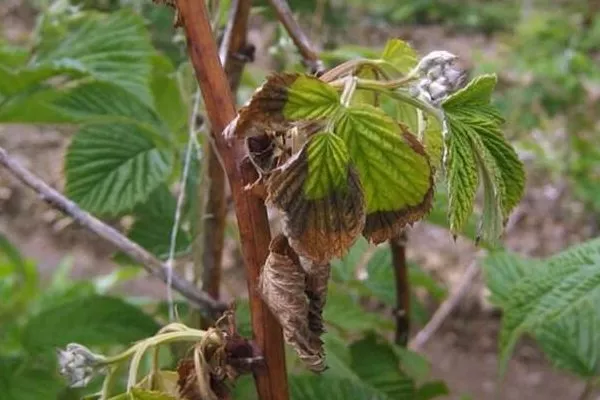
This raspberry variety is highly disease-resistant. However, it can be susceptible to viral infections, which can wipe out entire raspberry patches. Among the most common problems are:
- Infectious chlorosis. Symptoms of the disease include leaf pubescence. The virus is transmitted through gardening utensils. As a result, plant growth slows, leaves become smaller, and develop a wavy appearance.
- Mosaic virus. The disease manifests itself as unusual leaf coloring, reminiscent of a mosaic pattern. Raspberry plants also lose vigor, and bushes experience reduced yields. To prevent the spread of the disease, it is necessary to treat the leaves with specialized products.
In addition, it is recommended to treat the soil around the bush with pesticides against insects that can spread the virus between plants. - Aphids and spider mites. To combat them, you can use a recipe using tobacco decoction. To prepare, mix tobacco powder and tobacco residue with water, then boil for an hour. Then add 100 grams of laundry soap. Use this solution to spray all the bushes.
- Raspberry beetle or weevil. Insecticides can be used to control them. As a preventative measure, it is recommended to loosen the soil around raspberries in the fall and spring, and to destroy fallen leaves and shoots after pruning by burning them.
How does it reproduce?
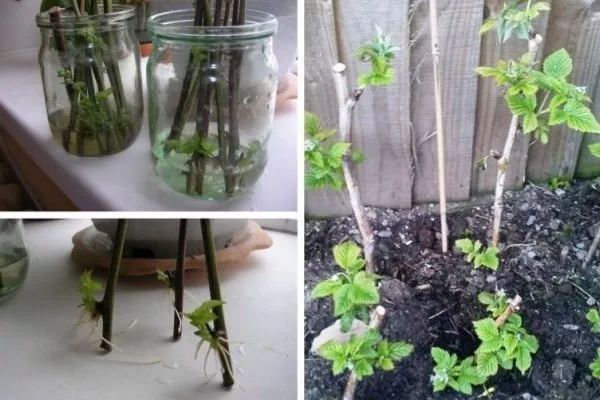
This variety is propagated using a variety of vegetative methods, including:
- use of root suckers;
- dividing bushes into parts;
- planting root cuttings.
The simplest and most widespread method is the use of root cuttings. For mass production, specialized agricultural technology is used. Seed propagation is used exclusively for breeding purposes.
Root propagation is considered a fast method: many small plants appear around the main bush, which are then uprooted and transplanted to a new location in the fall.
Pros and cons
Among the advantages of the Cascade Delight raspberry variety are the following:
However, the variety also has some disadvantages:
Reviews
Examining the characteristics of the Cascade Delight variety, one can conclude that it is a worthy choice for both home and commercial gardening. The berries of this variety are distinguished by their pleasant flavor and large size, making them versatile for a variety of culinary purposes.