
Karamelka is a remontant raspberry variety. It deservedly earned its appetizing name. The fruits of this raspberry are unusually sweet – it has been recognized as the most delicious of all remontant varieties. Let's learn how to plant and care for Karamelka.
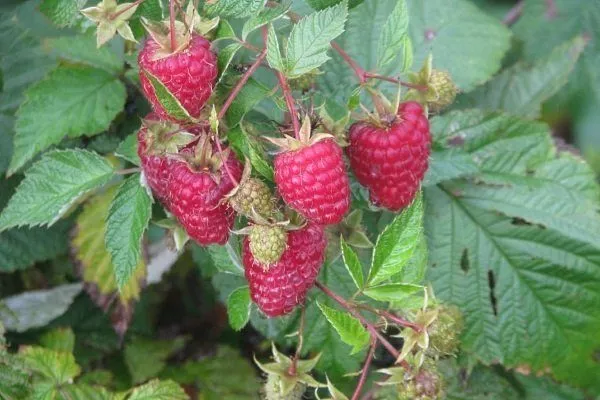
raspberry variety "Karamelka"
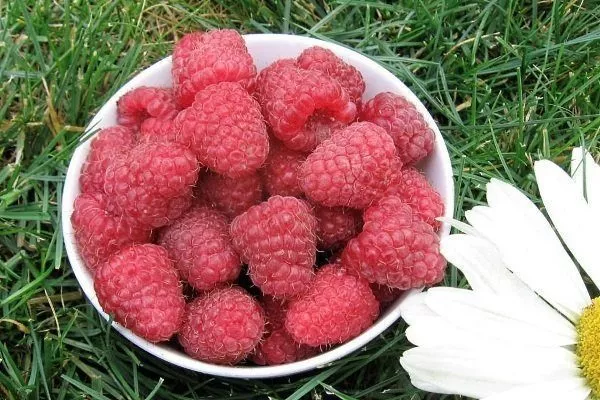
The Karamelka raspberry has an appetizing commercial appearance
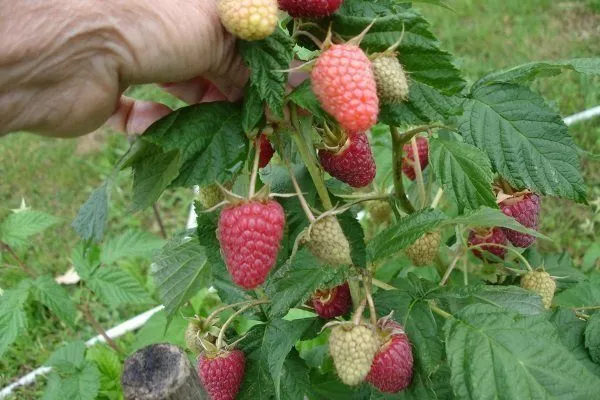
The Karamelka variety is considered one of the most successful new varieties in the remontant category
History of selection
Karamelka is the result of 10 years of work by a renowned Nizhny Novgorod breeder. The variety, having passed state evaluation, was added to the State Register in 2016. Karamelka is recommended for cultivation in temperate climates.
Description of Caramel
Brief botanical description of the Karamelka variety:
- Bushes. Upright, medium-sized. Height: 1.5-1.7 m. Shoots are straight, of normal thickness, with sharp and soft spines.
- Leaves. Green in color, slightly wrinkled, slightly pubescent.
- Fruit. Large, dry, shiny, and red in color, the berries are broadly conical in shape. Average weight is 6 g, with the largest berries reaching 12 g. The berries are easy to separate and remain soft when ripe. Their flavor is reminiscent of wild raspberries.
Characteristics of the variety
The Karamelka raspberry is especially prized by gardeners in risky farming zones. This variety quickly forms annual shoots and produces abundant fruit over a relatively short period. It requires no winter protection, and most of the berries ripen before frost, even in regions with short summers.
Karamelka fruits ripen simultaneously on one-year-old and two-year-old branches.
Experts recommend growing Karamelka as an annual crop. This is especially true in regions with prolonged, cold winters. The variety is considered mid-early. In temperate climates, berry harvesting begins in late July. Characteristics of the Karamelka variety are listed in Table 1.
Table 1
| Parameters | Description |
| Fruiting | remontant |
| Productivity | 5 kg from one bush, 15 centners from 1 hectare |
| Tasting score | 4.6 out of 5 |
| Purpose | universal |
| Shoot formation activity | average |
| Transportability | good |
| Frost resistance | high |
| Drought resistance | satisfactory |
| Growing regions | throughout the country, including the Far East and Kamchatka |
Where to buy and how to choose seedlings?
To ensure that planted raspberry seedlings grow into varietal raspberries that meet the stated characteristics, planting material from reliable sources is essential. These include specialized nurseries that professionally grow berry crops, as well as their sales representatives.
A video review of the raspberry variety "Karamelka" is presented below:
How to choose the right healthy specimen?
The future yield of your berry bush depends on the health and development of your seedlings. When purchasing planting material, pay attention to the appearance of each seedling:
- Recommended height: 30 cm.
- The key is the roots. They should be fibrous, consisting of numerous thin rootlets. If the seedling has thick, exposed roots, it will take a long time to establish itself and will grow slowly. A high-quality seedling should also have the beginnings of young shoots.
- The presence of dry leaves that are difficult to remove indicates a violation of harvesting rules or insect damage.
- Last year's seedlings should not show signs of mold or disease - these can be indicated by dark or light spots covering the bark.
- It is desirable that the roots of the seedling be in the substrate.
Inexperienced gardeners, when buying raspberry plants for planting, are tempted by seedlings with lush green foliage. They look tempting, but in reality, they are unsuitable. If you buy seedlings in the spring and they have leaves, there's a risk that they haven't overwintered properly. The presence of greenery also indicates that the plant has spent its energy growing leaves—because of this, it may not even bloom in the first year of planting.
For planting, choose short, unsightly seedlings with a lush root system, rather than powerful leafy counterparts with thick roots.
Advantages and disadvantages
Advantages of the Karamelka variety:
- Due to the dense pulp, the fruits tolerate transportation well and remain fresh for a long time.
- High frost resistance.
- The bushes are straight, with thick stems – they do not need support.
- Small number of spikes.
- Tasty and sweet berries.
- Good yield.
- Good shoot formation rates – producing 7-8 replacement shoots. Seedlings planted in spring produce numerous berries already in the summer of their first year.
- High marketability.
- The variety is convenient for laying out industrial plantings, since the gaps between Karamelka seedlings are 1 m, and for other varieties - 0.6-0.8 m.
- Unpretentiousness, endurance and high immunity.
- The berries are suitable for freezing.
- The crop can be harvested using mechanical devices.
- Resistance to temperature fluctuations.
The variety has few disadvantages:
- Weak to moderate drought tolerance.
- Late ripening of the second harvest.
- The actual yield turns out to be less than stated.
Subtleties of planting
Karamelka raspberries are planted in the spring—in March—or in September-October. Fall planting has its advantages: the raspberries have time to take root and enter spring prepared for growth. The recommended time is from September 20 to October 15.
Recommended and unsuitable "neighbors"
When planting raspberries, consider their surroundings and predecessors. It's not recommended to grow raspberries near plants that compete for nutrients and moisture. They also shouldn't be planted near aggressive crops or those that are sources of toxic substances.
Unwanted neighbors:
- grape;
- elder;
- sea buckthorn;
- jasmine;
- flowers – iris, marigold, nasturtium.
Garlic, radish and parsley are crops that prevent the growth of raspberries.
The best neighbors for raspberries:
- barberry;
- digitalis;
- strawberry;
- red currant;
- greens – sorrel, basil, dill;
- flowers – asters, delphinium;
- vegetables – cucumbers, tomatoes, peas, carrots, celery.
Good predecessors for Karamelka include peppers, tomatoes, and potatoes. It shouldn't be planted after other raspberries—the soil takes 5-7 years to recover.
Soil preparation
Raspberries are planted in a well-lit area. Preferably, the north side should be protected from the wind—for example, by a house wall, a fence, or a tree stand. Raspberries are planted on the south side of the plot. They prefer loose, well-drained soil without excessive moisture.
- ✓ Soil pH should be between 5.5-6.5 for optimal nutrient absorption.
- ✓ The depth of groundwater is at least 1.5 m to prevent root rot.
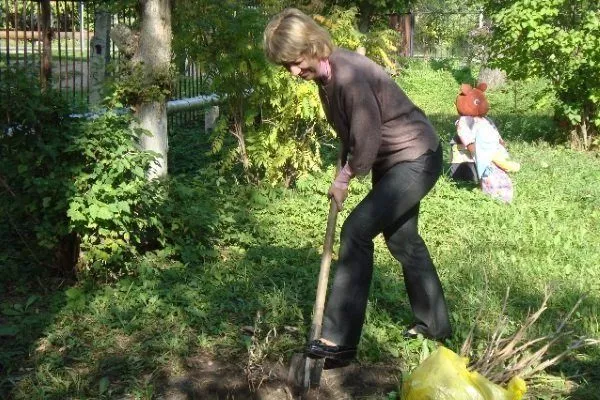
The soil for planting is prepared at least 2-3 weeks before planting the seedlings. The area is dug over, fertilizer is added, and the soil composition is adjusted. The following is added per square meter:
- compost or humus – 2-3 buckets;
- superphosphate – 50-60 g;
- potassium fertilizers – 30-40 g.
If the soil is clayey and heavy, add half a bucket of coarse sand per square meter. Acidic soils can be deacidified with lime or old cement. Wood ash can be added instead of potassium-phosphorus fertilizers.
Planting methods
Raspberry Karamelka is planted in one of the following ways:
- Bushy. Dig round holes of appropriate depth and diameter. Fill each hole with compost mixed with fertilizer. Place the holes evenly spaced, 50-70 cm apart.
- Trench. A trench 50-55 cm wide is dug. Seedlings are planted here at regular intervals. The distance between trenches is 2 m.
- Ribbon. Raspberries are planted in rows. Holes are dug and seedlings are spaced 50-80 cm apart. This planting method makes it easy to tie the bushes to trellises. Rows can be any length.
Harvesting and plant care are made easier. Unlike the trench method, several rows of plants are planted in the pits, not just one. Therefore, the pit width is larger than with the trench method—about 1 m. - Curtain. Used for weakened seedlings. Three to four seedlings are placed in one hole. The bushes can be planted in rows or in a square.
- Triangular. Often used for everbearing varieties. The triangle is equilateral. Space the seedlings 50 cm apart.
The Karamelka variety is productive, so the canes tend to sag under the weight of the fruit. To prevent canes from falling, it's recommended to tie the raspberry to a trellis.
Step-by-step instructions for planting in open ground
The recommended planting pattern is two rows. Space seedlings 50-70 cm apart. The distance between rows is 1.5 m. No more than 4-5 bushes should be planted per square meter; otherwise, the plantings will become too dense, which will lead to disease. For fall planting, use seedlings with well-developed root systems.
Stages of planting raspberries:
- Dig holes. The depth of the holes is 50-60 cm. The width is the same.
- Add 4-5 kg of humus to each hole to stimulate roots and increase yield.
- Add 2 tablespoons of superphosphate to the humus for each hole.
- Shorten the seedlings to 25-30 cm.
- Add some nutritious soil onto the humus to prevent the seedling from burning its roots.
- Form a mound from the soil you filled in the hole. Place the seedling's roots on it, carefully spreading them out.
- Cover the roots of the seedling with soil, tamping it down with your hands from time to time to avoid any voids.
- Water the seedling. The recommended amount is half a bucket per plant. Watering is necessary even in the rain.
- When the water is absorbed, sprinkle the soil with 3-4 cm of humus, peat, or other mulch.
When planting, make sure that the root collar is level with the ground surface - it cannot be buried deep.
Caring for Karamelka raspberries
The quality of care determines the Karamelka's yield, flavor, and sweetness of its fruit. In addition to standard care, the Karamelka variety requires mandatory staking.
Top dressing
Karamelka bears fruit for a long time, so it needs to be fertilized three times per season. The fertilizing schedule is shown in Table 2.
Table 2
| Period | Composition and rates of fertilizer |
| After the end of spring frosts | Add 5 liters of solution per 1 sq.m.:
Instead of organic matter, you can add mineral fertilizers - ammonium nitrate and urea (15 g per 1 sq. m). |
| Bloom | Per bucket of water, add 20 grams of potassium salt and superphosphate. This amount is enough for 1 square meter. |
| After picking the berries | Add compost or manure. A bucket per bush. |
Fertilizer should never be applied to dry soil, as this can burn the roots. Always water the soil before applying fertilizer.
Regularity of watering
Karamelka raspberries require regular watering. They can be watered by sprinkling or at the roots. The amount of water needed depends on the soil moisture and the weather. The average watering rate is two buckets per plant. Avoid watering during rainy seasons. The typical watering frequency is once every two weeks.
Rules for garter and pruning
Raspberry pruning is carried out in different seasons:
- In autumn. Prune one-year-old shoots, leaving stumps 3 cm high. Pruning increases the future harvest and also kills viruses and parasites that overwinter on the shoots. You can find more information on pruning raspberries in the fall.Here.
- In the spring. Dry or frozen shoots are selectively pruned. Pruning begins around April, when the condition of the buds can be used to judge the health and viability of the plant.
- In summer. In June, remove weak stems and root suckers. Leave 5-6 strong stems per square meter. Trim excess shoots with pruning shears.
Karamelka stems are resilient and strong, but staking them is recommended—this allows for good ventilation and easy maintenance. Karamelka shoots are tied to trellises—wires stretched between two posts.
Preventive treatment
Good growth and development depend on timely preventative measures. Raspberry plantings need:
- Trim in time. All cut shoots, as well as fallen leaves, are collected and disposed of.
- Spray with fungicides and insecticides. Raspberries are treated with Bordeaux mixture, HOM, copper sulfate, Actellic, and Karate.
- It is important to inspect the bushes regularly.to detect disease or parasite infestation in time.
- In early spring, before the buds open, treat the bushes with a 3% solution of Bordeaux mixture.
- After flowering, treat with biological preparations to prevent fungal diseases.
- In the fall, after harvesting, treat the plants with a 1% solution of copper sulfate.
Preparing for winter
Preparing Karamelka raspberries for winter:
- Pruning and destruction of cut branches, collection and burning of leaves.
- If raspberries are pruned to the roots in the fall, there's no need to cover them. Simply cover the soil with a layer of mulch to protect the root system. Read more about mulching. here.
- If one-year-old shoots are left over the winter, preparation for wintering follows the standard procedure. Before the onset of frost, the shoots are bent to the ground and secured so that they are completely covered by snow during the winter. To keep the stems at the ground, they are tied into bundles and pinned with metal staples.
Diseases and pests
The Karamelka raspberry is resistant to most berry diseases, but can become infected under favorable conditions for viruses and fungi, or in the absence of preventative spraying. This also applies to pests, such as overcrowding, lack of pruning, dampness, and other unfavorable conditions.
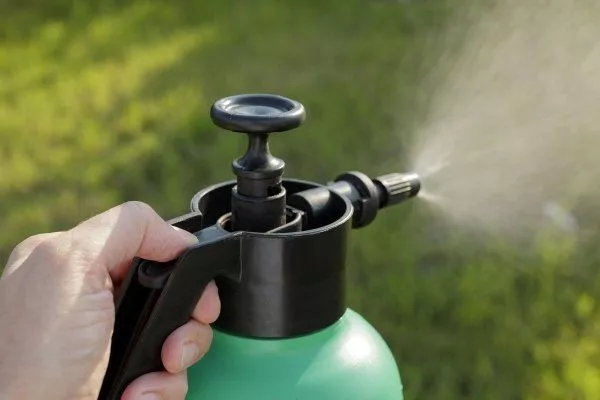
Diseases and pests for the Karamelka variety, as well as measures to combat them, are in Tables 3 and 4, respectively.
Table 3
| Diseases | Symptoms | How to fight? |
| Anthracnose | Gray spots with a purple border appear on the stems. | Remove and burn diseased shoots. Spray with copper oxychloride or copper sulfate before flowering. Fertilize with phosphorus-potassium fertilizers. |
| Rust | There are small yellow and orange spots on the shoots and leaves. | Treatment with Bordeaux mixture 1% (before flowering, two weeks later, after harvest). |
| White spot | Brown spots appear on leaves and stems. The affected areas then turn white and become covered with black dots. | Before flowering, spray with 1% Bordeaux mixture (10 g per liter). Spray with HOM (40 g per bucket). Consumption: 1.5 liters per 10 sq. m. |
| Bacterial cancer | Bush growth slows, and the berry flavor deteriorates. New growths up to 5 cm in size appear on the roots. | Disinfection of roots by immersion in a solution of copper sulfate (100 g per 10 l of water). Treatment time: 5-10 minutes. |
Table 4
| Pests | Damage caused | How to fight? |
| Aphid | The leaf blades are deformed. | Spraying before flowering and after picking berries with Actellic and Karate. |
| Raspberry moth | Oviposition in inflorescences. Ovaries damaged. | Spraying with Fastak (3 ml of the preparation per 10 l). |
| Raspberry mite | Leaves affected by the mite become deformed. | Destroy affected shoots. Treat with Koromait (a Japanese mite repellent). |
| Raspberry beetle | The larvae eat the fruits. | In May, spray with Karate (4 ml of the preparation per 10 liters of water). |
How to propagate a variety?
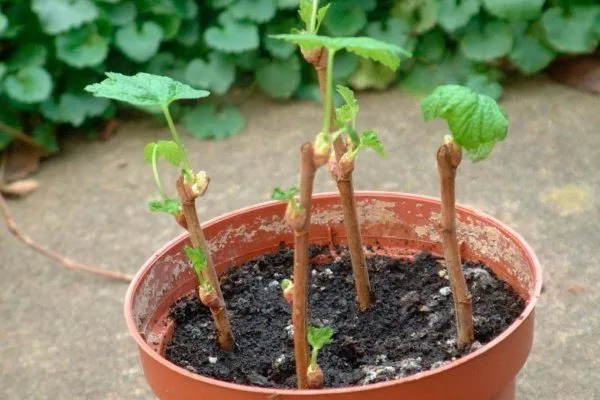
Karamelka can be propagated by seedlings or cuttings. The latter method is used if there is a shortage of planting material. Propagation by cuttings:
- Cut the shoots and divide them into cuttings 25-30 cm long. Each cutting should have 3-4 buds.
- Place the lower part of the cutting in Kornevin or another stimulator for a couple of hours.
- Plant the cuttings in moist soil. Cover with a glass container—you'll remove it when watering and to allow the plant to ventilate.
- When leaves and shoots appear on the cuttings, transplant them to a permanent location.
Everbearing varieties produce few shoots, so stems from the center of two-year-old bushes can be cut for propagation. This can be done in spring or fall. The following season, the raspberry will produce new shoots suitable for planting.
Uses of berries
Karamelka berries are delicious fresh, but they can also be used to make jams, preserves, and various desserts. They can also be dried and frozen, and even made into liqueurs and cordials. The fruit transports well over long distances, a factor that facilitates the cultivation of this variety on a commercial scale.
Harvesting and transportation
The berries begin to ripen in late July. It's best to pick raspberries in the afternoon. Karamelka ripens gradually, so the pink berries are left to ripen rather than being picked. The berries are picked carefully, without squeezing them with your fingers.
If the berry does not break off immediately, do not use force - let it ripen.
Place the raspberries in the container they will be stored or transported in—it's not advisable to move them around. Karamelka's fruits are firm and transport well.
Reviews from gardeners about Karamelka
To reap the benefits of the everbearing Karamelka raspberry, you'll need to create favorable conditions. Although this variety is hardy, it's extremely sensitive to growing conditions. Regular watering, fertilizing, pruning, and spraying will allow you to enjoy the sweet taste of raspberries from July until late autumn.