
Raspberries are increasingly being grown in gardens every year. There are many options for planting raspberries. Some people plant raspberries from cuttings, others from full-grown seedlings. Raspberries can be planted in various ways and at different times, but spring is the best time.
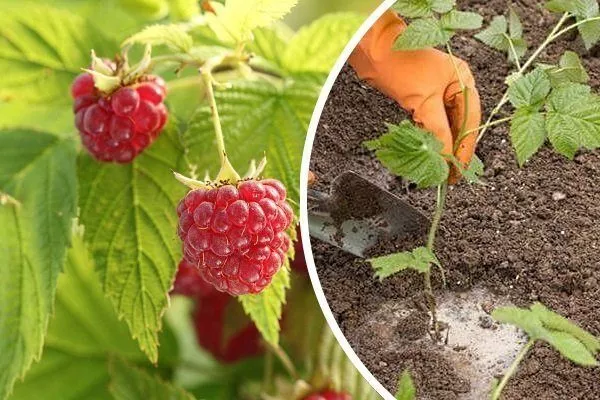
Methods of planting raspberries
There are a myriad of ways to plant raspberries, and the choice depends on the gardener's personal preference. Some don't want to spend a lot of time preparing the berries for planting, while others are willing to spend a lot of time on it. Therefore, you can plant seedlings or cuttings.
The main difference between a cutting and a seedling is that a seedling has roots, while a cutting is simply a pruned shoot. Planting a cutting requires a significant amount of time, whereas a seedling can be planted virtually unchanged, requiring minimal time.
Bush planting method
If raspberries are planted in bushes, the space between each bush should be approximately 1.5 m. The hole in which the bush will be placed should be 50 cm deep and 45-60 cm wide. Before planting, add fertilizer to each hole:
- 4 kg of compost or humus;
- 40 g of ash;
- 12-20 g of saltpeter;
- 40 g superphosphates.
After applying the fertilizer, mix the soil to distribute it evenly. Then place the bush in the hole. Shake the seedling gently when planting to help fill the space between the roots with soil.
The bush shouldn't be planted deep in the soil, otherwise its development will be very slow. However, it shouldn't be planted on the surface either, as the basal buds will dry out. It's important to remember to water the bush regularly and compact the soil. Planting should be done so that the root collar is at ground level.
During the winter, raspberries need to be bent down. You can do this individually, or you can do this for the entire bush. Use something heavy to weigh down the raspberries, but never rocks or soil. The snow layer should be at least 50 cm deep in winter, otherwise the bush will simply freeze and die.
Landing in trenches
This method of planting raspberries differs from the previous one in that it is more labor-intensive. The gardener will need to spend more time planting, but the results will be immediate.
- Two weeks before planting, dig a trench 45 cm deep and 60 cm wide.
- Place a 10 cm thick layer of organic material at the bottom of the trench.
- Pour a 5 cm layer of fertile soil on top of the organic matter.
Before planting berries, you need to do some preliminary work with the soil:
- Clear the area of weeds.
- Mark out the plantings.
- Dig trenches up to 45 cm deep and up to 60 cm wide.
- Leave 120-160 cm between rows. This figure depends on the development characteristics of the berry variety.
- Place a nutrient-rich layer of organic matter up to 10 cm thick at the bottom of the trench. This will nourish and warm the raspberry patch.
- Place soil on top of the pillow to prevent rotting in the future.
In the video below, a gardener explains how to plant raspberries in a trench:
It's best to choose a sunny spot for the trench, facing north to south. In these conditions, the berries will quickly take root and produce a bountiful harvest.
It's best to have two people plant raspberries in trenches. One will hold the bush, and the other will cover it with soil.
Planting raspberries also consists of the following steps:
- Straighten the roots of the bush.
- Water the raspberries and cover them with soil.
- Compress the top layer of mail.
- It is important to maintain the planting depth – do not bury the seedling too deep, but do not leave it on the surface either.
- Strengthen the edges of the trench with sides to prevent the soil from crumbling.
- Install T-shaped supports at the end of the trench; they will help prevent the bush from falling to the ground.
- Stretch the wire between the supports in two rows.
Before winter, raspberries also need to be prepared: bend down the entire trench together, and not each bush separately.
Raspberries, like other bushes, can be planted in either fall or spring. The choice of season depends on the gardener's personal preference. For raspberries, as for other fruit and berry bushes, fall is the best season. This ensures flowering in the spring, and a harvest in the summer. However, this isn't always possible, and raspberries are often planted in the spring. This planting method has its own distinct advantages and disadvantages.
Planting a seedling
First, you need to choose a seedling. When choosing a seedling, pay attention to how well its roots are developed. After purchasing it, if you're not planting it right away, place it in water. When transporting it, use a damp cloth and a bag. This will help retain moisture and ensure the seedling stays alive during the move.
It's best to plant one-year-old shoots, cut to 30-40 cm. The seedling is immediately placed in the soil and watered. Nothing else is required.
Watch a video review of planting raspberry seedlings in spring below:
Planting a cutting
If a gardener decides to plant raspberry cuttings, they must choose between root cuttings and green cuttings. Root cuttings are used if the plant's stems are infected. Raspberry diseases rarely spread to the roots, so they can be used for propagation.
In spring or fall, carefully dig up the adventitious root. It's best if it still has several branches. Trim all healthy roots into 8-10 cm long pieces.
Raspberries can also be propagated from green cuttings if the bush is diseased. To propagate from green cuttings, select root suckers that were removed during thinning. These should be shoots up to 15 cm tall with leaves still attached.
Pros and cons of spring planting raspberries
The advantages of this type of landing include the following factors:
- After winter, the soil is saturated with minerals and the bush will quickly form roots.
- Soil saturated with melt water will be a good helper for young roots.
- The bush hardly needs to be watered; the soil is saturated with moisture after winter.
- Many pests are just waking up from their slumber in the spring and are unable to damage the berries.
- When summer comes, the roots will be firmly rooted in the ground and will be able to easily survive the hot days.
Step-by-step instructions
If a gardener decides to plant raspberries in the spring, they must carefully follow all planting steps. Only then will the bushes take root and produce a bountiful harvest.
Selecting and preparing a seedling
The first step is the most important, as the future growth of the berry will depend on the starting material. The best option for planting is a bushy seedling with well-developed roots. This type of seedling will be able to establish itself firmly in the soil from the very first time.
- ✓ The presence of at least 3 healthy root shoots with a length of 15 cm.
- ✓ No signs of disease on the stem and leaves.
- ✓ The stem diameter at the base should be at least 5 mm.
It's important to pay attention to the rootstock. It shouldn't have any dry parts that break easily. The buds on the seedling should be fresh, free of dry parts, so the raspberry can take root quickly. Sometimes a plant with dry buds can take root, but this is the exception to the rule and shouldn't be followed.
Ideal time for planting
The best time to plant raspberries in natural soil is during the first months of spring. The ideal time is late March or early April. Frosts are rare during this time, and the soil is well-saturated with organic matter and moisture. Raspberries planted during this period will grow well and quickly establish a root system.
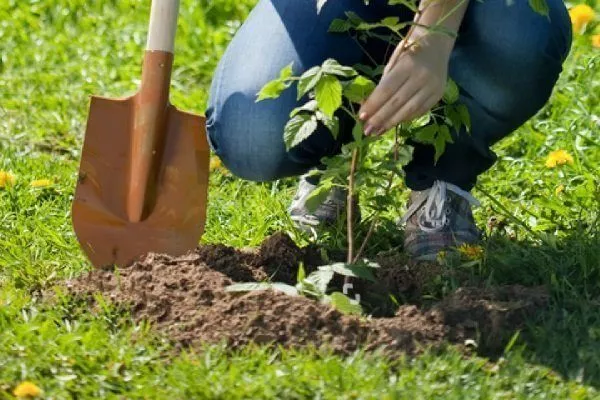
Landing site
The location on the plot where raspberries will grow must meet certain criteria:
- Plant the raspberries so that they receive maximum light.
- The future bush should be located in a place well protected from the wind.
- Raspberries should always have access to fresh moisture, so avoid planting them in areas with waterlogging. Stagnant water should not reach the roots.
- Avoid planting raspberries near currants. They have well-developed roots and will rob the raspberries of some of their nutrients.
- Plant the berries in a north-south direction, then the bush will receive all the nutrients evenly.
If the site does not meet all of the above criteria, raspberries will grow, but the berries may be less aromatic and not very juicy.
Distance between seedlings
It's crucial to maintain a distance between bushes—at least 50 cm. However, don't plant them too far apart, as this will make the bush difficult to grow.
Raspberries planted 50 cm apart will grow evenly. The bushes will not compete with each other. This distance is also convenient for gardeners, allowing them to walk freely between the bushes, loosening the soil, and harvesting.
Soil preparation
For raspberries, as with other fruit and berry bushes, the soil type is crucial. Light soils are best, as they are typically very rich in minerals. If such soil is not available in the area, the soil will require more fertilizer than light soils.
It's best to prepare the soil in the fall, which will shorten the spring planting time. Be sure to remove weeds and apply fertilizer. Level the soil and leave it until spring. The bush will quickly establish itself in this soil.
Preparing the holes
Instead of digging up the entire plot, you can prepare individual holes for each bush in the fall. Each hole will eventually hold a raspberry bush, preventing them from crowding each other. The hole dimensions—depth and diameter—should be 50 cm. If the hole is square, the sides should also be 50 cm.
Remove the soil from the hole, mix it with fertilizer, and return it to the hole. Do not compact the soil under any circumstances. Leave it until spring; the young bushes will grow well in this hole and fill it with their roots.
Top dressing
Fertilizer is an equally important element when planting raspberries. It will influence the future growth of the berries. First, add about 4 kg of compost to the bottom of the hole. Raspberries also need to be fertilized with:
- 50 g superphosphate;
- a glass of wood ash;
- 30-50 g of nitrogen fertilizers;
- 3 kg of manure
Fertilizing is necessary even in fertile soil. If fertile soil is not fertilized, the bush will grow large, but the berries will be few. Fertilizers can influence the taste of the harvest and the size of the bush.
Caring for raspberries after planting
In the first year after planting, raspberry roots are just getting established in their new location, so the bush needs special care:
- Create a watering area around the seedling. Deepen the soil for this purpose.
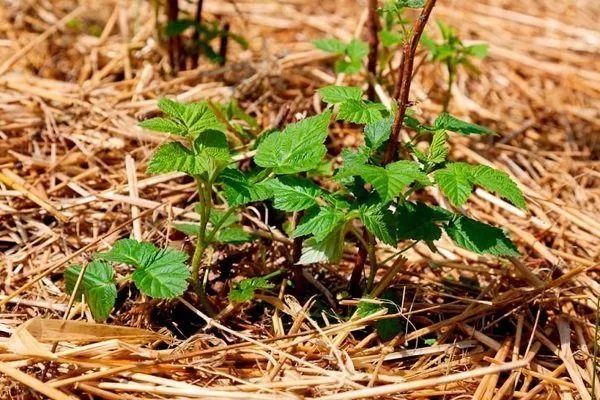
- Sprinkle the soil around the seedling with straw or other dry grass. Sawdust works well to prevent the soil from drying out.
- Don't overwater the bush. However, a rainy spring will only benefit the young raspberry.
- In the first year, do not feed the raspberries; the fertilizers applied during planting are sufficient.
Planting features in different regions
Raspberries used to be planted only in central Russia, as the climate there was most suitable. Today, raspberries are grown in virtually every region of Russia. This has become possible because breeders have developed varieties for virtually every region, taking into account the climate conditions that greatly influence the future of raspberries.
We recommend reading the article about the best varieties of raspberries.
Ural
| Name | Productivity | Frost resistance | Ripening period |
|---|---|---|---|
| Zorenka Altai | High | High | Average |
| High | Average | High | Early |
Summer arrives much later in the Urals than in central Russia. Snow often falls there in March and April, and raspberries planted in March will simply freeze under the snow. Therefore, raspberries in this region are often planted in late spring or early May, sometimes even in June.
Some raspberry varieties simply won't thrive in the Urals. Therefore, it's important to plant winter-hardy varieties. The Zorenka Altaya and Vysokaya raspberry varieties are particularly winter-hardy. The Zorenka Altaya variety is characterized by very good yields.
In the Urals, raspberry bushes are best planted deep in the garden, where they will be protected from the wind, which is very strong in this region. A tall fence can protect the bushes from gusts of wind, but it's important that it doesn't cast a shadow on the plantings.
Siberia
| Name | Productivity | Frost resistance | Ripening period |
|---|---|---|---|
| Kuzmin's news | High | Very high | Early |
| Visluha | Average | High | Average |
| Altai | High | High | Late |
Siberia experiences extremely severe frosts, which can reach -40-50 degrees Celsius. Therefore, agronomists have developed frost-resistant varieties specifically for Siberia. These include "Kuzmina's News," "Vislukha," and "Altai." The black berries "Povorot" and "Ugolek" and the yellow varieties "Dar Sibiri" and "Udacha" are also particularly frost-resistant.
The best location for a raspberry patch is a natural hill or artificial mound. This way, the soil will warm up quickly, and the raspberries will be able to easily recover from the long winter.
In Siberia, raspberries can also be planted on logs placed in trenches. This will help the plants survive the harsh Siberian winter. The roots won't immediately touch the frozen ground and will be able to withstand low temperatures without damage.
Young raspberries need to be covered during the winter. Tarpaulin or other lightweight fabric is usually used as a covering material.
Volga region
| Name | Productivity | Frost resistance | Ripening period |
|---|---|---|---|
| Freemen | High | Average | Early |
| Balm | Average | High | Average |
| Hussar | High | High | Early |
The Volga region is a risky agricultural area. The climate in this region fluctuates frequently, requiring careful timing when planting raspberries.
The best time to plant raspberries is after the first snow has melted. Frosts are very rare in the Volga region in spring, so early April is the ideal time. If frost does occur, raspberries will easily survive it. The following qualities of raspberries are also important for this region:
- stable yield;
- transportability.
Research has shown that varieties such as "Volnitsa," "Balsam," and "Gusar" produce good fruit in this region. "Volnitsa" and "Gusar" are also known for their high yields.
Central Russia
| Name | Productivity | Frost resistance | Ripening period |
|---|---|---|---|
| Balm | Average | High | Average |
| Meteor | High | Very high | Early |
Medium-sized, frost-resistant shrubs thrive best in central Russia. The "Balsam" raspberry variety is particularly winter-hardy and productive. Its berries are medium-sized and ruby-colored. This raspberry variety also has good disease resistance.
The raspberry variety "Meteor" is highly frost-resistant. It grows up to 2 meters in height and is a high yielder. It typically ripens in late June, producing brightly colored and fragrant berries.
Regardless of the region you choose, to ensure a bountiful harvest, it's important to remember the following facts and rules:
- Raspberries can be planted either as bushes or in trenches. It depends on the gardener's preference.
- You can plant berries in either fall or spring, but spring is best.
- Raspberries planted in spring will only produce a harvest the following year.
- It is better to plant raspberries in a place protected from the wind, so that there are no other bushes nearby.
- Be sure to feed your raspberries.
- Each region has its own planting rules and varieties that can grow in that climate.
Common mistakes when planting raspberries in spring
Every gardener wants large, delicious berries, yielding a bountiful harvest each season. This will be possible if the following mistakes are avoided:
- Don't ignore defects, signs of disease, or pests that appear on your cuttings. If you catch them early, they can be treated without harming the shrub.
- There should be no other bushes or large trees near the raspberries.
- Do not plant raspberries in the shade of buildings.
- Do not plant raspberries in clayey or heavy soils; they will not take root in such soil.
- Do not plant seedlings in a place where something was growing before, take a short break.
- Trim raspberries carefully to ensure that the procedure does not damage the bush.
- Don't plant raspberries deep in the soil. If the seedling's neck is buried, the stem will rot and the berries will die. However, you shouldn't leave the bush on the surface either.
If you follow all these rules, the bush will delight you with an abundant harvest of tasty and aromatic berries.
Raspberries are very easy to grow, and if you follow simple guidelines, you can reap a bountiful harvest of fragrant, juicy, and highly nutritious raspberries. And if the climate in your region is mild, you can harvest them even twice a year.