
The Izobilnaya raspberry is one of the most popular and beloved berry crops, delighting with its fragrant and juicy fruits. Its ease of cultivation, high yield, and excellent taste make this variety one of the most coveted by gardeners. Proper and regular care is crucial, as it affects the plant's immunity and development.
Breeding history
It was developed at the Kokinsky base of the All-Russian Scientific Research Institute of Raspberry and Cultivation of the Russian Academy of Sciences by Russian breeders I. V. Kazakov and V. V. Kichina. The work was conducted in the late 1970s. To create Izobilnaya, the English raspberry "Elizabeth Keep" was crossed with the Russian variety "Stolichnaya."
Introduction to the variety
The Izobilnaya raspberry is a dessert variety renowned for its consistent and abundant yields of large, very sweet berries. This variety is easy to care for, allowing even novice gardeners to successfully grow it without any difficulties.
Berries
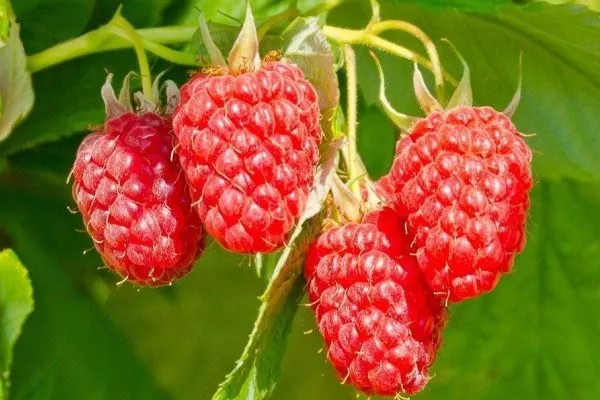
They weigh between 4 and 10 grams, with some specimens reaching 12 grams. They have a glossy surface and a bright red color. Their dense structure makes them resistant to transportation without loss of quality.
Bush
This is a remontant variety, allowing harvesting on both one- and two-year-old shoots. Distinguishing features include:
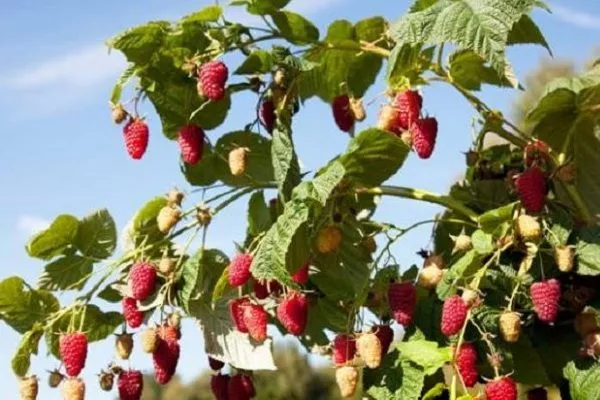
- Bushes – Semi-spreading yet compact, typically 2.5 to 3 m tall, and thornless. A single bush can produce up to 10 shoots and 5 root suckers.
- Trunks – elastic and dense, light brown in color, with rich dark green leaf blades.
- Escapes – The shoots are firm and strong, covered with a characteristic felt-like coating, and may have a waxy coating on the underside. They have shortened internodes. The strong shoots are difficult to bend, which leads to their frequent breakage when winter sheltering is installed.
The diameter of two-year-old seedlings ranges from 3 to 3.5 cm.
Ripening time and yield
Izobilnaya has an early ripening period, which depends on the region's climate. In the south, the harvest can be collected earlier than in colder climates, where the bushes begin bearing fruit in early July.
The yield is high – each plant can yield 4-4.5 kg of berries. On an industrial scale, producers can obtain up to 20 tons of fruit per hectare.
Regions for cultivation
The variety is recommended for cultivation in all horticultural zones of Russia, both for large commercial plantings and for homestead and country gardens.
Disease resistance
The Izobilnaya raspberry is rarely attacked by insects and bacteria. The greatest risk of disease occurs in bushes that are not properly cared for.
Storage and use
The fruits have a dense structure, which allows them to withstand transportation and storage well. They keep well in the refrigerator for several days, maintaining their freshness and flavor. For long-term storage, freezing is recommended, as it preserves most of the nutritional properties and flavor.
Their uses are varied. The berries are ideal for eating fresh due to their sweet flavor and juicy flesh. They are also used to make preserves, jellies, juices, and compotes. They are often used in baked goods, desserts, and as an addition to yogurts and porridges.

Pros and cons of the variety
One of the plant's significant advantages is its high frost resistance. Other advantages of the Izobilnaya variety:
Gardeners consider the following to be disadvantages:
Landing rules
Although Izobilnaya is considered easy to grow, the quality and quantity of the future harvest directly depend on proper planting. Poor soil lacking essential fertilizers, close groundwater levels, and excessive acidity can lead to wateriness, loss of sweetness, and reduced yield.
Follow these recommendations:
- Grow the crop in light, fertile soil with a neutral or slightly acidic pH.
- Choose a planting location along a fence or wall to provide protection from piercing winds. Although raspberries love the sun, constant exposure to scorching rays can cause burns and the plant to dry out.
- The groundwater level should not be too close to the surface, otherwise it may negatively affect the roots and overall development of plants.
- Plant seedlings in spring (April) or fall (September). If planting is planned for fall, dig the holes for the seedlings a month in advance, and for spring planting, prepare the site in the fall.
- Purchase seedlings from specialized nurseries that cultivate varietal crops. Important considerations when choosing seedlings include purchasing one- or two-year-old plants with 2-4 shoots.
The smaller the seedling, the more viable it is, so avoid buying plants that are too large. The shoots should be free of dry or damaged areas, and the root system should be well-developed. - Begin preparing the site in late summer or early fall. Thoroughly dig the soil, removing all plant debris and weeds, and break up any clods of soil.
During the preparation stage, apply fertilizer: per 1 square meter of soil, add about 8-10 kg of humus or compost mixed with superphosphate and potassium sulfate in equal proportions.
If the soil is too dry, moisten it before fertilizing. If the soil is too acidic, lime it with wood ash.
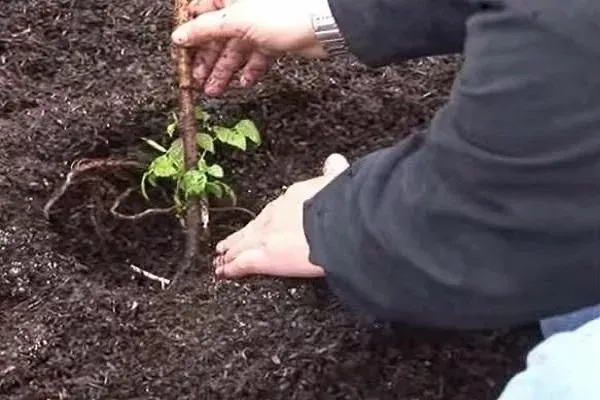
Planting is a simple process if done correctly. Follow these instructions:
- Plant seedlings in specially prepared holes measuring approximately 40x40x50 cm or trenches filled with fertile soil.
- Place seedlings at a distance of about 1 m from each other and 1.5-2 m between rows.
- Before planting, soak the roots in a clay slurry or a mullein solution.
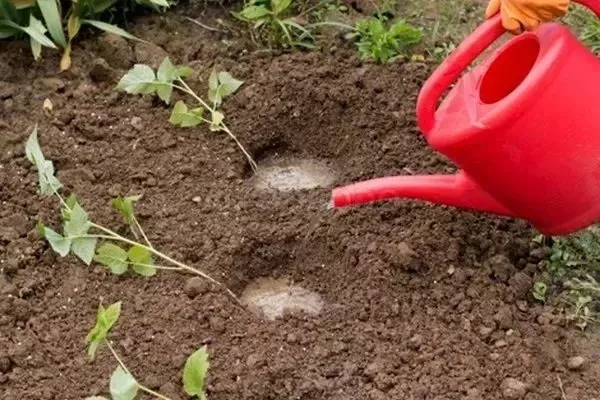
- After planting the seedlings and covering the roots with soil, water each bush with 8-10 liters of water and lightly mulch with peat in a layer of 5-6 cm.
To stimulate the growth of lateral shoots, pinch the tops of seedlings whose height exceeds 1 m.
How to care
To ensure raspberries quickly enter the growth phase and begin active development, they require comprehensive care. This includes standard agricultural recommendations.
Trimming
Thin out raspberries in early spring before the sap begins to flow. Leave approximately 13-15 strong, healthy shoots per square meter.
Dry, broken, frost-damaged branches, and underdeveloped shoots should be pruned for sanitary purposes. Use a sharp knife or pruning shears. To prevent the introduction of pathogenic bacteria, treat the cut areas with garden pitch.
Prune last year's fruit-bearing branches to the ground, leaving no stumps. Pinch the tips of young shoots to stimulate their rapid maturation.
Watering and fertilizing
Izobilnaya appreciates regular watering, but it's important not to overwater the shrub. Given average summer temperatures and no drought, 20 liters of water per plant per day is optimal.
The plant needs a boost of immunity. To protect the shrub and ensure its full development, which will positively impact the quality of the harvest, regularly apply special fertilizers. The optimal fertilizer ratio per square meter of planting area is:
- In autumn. When digging, add 4-5 kg of peat or humus. Use ammonium nitrate or 150 g of urea. Add about 200 g of wood ash.
- In summer. Apply an even layer of cow or horse manure 5-6 cm thick under the bush.
- In the spring. Water around the trunk with a solution of water mixed with 1 kg of mullein or chicken manure, at a rate of 1 kg per 10 liters.
Frost resistance and preparation for winter
In regions with frosty winters, where temperatures drop below -30°C, bend the bushes to the ground and cover them with a layer of snow 1 to 1.5 m thick. In winters with little snow, when snowfall is insufficient, use spruce branches or any non-woven covering material for cover.
How to tie up raspberries?
Staking raspberries is an important procedure that helps support the bush and prevent it from toppling over under the weight of the fruit. Follow these recommendations:
- Use different materials, such as plastic or metal wires, ropes, cords or special garters.
- The best time for gartering is spring or early summer, when the plant is actively growing, but has not yet formed many fruits.
- Make sure the support is strong and stable.
- Start from the bottom, tying each shoot to the support. Use soft material to avoid damaging the stems. Don't tie too tightly, as this can restrict plant growth.
During the season, monitor the growth of the bush and, if necessary, tie up new shoots to prevent them from being damaged.
Diseases and pests
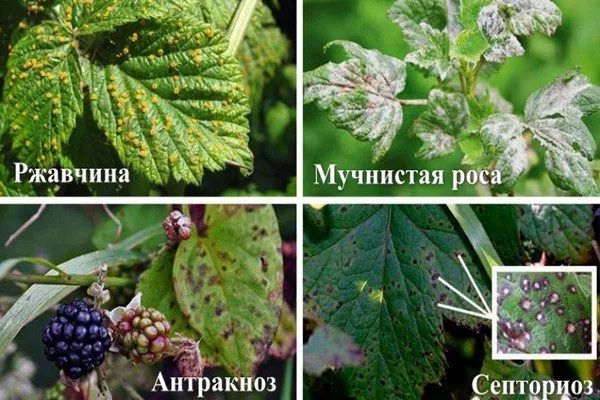
Raspberries are rarely affected by common diseases and harmful insects. However, if the bushes are not properly cared for, the plantation may be susceptible to certain infections.
Follow the advice of experienced gardeners:
- Excessive soil moisture can lead to the development of a fungal disease called anthracnose. It appears as blue or purple spots on leaves with a burgundy border. To protect plants, treat them with a 3% Bordeaux mixture.
- The appearance of growths on the roots indicates root canker. To prevent this disease, treat the root system with copper sulfate, then cover with a clay slurry.
- Cold and damp weather often favors the development of powdery mildew. The infection is usually accompanied by a light-colored coating. To combat the infection, use specialized products such as Profit Gold, Fitosporin, and others.
Methods of reproduction
There are several ways to propagate the Izobilnaya raspberry, allowing you to obtain new plants and ensure a stable harvest in your garden. You can increase the number of seedlings using the following methods:
- By cuttings. Select healthy, strong shoots in mid- to late summer. Take cuttings about 15-20 cm long, then remove the lower leaves. Root the cuttings in soil or water.
- By dividing the bush. In spring or fall, divide the mature bush into several sections. Carefully separate each section and replant it in a new location.
- By the undergrowth. In spring, use the shoots that appear near the base of the mature bush. Separate the shoots from the parent plant and transplant them to a new location.
- Seeds. Collect seeds from ripe berries, then sow them in the ground in early spring or fall.
These propagation methods allow you to obtain new specimens of the Izobilnaya raspberry with minimal effort and ensure a rich harvest for many years.
Harvesting
Fruiting is uniform, but the berries ripen gradually, so harvesting continues throughout July. The berries retain their flavor when stored on the top shelves of the refrigerator for 3-5 days. Store the harvest in dry, clean containers, avoiding contact with foods with strong odors.
Gardeners' reviews of raspberries
The Izobilnaya raspberry has gained popularity for its sweet and juicy berries. Its impressive yield and low maintenance make it an excellent choice for both experienced and novice gardeners. Regardless of climate, this variety delivers consistent yields and easily adapts to a variety of growing conditions.