
Heysa's Nectar Raspberry is a promising cold-hardy variety with delicious berries. This hybrid was created by crossing common raspberries with cloudberries and boasts excellent agronomic characteristics.
History of creation
The Heisa variety is a new raspberry variety classified as a nectar raspberry (a term used to describe varieties created by crossing raspberries with cloudberries or wild strawberries). The Heisa raspberry was developed by Finnish breeders in 2008.
Description of the variety
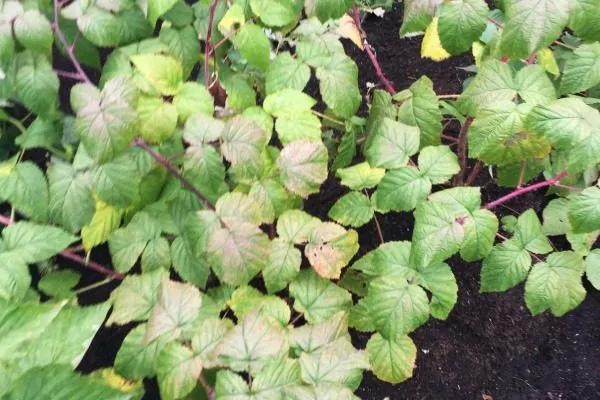
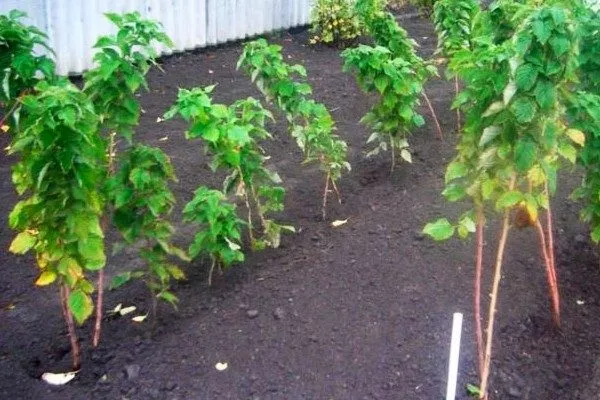
The bushes have stiff, straight shoots. The plants resemble common raspberries in appearance. Height: 150–180 cm. The branches are evenly covered with thorns and are triangular in shape. This variety is characterized by a slight increase in new shoots.
Berries and their taste
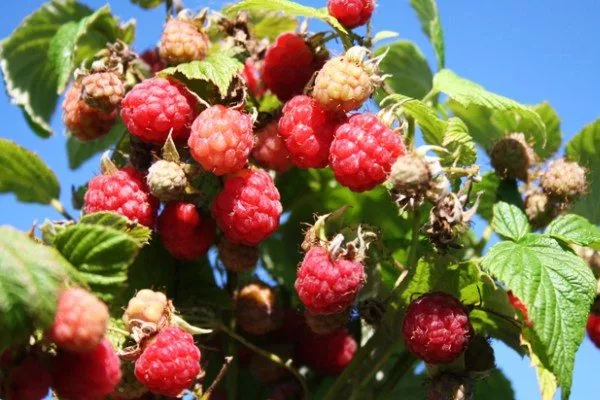
The berries are medium-sized, bright red, and round-conical. They resemble regular raspberries in appearance. Each fruit weighs approximately 4-5 grams. They have a sweet, unique flavor with honey notes. The berries are ideal for eating, making juice, and making various preserves. Heiss raspberries are also suitable for freezing.
Characteristics
The Hayes raspberry begins to bear fruit fully three years after planting. It is a mid-season variety. The berries ripen around the end of July (in temperate climates), and the fruiting period lasts for about two weeks.
Pros and cons
Before planting a hybrid raspberry and cloudberry variety in your garden, consider all its advantages and disadvantages. It's possible this variety isn't suitable for your intended purposes, and you'll need to look for another option.
Pros:
Cons:
How to choose a site for planting?
Hayes raspberries thrive in a sunny location protected from drafts and strong winds. Legumes and grains are considered their best predecessors. Avoid planting raspberries where strawberries, tomatoes, or potatoes were grown, as these are susceptible to diseases that can affect this berry crop.
The site should be free of high groundwater levels, and areas with stagnant water are also contraindicated, as this leads to root rot. The best soils are light, loose, and neutral or slightly acidic—pH 5.7-6.5.
How to plant Hayes raspberries correctly?
Hayes raspberries are traditionally planted in spring or fall. The soil is enriched with various fertilizers beforehand. This is done in the fall if planting is planned for spring. If planting in the fall, the soil should be prepared at least several weeks in advance.
- ✓ Seedlings must have at least three healthy roots at least 10 cm long.
- ✓ The presence of live buds at the base of the stem is mandatory.
What to pay attention to when disembarking:
- For planting, select seedlings no taller than 0.7 m; taller plants have trouble rooting. Seedlings should have two stems and well-developed roots.
- Immediately before planting, the roots of the seedlings are immersed in a slurry made from a solution of mullein and soil. This procedure improves the survival rate of the plants.
- Planting is carried out using standard technology. The planting holes/trenches are pre-filled with organic matter and mineral fertilizers.
- When planting in holes, it is recommended to maintain intervals of 1 m between adjacent bushes, and 2 m between rows. When planting in trenches, the width between rows is half that – 1 m.
- The planted raspberries are watered with warm, settled water and covered with mulch.
- To help the seedlings take root better, they are cut to approximately 30 cm in height.
Care Features
Hayes raspberries are cared for according to the standard care plan. They require pruning, watering, fertilizing, preventative treatments, and other standard care to ensure a good harvest.
Features of caring for Hayes raspberries:
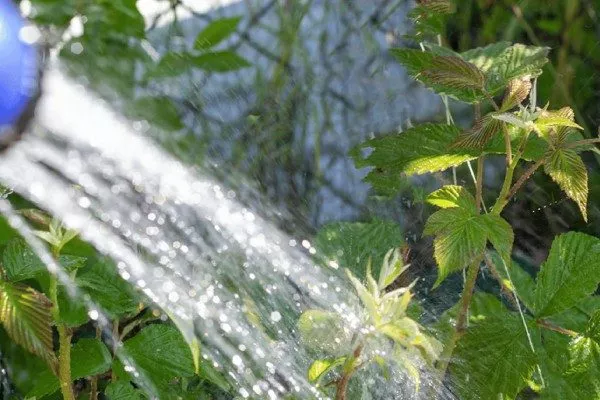
- Watering The watering is done taking into account the climate, current weather, and soil conditions. The variety thrives on moisture and should be watered infrequently but generously. The optimal time for watering is morning or evening, and the best water is rainwater or settled water.
The first watering is done around May, then during flowering, and then during fruit formation—in June or July. In August, raspberries are watered only if there is no precipitation, and the final watering is done in mid-autumn. - Fertilize raspberries three times per season:
- In spring, superphosphate and nitrogen-containing fertilizers, such as ammonium nitrate, are added.
- During the flowering period, a mixture of superphosphate, potassium salt, urea and wood ash is added.
- In the fall, organic fertilizers are added - compost, humus, rotted manure.
- During the season, you can also do another feeding if the bushes look weak - add manure diluted in water.
- They are cutting it off Raspberries after wintering, before the sap begins to flow. Remove all dry and frozen shoots. In the summer and fall, carry out sanitary measures as needed.
If Hayes raspberries don't have enough water or nutrients, the harvest won't be as good as expected. Not only will the berries become fewer in number, they'll also become smaller and won't reach the desired sweetness.
Do I need to cover it for the winter?
Preparing raspberries for winter involves several agricultural practices. Before winter, the bushes are pruned, given a final fertilizer, watered to replenish moisture, sprayed prophylactically, and only then, if necessary, covered.
Finnish Heisa raspberries are very cold-hardy. Because they can withstand temperatures as low as -40°C (-40°F), they don't need to be covered in many regions. In regions with deep snow cover, they can easily overwinter under the snow without any need for cover.
In areas with severe frosts and low snow cover, it is recommended to cover the bushes with special covering materials. The shoots are tied, bent to the ground, secured, and then covered with agrofibre or spunbond.
Diseases and pests
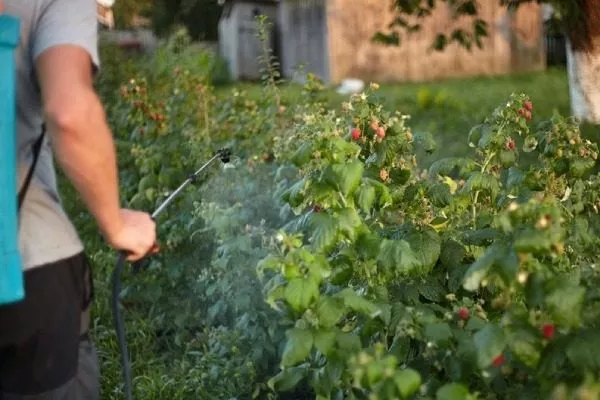
This variety is resistant to various infections and pests, but it is still recommended to spray the bushes with fungicides and Bordeaux mixture to prevent fungal diseases. Under unfavorable conditions, the most dangerous diseases for this variety are powdery mildew, anthracnose, and didymella (purple leaf spot).
Among the most dangerous pests are the raspberry fly, raspberry beetle, strawberry-raspberry weevil, and spider mite. If these are detected, raspberry bushes should be immediately treated with insecticides, such as Iskra, Fufanon, Decis, Intavir, and others. It is especially recommended to spray the lower parts of the stems, as this is where the greatest number of pests accumulate.
Harvesting and storage
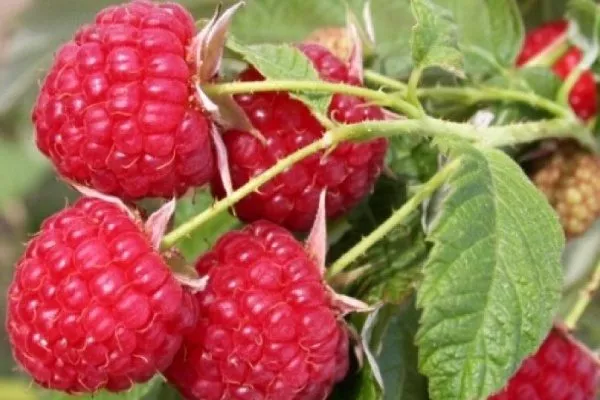
The berries are picked in cool, dry weather. Wet berries spoil quickly and are not suitable for even short-term storage. The berries are picked by hand, removing them from the stems. No tools are used for picking, as the berries are too soft.
Raspberries left at room temperature remain edible for about 8 hours. After picking, raspberries (if not intended for immediate consumption or processing) are placed in a cool room or refrigerator. Here, they can be stored for 7-10 days. Frozen raspberries can be stored for up to a year, and dried raspberries for up to two years.
Reviews
The Heiss raspberry is an interesting nectar variety that attracts gardeners and berry lovers with its unusual flavor, which has distinct honey notes. This unusual hybrid will easily enhance any garden or plot, and its berries make an excellent summer treat and winter preserves.