
Heritage raspberry is a proven everbearing variety that has remained popular for half a century. High-yielding, easy-to-care-for, and time-tested, this variety deserves a place in your garden.
This article will teach you about the pros and cons of the Heritage variety, pest control methods, and how to properly plant the bushes to maximize yields.
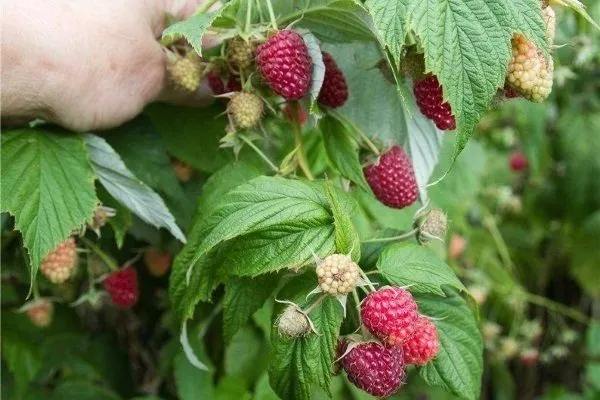
raspberry variety "Heritage"
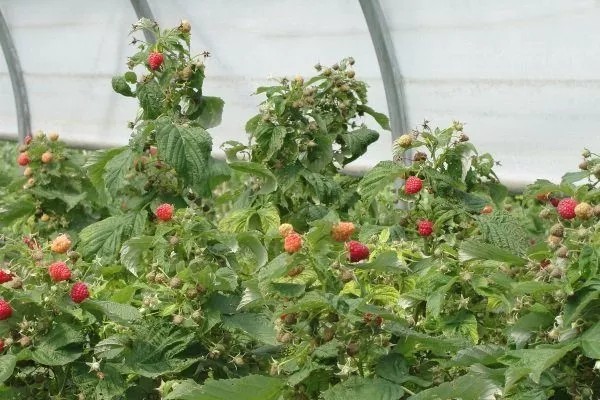
Heritage raspberry bushes bear fruit until frost
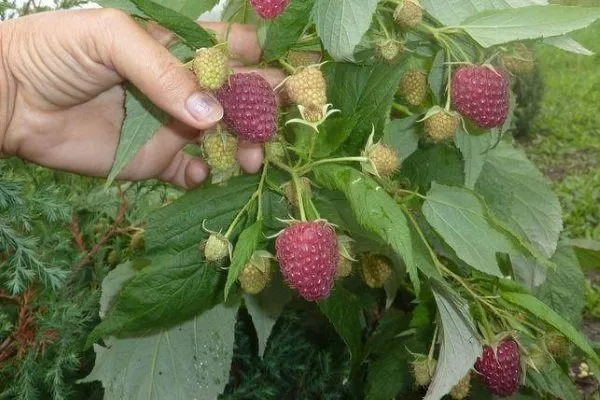
For half a century (since 1969) the variety has not given up its position and is still among the leaders in industrial cultivation
What does Heritage raspberry look like?
Raspberry Heritage is a subshrub about 2 m tall. The shoots are erect and have small thorns.
The bush is gently spreading, with average shoot formation. Sturdy fruiting branches are gathered in inflorescences at the base of the shoot. The leaf blade is dark green and oblong.
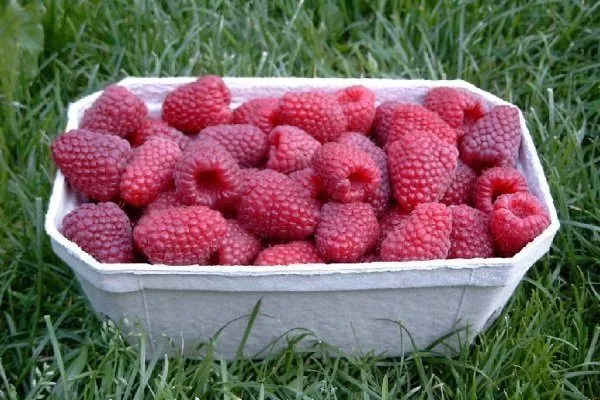
The berries are cone-shaped with a blunt top, fine-grained, and uniform in size. When ripe, they have a pleasant raspberry hue and a rich, sweet aroma. The average fruit size is 3-3.5 g. The flavor is pleasant, sweet with a slight tartness.
Advantages and disadvantages of the variety
A characteristic feature of this raspberry variety is its remontancy – the ability to bloom and produce several harvests during one growing season.
In addition, moderate shoot formation prevents remontant raspberries from spreading across the entire plot, which is typical for most “classic” summer varieties.
Other benefits of Heritage raspberries include:
- high productivity;
- good frost resistance;
- one-dimensionality of berries;
- self-fertility;
- slight thorniness;
- transportability and shelf life;
- immunity to diseases;
- versatility of fruit use.
The remontant variety has many advantages, which is why it is popular not only among Russian gardeners and summer residents, but also among large industrial planters in Europe and America.
Heritage, like any variety, has its drawbacks:
- the quality of the harvest depends on the application of organic and mineral fertilizers;
- the need to control the moisture level in the root zone;
- mandatory garter of shoots;
- loss of sugar content in berries due to excessive watering.
Some raspberry growers also consider the medium-sized berries a drawback, but their excellent taste more than offsets this drawback. With proper cultivation practices, raspberries will not become smaller and will delight you with a consistent, high-quality harvest throughout the season.
An overview of the Heritage raspberry variety is presented in the video below:
Preparing for landing
Heritage will fully realize its positive characteristics only with proper cultivation practices. Growing everbearing raspberries doesn't require any special skills; with a little knowledge, you'll be rewarded with an abundance of juicy, delicious berries.
To ensure the Heritage raspberry takes root easily and develops properly, several important conditions must be met before planting:
- select healthy seedlings;
- select an area for raspberry bushes;
- fertilize the soil;
- plant the bushes on time.
Selection of seedlings and transportation
It's best to purchase raspberry seedlings from garden nurseries or specialized online stores. Buying raspberries at spontaneous markets is not recommended, as unregistered sellers rarely monitor the varietal purity and quality of the plants they sell.
- ✓ Check for the presence of live buds at the base of the seedling, at least 3 pieces.
- ✓ Make sure the root system is firm, dense and moist, with no signs of rot.
Choose medium-sized seedlings with 2-3 well-formed shoots. There should be at least 3 live buds at the base, which will later produce young fruiting branches. When purchasing, pay attention to the appearance of the root system. A healthy plant will have firm, dense, and moist roots.
Nurseries and stores offer both open-root and closed-root seedlings. Open-root plants are less expensive, but they need to be planted immediately. Container-grown seedlings have a better survival rate and can be planted from spring until the first frost.
Avoid purchasing seedlings with roots wrapped in plastic bags. Such prolonged overwatering will lead to root rot and the death of the plant.
After purchasing raspberries with an open root system, wrap them in a damp cloth and immediately bury them in the garden upon arrival. For seedlings with a closed root system, position them evenly and securely to prevent the container from tipping over during transport.
Place for raspberry bush
Pay special attention when choosing a site for your future raspberry patch, as the plant will grow there for 10-15 years. Everbearing raspberries love the sun, but planting them in overly exposed areas is not recommended. In winter, shoots suffer from freezing winds, and buds may die.
In dappled shade, the shoots stretch. The crop grows well in fertile, permeable soils with a shallow water table. The optimal soil pH for growing raspberries is 5.7-6.5.
Soil preparation
It's best to prepare the soil for raspberry bushes 1.5 to 2 months before planting. This is necessary to enrich the soil with nutrients, create optimal water and air circulation, and eliminate harmful organisms. Weeds can be controlled by digging the area or using herbicides.
- 1.5-2 months before planting, apply organic and mineral fertilizers to the area.
- Dig the area thoroughly to enrich the soil with nutrients and kill harmful organisms.
- Avoid planting in the place of an old raspberry patch if less than 4 years have passed since its removal.
To increase soil fertility, you need to add the following per 1 sq. m:
- 10 kg of organic fertilizers;
- 45 g superphosphate;
- 200 g of ash.
After applying fertilizer, thoroughly dig the area. Do not plant raspberry seedlings in the same area where an old raspberry patch was removed less than four years ago.
Planting period
Heritage can be planted in both spring and fall. Experienced gardeners prefer fall planting. Planted in the first half of October, the bushes will have time to take root before frost and will begin growing immediately with the arrival of warmer weather.
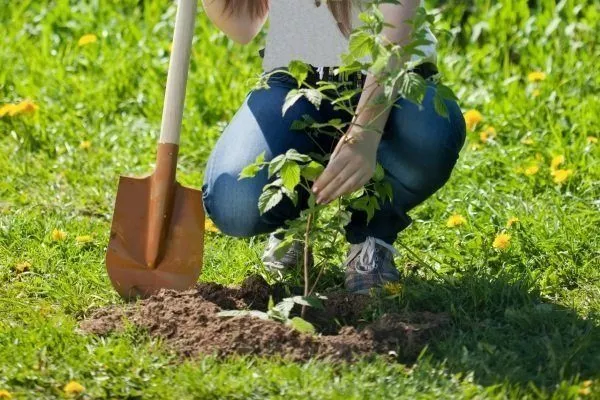
By postponing planting until spring, you risk not having time to plant the raspberries before bud break, which will negatively impact their survival. Even with timely planting, warm weather may arrive before the raspberries have a chance to establish properly.
You can get more information about planting raspberries in spring from this article.
Step-by-step instructions: how to plant Heritage raspberries correctly?
Before planting seedlings with open roots, soak them in a bucket of water for a couple of hours. This will allow the plants to absorb moisture. Remove raspberries with closed roots from the pot and spread out the roots.
Heritage raspberry planting algorithm:
- Dig a planting hole 40x40 cm.
- Place the seedling so that the root collar protrudes 4 cm above the ground. Cover with soil.
- Firm the soil around the plant, forming a border. Trim the shoots to 30 cm.
- Water the raspberries at a rate of 30 liters per bush and mulch the trunk circle with compost.
Caring for a subshrub
Everbearing raspberries are an easy-to-grow subshrub. Even if the garden is neglected, they continue to grow for many years. However, without proper care, the bush weakens, becomes susceptible to pests and diseases, and the berries become smaller. With regular attention to raspberry cultivation, Heritage raspberries can yield up to 5 kg of berries per bush.
Caring for remontant raspberries includes:
- regular watering;
- pruning bushes;
- tying to a support;
- top dressing;
- mulching the tree trunk circle;
- activities to prepare for winter.
Watering mode
Heritage raspberries do not tolerate drought well, so regular, sufficient watering is essential for proper bush development.
The everbearing variety especially needs abundant watering from May to August. Insufficient moisture during this period leads to weak shoots and a reduction in productivity by at least a third.
The best option is drip irrigation. You won't have to constantly monitor soil moisture; it will remain within normal limits. An irrigation system prevents water from getting on the leaves and berries, reducing the risk of bacterial and fungal diseases.
The first watering is done in late spring, when the buds begin to actively grow. Subsequent watering is adjusted based on weather conditions and soil drying rates. To moisten the soil to a depth of 30-40 cm, apply at least two buckets of water per square meter of bed.
Avoid overwatering the soil to prevent root rot. Water the bushes daily during hot, dry days, and once a week during rainy seasons.

Pruning branches
Heritage raspberries bear fruit on both two-year-old and one-year-old shoots. To ensure two harvests the following season, pruning is performed using a special technique.
In October-November, after the berries have been harvested, completely prune out the two-year-old shoots that have borne fruit, leaving the one-year-olds. In April, remove only the branches damaged over the winter. This way, you'll get a summer harvest from the older shoots, and a fall harvest from the younger ones.
However, berry experts recommend growing Heritage for a single harvest. At the end of October, after the berries have been harvested, prune all existing branches on the subshrub, leaving no stumps. This method will yield larger, sweeter berries, and the plants will be less susceptible to disease.
We recommend reading the article about How to properly prune raspberries in the fall.
Tying to a trellis
Heritage's canes are quite tall and require support. Tying the raspberry to a trellis makes plant maintenance and harvesting easier, and also increases the bush's productivity.
Wooden posts at least 1.5 m high are installed along the rows, and galvanized wire is secured between them. It's best to stretch the wire in two rows, at heights of 0.7 m and 1.5 m. Each branch is tied to the trellis individually.
Root feeding
Early spring fertilization is necessary to accelerate vegetation and the growth of young shoots. Nitrogen-containing fertilizers are best for this:
- infusion of bird droppings;
- mullein;
- ammonium sulfate;
- Azofoska.
Organic fertilizers are diluted with water at a ratio of 1:10. Apply 5 liters of the infusion per square meter of raspberry patch. Mineral fertilizers are added to the soil according to the instructions.
During flowering and fruiting, the bushes require potassium fertilizer: potassium sulfate (25 g per 10 liters of water) or wood ash infusion. After the first berries appear, feed the bushes with Heritage Nitrophoska, diluting 45 g of the fertilizer in 10 liters of water.
Autumn fertilization is not necessary when growing raspberries for a single harvest. When leaving one-year-old shoots to overwinter in anticipation of a summer harvest next year, fertilize the bushes. Scatter 1 teaspoon of calcium sulfate and superphosphate under each bush, and mulch the soil.
Mulching
Mulching the soil— an agricultural technique aimed at reducing moisture evaporation in the root zone and improving the water-air regime.
Raspberry roots are located 30 cm below the soil surface, so they easily dry out in hot weather and freeze in winter. Using mulch will protect the root system from these problems.
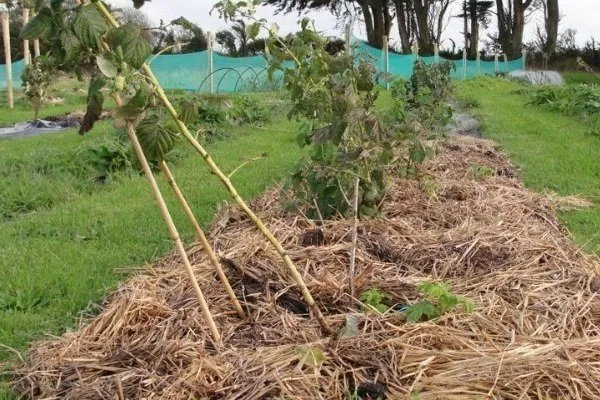
The best mulch for Heritage raspberries is considered to be:
- peat;
- sawdust;
- compost;
- straw;
- rotten leaves.
Black spunbond is also used for mulching plantings. Its advantage over organic mulch is that it protects raspberry bushes from weeds. Everbearing raspberries are mulched in the fall, before the first frost, and in the spring.
Shelter for the winter
Before frost, the soil around the bush should be loosened, and moisture-recharging watering should be carried out at the rate of 50 liters of water per 1 square meter.
If you're growing Heritage for two harvests, remove the one-year-old shoots from the trellis, bend them to the ground, and tie them into bundles. For regions with little snow and cold winters, you'll need to cover the shoots with agrofibre or other gardening material.
Raspberries grown for a single harvest are covered with compost or wood shavings after pruning. The covering layer should be at least 10-15 cm.
Propagation of Heritage raspberries
Anyone can grow remontant raspberries; no special skills or knowledge are required.
Heritage is propagated in 3 ways:
- offspring;
- root cuttings;
- green cuttings.
Green cuttings are cut 3-5 cm below ground level in spring or autumn and rooted in a greenhouse.
Root shoots are dug up and planted in the fall, when their above-ground part reaches 5-10 cm.
Root cuttings are taken after harvesting. To do this, dig up the root of a healthy bush and cut it into 10-15 cm long shoots.
Disease prevention and pest control
With proper agricultural practices, Heritage raspberries rarely get sick or are attacked by pests.
To protect yourself as much as possible from potential problems, follow these simple preventative measures:
- remove weak, unhealthy growth;
- stick to the feeding regime;
- When cutting shoots, do not leave stumps;
- regularly carry out preventative treatments with fungicides and insecticides;
- Avoid getting water on the leaves and berries when watering.
The Heritage raspberry variety can be attacked by the following pests:
- Raspberry beetleYou can protect your plantings from the raspberry beetle by treating the bushes with Confidor or Decis before flowering.
- Shoot and leaf aphidsSmall colonies can be eliminated by treating raspberry leaves with laundry soap foam.

- Stem gall midgeAffected branches are cut off and burned, and the bush is treated with Karbofos.
- Raspberry gall waspAll affected branches must be cut out and burned. Before bud break, the raspberry bushes should be treated with Decis as a preventative measure.
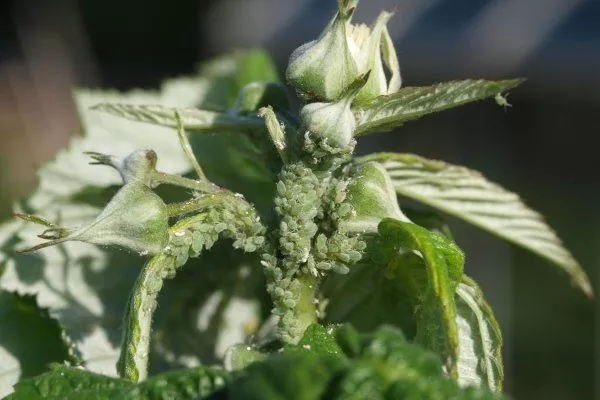
Signs of unhealthy raspberry bushes
Developing healthy Heritage raspberry bushes have elastic, strong shoots without cracks, uniform dark green leaves, and regularly shaped berries.
Below are the signs that indicate the onset of bush disease:
- uneven coloring of the leaf blade;
- wrinkling or curling of leaves;
- yellowing of the bush;
- drying of shoots;
- the appearance of any spots on the bush;
- rotting or drying out of berries.
If you notice any warning signs, take action immediately. Bacterial and fungal diseases spread quickly, so all your bushes can become infected in a short period of time.
Common diseases of this raspberry variety:
- rust;
- white spot;
- anthracnose;
- chlorosis;
- goiter of roots.
Harvesting and storing berries
Heritage berries ripen in late August. Fruiting is prolonged, and can last until early October. The timing depends on weather conditions and the growing region.
On average, a single bush yields 3 kg of berries, up to 5 kg with intensive fertilizing. Harvesting occurs once a week.
At temperatures up to +4°C, the berries retain their quality and appearance for up to two weeks. For longer storage, they can be frozen.
The Heritage variety is distinguished by good transportability.
What raspberry varieties are similar to Heritage?
Most often, Heritage is compared with remontant varieties such as Zyugana, Polana, Atlant and Brusvyana (see Table 1).
Table 1 - Comparative characteristics of remontant raspberry varieties
| Name of the variety | Average fruit weight, g | The beginning of fruiting | Average yield per bush, kg |
| Heritage | 3-3.5 | end of August | 3-5 |
| Zyugana | 8-10 | September | 7-12 |
| Polana | 3-5 | July-August | 3-4 |
| Atlas | 6-8 | September | 2-2.5 |
| Brusvyana | 12-15 | mid-August | 8 |
The table shows that Heritage is inferior to some varieties in terms of yield and berry size. However, the excellent fruit flavor and low maintenance make this variety popular among both gardeners and commercial growers.
What do gardeners think about Heritage raspberries?
Reviews from summer residents and gardeners about the Heritage raspberry variety are mostly positive: