
Raspberries are not only delicious but also a healthy berry, possessing numerous medicinal properties. Growing the Husar raspberry variety requires special attention, as it is susceptible to freezing in winter. Unfavorable conditions reduce the quality and yield of the harvest, and the plant is susceptible to various diseases and pests.
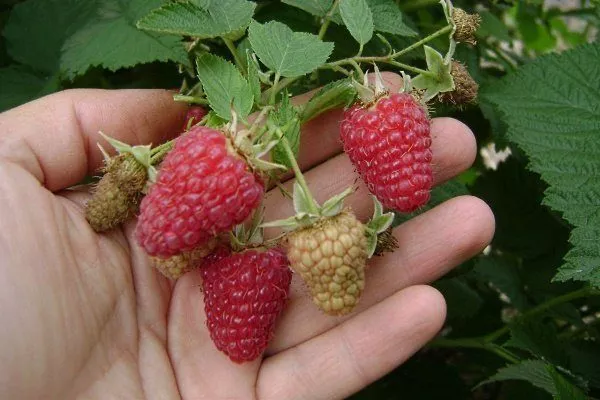
raspberry variety "Hussar"
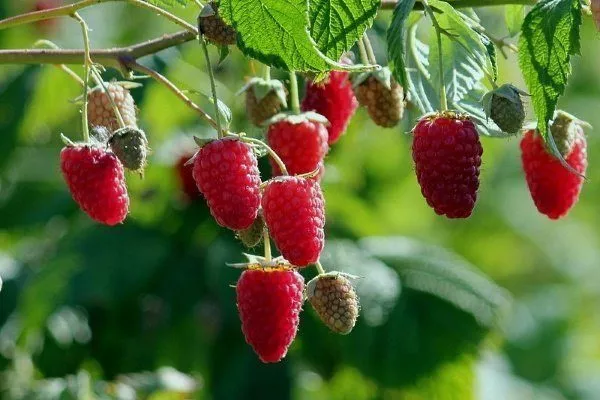
The Hussar variety is responsive to watering and fertilization, producing berries for a long period
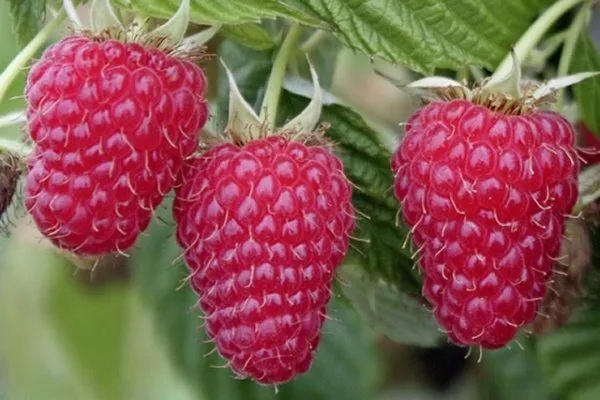
Raspberry "Gusar" is perhaps the best domestic variety in terms of the sum of its positive economically valuable properties
How did breeders create the Hussar variety?
In 1999, breeder Kazakov developed a raspberry variety he named "Gusar." The Gusar raspberry is successfully grown throughout Russia, but the original plan was to cultivate it in the North Caucasus.
This variety is considered frost-hardy, easily tolerating temperatures as low as -40°C for extended periods. Raspberries are also drought-tolerant and can grow in open areas and low-fertility soils.
This raspberry variety is recommended for cultivation in the Central, Northwestern, North Caucasus, Middle Volga, and Volga-Vyatka regions. It is also suitable for cultivation in Ukraine and Belarus.
Distinctive features of the Hussar raspberry
The Hussar variety is extremely popular among gardeners. This is not surprising, as the raspberry has acquired truly valuable qualities:
- Its strong stems allow it to easily withstand even strong gusts of wind. Under ideal conditions, the bush can grow up to 3 m in height.
- The fruits are large, with an average berry weight of about 3 g, but some weigh up to 12 g. You can get about 15 kg of tender raspberries from just one bush, but only if it is highly productive.
- The berries are conical in shape and, when fully ripe, become tender and sweet, with a slight tartness. Raspberries contain high amounts of vitamins B6, C, and K.
- Fruit branches are located along the surface of the shoot.
- The leaves are slightly pubescent, slightly wrinkled, and have a rich dark green color.
- The fruits are scarlet with a ruby hue and a distinct berry aroma.
- The crop tolerates drought and low temperatures well.
- It has high resistance to various fungal and viral diseases.
- The sugar content of berries does not exceed 10.9%. The berries contain approximately 37% vitamin C.
The gardener presented the raspberry variety "Hussar" for review in the following video:
Advantages and disadvantages
The Husar raspberry is one of the best varieties. It has become so popular among gardeners due to its many advantages.
The main advantages of the Hussar raspberry are:
- large berries of rich red color;
- pleasant berry taste with a slight sourness;
- the pulp is tender and aromatic;
- all berries ripen in just 1 month;
- the bushes grow quickly and can reach almost 3 m in length;
- There are practically no thorns on the stem, they are located at the bottom, so there are no difficulties when harvesting;
- the fruits are versatile in use;
- the variety is drought-resistant, so it is grown even in hot regions, and drought does not affect the quality and volume of the harvest;
- The leaves and stems have a slightly reddish tint, and their surface is covered with a virtually invisible layer of hairs that protect against dryness and other harmful environmental influences.
With proper and regular care, one raspberry bush can produce 10-15 kg of juicy berries.
Despite its positive qualities, the Hussar variety also has a number of disadvantages, which include:
- The berries are too soft and not dense, so they cannot be stored for a long time.
- The softness of the berries does not allow for transportation of the fruits, as there is a risk of losing the harvest.
- Raspberry Hussar requires careful and constant care, and a large area is also required for its cultivation.
- This variety is frost-hardy, but the root system must be protected. Otherwise, the raspberries will simply die in the cold.
Preparing for landing
Before purchasing Gusar raspberry seedlings, consider where you'll plant them. It's important to choose a spot that's not too dark and receives moderate sun.
The area should be protected from the winds, thanks to which the raspberries will grow quickly and soon produce a large harvest.
Planting material
To ensure that your raspberry bush grows well and produces a high-quality harvest, you need to choose the right seedling.
- ✓ Check for the presence of at least one live bud at the base of the shoot.
- ✓ Make sure that the root system of the seedling is not overdried and looks healthy.
Please follow these guidelines:
- The seedling should have only 1 shoot.
- At the base, the shoot should be no more than 1 cm in volume.
- The length of the upper stem is no more than 45 cm, the rhizome is no less than 15 cm.
- Purchase seedlings only from reputable and specialized gardening stores to ensure high-quality planting material. Poor-quality plants die before they even produce their first harvest.
- Do not purchase a seedling with visible external damage, or if it does not match the main characteristics of the variety.
You should not select seedlings for planting whose leaves have already fully opened, as the plants will not take root, will constantly get sick, and eventually die.
Area for raspberry patch
The Hussar raspberry variety doesn't have high soil requirements, so seedlings take root easily and quickly in almost any area.
To get the maximum harvest and enjoy fragrant and juicy berries, choose a good location for the crop.
The advice is as follows:
- Choose an area where you plan to plant your raspberry bushes that receives adequate daylight. Growing in the shade will cause the bushes to develop poorly and won't be strong enough to survive the winter.
- The ideal place for a raspberry patch would be a flat area, but a slight slope is also acceptable.
- Ensure the groundwater level does not exceed 1.5 meters below the surface, as raspberries should not be overwatered. Failure to observe this advice may result in the death of the plant.
- The quality of the soil in the selected area is also important. Well-drained soil is ideal. The pH level should not exceed 6.
- Avoid planting in soil where potatoes, strawberries, carrots, or eggplants were grown last year. Disease sources, as well as pest larvae remaining in the soil, will seriously damage future raspberry crops.
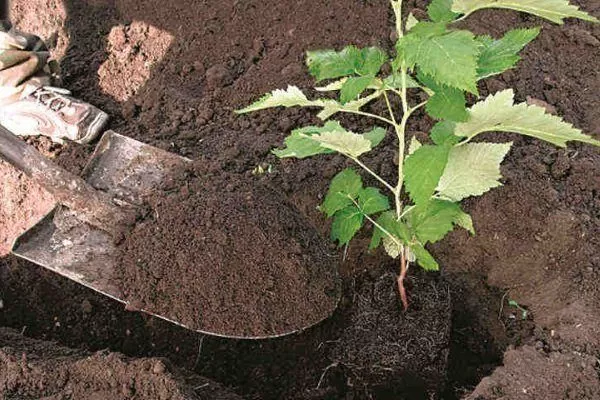
Soil cultivation
The garden crop feels great on light loamy or sandy loam soils.
It's important to choose soil with a neutral pH. The crop thrives in clay soils.
Avoid overwatering the soil, as excessive moisture leads to rapid bush growth and poor fruit set. Therefore, it is recommended to additionally enrich clay areas with one bucket of sand per square meter. Acidic soils require liming: 500 g of lime per square meter.
Planting dates
You can plant the Husar raspberry in spring or fall. If you choose spring, it's important to ensure the temperature doesn't drop below 0°C for a week. Above-zero temperatures are ideal, as the soil needs to warm up well before planting.
At planting raspberries in spring, do not expect abundant fruiting, as the plant will put all its energy into getting established in its new location.
The best time to plant raspberries is autumn, but no later than 20 days before the first frost. This will give the seedlings time to establish themselves in their new location, take root, and be well prepared for the onset of winter. By spring, the raspberry will have put all its energy into not only forming shoots but also increasing the yield.
Proper fit: step-by-step instructions
There are several ways to plant raspberries: trench, strip or bush.
In any case, organic fertilizers should be used additionally. Humus is an excellent choice, but well-rotted manure is also suitable. To prevent the seedling's roots from coming into contact with the fertilizer, it should be additionally covered with soil, which will help prevent burning.
Before planting, the seedlings are placed in water and left for 2 hours, which allows them to gain strength and quickly adapt to the new location.
Trench method landing is carried out as follows:
- Dig a trench long enough, at least 20 cm deep.
- Fill the trench with water so that it is evenly distributed.
- Add pre-selected fertilizers.
- Place the seedlings carefully, leaving a distance of at least 50 cm between them.
- Lightly cover the raspberries with soil. Remember to support the seedlings as they need to be kept upright.
- Compact the soil slightly.
- After planting all the seedlings, be sure to water them.
To calculate the required trench length, consider the number of seedlings, as well as the distance that should be left between them during planting.
Tape method The planting is very easy to do, just follow these tips:
- Dig several holes in one row, taking into account how many seedlings will be planted.
- Leave a distance of approximately 30-40 cm between the holes.
- The width of the hole should be 40 cm and the depth 50 cm.
- If you are planting several rows of seedlings at once, leave a distance of 2 m between each one.
- Place the prepared fertilizer into each hole, filling it about halfway, and add a little soil on top.
- Place the seedlings in the planting hole, carefully straightening the roots.
- Hold the seedlings upright, add soil and compact them lightly, but not too much, so as not to damage the roots.
- Avoid planting seedlings too deeply into the soil—the basal buds should be above the soil surface. Failure to do so may result in rot.
- Water the seedlings: 1 bucket of water for each cutting.
Planting raspberries Hussar by handicraft method is carried out according to the following scheme:
- Dig planting holes, leaving a distance of about 1-1.5 m.
- The depth and width of the hole should be 50 cm.
- Add fertilizer, don't forget about water.
- Divide the seedlings into groups of 10 pieces.
- Place 10 seedlings per planting hole.
- Add enough soil so that the root buds are on the surface.
- Lightly compact the soil.
- Be sure to water each plant, which will speed up their rooting.
Tips for caring for the Husar raspberry
To obtain a rich harvest every season, it is not enough to simply plant Gusar raspberry seedlings, taking into account all the rules and subtleties of this process.
This plant requires regular care, which includes timely fertilization, tying, watering, pruning, and, of course, don't forget to cover the plant for the winter, which helps prevent freezing during severe frosts.
Watering
Although the plant tolerates dry periods quite well, it should be watered regularly, especially if the summer is dry. It is recommended to water the raspberry patch once every 7-9 days, using the following ratio: 10 liters of water per bush.
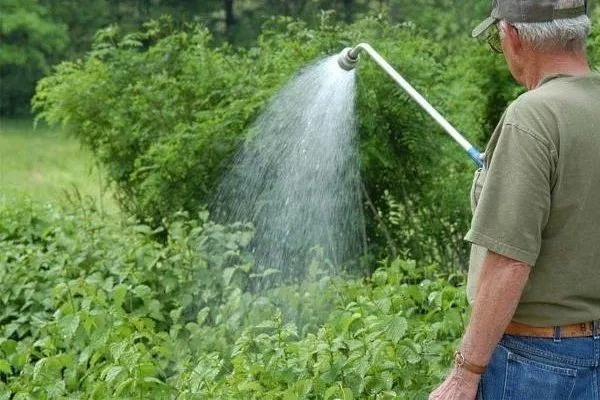
Various watering methods can be used, such as simulating rain. Using a sprayer moistens the soil, air, and foliage. However, this method is strictly prohibited once fruiting begins, as it can cause berry rot.
In most cases, irrigation is carried out through furrows, which must first be created around the bushes or between rows in a raspberry patch. After watering, it is important to close each furrow.
Drip irrigation, which uses special drip tapes with drippers, is also popular. Water is supplied to these tapes under high pressure. This irrigation method maintains optimal soil moisture and reduces water consumption.
Before the onset of frost, watering is mandatory, taking into account the consumption of 20 liters of water per bush.
Supports
Staking is not necessary when growing the Gusar raspberry. One of the variety's distinctive features is its fairly strong stems. However, during the ripening period, additional supports are used. Supporting the raspberries improves fruit quality.
During heavy fruiting, the heavy weight puts increased pressure on the thin stems. In this case, the use of supports to provide additional support is essential.
There are several different types of raspberry garters used:
- Fan-shaped — Drive stakes into the ground on both sides of the plant stem. Carefully tie the stems in place at a small distance (about 5-10 cm). After tying, the raspberry bushes will resemble a fan, hence the name.
- Trellis — Drive supports around the entire perimeter of the raspberry patch, then thread a rope between them to secure the plant's branches. This method of tying will ensure the bush remains upright.
Trimming
One of the most important aspects of raspberry care is pruning. This procedure significantly increases the variety's yield and has a positive effect on the garden's appearance.
The pruning rules are as follows:
- Begin pruning after all crops have been harvested and in early spring once frosts have passed.
- When pruning raspberries after fruiting, remove about 30 cm and trim off all branches that did not bear berries. For information on proper fall raspberry pruning, read here.
- With the arrival of spring, remove all unnecessary branches that make the bush appear too dense.
- Cut off fruiting shoots at a level of about 20 cm above the ground.
- If you shorten the branches too much, don’t worry, as raspberries grow very quickly and the appearance of the first side branches easily compensates for the short height of the stem.
By removing excess branches, there will be no difficulties during harvesting.
Loosening and weeds
When growing the Gusar raspberry, remember that the variety requires constant soil loosening. This simple procedure allows maximum access of valuable nutrients to the root system, resulting in faster growth.
Loosening is done to a depth of about 7 cm, but care must be taken to avoid damaging the root system. A layer of humus and straw is placed on top of the soil.
It's important to regularly weed your raspberry patch to remove weeds. Grass chokes the raspberries, preventing them from receiving the necessary nutrients. Weed every 14-20 days.
Fertilizing and mulching
As soon as the warm weather sets in, the frosts have completely passed, and new leaves appear on the raspberry stems, start fertilizing.
- Apply nitrogen fertilizer in early spring to stimulate growth.
- During the flowering period, add potassium-phosphorus fertilizers to improve fruiting.
- In the fall, apply organic fertilizer to prepare the plant for winter.
Fertilizers are applied like this:
- When the soil thaws, add rotted manure (no more than 1 bucket) under each bush.
- First, use organic fertilizers. Cow manure works well, but it should be diluted with water at a ratio of 1:5. You can also use a solution of bird droppings and water (1:10). Use 1 liter of fertilizer per raspberry bush.
- When the flowering period begins, apply the second fertilizer. Use the following mixture: potassium and phosphorus fertilizers (10 g each), with the addition of organic infusion (exactly 10 liters).
- Carry out this procedure in the fall, as you would after flowering begins. However, if the bush is very lush and actively growing, this procedure is not necessary, as the soil contains sufficient nutrients.
- In summer, sprinkle wood ash between the raspberry rows every 2 weeks - use 500 ml of ash per 1 square meter.
Preparing for winter
When grown as an annual crop, with stems trimmed back, the Gusar raspberry bush tolerates winter cold without issue. Simply covering the roots with mulch is sufficient.
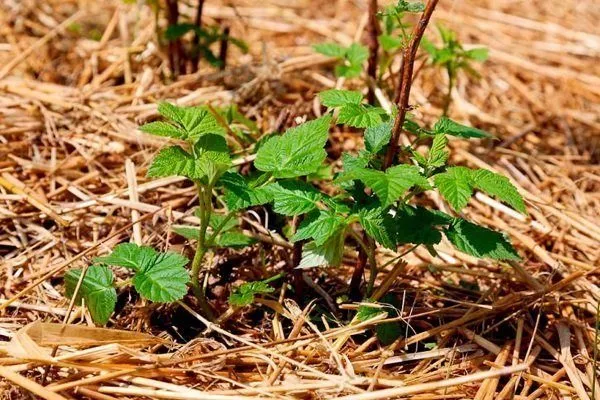
However, gardeners generally choose to harvest several times during the same season. Therefore, with the onset of autumn, only shoots that are several years old should be removed, while annual shoots should be covered.
The Husar raspberry is a frost-hardy variety that easily survives winter and doesn't require additional insulation from snow cover. However, if the winter is snowless and the plant grows in less than favorable conditions, there is a risk of root freezing.
To prepare the plant for winter, after watering before winter, mulch with compost. Bend the raspberry stems into an arc and secure them to wire stretched along the row. Cover the top with non-woven material to prevent the shoots from rotting. Do not cover the shoots earlier than one week before the first frost.
Raspberry harvesting and storage
In early June, begin harvesting the first crop of Husar raspberries.
Try to carry out this procedure in dry weather: when there's no rain and the grass is completely dry. Otherwise, the berries will spoil quickly, and the entire harvest will be lost.
Fully ripe berries have a deep red color. If the fruit begins to darken, it's overripe. This won't negatively affect the flavor of the berries, but it will make transportation much more difficult. Carefully separate the berries and stems, as the juicy flesh is easily damaged, turning the fruit into mush.
If you plan to transport raspberries, carefully trim the stems without damaging the receptacle. Try not to touch the berries themselves.
To harvest, use glass, dry and clean jars; the containers in which the harvest will be transported are also suitable.
Once you've finished picking, be sure to place the berries in the shade to prevent them from turning sour or falling apart when exposed to the sun.
Store the harvest in the refrigerator for 2-3 days at a temperature of at least +5°C and humidity levels of 85%.
Try to process berries quickly - make jam, berry preserves or compotes; raspberries mashed with sugar (the ingredients are taken in equal quantities) turn out very tasty.
Reproduction
This raspberry variety can be propagated in several ways. Seed propagation is extremely rare, as it requires a lot of time and effort, and the main varietal characteristics may be lost.
Propagation by cuttings:
- In early summer, cut young shoots about 5 cm below ground level and place them at an angle of about 45 degrees in a greenhouse.
- Ventilate and moisten the cuttings regularly.
- Rooting occurs in approximately 15 days.
- Apply top dressing using complex fertilizers.
- After a week, plant the cuttings in the garden, using a 10x30 cm pattern.
- In the fall, transplant the raspberries to a pre-prepared location in the garden.
Raspberry Hussar quickly propagates using root suckers:
- In summer, dig up shoots about 15 cm high along with the roots.
- Transplant to a prepared area.
- You can propagate raspberries by dividing the bush – the bush is divided into parts.
- Cut each part to 45 cm, then plant them as individual branches.
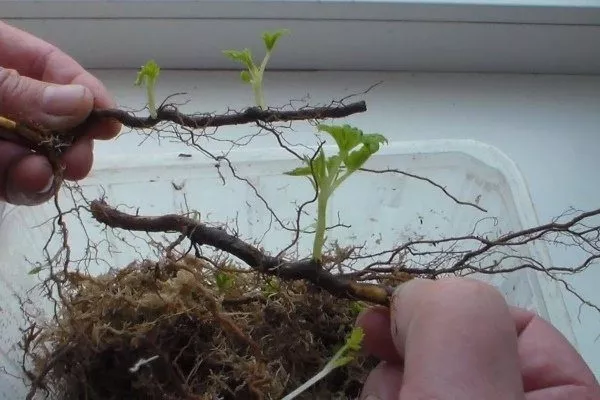
Raspberry propagation is also carried out using root cuttings:
- At the end of the season, cut the shoots into pieces about 10 cm long.
- Plant in a prepared area, do not forget to apply fertilizer in advance.
- Water the plantings, carry out soil mulching.
- For the winter, be sure to cover the shoots with pine branches.
- In spring, remove the pine branches and stretch film over the top.
- After the first green shoots appear, remove the film.
- Transplant the seedlings to a permanent location in the fall.
Diseases and insects affecting raspberries
The Husar raspberry, like any other garden crop, is susceptible to various diseases and pests. Simple preventative measures can help combat the problem.
The most common diseases are:
- OvergrowthYoung seedlings are affected, and the plant produces numerous shoots that form clumps. As a result, the branches stop growing and developing early. Affected bushes should be dug up and burned. As a preventative measure, timely pruning, including basal pruning, is essential.
- Yellow mosaicYellow spots appear on affected leaves, the edges curl, and shoots stop growing. If the disease spreads, the bush must be completely destroyed. To prevent this, raspberries should be planted in a well-lit area.
- Curly hair— shoots become shortened and distorted, their growth stops, and leaves curl. Timely pruning of raspberries is a preventative measure.
- Green mosaic— develops as a result of a lack of sunlight, the leaves curl downwards, and dark green spots appear on their surface.
To treat, apply 1 liter of Fitoverm solution to each bush. To prevent the disease from progressing, plant in a sunny, shade-free area.
May be affected by pests such as:
- Raspberry weevilThe pest chews holes in the surface of leaves and flowers. Gradually, the leaves dry out completely.
- Raspberry beetle— almost the entire harvest is destroyed, both leaves and fruits are damaged.
- Raspberry mosquito— larvae can be seen on the bark of the stems, after which the pest chews a hole into the center of the branches. The branch quickly dries out.
- Raspberry moth— adult plants suffer. The appearance of larvae is the first sign of a pest's presence.
To prevent insect pests, periodically dig up the soil under the bushes and remember to remove weeds from the area in a timely manner.
Raspberries should be planted in open, well-lit areas. Don't forget to water your raspberry patch regularly.
What mistake deprives gardeners of their harvest?
The most common mistake that can cause you to lose your entire harvest is improper preparation for the cold weather.
The variety is frost-resistant, but this doesn't mean it doesn't require additional shelter and winter preparation. This applies to winters with little snow, when there's no additional insulation from a snow layer.
Reviews of the Hussar raspberry variety
The Hussar raspberry is popular among gardeners. This is not surprising, as this variety easily tolerates cold winters and is highly resistant to various diseases, pests, and drought. The plant is easy to care for and produces a bountiful harvest.