
The Hercules raspberry is very popular among gardeners. This variety is characterized by high and stable yields and excellent weather resistance. Hercules raspberries are also undemanding in terms of soil conditions and can grow in virtually any type of soil.
History of origin and regions of cultivation
Hercules was bred by specialists from the Kokino branch of the All-Russian Institute of Selection and Technology of Horticulture and Nursery. The well-known Ottom Bliss variety served as the basis.
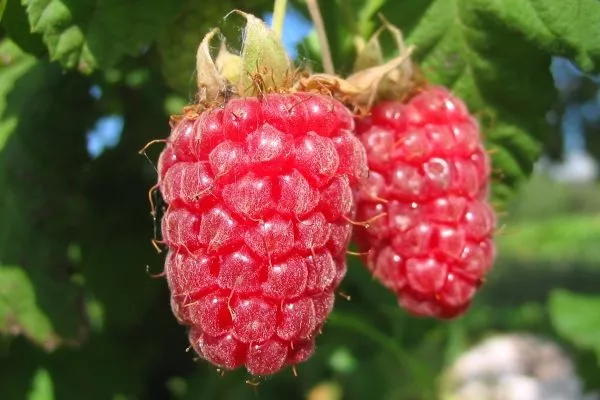
A distinctive feature of this variety is its excellent adaptation to various climatic conditions. Therefore, raspberries are successfully grown in a wide variety of regions. The Central region is considered optimal for this variety, but the crop will thrive in other climates as well.
Hercules is successfully grown in the following regions:
- Moscow region;
- Oryol region;
- Tula region;
- Vladimir region;
- Ryazan region.
Self-fertile raspberries are popular with gardeners in many regions of Russia, Belarus, and Ukraine. The plants tolerate both cold and drought well and are highly resilient to adverse weather conditions.
The variety is best adapted to the climate of the southern and central regions of Russia. It also produces standard growth in northern regions, but yields decline.
Properties and characteristics of the plant
The Hercules raspberry is a productive, everbearing, large-fruited variety. The bushes are compact and produce shoots moderately. The stems are not very tall, so additional support is not required.
| Name | Disease resistance | Ripening period | Berry size |
|---|---|---|---|
| Raspberry Hercules | High | July-October | 8-15 g |
| Daughter of Hercules | High | July-October | 10-20 g |
Berries and their description
Let's look at the main characteristics of the fruit. They are as follows:
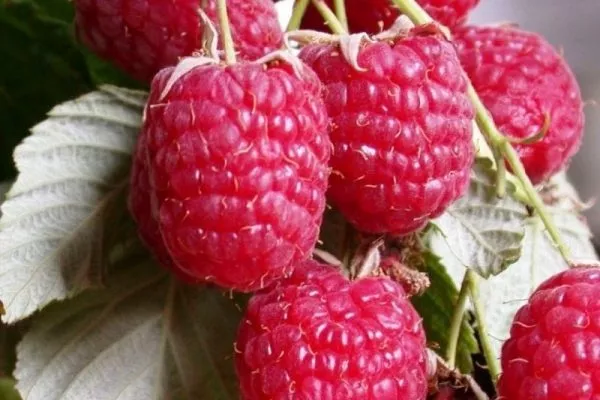
- the berries are large, cone-shaped, and slightly pubescent;
- the fruits reach approximately 2 cm in length and width, but can be larger;
- rich ruby hue;
- the fruits are easily separated from the bed, but even after full ripening they do not fall off and remain on the branches;
- the average weight of one berry is about 8 g, but some specimens can reach a weight of 15 g;
- The taste is pleasant, sweet and sour, refreshing.
Nutritional value (per 100 g):
- acids – 1.3%;
- vitamin C – 32 mg;
- sugar – 9.8%.
Raspberry bush
This variety is everbearing. Fruit formation occurs primarily on one-year-old shoots. These shoots are not very long, but if the bushes are located in the shade, the branches begin to stretch significantly due to lack of sun. In this case, additional support will be needed.
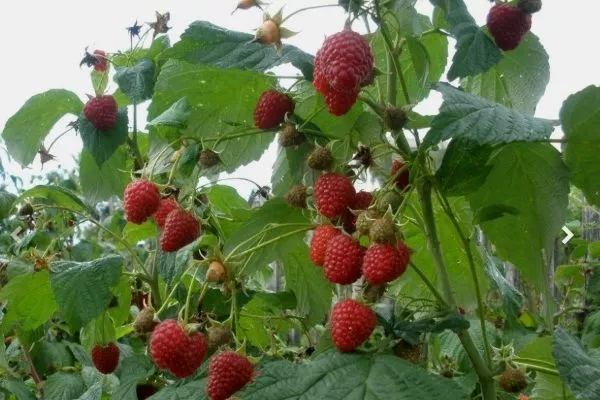
Description of the bush:
- the plant is not too large and does not take up much space;
- about 3-4 replacement shoots are formed;
- the shoots are strong, approximately 150 cm in height, so the variety practically does not need any support;
- young shoots are green in color, but by autumn they become purple-brown in color, and a waxy coating appears on their surface;
- There is no pubescence on the shoots, but along the entire length of the bush there are sharp thorns that grow from top to bottom;
- the leaves are large, slightly wrinkled, no pubescence, green on top, whitish on the bottom;
- the edge of the leaf blade is slightly pointed;
- Blooming is abundant, begins in June, the flowers are not too large, white.
Drought and frost resistance
The variety has moderate frost resistance. If grown in areas with cold winters, additional cover is necessary during this period. In the central regions of the country, pruning the bushes in the fall is common, and the soil around the plants is covered with dry leaves or peat.
The Hercules raspberry is highly drought-resistant, so it doesn't require frequent watering. This quality makes it highly prized by gardeners who don't have much time to devote to their plants.
Productivity and ripening time
This variety exhibits very high yields, with each shoot producing approximately 160 berries. A single plant can yield between 2 and 5 kg of fruit.
When raspberries are grown on an industrial scale, over 9 tons of fruit can be harvested per hectare. The first wave of berries begins to actively ripen in the second half of July, followed by the second wave a month later.
Variety resistance
This variety has a strong immune system, making it virtually disease-free and rarely subject to insect attacks. However, as the growing season begins, plants may suffer from certain diseases and pests.
Follow these preventative measures:
- Treat raspberry bushes in the spring according to the instructions with copper-based preparations before active sap flow begins;
- Follow crop rotation rules – do not plant raspberries in the same place twice; blackberries, cabbage, tomatoes, and strawberries are also poor predecessors.
Daughter of Hercules variety
The "Daughter of Hercules" variety is also worth mentioning. It was developed from the "Heracles" raspberry. Many people think they are the same variety, but this is not the case. The variety inherited its growing conditions, bush characteristics, and flavor from its parent.
Hercules' Daughter is distinguished by its high yield. This variety's bushes are medium-sized and branched. The berries are elongated and conical, very large, averaging 10 grams in weight. However, some fruits reach 20 grams.
Advantages and disadvantages of the variety
The Hercules raspberry has many positive characteristics. Its main advantages include:
- high yield rates;
- large and tasty berries;
- the harvest is collected several times during the season, since the variety is remontant;
- the berries ripen early;
- the fruits tolerate long-distance transportation well;
- the bushes are not spreading, compact, and do not take up much space;
- the shoots grow straight, strong, and do not need garter;
- the variety is early-bearing, so the first harvest can be collected the following year after planting the seedling;
- plant care is simple;
- high resistance to a number of diseases;
- The variety grows well in various climatic conditions, including poor ones.
There are also some disadvantages:
- the shoots are densely covered with sharp thorns, which makes harvesting very difficult;
- a little growth forms on the bushes, which makes it difficult for raspberries to propagate on their own;
- If the cold weather sets in early in the fall, the second wave of the harvest does not always have time to fully ripen;
- in extreme heat and with an acute moisture deficit, the fruits become smaller;
- in the first wave, large berries are formed, in the second, smaller ones;
- The growth of the crop is weak, the bushes develop slowly.
Landing features
To get a good raspberry harvest, you need to not only provide the crop with optimal care but also plant it correctly. Growing raspberries isn't particularly difficult if you follow just a few rules.
Choosing a location
Raspberries are light- and heat-loving plants, so choose a sunny location for planting. The area should be protected from cold winds, and drafts are avoided. This variety produces a good harvest even in partial shade.
Hercules isn't picky about soil conditions. It thrives in virtually any type of soil. The only exception is highly depleted and acidic soil. If your plot has this type of soil, be sure to fertilize it before planting.
When choosing, consider these tips:
- choose a place for the raspberry patch on the southern side of the soot;
- Lowlands are not suitable, as moisture stagnates there and the plant roots begin to rot, which leads to the development of fungal infections;
- The area is well warmed by the sun and protected from the wind by a fence or other outbuildings.
Planting dates
Plant during the dormant season. The optimal time is spring, before buds appear, or fall. When choosing a specific time, consider the following tips:
- SpringPlant the Hercules raspberry before the sap begins to flow. To do this, dig planting holes in the fall, and plant in the spring, once the snow has melted and the soil is dry enough.
- AutumnPlant no later than a month before the first frost. This way, you'll have your first harvest as early as July of the following year. Planting earlier will cause significant stress on the seedlings and reduce their winter hardiness.
Don't plant too late, otherwise the plant won't have time to take root and prepare properly for winter, and will die from frost.
Selection of seedlings and preparation
Purchase seedlings only from specialized stores or nurseries. When choosing planting material, consider the following tips:
- there should be no broken or dried parts on the roots;
- all roots are elastic, dense and resilient, if they are bent, they quickly return to their original shape;
- If the bark of the shoots is dark and there are no leaves on the plant, refuse to buy it, as such a plant will most likely not take root and will die after planting.
- ✓ Check for live buds at the base of the seedling.
- ✓ Check for signs of fungal diseases in the root system.
If you plan to plant raspberries in the fall, choose seedlings with closed root systems. They will adapt much more quickly to their new location and have time to properly prepare for the cold weather.
Preparing the land
About 1-1.5 months before planting, prepare the site. Add 50 g of superphosphate, two 10-liter buckets of compost, and 30 g of potassium nitrate per square meter. Then dig the soil to the depth of a spade.
If the soil is highly acidic, add lime (600 g of lime per square meter). For liming in garden plots, use stove ash (400 g per square meter).
The landing process
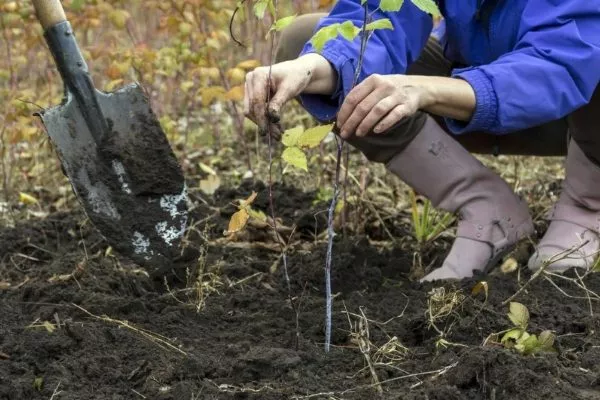
It's much more convenient to plant raspberries in trenches. The entire process is very simple and doesn't take much time:
- Prepare planting trenches. Space raspberry bushes 1 m apart and trenches 2 m apart.
- Place a nutritious soil mixture consisting of peat, compost, ash and rotted manure (take all components in equal quantities) at the bottom of the trench.
- Before planting, soak the seedlings in a clay mixture and leave them for several hours. This will help them establish themselves much more quickly in their new location.
- Raspberries have fibrous roots, so dig a planting hole at least 50 cm deep.
- Place the seedling in the hole and sprinkle it with soil mixture, compact it lightly, but not too hard, so as not to break the roots.
- Finally, water all seedlings at a rate of 10 liters of water per plant. Mulch the soil with sawdust or peat to prevent moisture evaporation.
More detailed instructions on planting raspberries are provided in the following video:
Caring for raspberries
This raspberry variety does not require special care; it is enough to water it regularly, apply fertilizer periodically, tie the plants to a trellis if necessary, and properly prepare them for winter.
Watering
The Hercules raspberry isn't a moisture-loving plant, but regular watering is essential for a good harvest. Water the planting so that the soil is saturated to a depth of at least 30 cm. One mature plant requires approximately 30 liters of water.
Start watering no earlier than the second half of May, taking into account weather conditions in your region. Continue watering until mid-August. In October, carry out the final pre-winter watering of the season.
If you use the sprinkler method, do it early in the morning or evening. If water droplets remain on the leaves and they are exposed to the sun, the plant will get burned.
Tying to a trellis
Straight, dense bushes don't bend under the weight of the fruit, so additional support isn't required. However, raspberries grown on trellises are well-ventilated, receive even sunlight, and the lower branches don't touch the ground, making harvesting much easier.
To achieve these results, install trellises about 2 m high, spaced 3 m apart, near the bushes. Bury them in the ground and stretch three rows of wire, then tie the raspberry bushes in place.
Here is a video instruction on tying raspberries to a trellis:
Loosening and mulching
Regular loosening of the soil ensures air access to the roots. Loosen the soil between rows to a depth of no more than 15 cm, as the plant's roots are located in the surface layer. Carry out this procedure very carefully. First, immediately after the snow melts, and then each time after watering and weeding.
Mulch the soil with dry straw. This will not only retain moisture in the soil and reduce watering, but also prevent weed growth.
Weeding
This procedure is essential. Weed regularly to prevent weed growth. Grass not only takes nutrients and moisture from the soil but can also be a source of disease.
Fertilization
Everbearing raspberries require only three fertilizing applications per season. Follow this schedule:
- Spring. In May, apply the first fertilizing with mullein (use 500 ml of concentrate per 10 liters). Use 5 liters of nutrient solution per plant.
- Summer. In July, spray the bushes with a solution of urea (50 g), potassium sulfate (70 g), boric acid (110 g) and superphosphate (250 g), dissolved in water (10 l).
- Autumn. Use complex fertilizers according to the instructions, sprinkle ash around the bushes.
- Before flowering, apply potassium-phosphorus fertilizers to stimulate the formation of ovaries.
- After harvesting the first crop, feed the plants with nitrogen fertilizers to support shoot growth.
- In the fall, apply organic fertilizer to improve the soil structure and prepare for winter.
Apply fertilizer only after watering to avoid burning the roots. After fertilizing, mulch the soil.
After harvesting, fertilize the soil with organic matter—a 1:10 solution of mullein or bird droppings (1:20). Apply 5 liters of nutrient solution per plant. This solution can be applied both after harvesting and before flowering.
In the fall, mulch the soil with compost or manure. A layer of mulch will keep the plant's roots warm during the winter and provide the raspberries with nutrients in the spring.
After harvesting the fruits, it is useful to feed the plants with herbal infusion:
- Place chopped dandelion, nettle, and burdock in a barrel. Add some soil and ash (1 cup per 50 liters). Add yeast (1 packet) and dried chicken manure (1 kg).
- Pour warm water into the barrel and leave the mixture to infuse for exactly 7 days.
- When fermentation is complete, dilute the mixture with water in a ratio of 1:10 and use it to water the raspberry patch.
Preparing for winter
If the branches on the bushes are completely cut off, there is no need for additional shelter for the winter, since the roots will easily withstand the cold in the soil and will not be damaged even by severe frosts.
If the above-ground portion remains, the bush should be additionally insulated with burlap. You can also bend the branches to the ground and cover them with spruce branches or peat. In the spring, immediately after the snow melts, uncover the raspberry bush.
Trimming
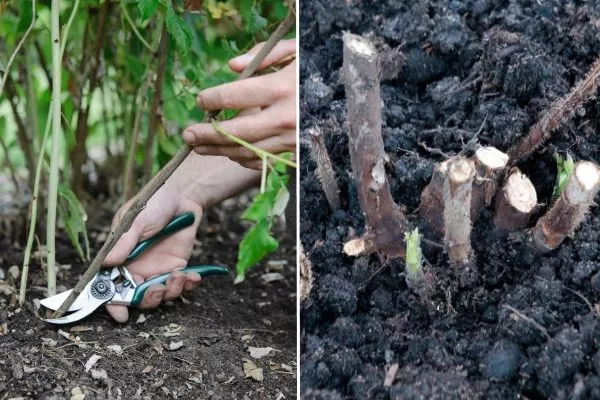
At the end of October or the beginning of November (depending on weather conditions and growing region), it is carried out autumn pruning of raspberriesFor sanitary purposes, this procedure is mandatory in the spring, but it will not be necessary if all branches were cut off at the root before winter.
Standard
The most common option is to carry out this operation in the fall. Prune all shoots, leaving no more than 30 cm from the root. In the spring, one-year-old side shoots will appear. You'll get 30% of the harvest in early summer, and 70% by the end of the season.
Under the root
Cut all branches back to ground level. Do this no later than 15 days before the first frost. Unlike standard pruning, this method will delay fruiting but produce more abundant fruit.
Double crop
Before flowering, prune the bushes, including the ovaries. This should be done in mid-May. This procedure will ensure the second harvest is several times larger than expected.
Top cutting
In the fall, shorten the shoots by 40 cm. Thanks to this, the first harvest of the new season will be 65% larger than the total volume.
Methods of reproduction
The simplest option is propagation by root suckers. The procedure is very simple:
- In summer, dig up shoots that have reached 5 cm in height.
- Plant them in fertile soil. This raspberry variety quickly takes root in its new location, and the transplanted shoots will soon begin to grow.
Another method of propagation is by cuttings. Follow these steps:
- In the fall, when the season ends, cut the roots into cuttings at least 10 cm long.
- Plant the cuttings in furrows at a distance of 30 cm from each other.
- Water the bush, mulch the soil and cover it with pine needles for the winter.
- Early in the spring, immediately after the snow melts, remove the covering and cover the cuttings with film.
- When sprouts appear, in about 2-3 weeks, remove the film.
Pest and disease control
The Hercules raspberry is highly disease-resistant. It is less susceptible to gray mold and other fungal diseases. It is also highly resistant to the raspberry mite.
Aphid
Entire colonies of shoot aphids often settle on branches and burrow directly into the inflorescences. Leaf aphids cause significant damage to the plant, feeding on the undersides of the leaves. This pest literally sucks all the juices out of the raspberry. If the infestation is severe, the plant begins to slowly die.
To control the pest, spray raspberry bushes with Actellic or Karbofos (as per instructions) during bud break. Take action immediately upon detecting a problem, as aphids spread rapidly and can quickly overrun the entire garden.
Raspberry beetle
This pest is often found on raspberry bushes. The beetle is large (about 4 mm long) and can be identified by its yellow-gray stripes. The pest overwinters in the soil, and by mid-spring it settles in the buds and begins actively destroying them.
When bud formation begins, shake off the beetles by hand, then burn them. When the larvae begin to pupate, be sure to dig up the soil in the raspberry patch.
To prevent or control the pest, treat the bushes with Confidor (as per the instructions). Inspect the plants periodically and collect the beetles by hand.
Kidney moth
The adult pest looks like a butterfly with dark brown wings and golden spots.
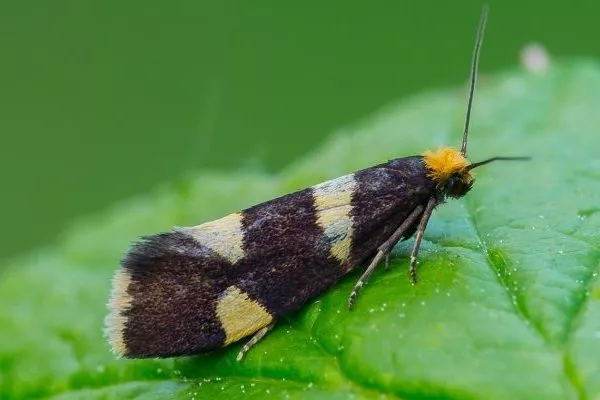
In the caterpillar stage, it's reddish. It's the caterpillar that poses the greatest threat to raspberries. They spend the winter in the crevices of the stem, and in the spring they move up the shoots, actively gnawing out the buds and then eating into the flesh of the branch.
The pest lays eggs in raspberry blossoms. Caterpillars then hatch and begin devouring the sweet berries. If left untreated, the pest can completely destroy the crop.
To combat this, resort to the following actions:
- When preparing the plant for winter, cut off all shoots at the root;
- When the buds begin to swell, treat with chemicals according to the instructions (for example, Decis, Confidor, Karbofos Emulsion, Iskra).
Harvesting
The first berries appear in early August, and fruiting continues until the first frost (usually until October). However, raspberries don't always ripen fully, especially when grown in colder regions. Even without this, yields are very high—one bush produces about 5 kg of berries.
Harvest the fruit in dry weather, in the evening or morning. Use plastic containers or birch bark boxes.
Raspberries are ideal for fresh consumption, but if the harvest is abundant, the berries can be processed. The resulting fruits are delicious:
- jams;
- jam;
- jams and other types of preserves.
Gardeners' reviews of the everbearing raspberry Hercules
The Hercules raspberry is a high-yielding everbearing variety, beloved by both professional farmers and amateur gardeners. Raspberry care is extremely simple, yet the result is a bountiful harvest with minimal effort.