
The Galaxy raspberry belongs to the group of standard varieties with a mid-late ripening period. The raspberry "tree," as the tree-like bushes are called, is semi-everbearing, large-fruited, and resistant to adverse conditions, diseases, and pests. The berries are richly sweet, and few shoots emerge.
Breeding history
The Galaxy raspberry is a relatively new variety. It is not yet included in the Russian State Register. There is no precise information about its origin, but it is believed that the breeding work was conducted at the All-Russian Institute of Selection and Technology for Horticulture and Nursery.
The research was led by the renowned Professor Viktor Valerianovich Kichina. The Galaxy turned out to be one of the hybrids developed through selective breeding.
Introduction to the Galaxy raspberry variety
This variety is grown by hobby gardeners. It is not yet cultivated on an industrial scale.
Berries
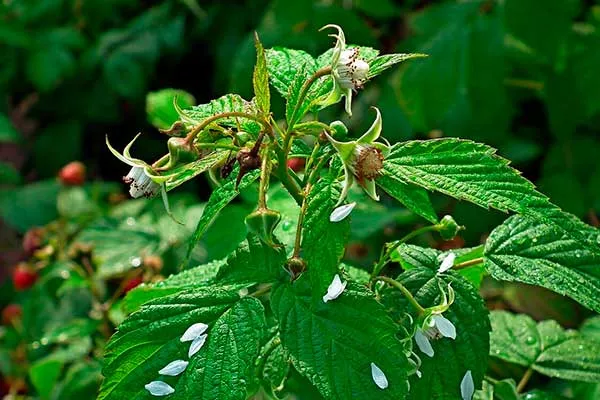
The bush blooms in the first days of June in southern regions, but budding occurs a little earlier. Flowering is uneven, so the harvest is sequential: the berries ripen first on the lower parts of the plant, then on the upper parts.
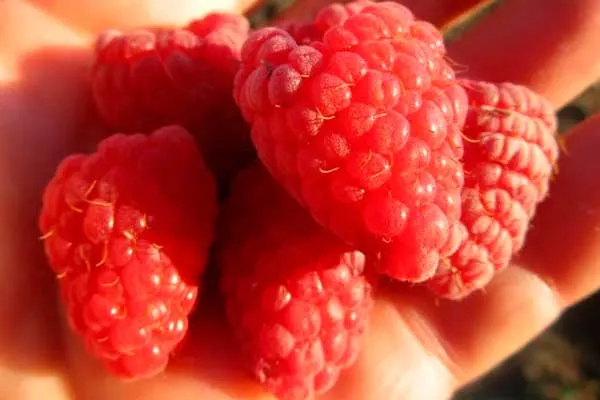
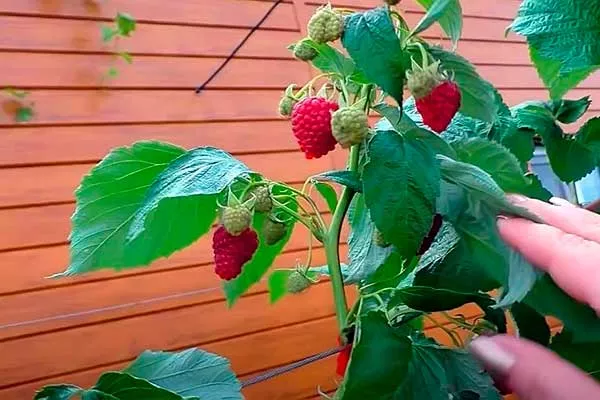
Enormous, snow-white flowers produce large berries, weighing up to 15-18 g under the most favorable growing conditions. Smaller specimens, weighing from 6 to 15 g, also occur. Other characteristic fruit features:
- drupes are the same size, small;
- the berries are collected in clusters of a maximum of 7 pieces;
- the drupes are firmly connected to each other, so the fruits do not fall apart;
- the shade is red-burgundy, and the surface has a glossy finish;
- classic elongated shape;
- the pulp is dense and at the same time juicy;
- the aroma is rich, raspberry;
- The taste is bright and sweet, but there is also a subtle sourness.
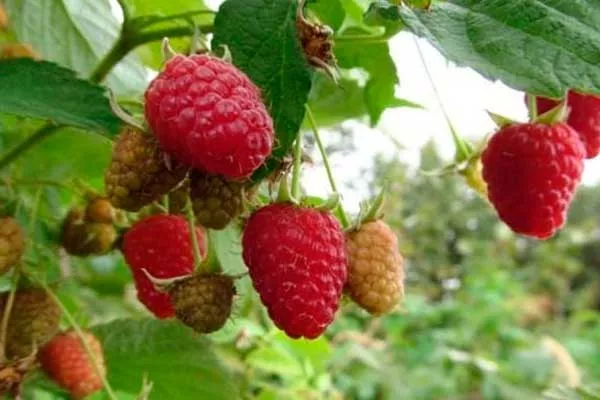
Bush
Galaxy, being a hybrid, has a strong, bushy structure with very strong, upright branches, preventing a spreading crown. This means it takes up minimal space in a raspberry patch. Other characteristics:
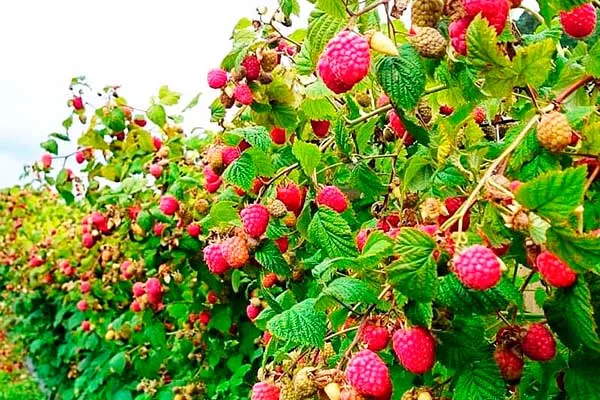
- height of the bush – 170-200 cm;
- studdedness – absent;
- shoot formation – strong (in contrast to a small number of root shoots, about 8-10 shoots are formed from one bud on a branch;
- leaf blades – dark green, slightly pubescent below;
- leaf type – odd-pinnate, petiolate, oval.
Ripening time and yield
Galaxy is considered a late-ripening variety, with harvesting beginning in the first ten days of July. The berries ripen unevenly, extending the harvest period to August 10-15. This variety is harvested in five stages, with a single bush yielding up to 8-12 kg of berries.
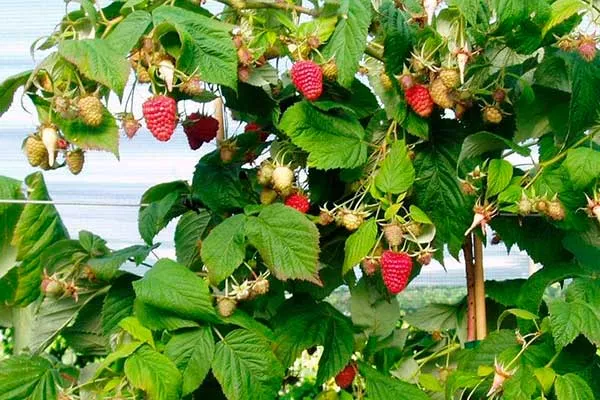
Winter hardiness, regions for cultivation
The Galaxy variety was bred in the Moscow region, making it ideal for the central region. This variety also grows well in other climates, including northern ones, where protective cover is required during the winter. It is not well adapted to dry conditions and requires regular watering.
Raspberries are highly frost-resistant and can withstand short-term frosts down to -30°C. However, in areas with harsh winters and prolonged frosts, it is necessary to provide protective cover for the plants to prevent their death.
A more serious threat to the variety is sudden temperature fluctuations and thaws, especially if accompanied by insufficient snow cover. Using film for winter cover can exacerbate the situation, as it can increase the temperature underneath, leading to rotting of the bush.
Pollination
The flowers of the Galaxy raspberry are bisexual, making it self-pollinating. If insects are scarce, you can attract them by spraying the bushes with honey diluted with water (1 tablespoon per 1 liter).
Disease resistance
There is no official information on the Galaxy hybrid's resistance to pests and diseases. Gardeners are wary of planting this little-studied variety. However, raspberries are susceptible to a wide range of diseases and pests. The most dangerous ailments include:
- anthracnose;
- botrytis;
- purple spot;
- root rot;
- viral mosaic;
- ringspot.
Pests that can cause damage to raspberry bushes and berries include:
- spider mite;
- aphid;
- weevil;
- shoot gall midge;
- raspberry fly and beetle.
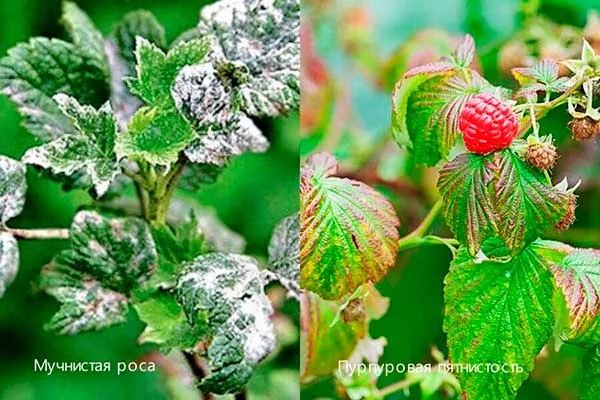
Fungal diseases are promoted by dense plantings, high humidity, and cool weather. Fungicides are used for control:
- Bordeaux mixture;
- colloidal sulfur;
- Fast;
- Zineb;
- Thiovit Jet;
- Oxychom;
- Cuproxate;
- Horus;
- Abiga Peak;
- Previkur Energy;
- Fundazol.
To combat viral diseases, it's important to avoid overcrowding. Before flowering and after harvest, treat raspberries with Bordeaux mixture (1%) or another copper-containing preparation as a preventative measure.
It is also important to combat aphids that spread viruses; the following preparations are used for this:
- Biotlin;
- Aktara;
- Tanrek;
- Aliot.
Raspberries can also be affected by other pests. Insecticides are used to control them:
- spider mite – Akarin, Bitoxibacillin;
- raspberry fly – Karbofos, Iskra, Aktofit;
- shoot gall midge – Karbofos, Karate, Mospilan 20%, Calypso;
- weevil – Kemifos, Taran, Alatar, Iskra Bio.
- Many pest control products boast a broad spectrum of action. These include Fitoverm, Fufanon Nova, and Actellic.
Compliance with agricultural standards will protect the plant from pests and diseases.
Storage and use
Fresh raspberries can be stored for no more than 4-7 days, provided they are intact and dry. This is possible by placing the berries in a maximum of two layers in containers and covering them with a napkin or lid, leaving a gap for ventilation. Store the berries in this manner in the refrigerator.
Galaxy berries are popular for their versatility. They are good for fresh consumption and suitable for various processing methods. Freezing and mashing with granulated sugar are recommended for maximum preservation of nutrients and properties.
Pros and cons of the variety
Many amateur gardeners who have planted this hybrid in their gardens enjoy the Galaxy variety. They note the following positive qualities:
The Galaxy raspberry has a few disadvantages:
Landing rules
Planting Galaxy follows the same principles as other raspberry varieties. However, there are some special nuances to consider.
Selecting a site and preparing the soil
The optimal planting site is level, not in a lowland, on a slope, or at an elevated location. Such areas significantly reduce yields. Raspberries should be planted in well-lit areas. The following conditions are favorable for this variety:
- loose fertile soil;
- neutral soil reaction, optimal pH level is 5.7-6.5;
- distance to groundwater;
- no possibility of flooding or stagnant moisture.
Plant Galaxy in spring or fall. In the latter case, finish planting at least 2-3 weeks before the cold weather sets in. Fall planting is recommended only for southern regions with mild winters.
Prepare the site for the bushes 1-2 months in advance. If spring planting is planned, it's best to do this in the fall. The area must be dug over, all weeds removed, and organic matter added. If using peat or manure, 10-11 kg of fertilizer per square meter is required. If the soil is too acidic, add up to 400-500 g of dolomite flour or lime.
Planting methods
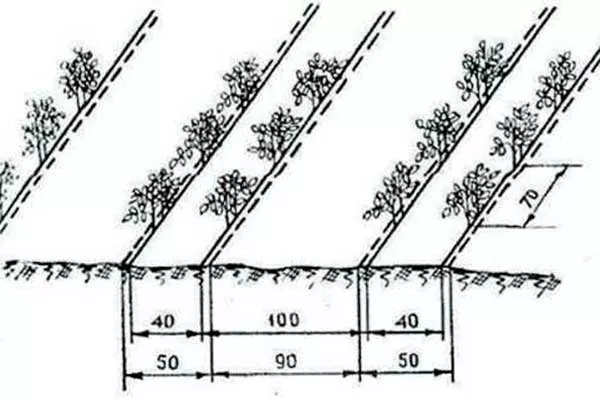
The Galaxy is well rooted by various methods, but the most common are the following:
- Ribbon:
- Plant seedlings in rows. This makes care and cultivation easier.
- Distance: leave about 50-70 cm between plants in a row, and 150-200 cm between rows.
- Suitable for: Large plantations and areas where a systematic approach is required.

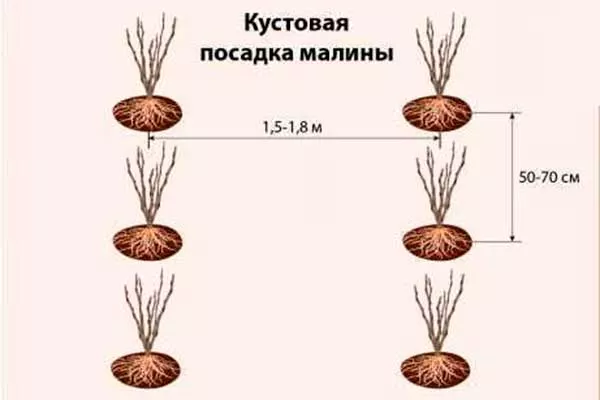
- Bush:
- Each seedling is planted separately, which allows it to develop fully.
- Distance: bushes are planted at a distance of about 100 cm from each other in all directions.
- Suitable for: small gardens or areas with limited space.
Landing features
Only healthy seedlings with a well-developed root system should be used for planting. To prevent the root system from drying out, you can wrap it in a damp cloth or bury it. Before planting, treat the roots with a growth stimulant such as Kornevin or Heteroauxin, and then with a mixture of clay and mullein.
- ✓ Seedlings must have at least 3 healthy buds.
- ✓ The root system must be well developed, without signs of rot.
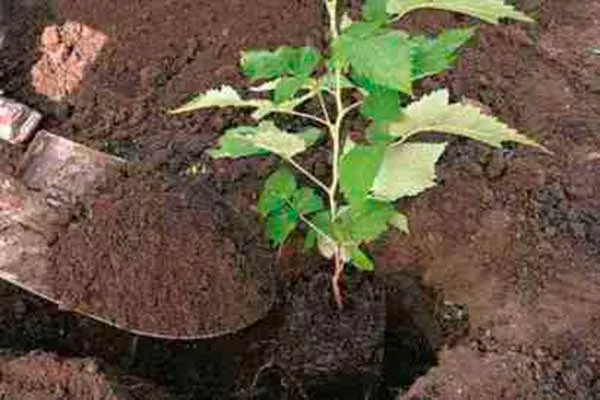
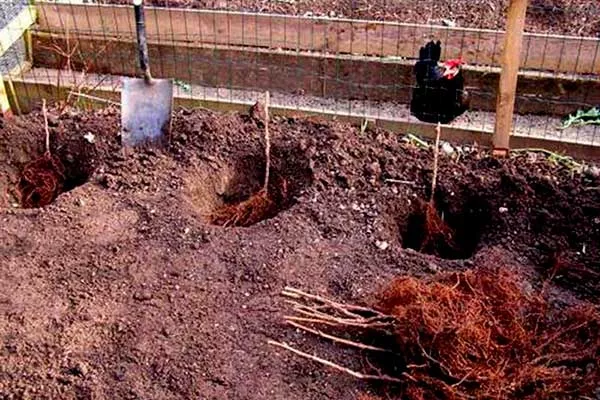
Plant raspberries in holes or trenches. In either case, make the depth 40 cm. The planting algorithm is as follows:
- Water the prepared trenches or holes thoroughly.
- Cut the seedlings back, leaving 1 shoot of 20 cm.
- Place the bush in the hole at an angle of 30°.
- Straighten the roots.
- Fill the hole with soil, leaving the root collar 1-2 cm above the surface.
- Water the seedlings – at least 2 liters of water for each.
- Mulch with a layer of at least 5 cm. Peat, hay, leaves, or grass are suitable.
- ✓ The first watering should be abundant, at least 5 liters of water per seedling.
- ✓ Mulch with a layer of at least 5 cm to retain moisture and protect against weeds.
The best predecessors for raspberries are legumes and members of the pumpkin family, while strawberries and nightshades are the worst. Apple, cherry, and garlic trees are good neighbors.
How to care?
The raspberry canes of this variety are quite strong and difficult to break, but it's still best to tie the bushes up to make caring for them and harvesting the fruit easier. There are several types of care that are essential:
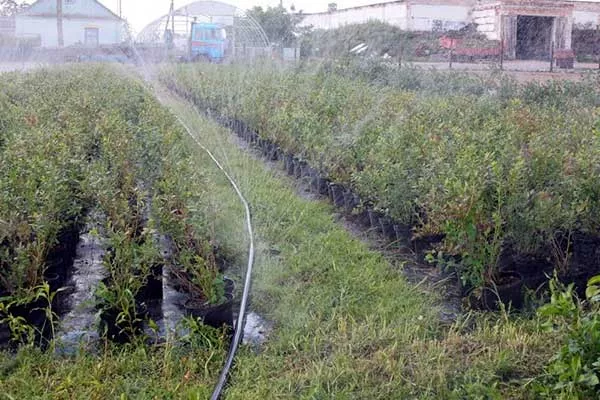
- Moisturizing. Water this variety generously only if the summer is dry. It's important to check the water penetration depth: 40 cm is ideal. Water the most in May, when the fruit is just forming. If the shrub occupies a large area, use drip irrigation.
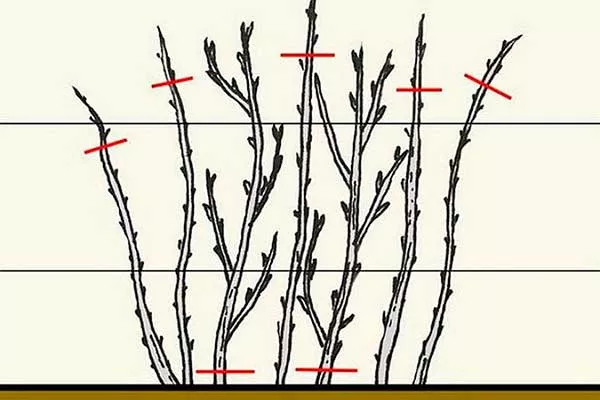
- Trimming. Sanitary pruning of the Galaxy is carried out in the spring, before the sap begins to flow. Pinch out the upper branches, and completely remove any frost-bitten, dry, or broken branches. Although root shoots don't appear very actively, they still need to be trimmed, otherwise the raspberry patch will gradually grow in a chaotic manner. Check the shoots in midsummer.
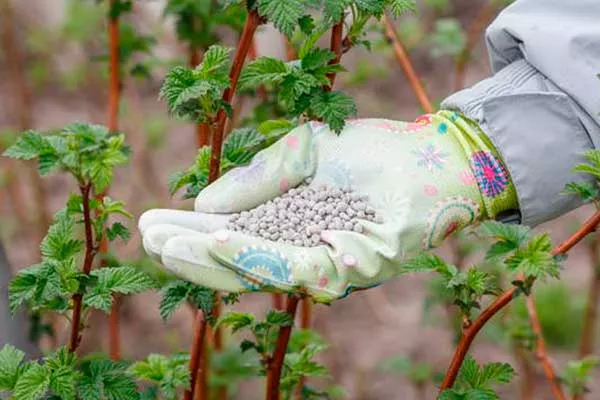
- Fertilizer. Fertilize at least three times per season. In early spring, the plant requires nitrogen-rich fertilizers and wood ash. In late spring, add organic matter such as cow manure or manure. In June, apply potassium and phosphorus fertilizers.
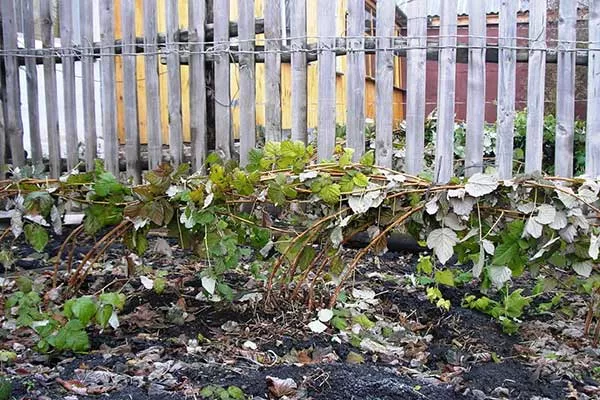
- Preparing for the winter period. Galaxy tolerates frost well, but in northern regions it should be covered for the winter. Severe frosts can seriously damage the plant. Mulching the root system with peat, hay, or leaves is sufficient. Bend the stems to the ground and cover with spruce branches or agrofibre.
How to tie up raspberries?
Staking raspberries, especially if you're planting them near a fence, can be helpful for keeping them organized, easier to maintain, and improving yields.
The importance of tying up bushes:
- Maintaining the bush's shape. Helps keep the bushes upright, which is important for ensuring light and air reach all parts of the plant.
- Protection against breakage. Prevents shoots from breaking under the weight of fruit and in strong winds.
How to tie raspberries to a fence:
- Selecting a tying method:
- Using a fence as support: If the fence is strong enough, tie the raspberry canes to it using soft materials such as garden twine or special tying straps.
- Installing additional supports. If the fence doesn't allow for easy tying of shoots to it or you need additional support, install stakes near the plants or stretch wire or twine horizontally between the posts at different heights.
- Tying technique:
- Soft tying. Use soft materials for tying to avoid damaging the shoots. Wrap the twine around the shoot and secure it to the fence or support, without pulling it too tight.
- Shoot distribution. Distribute shoots evenly along the structure to ensure each shoot receives sufficient light and air. Avoid crossing shoots.
- Regular checking and adjustment:
- Periodically check the twine and straps for wear or damage and replace them if necessary.
- Adjust the garter as the plants grow to avoid pinching the shoots and maintain optimal distribution of the berry weight.
Methods of reproduction
There are 2 main methods of propagating the Galaxy variety:
- Cuttings-stems. Cut a stem at least 25 cm long, maybe a little longer. It should have three very healthy buds. In the fall, cut them, bury them, and cover them with plastic wrap. In the spring, remove the covering. Rooting occurs quite quickly and vigorously, especially if you follow proper agricultural practices.
- Root cuttings. Harvest them before winter. Plant them in soil and moisten them. Leave them for a year to obtain full-fledged planting material.
Gardener reviews of the Galaxy raspberry
Although not officially recognized by the state, the Galaxy raspberry is still popular among Russian gardeners. It's relatively easy to grow, produces high yields, and doesn't require any special soil. It has excellent flavor and is versatile. The key is to water the bushes regularly.