
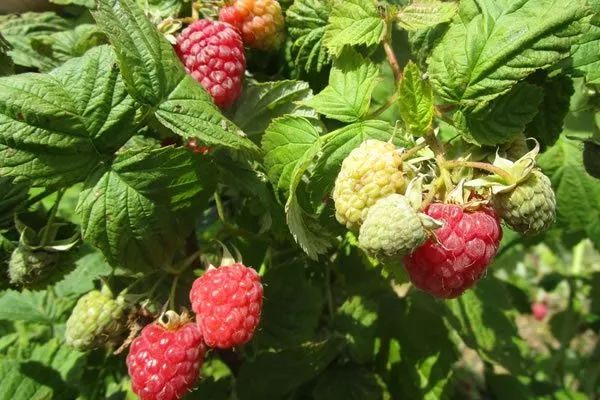
The Phenomenon raspberry is not everbearing, so the harvest is only once per season. This summer variety is considered mid-early, high-yielding, and versatile. The fruits retain their color and sweetness even in adverse weather conditions.
History of selection
This unique raspberry variety was developed through careful breeding by specialists at the Krasnokutsk Experimental Station of the Institute of Advanced Horticulture. It combines characteristics of the Odarka and Stolichnaya varieties. The new variety was registered in 1991 at the Institute of Advanced Horticulture of the Ukrainian Academy of Agricultural Sciences.
Breeders made every effort to ensure that the new variety possessed the maximum number of beneficial properties and retained the best traits of its parents.
Introduction to the variety
Phenomenon is a non-everbearing variety, meaning it produces fruit only once during the growing season, but its berries ripen significantly earlier than other varieties. Fruiting begins between June 12 and 17, and the exact ripening time depends on local climate conditions.
Where can it be grown?
The Phenomenon variety is ideal for growing in Russia. It adapts to various climate zones and conditions, from the south to the north.
Description of the plant
To accurately determine whether this variety is worth planting in your garden, carefully study all the characteristics of the plant and its fruits:
- Bush and branches. The shrubs form broad crowns and reach a considerable height, ranging from 250-260 cm. In some areas, they can reach 300-320 cm. Young branches of the shrub have a green tint, but within a year after planting, they turn brownish. The shoots have small thorns that do not interfere with harvesting or care of the plant.
- Leaves. The leaf blades are large and dark green in color, covered with short pubescence.
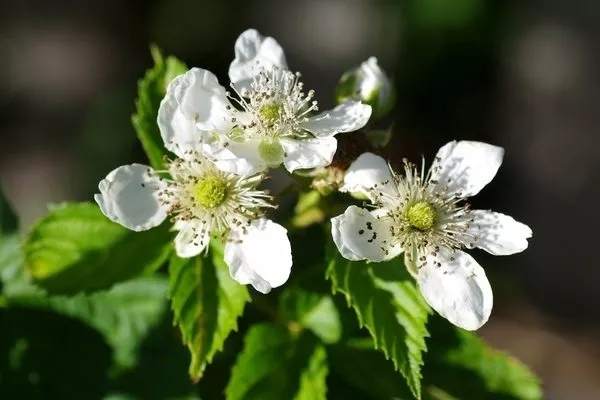
- Flowers. Raspberry blossoms with buds of snow-white petals, collected in clusters.
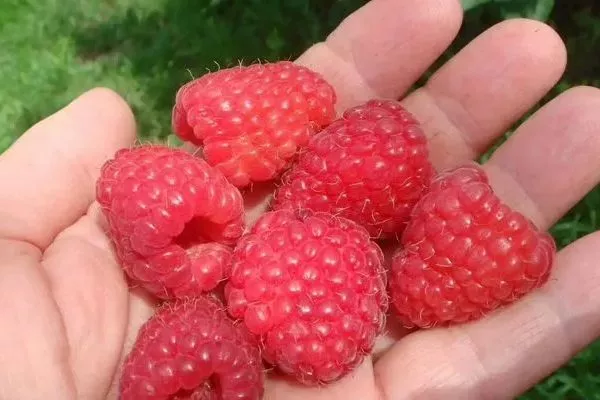
- Fruit. They are distinguished by their large size and slightly conical shape, weighing approximately 5-10 grams. Ripe berries are scarlet or bright red and may have a bluish tint. The flesh is quite firm, preventing splatter during picking. The fruits are characterized by increased juiciness and a distinct aroma, a sweet taste with a barely noticeable tartness, and are rated 4.1 out of 5 on a tasting scale.
- Bones. The seeds are barely noticeable and do not interfere with eating, as they are practically too small.
Frost resistance
Phenomenon is highly frost-resistant, eliminating the need for winter cover. In areas with heavy snowfall, winter itself protects the root system, keeping it intact.
Pollination
This variety does not require pollination by other raspberry species. However, planting it next to varieties that bloom and ripen at the same time can be beneficial.
Productivity
Phenomenon is a once-fruiting variety. Its fruits reach maturity once per season, but by then they are already fully formed and ripen fairly quickly. The berries form in large clusters from the ovaries.
The fruit ripens in the second half of June, but this period may vary depending on the climatic conditions of the region.
Storage of the harvest
This raspberry variety has a long shelf life. The berries can be refrigerated to prolong their shelf life. Their firm structure makes them resistant to damage during transportation.
These qualities make the Phenomenon variety suitable for cultivation for commercial sale, allowing it to be successfully exported to other regions.
Location and soil requirements
The ideal location for growing raspberries is in sunny areas with soil that can be black earth, loamy or sandy loam, with a neutral or slightly alkaline content, and also with the ability to retain moisture, provide air exchange and be well-drained.
When choosing a planting site, consider protection from northerly winds and strong gusts of wind. It is not recommended to plant raspberries in low-lying areas where water stagnation is possible, or where the groundwater level is less than 150-180 cm deep. The best planting sites are south- and southeast-facing slopes.
Landing rules
The timing of planting raspberry seedlings depends on the climate: in colder regions, spring planting is preferable, while in warmer regions, autumn planting is preferable. It's important that the young plant has time to develop its root system, adapt to the new conditions, and establish itself before the cold weather sets in. Typically, even under ideal conditions, this takes at least a month.
Other aspects to consider:
- The distance between rows of raspberry bushes should be from 150 to 220 cm, and between plants - from 60 to 90 cm.
- The soil must be fertile, rich in humus, organic matter, micro- and macroelements.
- It is necessary to select a planting plant with at least three buds and a well-developed root system, while the roots must be healthy and not dried out.
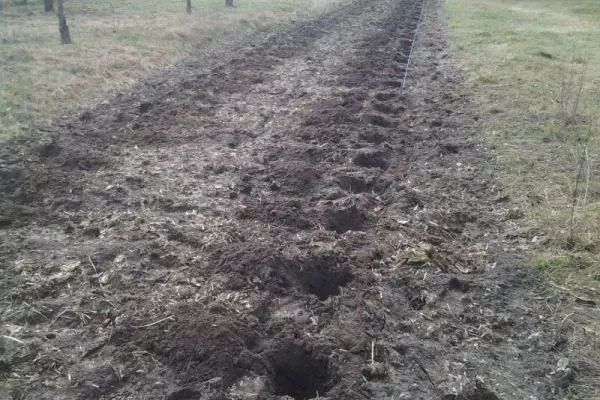
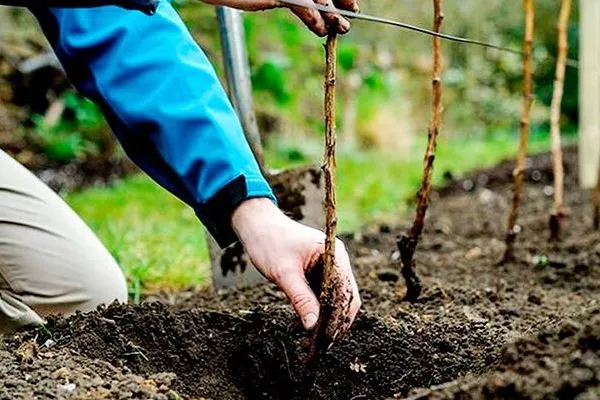
- For planting, it is recommended to use holes measuring 30-40 x 30-40 cm. The depth of the hole is determined depending on the length of the roots.
- During planting, enrich each hole with 80-120 g of charcoal or 2-4 kg of compost (the exact dosage depends on the soil conditions in your area). Mix these fertilizers with water beforehand. This type of nutrition promotes rapid adaptation.
- Form a small mound in the center of each hole, and place the seedling on it with its roots carefully spread out. The root collar shouldn't be buried too deeply.
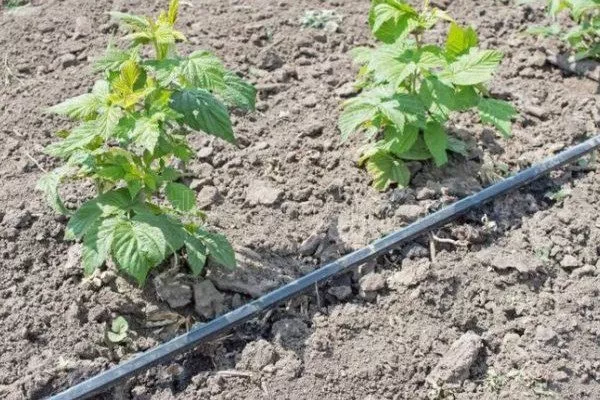
After planting, be sure to water the area around the tree trunk and compact it lightly. It is recommended to apply a 3 to 8 cm layer of mulch around the shrubs, depending on the growing region.
Care tips
To obtain a bountiful harvest from the Phenomenon raspberry variety, careful care is essential throughout the year. Key care steps include:
- Watering. In dry climates and during hot periods, it's necessary to water the bushes frequently. If there's no regular rainfall, this should be done at least 3-4 times during the season. Each bush should receive approximately 18-25 liters of water. The standard frequency is:
- The first watering should be done after April 25, when buds begin to form on the raspberries.
- The second is necessary during the formation of ovaries.
- Make the final cut in the fall before frost sets in.
- Nutrition. Plants need to be fertilized regularly. It's recommended to do this annually, starting in the first year after planting:
- Apply spring fertilizer after the last frosts have passed. Before applying, dig up the soil around the shrub and then evenly distribute the ammonium nitrate. 100 g of fertilizer is sufficient for every 10 square meters of area.
- Fertilize the bush a second time during flowering. To do this, loosen the soil around the bush and create a small trench at least 20-25 cm wide. Fill it with a mixture of chicken manure and water (dilute according to standard guidelines). Each plant will require 8-12 liters of this mixture.
- Trimming/shaping. It's important to monitor the emergence of new shoots and remove them promptly to prevent them from reducing yield and fruit size. Prune off any excess branches, as well as any that have become weak, diseased, or dried out.
- Support structure. Since this variety of raspberry bushes can grow quite tall, they require support. For this purpose, trellises with wire are installed to secure the raspberry canes to prevent them from leaning toward the ground or spreading.
Diseases and pests
The Phenomenon raspberry is resistant to infectious diseases, but is susceptible to the following pathologies:
- Curly hair. With this disease, the bush's leaves begin to curl and become bumpy. During this period, the stems shorten and become coarser. Bushes affected by curl do not produce berries. The infection is not treatable, so remove and destroy affected bushes immediately.
- Viral mosaic. With this disease, the leaf blade becomes deformed and reduced in size. Dark spots appear in the center, while the edges become lighter. Yields decline each year, and the berries become denser. This disease is almost impossible to overcome.
- Bushiness. This disease is characterized by the appearance of small shoots on the roots, reaching approximately 12-16 cm in length. Up to 200-250 such shoots can appear on a single bush, which contributes to a decrease in yield.
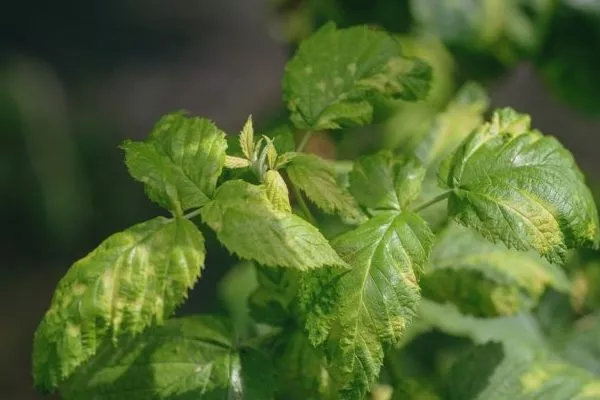
- Infectious chlorosis. This disease causes the plant's leaves to take on a yellowish tint. The tint initially appears around the veins, then spreads to the entire leaf blade. As a result, the stems become elongated and thin, and the berries dry out before they ripen.
Among the pests that can damage raspberries of this variety are:
- Raspberry beetle. It lays eggs on the tips of ovaries and in flowers, where they hatch into larvae that damage the fruit. To protect the shrub, spraying with Kinmix or Iskra insecticides is recommended, as well as regularly loosening the soil around the plants. After the fruit ripens, it is possible to treat them with Karbofos.
- Weevil. It damages flower stalks, causing them to thrash. Adult insects, transformed from weevils, eat the leaves. Iskra or Karbofos can also be used to control this pest.
Methods of reproduction
Shrubs are typically propagated through root suckers. These plants are capable of producing enough shoots to grow an entire garden from a single bush in just a couple of years.
It is best to plant new plants in early spring, before the buds appear.
Pros and cons
The Phenomenon variety has several advantages, including:
Despite the obvious advantages, it's important to consider the disadvantages to be prepared for potential problems. These disadvantages include:
To prevent problems, proper care and pest control are required.
Gardeners' reviews
The Phenomenon variety deservedly attracts attention with its large fruits, as evidenced by both descriptions and reviews. The fruits of this raspberry are truly impressive in size. However, due to their weak wind resistance, the plants must be tied to a support structure. Some bushes even demonstrate remontant qualities and are capable of producing fruit into the fall – this requires careful care.