
Blackberries are an easy-to-grow and productive hybrid that will make a pleasant and rewarding addition to your garden. They require virtually no maintenance and produce a prolific harvest. Let's learn how to plant this crop in your garden, its benefits, and how to get a bountiful harvest.
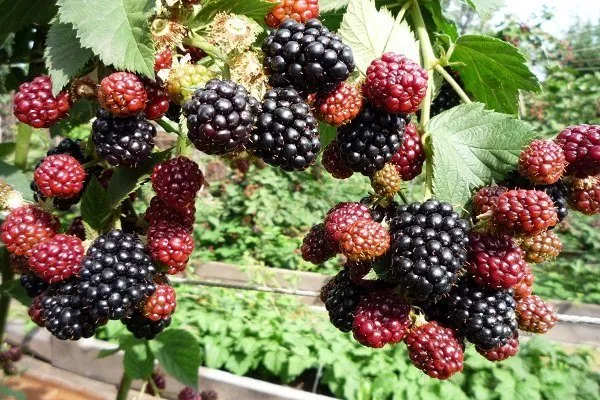
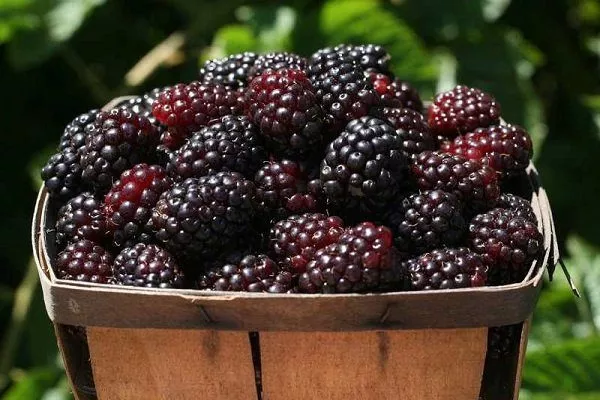
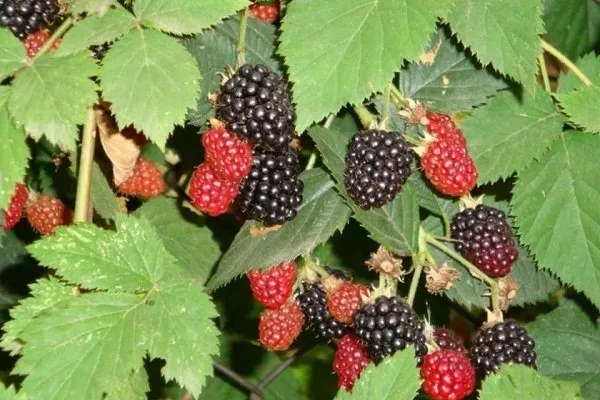
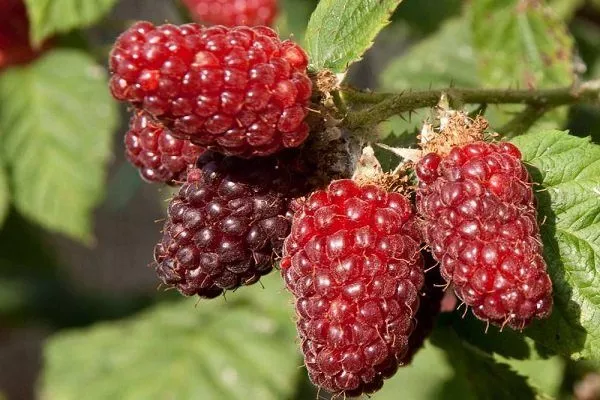
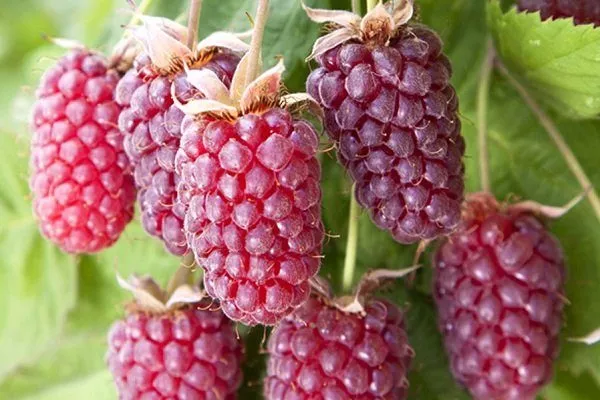
The color of blackberries can range from pink to dark purple.
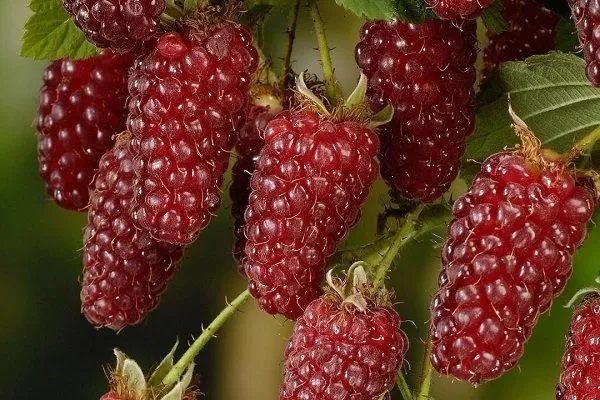
The taste of blackberries with a hint of sourness
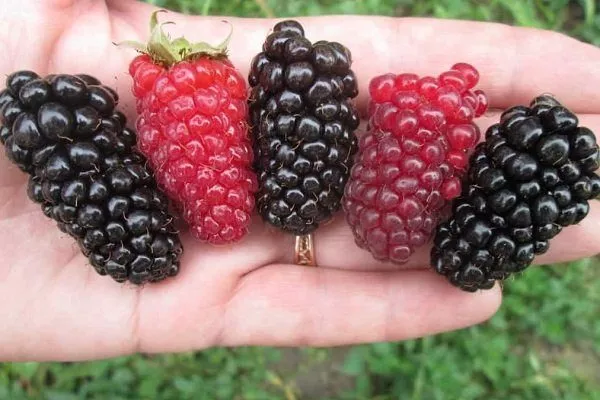
Blackberries are larger than regular raspberries.
History of appearance
Blackberries are a hybrid created by crossing two popular berry crops—raspberries and blackberries. The hybrid's berries taste similar to both parent varieties. However, unlike sweet raspberries, blackberries are always slightly tart.
The hybrid was first developed in America in 1883, in Santa Cruz, California. It originated in the garden of a certain James Logan, a judge who, in his spare time, was involved in breeding berry crops.
In honor of its creator, the hybrid is often called the loganberry. The new variety failed to gain popularity due to its poor taste. However, the resulting plant was easy to maintain and productive, and it began to be used to develop new hybrids.
Blackberries: Key Characteristics
When developing new blackberry varieties, breeders primarily aimed to improve the raspberry's properties. The hybrid is very similar to the common raspberry, but surpasses it in many characteristics, including frost resistance, drought tolerance, and yield.
Appearance and characteristics of the plant
In appearance, blackberries resemble one of their parent varieties, depending on which one inherits more of its characteristics. The hybrid's external characteristics depend on the variety—the plant can differ in height, berry size, and color.
Hybrid features:
- the bushes are semi-spreading, the branches grow almost parallel to the ground or first upwards and then bend downwards;
- flowers are large, pink or white;
- the roots are powerful, penetrating deep into the ground;
- The color of the fruit depends on the variety.
There are thornless and thornless varieties of blackberries. But unlike blackberries, the hybrid's thorns are small.
Berries
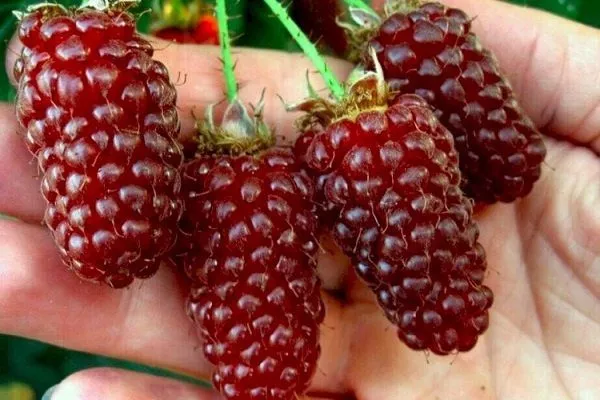
The fruits are large, averaging 10 g. They are arranged in clusters of several. Like raspberries and blackberries, they are composed of small balls. The fruit color ranges from pink to deep purple. The fruit length is up to 5 cm, and the diameter is 2 cm.
Productivity
The yield of a blackberry bush is 3 kg. This is an order of magnitude higher than that of raspberries, which yield approximately 300 g of berries. High yields are a characteristic of any blackberry variety, inherited from the blackberry.
The hybrid begins flowering in early May, and the first berries can be harvested as early as mid-June. Fruiting lasts for about a month.
The number of berries collected depends on how old the bush is – with age, the yield only increases.
What is the difference between blackberries and regular raspberries?
Raspberries and blackberries are very similar in appearance, with leaves and berries that are almost identical—an inexperienced gardener wouldn't even be able to tell the difference. Differences can be noticed upon closer inspection of the properties and characteristics of these crops.
The main differences between blackberries and raspberries:
- the berries are twice as large and in most varieties they are dark in color;
- blooms beautifully – the flowering of raspberry bushes goes almost unnoticed;
- the roots penetrate into the soil much deeper;
- the berries are more sour;
- the structure of the fruits is denser - they do not release juice when washed;
- a blackberry bush lives up to 10 years, raspberry roots die off after 3-4 years;
- large volume of deciduous mass;
- need for pinching;
- The bushes are taller and more spreading – the stems reach 3-4 m.
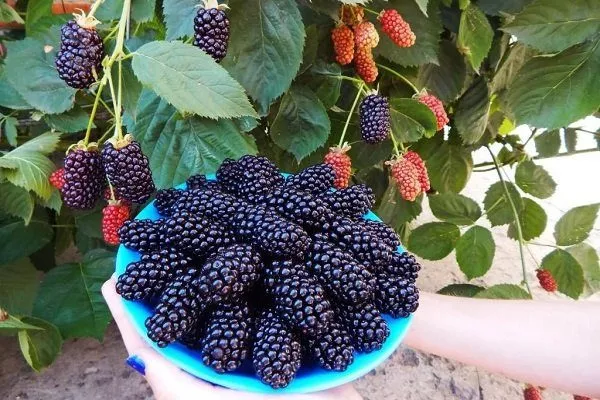
Advantages and disadvantages
Blackberries are significantly less common than raspberries—they can't match the sweet berry's flavor, which has long been a staple in our gardens. However, this crop has its merits, making it worth growing in your garden.
Pros:
- undemanding to growing conditions and unpretentious in care;
- high yield;
- large berries - they are much larger than those of raspberries;
- the plant looks decorative throughout the growing season;
- tolerates moisture deficiency well.
Cons:
- there is a sour taste;
- loose fruits are quickly crushed and spoiled, and are poorly suited for transportation;
- in the summer heat, the berries “bake”, lose their juiciness, become dry and wrinkled;
- the stems are covered with thorns, which interfere with the collection of fruits;
- the bushes are tall and spreading, they have to be tied to trellises;
- grows quickly - plantings need to be thinned out.
The benefits and harms of blackberries
Blackberries are low in calories, with 100 grams of fresh berries containing 55 kcal. They are rich in vitamins PP, E, A, C, and K, as well as provitamin A, and micro and macronutrients such as iron, selenium, calcium, sodium, copper, potassium, manganese, and phosphorus.
Useful properties of berries:
- improve overall well-being;
- prevent constipation;
- relieve gases and reduce intestinal spasms;
- thanks to antioxidants, they help fight cancer and heart disease;
- improve bone density;
- reduce menstrual pain;
- prevent depression.
Raspberries are beneficial for people with diabetes, as they effectively lower blood sugar levels.
In folk medicine, not only the raspberry fruit but also its leaves and roots are used. Infusions are taken for colds and nervous irritability, while decoctions of the roots are used for varicose veins.
Ezhemalina is contraindicated for:
- high stomach acidity;
- individual intolerance.
You can see what blackberries look like and learn about their characteristics in the following video:
Popular varieties
| Name | Disease resistance | Flowering period | Soil requirements |
|---|---|---|---|
| Boysenberry | High | Beginning of May | Fertile, well-drained |
| Darrow | Average | Mid-May | Light, loamy |
| Tayberry | High | End of April | Fertile, with neutral acidity |
| Texas | Average | Beginning of May | Fertile, well-drained |
| Thornless Thorness Loganberry | High | Mid-May | Light, loamy |
Blackberries come in dozens of different varieties, each with distinct appearance and characteristics. Below are the most popular hybrid varieties, each of which will be a worthy addition to your garden:
- Boysenberry. A frost-hardy variety with high immunity. The berries are dark red, large, and delicious. A single bush can produce up to 7 kg of fruit per season.

- Darrow. The shoots grow up to 3 m long. The berries are oblong, dark crimson or even black. They weigh 10 g. The yield per bush is up to 10 kg.
- Tayberry. An early variety with large, red, delicious berries. The shoots reach 3-4 meters in length and bloom with large pink flowers. The downsides are the thorns and short shelf life. One bush produces up to 5 kg of fruit.
- Texas. The shoots reach 5 m in length. The bush height is 2 m. The berries are larger than average, weighing up to 12 g. The yield per bush is 8 kg.
- Thornless Thorness Loganberry. A medium-sized bush with small shoots. It bears fruit until frost. The berries are cone-shaped, large, deep red, and sweet and sour. Yields up to 10 kg per bush.
Landing
The planting techniques for all three crops—raspberries, blackberries, and their hybrids—are virtually identical. Blackberries thrive, so planting them is straightforward. The key is to follow the recommended planting pattern to ensure the bushes don't become crowded.
Optimal planting times
Blackberries are planted at the usual time for berry crops:
- in spring they are planted before the buds open, in temperate latitudes this period falls in April;
- in the fall - a few weeks before the frost, the seedlings must have time to take root before they arrive.
In northern latitudes, planting begins a couple of weeks later than in temperate climates. The timing of planting is influenced not only by the regional climate but also by the current weather. The hybrid takes root well, so it can be planted at any time, even in summer. The main thing is to avoid extreme heat.
Choosing a location
Blackberries prefer to grow in partial shade. Sunlight causes the berries to "bake," losing their juiciness and other marketable qualities. However, the bushes shouldn't be grown in full shade either, as their berries will be too sour.
Site requirements:
- protected from the winds;
- well ventilated;
- located on a small hill;
- light and fertile soils.
The crop grows well in loamy soils. It can also produce fruit well in acidic soils, but only with regular application of wood ash.
A couple of weeks before planting, dig the plot to the depth of a spade, removing weed roots, stones, and other debris. If necessary, add sand or clay to heavy clay or sandy soils, respectively. If the soil is infertile, add compost or humus—one bucket per square meter.
Selecting a seedling
Blackberry seedlings are purchased from agricultural stores and garden nurseries; only there are certified planting materials available.
- ✓ Check for at least three healthy roots at least 15 cm long.
- ✓ Make sure the seedling stems are at least 5 mm in diameter at the base.
How to choose a quality seedling:
- Pay attention to the condition of the roots. If they are moist, firm, and well-developed, the seedling is healthy.
- At least two stems should emerge from the roots.
- Under the bark is a green stem. It should have several buds.
For long-term transportation, the roots are wrapped in cloth; they can be kept in plastic film for a couple of hours, no more.
If the seedlings have already been purchased and the weather is not suitable for planting, they are taken to the cellar or dug into the ground.
Landing
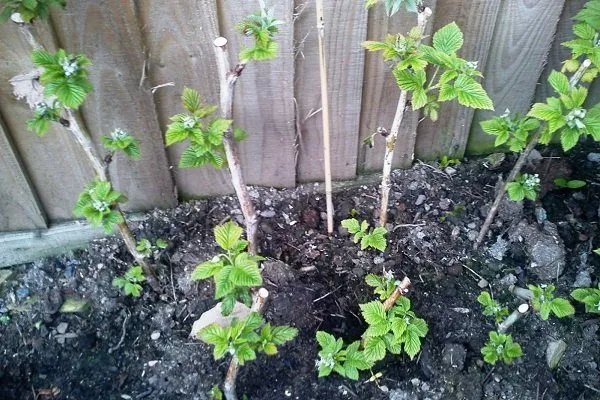
It's recommended to plant blackberries in rows, leaving 1 meter of space between adjacent seedlings. The distance between adjacent rows is approximately 2 meters. This planting pattern allows the bushes to receive sufficient light, which is essential for a good harvest.
Planting order:
- Prepare the seedlings for planting: soak them in water for 24 hours, then dip them in a mixture of clay, manure, and water before planting. For seedlings with closed roots in containers, simply water them and remove them after an hour.
- Dig planting holes measuring 40 x 40 x 40 cm, using a 1 x 2 m pattern. Mix the topsoil obtained from digging the holes with humus. Add a 10 cm layer of pebbles or other drainage material to the bottom.
- Pour a layer of soil on top of the drainage – enough to fill the hole halfway.
- Place the seedling in the center of the hole. Carefully spread out the roots—none should be bent. The root collar should be slightly above ground level.
- Cover the roots with a mixture prepared from the top fertile layer of soil and humus.
- Firm the soil and water. Trim the shoots to 30 cm.
When planting blackberries in the fall, avoid overusing organic matter, such as chicken manure, as this type of fertilizer encourages vigorous growth of the plant's above-ground parts, which reduces frost resistance.
Features of care and cultivation
Any blackberry variety is hardy and easy to maintain, so it doesn't require much effort. The only labor-intensive part is pruning and tying the plant.
Watering and fertilizing
The blackberry-raspberry hybrid is able to withstand dry periods; it requires watering during planting and 2 weeks after.
Blackberries require ample watering only when the berries are forming and ripening, as well as during long periods without rain. The rest of the year, the hybrid grows well without watering; the rainfall is sufficient.
Fertilizer is applied two years after planting, and then every two to three years. There are no special fertilizers for blackberries; the same fertilizers are used as for raspberries.
How to feed a hybrid:
- manure - 3-5 kg per 1 sq. m;
- potassium and phosphorus fertilizers - 20 g of double superphosphate and potassium sulfate per 1 sq. m.
The dosage of fertilizer may vary depending on the type of soil in which the blackberries are grown.
Pruning and garter
Blackberries tend to spread out, and their long shoots sag under the weight of large berries. To ease the strain on the branches, the bush is tied to a trellis. Otherwise, it will spread out, and the berries will become smaller.
The trellis height is at least 2-3 meters. Wire or nylon fishing line is stretched across the supports in five rows. Fruiting shoots are tied to the upper "tiers," and the remaining branches are secured to the lower ones.
Blackberries are pruned regularly:
- In autumn. Pruning is done after the harvest, towards the end of autumn, but before frost sets in. If frost strikes, the branches will become brittle and break when pruned. When pruning, remove all broken, dry, and diseased shoots.
- In the spring. Bushes are pruned after the snow melts. At this time of year, frost-damaged branches must also be removed if the bushes were not covered and still froze. After pruning, the upper shoots are pinched.
You can also learn about blackberry pruning rules in the following video:
Mulching
Mulching is the application of a material to the soil that inhibits weed growth and moisture evaporation. This simple procedure significantly simplifies garden bed maintenance and reduces water consumption for irrigation.
A variety of materials can be used as mulch. You can simply sprinkle sawdust, peat, leaves, etc. on the soil.
Example of two-layer mulching:
- Make the first layer from newspapers or cardboard.
- Sprinkle ash, rotted manure and mown grass on top of the paper.
The mulch thickness is 10-15 cm. The paper will decompose over time, and the remaining components will rot into humus, filling the soil with nutrients.
Reproduction
Blackberries are propagated vegetatively. Being a hybrid, seed propagation is unsuitable, as it doesn't transmit varietal characteristics.
Reproduction options:
- Green cuttings. Harvesting begins in August. 20-40 cm of the tops are cut off and planted in the ground—in a trench 20-25 cm deep. The top is covered with soil. By the following year, each cutting will produce 3-4 new plants, ready for transplanting to a permanent location.
- Lignified cuttings. In the fall, cut shoots 20 cm long, which should have at least two buds. The cuttings are immersed in water for 24 hours and then planted in soil at a depth of 20 cm, leaving two buds above the surface.
- By root cuttings. In spring, the bush is dug up and the roots are divided into 10-15 cm long shoots. These are then planted in the ground and watered. Planting depth is 20 cm.
Autumn care and preparation for winter
In the fall, the crop is prepared for winter. Preparatory measures are especially important in winters with little snow. Bushes are pruned, sprayed, and covered with insulating materials.
- Prune all damaged and diseased shoots at the end of October.
- Treat the bushes with a 3% solution of Bordeaux mixture to prevent fungal diseases.
- Insulate the root system with a 10 cm layer of peat or sawdust.
In autumn, blackberries are treated with a decoction of nettle or horsetail to prevent diseases.
Almost all blackberry varieties are cold-hardy and don't require winter protection, especially in regions with mild winters. However, some varieties are less frost-hardy and require winter protection during their first few years. If the region receives a lot of snow during the winter, this will be sufficient to protect the shoots from freezing.
How to cover blackberries:
- Remove the bushes from the trellises, untying all the branches from them.
- Place the stems along the supports and cover them with peat, sawdust, straw, and fallen leaves.
In the spring, as soon as the weather warms up, the covering is removed. If this is not done in time, the bushes may rot.
Diseases and pests
Blackberries are not prone to diseases. However, under unfavorable conditions, they can be affected by the same diseases as raspberries.
What is wrong with the culture:
- Anthracnose. Brown spots appear on the branches. The cause is a fungus. Affected branches are pruned and burned. The bushes are sprayed with Fundazol or Topsin.
- Gray rot. A whitish coating appears on the leaves and fruits. The bushes are sprayed with fungicides at least 20 days before harvest.
Blackberries can also be susceptible to verticillium wilt, rust, and powdery mildew, which can be controlled with broad-spectrum contact treatments.
Prevention methods:
- In the spring, the bushes are sprayed with a 1% Bordeaux mixture. The treatment is repeated after 10 days.
- In autumn, fallen leaves are raked to destroy pest larvae.
- In autumn, the soil is dug to a depth of 15 cm.
- During budding, the bushes are sprayed with tansy infusion: 2 kg of fresh or 0.7 kg of dry raw material are diluted in 10 liters of water, boiled for half an hour, infused for a day and 10 liters of water are added.
- Once every two weeks, the withered tops are cut off and burned.
- Prevents soil waterlogging.
Blackberries are most often attacked by weevils, raspberry beetles, and gall midges. To prevent infestation, bushes are sprayed with "Karbofos" or "Fufanon" during bud formation.
Harvesting and storage
Blackberries ripen unevenly, so the harvest stretches from July until autumn. The berries are picked only in dry, cloudy weather. They are carefully picked and placed in shallow plastic containers for storage.
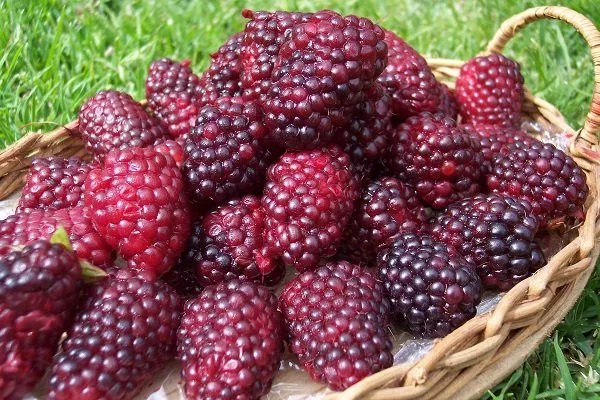
Place no more than 1 kg of berries in one container to prevent choking. Store them in a cool place, preferably in the refrigerator, where they retain their shelf life for up to 20 days. The optimal temperature is 0°C, humidity 90%.
If the blackberries are to be transported, they are picked together with the receptacle - it is pinched off with the fingers or carefully cut off.
Methods of preparation:
- Freezing. Only dry, whole berries are stored. They are laid out on a tray, frozen, and then placed in plastic bags.
- Blanks. Blackberries are used to make jam, compotes, ground with sugar, made into syrups, and preserved in their own juice.
Black raspberries, while not aiming to replace the popular raspberry, are poised to fill the niche of an easy-to-grow shrub that thrives without much care. Their berries aren't as tasty, but they're plentiful, and a harvest is guaranteed—the hybrid bears fruit even in the most challenging conditions.