
The Enrosadira raspberry is a remontant variety bred in Italy, considered a worthy representative of this berry crop. Not only does it boast excellent flavor and enviable agronomic characteristics, but it also produces two full harvests per season.

History of creation
The Enrosadira variety was developed in the Italian province of Trentino in 2004. The selection was conducted at a fruit and berry nursery owned by Gilberto Molari. The work involved crossing two donor plants—T44L04 Lagorai and T35L04, the mother and father plants, respectively.
The development of the everbearing variety took several years. The resulting plants were initially propagated vegetatively, using cuttings, while monitoring the preservation of varietal traits. The variety was patented only in 2013. At the MACFRUT international exhibition, the hybrid was awarded the highest prize—a gold medal.
The hybrid can be grown in almost all climate zones, except the northernmost ones. This variety can grow in the south, central Russia, and Siberia.
Description of plants
The bushes are tall and powerful, reaching a height of 1.75–2.5 cm. The shoots are straight, vigorous, strong, covered with small red-brown thorns.
The leaves are green, oval, and corrugated, with pointed tips and serrated edges. Young shoots are lighter in color—greenish—while older branches are brown or gray-orange and woody. The flowers are small and white, approximately 1 cm in diameter.
Shoots called laterals can grow from the base of the plant or from buds located underground, each bearing 20-30 berries. The lower the shoot, the longer it grows and the more berries it produces. The roots are powerful and penetrate deep into the soil, allowing the plants to survive prolonged droughts.
- ✓ The shoots have a characteristic red-brown tint of thorns, which distinguishes them from other varieties.
- ✓ The berries retain their shape and do not leak during transportation due to the dense structure of the pulp.
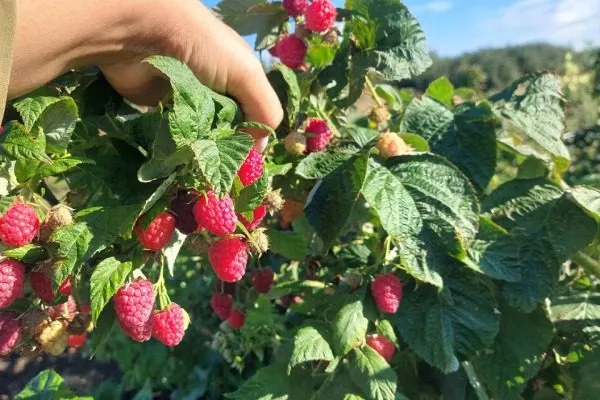
Description of fruits
The Enrosadira raspberry produces large, bright red, elongated conical berries. Each berry is 3 cm long and 2 cm wide, weighing 8-12 g. They are uniform in size and slightly pubescent. The drupes are closely packed and contain few seeds.
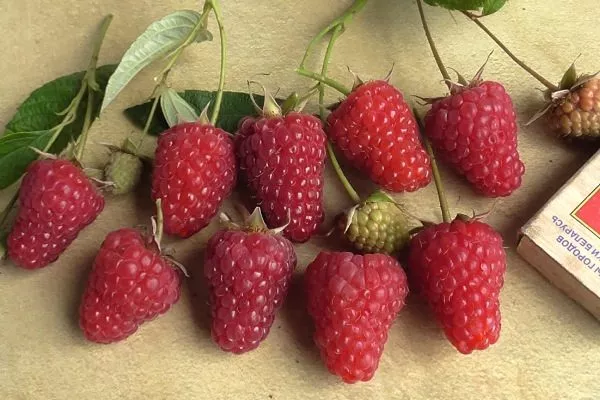
The taste and purpose of berries
The berries' flesh is meaty and juicy. Ripe fruits have a distinctive aroma. The flavor is sweet and pleasant. The berries are ideal for eating fresh, making desserts, jams, and compotes.
Ripening time
The Enrosadira raspberry is a mid-late variety. The berries ripen in July-August. The fruiting period lasts approximately 60-70 days. During this period, the harvest is collected two or even three times. About 70% of the berries ripen on the previous year's canes.
In June, two-year-old branches begin to bear fruit, especially in southern regions. The autumn harvest takes longer. The berries ripen earlier in tunnels than in the open ground.
Productivity
This hybrid is considered a high-yielding variety, with one bush capable of producing up to 1.3 kg of berries per season. In commercial cultivation, up to 25 tons are harvested per hectare. Fruiting begins in the first year after planting, but berries are still scarce at this stage; the bushes begin bearing fruit fully in their second year.
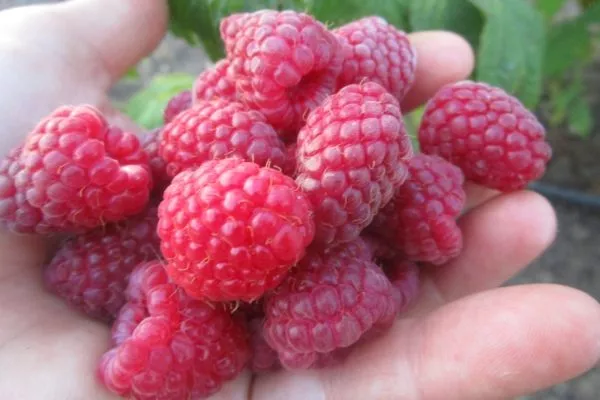
Other characteristics
This variety is distinguished by its frost resistance. Mature bushes can withstand temperatures down to -26°C. Thanks to this frost resistance, the variety survives the winter well.
This remontant raspberry tolerates drought well and has high immunity; it is almost not susceptible to rust and late blight root rot.
Pros and cons
The Enrosadira everbearing raspberry has almost no drawbacks, but it has numerous advantages. However, it's best to learn about all the pros and cons before planting.
Pros:
Cons:
Landing features
The yield of Enrosadira raspberries, their growth and development, largely depend on how correctly the planting was carried out.
- ✓ The soil pH level should be strictly within 6.0-6.5 for optimal nutrient absorption.
- ✓ The depth of groundwater is at least 1.5 m to prevent root rot.
How to plant Enrosadira raspberry correctly:
- Raspberry bushes will grow best in well-lit areas protected from drafts.
- It is not recommended to plant raspberries in place of tomatoes, peppers and other nightshade crops.
- Recommended soils are sandy loam and loamy, with neutral acidity and good aeration.
- Planting can be done at any time of the year, but the best time for this event is considered to be spring (April) and autumn (September-October).
- Trenches are dug for planting. The optimal depth is 40 cm. Space between bushes is 50-70 cm, and 2 m between rows.
- The soil is pre-fertilized with organic and mineral fertilizers (it is better to use special complex compositions for berry crops).
- After planting, the root collar should be at ground level; if it is located higher or lower, the plant will not develop.
- Planted raspberry seedlings are watered with settled water so that it flows down the slope of the furrow.
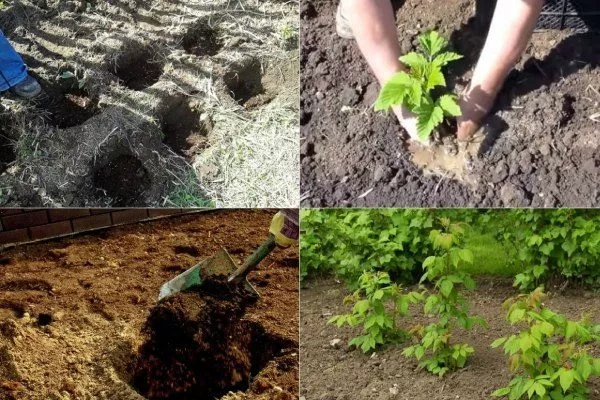
How to care?
The Italian Enrosadira raspberry requires basic care: watering, fertilizing, pruning, tying, and preparing for winter. All these steps must be done promptly and correctly.
Care features:
- Despite its drought tolerance, the Enrosadira raspberry requires regular watering; otherwise, the leaves will dry out and the fruit will shrink and wilt. If there's plenty of rainfall, watering isn't necessary, but during drought, watering should be done about once a week.
- Fertilizers are applied four times per season: in early spring, then when the buds open, then during budding, and before winter. The first three applications are nitrogen-based, and the last one is potassium-phosphorus-based.
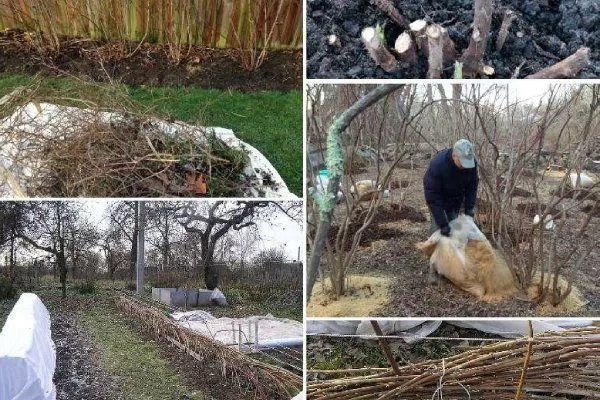
- In the fall, annual plants are pruned completely, and new shoots grow in their place in the spring. Two-year-old bushes are pruned in stages. In March, sanitation and shoot thinning are carried out. In May, the tips of young shoots are shortened, and after fruiting, last year's branches are cut back to the ground.
- Staking the shoots, for example, on a trellis, helps prevent breakage. This also makes berry picking easier and reduces the risk of fungal infections.
Diseases and pests
When growing Enrosadira raspberries, preventative measures are much more beneficial than curative ones. They help prevent yield declines and protect the raspberry bush from a wide variety of diseases.
Basic preventive measures:
- Spraying with fungicidal and insecticidal preparations.
- Using only high-quality planting material.
- Inspect the bushes for disease symptoms and, if necessary, treat them by timely spraying.
- Soil treatment with 1% copper sulfate.
- Pouring boiling water over the soil helps destroy the larvae of many pests.
Harvesting and storage
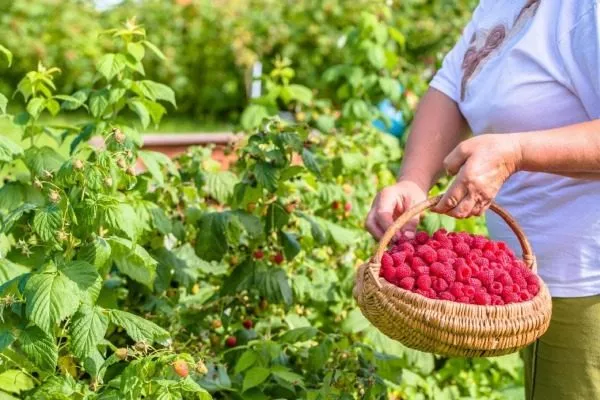
Raspberry harvesting begins when they are fully ripe. No tools are used. Ripe berries are easily separated from the branches; the main thing is not to squeeze them with your fingers. The harvested berries are immediately sorted, and the best berries are placed in a basket or container.
Reproduction
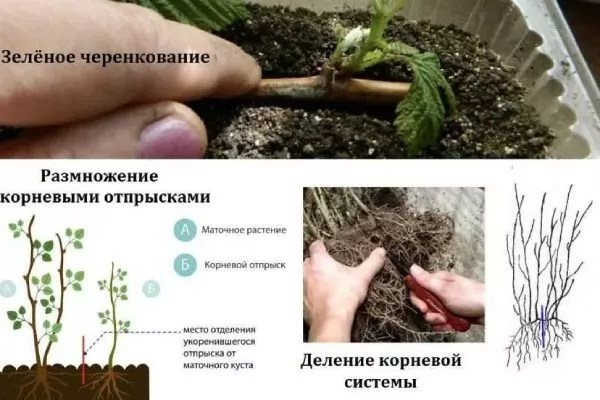
Enrosadira raspberries can be propagated by any vegetative method—cuttings, divisions, or root suckers. Young seedlings are dug up in the summer, after weeding. Propagating raspberries by cuttings is more difficult and is only used by experienced gardeners.
Mature bushes can be propagated by division. This procedure is carried out in the fall. The divisions are planted in pre-prepared furrows. Although Enrosadira is a hybrid, when propagated vegetatively, this raspberry retains all its varietal characteristics.
Reviews
The Enrosadira raspberry is a promising variety capable of providing its growers with berries for a long time. This hybrid combines all the best qualities of raspberries—it's delicious, productive, and easy to grow.