
One of the main characteristics of black raspberries is their ease of care, as the plant presents few difficulties. However, before beginning to grow raspberries, inexperienced gardeners should learn all the intricacies and peculiarities of planting and caring for this variety.
Description of black raspberries
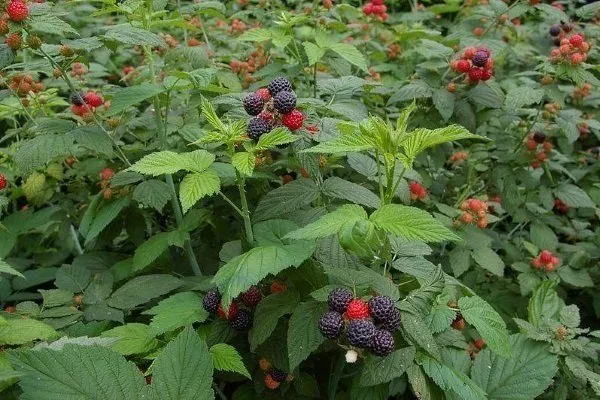
Black raspberry gets its name from the distinctive inky hue of its fruit. The bushes are very lush, producing large, dark berries. A distinctive feature of this variety is its high-quality, tasty harvest, which is abundant, unlike the more common red and white raspberry varieties. This perennial shrub, with shoots ranging from 1 to 3 meters in height, is a distinctive feature of this variety.
The culture has certain characteristics:
- Strong roots that don't produce excess shoots. Therefore, individual bushes can be planted near other plants without worrying about being destroyed.
- The bush bears fruit early and is highly resistant to drought. The raspberry patch can be planted in sunny and open areas. It will not dry out in hot summers.
- The berries hold on tightly enough that even after they are fully ripe, they will not fall to the ground if they are not picked in time.
- It has strong resistance to various types of diseases and is extremely rarely attacked by insects.
- They don't require any complex or special care. Regular feeding and moderate watering are sufficient. However, not all varieties of chokeberries tolerate extreme cold. It's recommended to tie up the bushes before winter, otherwise the delicate shoots may break under the weight of the snow.
- Flowering begins no earlier than the plant's second year of growth. The flowers are quite large, forming large clusters. Each flower has five white petals and green sepals. A distinctive feature of the flowers is the presence of numerous stamens.
- The petals are oblong, the sepals are triangular.
- Flowering begins in late spring or early summer (this depends on when the plant was planted). Flowering lasts approximately 14 days.
Where does it grow?
Black raspberries can grow both in gardens and in the wild. They are most commonly found in the forests of eastern North America. Their primary habitats are forest edges and deciduous forests. They can also be found in open areas, but are extremely rare.
Only those fruits that have acquired a rich black color can be collected.
Differences from blackberries and red raspberries
The main distinguishing features, when compared to red raspberries and blackberries, are:
- Fruit. The interior is hollow. It's easily picked, leaving the receptacle hanging on the branch. Blackberries will remain hollow, with both the fruit and the receptacle being torn off at the same time. Black raspberries are hemispherical in shape, which distinguishes them from regular red raspberries.
- Ripening period. There are also differences in ripening time, as blackberries ripen significantly later. Some varieties have similar harvest seasons.
- Appearance. If you examine the plants closely, you'll notice differences in the stems. Blackberries have long, green stems and sturdy thorns. Blackberries grow very densely and can resemble coiled wire. The branches of black raspberries are shorter and thinner, unlike those of the classic red variety.
Dark berries have a sweeter flavor and are juicier. A single bush can yield approximately 4 kg of ripe fruit per summer. The berries are not only very large but also firm enough to withstand bruising during transportation. Black raspberries contain many valuable acids and a wealth of vitamins.
Black raspberries make incredibly delicious jams and preserves. These delicious treats make a wonderful vitamin-rich addition to tea.
Varieties and their characteristics
There are many varieties of black raspberries. When choosing a particular variety for your garden, consider its ripening time, characteristics, fruiting characteristics, and flavor.
| Name | Height of shoots | Productivity | Frost resistance |
|---|---|---|---|
| Cumberland | 1-3 m | 5 kg per bush | High |
| Coal | up to 3 m | High | High |
| Bristol | up to 3 m | Abundant | Low |
| Black Jewel | up to 3 m | High | High |
| Boysenberry | up to 3 m | High | High |
| New Logan | up to 2 m | Early ripening | Low |
Cumberland
The distinctive features of this variety are its vigorous, arching stems. The branches are covered with small, densely spaced thorns. The fruits are very sweet, quite large, and taste similar to blackberries.
Its main advantage is its abundant harvest—one bush produces approximately 5 kg of aromatic fruit. Cumberland tolerates even severe frosts well, but does not like excessively waterlogged soil.
Coal
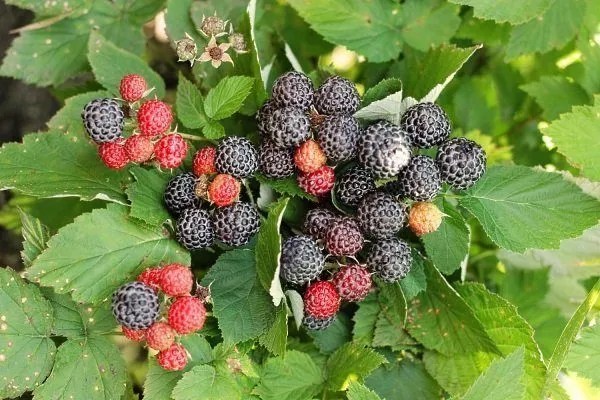
This variety is an early one, with shoots that can reach almost 3 meters in height. The stems are covered with small spines and a semicircular arch. The Ugolek variety is characterized by its small, juicy berries.
With proper care and good growing conditions, it can produce high yields. It is resistant to various pests and diseases and easily survives frost.
Bristol
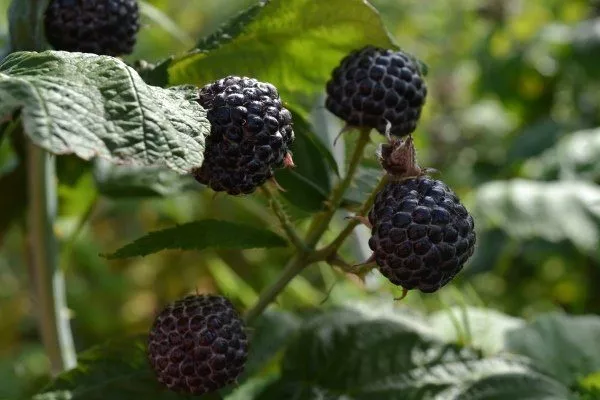
This berry variety is one of the best, producing a bountiful harvest. The shoots can reach 3 meters in height, and the fruits are rounded, with a slight blue tint visible on the surface.
Bristol is a juicy and very sweet variety. When growing it, keep in mind that it has low frost resistance and prefers open, sunny locations.
Black Jewel
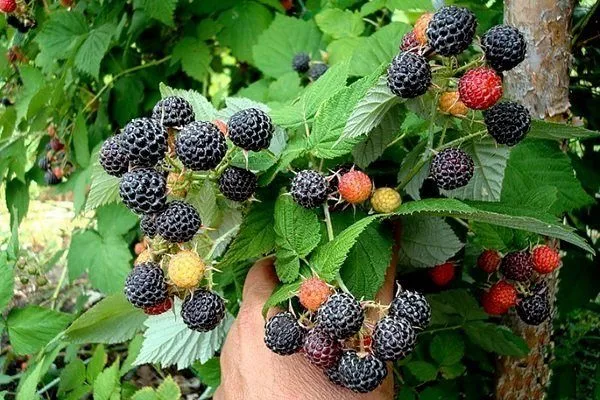
This raspberry variety is considered high-yielding and easily tolerates periods of drought and frost. The fruits are sweet and quite firm. Once fully ripe, they do not fall off, do not bake in the sun, and retain their flavor. One drawback of this variety is its low resistance to powdery mildew.
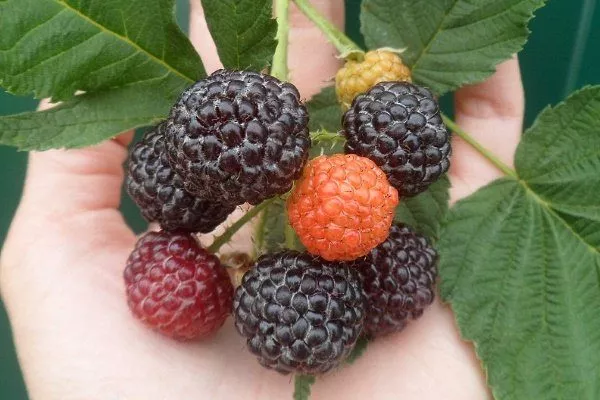
Boysenberry
Raspberry bushes can reach 3 meters in height. The main characteristic of this variety is the complete absence of thorns on the stems. The fruits are oblong, dark blue, and have a glossy sheen. The plant easily tolerates frosts and is virtually disease-free.
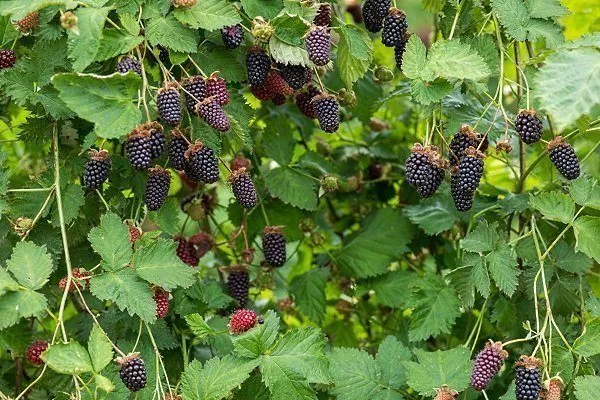
New Logan
This variety is very similar to Cumberland, but the fruit ripens much earlier. The berries have a glossy sheen and taste similar to blackberries. The stems reach 2 meters in height and have stiff thorns. It requires protection before wintering, as it is sensitive to even light frosts.
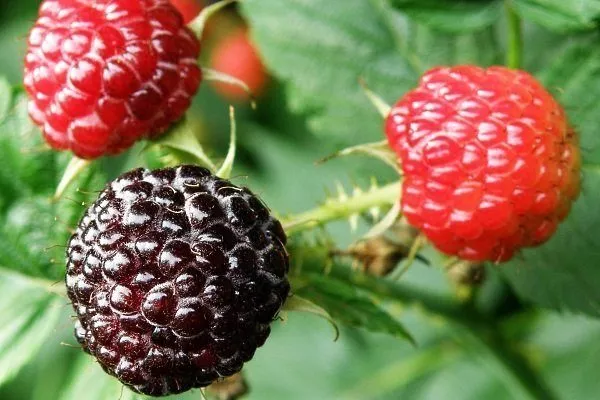
Pros and cons of black raspberries
Black raspberries are very popular among gardeners due to the following positive qualities:
- high yield – one bush can produce up to 5 kg of delicate berries per season;
- a more delicate, sweet and aromatic variety, in contrast to the classic red;
- the fruits do not fall off, even after full ripening;
- long and powerful roots;
- ripens much earlier than red raspberries;
- the bush does not grow with the help of roots;
- tolerates long-distance transportation well and can be stored for several days without losing its flavor;
- the fruits can be frozen for the winter or used to make jam;
- can grow in almost any soil;
- Regular consumption of black raspberries helps to minimize the risk of developing cancer;
- rarely susceptible to diseases, most pests do not affect it;
- tolerates dry and hot summers well.
One of the disadvantages of black raspberries is their poor frost resistance. Therefore, before winter, the plants need to be insulated with a covering material.
Beneficial properties
This berry is not only incredibly tasty but also a valuable source of beneficial vitamins. It can be used to combat various colds.
Black raspberries have the following beneficial properties:
- heavy metals are removed from the body;
- blood pressure readings decrease;
- hemoglobin in the blood increases;
- the walls of blood vessels are strengthened;
- the likelihood of malignant tumor formation is minimized;
- vision improves;
- cholesterol levels are reduced;
- improves the condition and appearance of the skin.
Preparatory work before planting
Black raspberries are easy to care for and can grow in virtually any soil type. To maximize your harvest, consider a few planting considerations.
Deadlines
The best time for planting is early spring. Of course, the procedure can be carried out in the fall, but the plants don't always have time to harden before frost sets in. As a result, the seedlings may not survive the winter and die.
Selecting a location and preparing the soil
A well-lit, sunny location is ideal, as the plant does not tolerate even slight shade. Plant black raspberries as far away from red raspberries as possible, otherwise the plants may cross-pollinate, resulting in red or purple berries instead of black ones.
- ✓ The optimal soil pH should be in the range of 5.5-6.5 to ensure better absorption of nutrients.
- ✓ The soil must be well-drained to avoid waterlogging and root rot.
It's important to choose an area of the garden where the groundwater is as far below the surface as possible. It's best to plant the plant in fertile, loose soil, at a slight elevation.
Preparation of planting material
No special preparation of the seedlings is required. Simply inspect each plant to ensure there are no damages to the roots. Then, gently straighten the roots, and you can begin planting.
Landing features
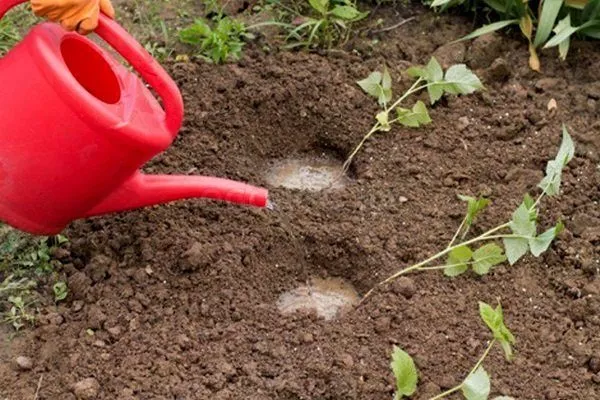
How quickly a seedling will take root depends on how well it's planted. The following steps are sufficient:
- Prepare a hole for planting, no more than 55 cm wide and about 45 cm deep.
- Combine ash with humus and fill the bottom of the planting hole, then add water.
- Place the sprout in the hole.
- You need to wait until the water is completely absorbed into the soil.
- Cover the plant roots with a mixture of sand, complex fertilizers and soil.
- Make sure that the soil does not cover the trunk collar.
- At the end, be sure to water the plant again.
What kind of care is required?
This berry is easy to care for, so even novice gardeners can grow it. Just follow a few simple rules:
- See you off soil mulching After the seedling has been planted, use sawdust, manure, or pre-dried grass.
- Don't forget to water regularly, especially during the ripening period. Berry size is directly affected by watering frequency. A drip irrigation system is best.
- The branches grow very quickly and can reach a height of 3 meters, making them brittle. Staking them to a trellis will help prevent them from breaking.
- Regularly loosen and weed the soil, removing weeds that can choke out the crop and take nutrients from the soil.
- Prune raspberries at least twice a year. Summer pruning will increase yields by cutting back shoots at their growing point. Fall pruning will help prepare the plant for winter by removing all old and dead branches.
- In the spring, apply nitrogen-containing fertilizers—for example, natural organic matter (cow manure or chicken manure) works well. Synthetic fertilizers, such as urea, can also be used.
- At the beginning of spring, apply nitrogen fertilizers (for example, urea) at a rate of 30 g per bush.
- During the flowering period, add potassium-phosphorus fertilizers to improve fruiting.
- After harvesting, add compost or humus to restore the soil.
Wintering of bushes
There are several different methods for preparing bushes for the coming winter. The choice of a specific method depends solely on the climate of the region where the crop will be grown.
To prepare raspberry bushes for cold weather, it is worth using the following tips:
- If the winter is mild and snowy, leave the bushes on the supports and secure each stem securely. Under these conditions, heavy snowfalls will not harm the plant.
- If there is no snow throughout the winter, use a layer of spruce branches or mulch to protect the berry bushes.
- In case of sudden temperature changes and winters with little snow, use special agrofibre for covering.
- During long, cold winters, bend the bush's shoots toward the ground, but not too low. Secure the stems in this position, then cover them with snow during the first rainfall. This layer of snow will protect the stems from freezing.
Propagation of black raspberries
It's recommended to begin propagating black raspberries towards the end of summer. Layering can be used, where the bush's branches are pulled out and bent into an arc, then pressed into the ground. If using this method, it's necessary to prepare trenches no more than 10 cm deep beforehand.
The procedure for propagating shrubs using the trench method is very simple to perform:
- Carefully place the stems into the prepared trenches and sprinkle a layer of soil on top.
- Make sure that the active growth point remains above the soil surface.
- Before the onset of frost, sprinkle the stems with a layer of sawdust and peat. This will provide additional insulation.
- In the spring, carefully separate the rooted shoots and then plant them separately.
In this video, a gardener explains how to propagate black raspberries:
Diseases, pests and their control
The plant is rarely susceptible to disease or insect attack. Verticillium wilt is the most dangerous, as it is incurable and requires complete destruction of the affected plant.
Constant rain and overwatering can promote the development of various types of fungi. Therefore, it is recommended to plant the plant in slightly elevated areas and in well-drained soil.
Among pests, the most dangerous is the cockchafer, which can cause serious damage to bushes, eventually leading to their wilting.
You can prevent various diseases and pest attacks with simple preventative measures. Treating bushes several times a year with fungicides and complex insecticides is sufficient. Herbal infusions and ash are also beneficial.
Harvesting
You can begin harvesting once the berries have acquired a uniform, rich color. Place the berries in clean, dry containers and store in the shade immediately after picking. They can be refrigerated or transported. The berries easily withstand long-distance transport, maintaining their attractive appearance and flavor.
Reviews of the variety
Black raspberries combine the best qualities of both the classic red raspberry and the blackberry. The fruits are incredibly tasty, juicy, aromatic, healthy, and large. This berry produces large yields and requires little care. Even gardeners with little experience can easily grow this crop in their garden.