
Brusvyana is a remontant raspberry variety. Its bushes are so vigorous and robust that gardeners often refer to it as "tree raspberry." Let's learn about the specifics of planting and growing Brusvyana.
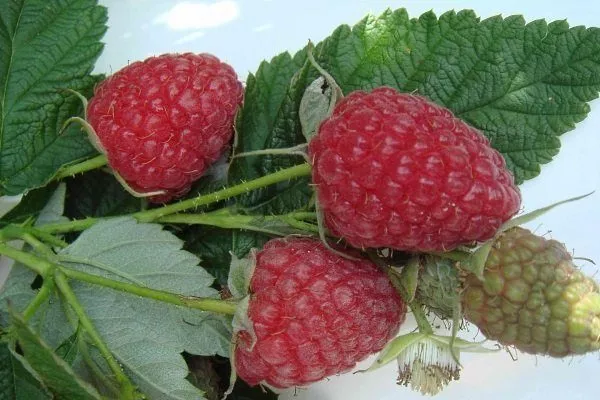
remontant raspberry variety "Brusvyana"
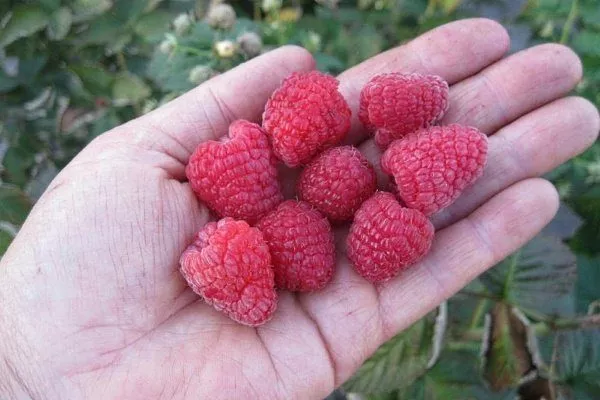
Brusvyana raspberries are easy to transport and do not get crushed or runny.
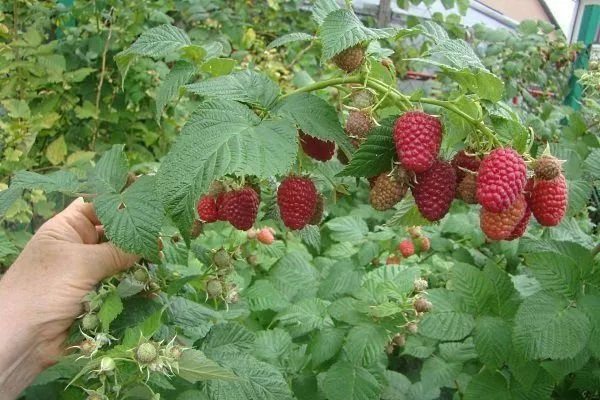
The fruiting period of the Brusvyana raspberry variety extends until the autumn frosts
Description of bushes and berries
| Name | Bush height | Weight of berries | Yield per bush |
|---|---|---|---|
| Brusvyana | 2-2.5 m | 15 g | 5-8 kg |
Brief botanical description of Brusvyana:
- Bushes. Tree-like, vigorous, and dense. The stems are erect, with few thorns. They are distinguished by their exceptional strength, and even at a height of 2-2.5 m, they do not require staking. The bush has numerous stems, each up to 4 cm thick. The root system is located primarily in the upper soil layer, with small root suckers.
- Fruit. Large, cone-shaped, and slightly elongated, each berry weighs approximately 15 g. The fruit is bright red and matte. The fruits are densely packed on the shoots.
Brusvyana is one of the largest-fruited remontant varieties.
The history of the variety and the beginning of its cultivation
The variety is named after the Brusvyana nursery of the same name (Zhytomyr Oblast, Ukraine). Breeding work began in 1993. The variety was obtained by crossing a Polish variety with local varieties. It took the author 15 years to achieve his goals. The variety is actively grown commercially not only in Ukraine, but also in Russia, Belarus, and Kazakhstan. The variety is not listed in the State Register of the Russian Federation.
Productivity and taste
With proper care, this variety produces two or three harvests. Fruiting begins in June and continues until mid-August. The first harvest grows on two-year-old shoots, the second on one-year-old shoots. Fruiting is long—approximately 80-100 days—and ends with the onset of frost. The annual yield of one bush is 5-8 kg of raspberries. The fruits have a distinct raspberry flavor with a slight tartness.
Watch the video below for a review of the Brusvyana raspberry variety:
Resistance to diseases and natural conditions
Some sources claim that Brusvyana is resistant to a wide variety of microbes, fungi, and pests. This is an exaggeration; the variety is susceptible to diseases like any other raspberry, but it does have genetic resistance to most berry diseases.
Description of raspberry bush diseases (with photos) is presented Here.
Brusvyana is highly frost-resistant. The bushes easily survive cold, snowless winters. The critical temperature is -30°C. The variety's relationship with moisture is ambivalent. On the one hand, Brusvyana does not tolerate drought and requires regular watering. On the other hand, excess moisture leads to root rot and the death of the plant.
What should you pay attention to when buying seedlings?
To avoid getting diseased planting material, it is better to buy seedlings from nurseries.
Features of choosing raspberry seedlings:
- Good seedlings have strong, well-developed roots, free from damage and rot. To check the freshness of the roots, simply scratch one of the root shoots with your fingernail – there should be fresh wood there. If there is mold or a dry root under the bark, don't take the seedling.
- The stems should be green, strong, and no more than 20 cm long.
- The best option is seedlings in containers; they take root better and can be planted at any time.
- ✓ The presence of at least 3 live buds on the stem.
- ✓ No signs of fungal diseases on the root collar.
Pros and cons of the Brusvyana variety
Brusvyana is a wonderful raspberry, surpassing many popular varieties, both domestic and foreign, in many characteristics.
Pros:
- Long fruiting period – from June to October, the variety produces 2-3 harvests per season.
- Excellent fruit characteristics. The berries grow very large, beautiful, and aromatic.
- The stems and shoots are very strong and can support a large mass of berries, without bending to the ground or breaking off.
- High yield, which with proper agricultural technology reaches significant values, makes the variety good for commercial cultivation.
- High heat resistance – berries do not lose their marketable appearance and taste during extreme heat.
- Easy to care for and highly winter hardy.
- Resistance to diseases and pests.
- The fruits do not fall off - the drupes hold tightly and do not fall off even in strong winds.
- Sparse root growth means Brusvyana plantings spread only slightly. However, this characteristic becomes a disadvantage when it comes to propagation.
The variety has some disadvantages, but they are not critical:
- In rainy and cloudy summers, the berries become sour and lose their sugar content.
- When there is a lack of moisture, the leaves dry out and the berries become soft, as if baked.
- Due to the variety's increased moisture requirements, the roots may rot, requiring drainage.
- The matte finish and slight whitish coating on the berries puts off some buyers.
- Due to the heat, the first-harvest berries are juicy and soft, with poor shelf life. But this has its upside: these berries are tastier.
- Many gardeners do not like the specific smell emitted by the bushes.
Choosing a landing site
Many novice gardeners consider everbearing varieties to be super-hardy, so they overlook them. The result is a meager harvest or the death of the berry bush. To fully reap the benefits of an everbearing variety, it's important to choose the right location and provide it with adequate care. When choosing a planting site, it's important to consider the variety's requirements for key growing conditions—soil, moisture, and light.
Lighting
Raspberries require plenty of sun to thrive and produce a productive harvest. Choose the sunniest areas for planting, but be sure to protect them from wind and excess moisture. South-facing sites are preferable.
The influence of lighting on Brusvyana:
- When raspberry bushes lack sunlight, they stretch and lose vigor. This is unacceptable for Brusvyana, as its branches must bear significant loads. Not only are the berries very large, but they also grow in clusters—thick, strong canes are needed to support such a load.
- Sunlight has a positive effect on the flavor of berries—in good light, they become sweeter and more aromatic. In shade, the fruits are slightly sour and not as tasty. With proper watering, the berries are resistant even to prolonged sun exposure.
To prevent the growth of shoots, gardeners dig iron or slate sheets around the perimeter of the berry patch to a depth of 0.5 m.
Soil
Site and soil requirements:
- It is recommended to choose loose, moist soils with mild acidity.
- You cannot create berry gardens in lowlands where rain and melt water accumulates.
- The best soil type is light, fertile soil with neutral pH. If such areas are unavailable, the soil composition is adjusted by making it alkaline and adding any missing elements.
- ✓ Optimum soil pH: 5.8-6.5. If pH is below 5.5, liming is necessary.
- ✓ The depth of the root system is 20-30 cm, which requires special attention to loosening and mulching.
Neighboring cultures
What is recommended to plant raspberries next to:
- An apple tree is the best neighbor for raspberries. The fruit tree prevents raspberry botrytis, which in turn prevents apple scab.
- Dill – increases the yield of berry bushes by attracting pollinating insects.
- Plum, pear, rowan, red and black currant, honeysuckle, roses, peonies, sorrel, basil, barberry, juniper.
Neutral neighbors for raspberries include mint, sage, cabbage, pumpkin, gooseberry, bush beans, lilac, and also many flowers - lilies, cosmos, rhododendron, calendula, carnation, snapdragon.
It's not recommended to plant crops susceptible to the same diseases and pests near raspberries. It's also undesirable to plant crops that produce similarly high levels of toxins nearby.
Unwanted neighbors:
- Shrubs – elderberry, jasmine, sea buckthorn.
- Flowers – iris, nasturtium, marigold.
- Grapes, garlic, parsley, radish.
Pre-landing work
The start of pre-planting preparation depends on the time of planting. If planting is in the spring, the site is prepared in the fall. For fall planting, preparation begins at least a month in advance.
Soil preparation procedure:
- The area is carefully dug to a depth of approximately 30 cm.
- Fertilizers are added during digging:
- Spring planting. Potassium fertilizers and superphosphate are added to the soil at 40 and 50 g per 1 sq. m, respectively.
- Autumn planting. Add humus, bird droppings solution, and compost – 1.5-2 m per 1 sq. m.
- If necessary, adjust the soil composition. If the soil is acidic, add slaked lime, dolomite flour, cement dust, or old plaster. Depending on the soil acidity, apply 150-300 g of the substance to the soil. To improve the soil composition, it is also recommended to add wood ash – 1 cup per 1 square meter.
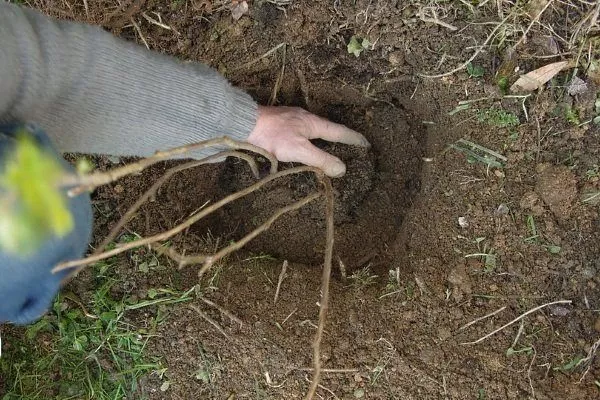
- Prepare holes for seedlings – 50 cm wide and 50 cm deep. For row planting, dig furrows of the same size.
Landing features
To obtain multiple harvests from the everbearing Brusvyana, it's necessary not only to properly prepare the soil but also to plant the seedlings correctly. The variety's main distinguishing feature is its short root system. The roots are located close to the soil surface, so the soil must be as loose as possible.
Deadlines
Raspberries are planted according to the regional climate. There are two planting timing options:
- Spring. Planting should begin before buds appear, around mid-April. The soil should warm to 15°C, and the weather outside should be warm. Recommended for colder regions. Read more about planting raspberries in spring. here.
- Autumn. Plant in October. It's important for the plants to take root before the soil freezes.
Schemes
Bushes require a certain amount of space to develop. Crowding too densely will reduce yields. The optimal spacing between seedlings for trench planting is 60-70 cm, with a maximum of 100 cm. The recommended distance between adjacent rows is 2 m. With this planting pattern, about a hundred bushes will fit on one hundred square meters. With a bush planting pattern, the spacing between seedlings is twice as large.
Landing
The order of planting seedlings:
- On each bush, defective roots, stems and dry shoots are removed.
- After placing the roots in a clay slurry, lower the seedling into the hole or trench. Carefully cover the roots with soil and compact it. Plant to a depth of 8-10 cm.
- The shoot is cut back to the bud, leaving a "stump" 20-25 cm high. Seedlings purchased in containers do not require pruning.
- The planted seedlings are watered. 5-6 liters per bush.
Caring for raspberries
Caring for Brusvyana isn't particularly difficult; even a beginner can easily master its cultivation techniques. The main thing is to provide the berry plant with enough water and fertilizer, and remember to cover it for the winter.
Watering
Water Brusvyana regularly. After each watering, it is recommended to loosen the soil and remove weeds. Watering guidelines:
- Berry bushes are watered more than usual during flowering and fruiting.
- The soil should be moistened to a depth of 40 cm. It's important not to overdo it, as stagnant soil moisture will negatively impact the harvest.
- In a temperate climate, the frequency of watering is every 10-15 days.
- The best time to water raspberries is morning or evening.
- The optimal watering method is drip irrigation. Regular watering, such as spraying the roots with a hose or using a sprinkler, is also acceptable.
- Water at the rate of 20-30 liters of water per bush.
Mulching
Mulching protects the soil from drying out and weed growth. Gardeners recommend using humus, peat, or dry grass.
Top dressing
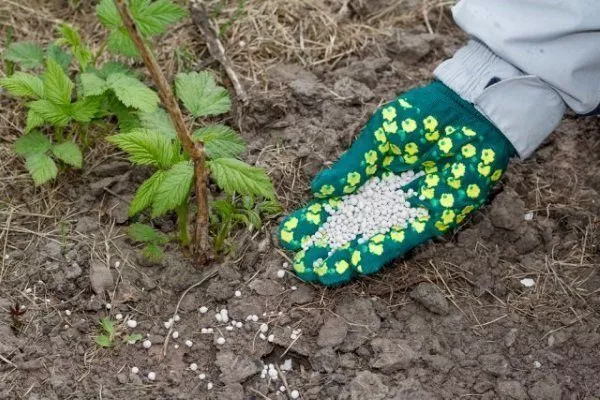
The best fertilizer is organic. Apply it for the first time in the second year after planting. Cow manure or poultry manure are applied 2-3 times during the growing season.
Fertilizer rates per 1 sq.m:
- Nitroammophoska – 60-100 g, or urea – 25-40 g, mixed with double superphosphate – 30-40 g.
- When shoots darken, add potassium – 25-35.
- Chicken manure or mullein diluted 1:20 and 1:10 respectively, add 4-5 liters.
Trimming
Features of raspberry pruning:
- It's best to prune the plantings in early spring. At this time, last year's stems are shortened by 15-20 cm.
- At the end of spring, the plantings are thinned out, leaving no more than 5-7 strong stems on each bush.
- Also, at the end of summer, root shoots are pruned. This is done using a sharp shovel.
- At the end of the season, some gardeners cut the fruiting stems to the ground—this pruning method helps the berry bushes survive the harsh winter. However, this pruning method only results in a single harvest the following year.
Trellis
Brusvyana bushes are tall and branchy, so many gardeners install special supports—trellises—at the planting stage. Posts (2 meters high) are installed at 9-meter intervals, with wire or twine laid between them. The bushes are tied to the supports. The width of the row should correspond to the height of the posts to prevent additional shade for neighboring bushes.
Shelter for the winter
Winter preparation procedure:
- Cleaning up cut stems and fallen leaves.
- Mulching the soil A thick layer of humus, peat, or straw. The layer thickness is about 20 cm.
- If only two-year-old stems are pruned, the young shoots are pressed to the ground after being tied. This should be done before frost sets in; if it's too late, the stems won't bend—they'll break. Covering procedure:
- The leaves are torn off from the shoots.
- The stems are tied into a bundle, bent to form an arch 30 cm high above the ground, and secured with hooks.
- The shoots are covered from above with covering material - spruce branches or hay, which is removed in the spring.
How to propagate a variety?
Brusvyana produces few root suckers or replacement shoots, making propagation difficult. The following propagation methods are recommended:
- By cutting out the center. This method is used 2-3 years after planting. Early in the spring, the center of the bush is cut out. The diameter of the cut circle with roots is 12-15 cm. The roots that remain in the soil produce 10-20 root suckers.
- Cuttings. Green cuttings are prepared—they should have a bleached section in the soil. The above-ground part should be 3-5 cm long. Raspberry cuttings are best propagated by spring, but they also root well in the fall.
Diseases, treatment and prevention
Disease resistance is average. Diseases dangerous to Brusvyana include:
- anthracnose;
- white spot;
- gray mold;
- chlorosis;
- rust.
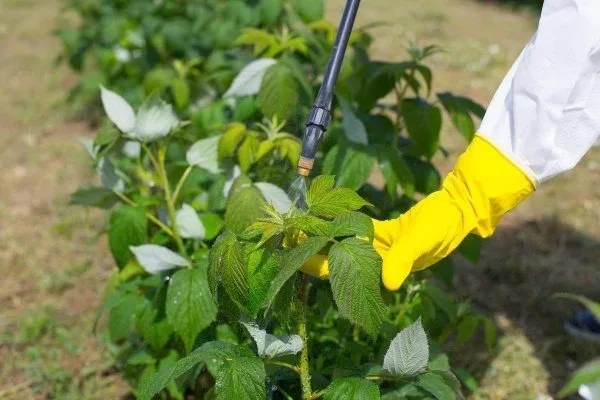
The best method of control is prevention. Spring spraying with fungicides such as Skor and Fundazol, as well as copper sulfate solutions or Bordeaux mixture, is recommended. If large infestations appear, diseased stems are cut out and burned, and the raspberry bushes are treated with the aforementioned products.
Pests, their destruction and prevention
Pest resistance is average. The main pests that threaten this variety are:
- raspberry beetle;
- weevil.
Pests are controlled by spraying—plantings are treated with insecticides such as Aktara, Actellic, and others. However, it's better to prevent pests from appearing—avoid overwatering, apply fertilizer promptly, and weed.
Harvesting and storage
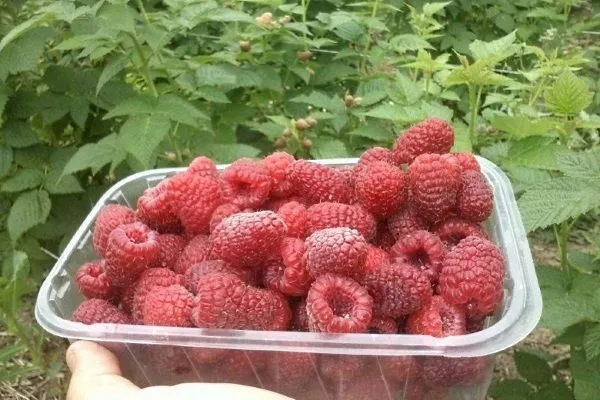
Raspberry picking is painstaking work; the berries must be picked by hand. The fruit is immediately placed in containers for storage or transportation. The containers should be shallow to prevent the berries from bruising under their own weight. Brusvyana berries are firm and not easily bruised, but it's still not recommended to transfer them from one container to another.
If the berries are to be transported, the bottom of the boxes are lined with leaves, such as raspberry leaves. The layers of berries are also interleaved with leaves. Store the berries in the refrigerator for 5-7 days.
Reviews from gardeners about the Brusvyana variety
Gardeners who have harvested one or more crops of the Brusvyana remontant raspberry have praised its high productivity, excellent berry flavor, and low maintenance requirements.
Compared to strawberries and other garden crops, raspberries are easy to grow and require little attention. Moreover, prices for this berry are stable, making it possible to earn a good profit growing them. By mastering simple cultivation techniques, you can reap two or even three generous harvests of everbearing varieties.