
The raspberry with the luxurious name "Brilliantovaya" belongs to a group of modern everbearing varieties with impeccable characteristics: abundant yields, resistance to infections and insects, excellent transportability and shelf life, and universal use. This hybrid is ideal for cultivation in both private gardens and on an industrial scale.
History of selection
The remontant variety was developed in Russia a decade before the turn of the century and received official recognition in 2006. Credit for its creation goes to the outstanding Russian botanist and Doctor of Sciences I. V. Kazakov.
The goal of introducing the new variety was to develop a cultivated plant capable of producing fruit in virtually any climate, which implies high frost resistance for both the bushes and their berries. As a result, the team of breeders presented a unique product for agriculture.
Regions for planting
This variety is suitable for the central regions of our country with a temperate climate. It has average frost resistance, making it suitable for cultivation in the Black Earth Region and the Caucasus, as raspberries adapt to a variety of soil types, including rich and heavier loams and sandy loams.
In Siberia and the Urals, cultivation is not recommended due to the need to protect the bushes for the winter and create the most favorable conditions (heated greenhouse), which entails additional costs.
General idea of the variety
The variety created by Academician Kazakov, along with his other remontant developments, possesses special features, formal properties and key characteristics that will be presented below.
Bush and branches
The bush's compact size allows for planting as little as 60 cm apart. This approach increases yield per hectare and optimizes profitability for professional agricultural businesses.
Detailed morphological features of the variety:
- Appearance: The bush has a low growth rate and a spreading crown, consisting of four strong woody stems that form the trunks and serve as the base for the branches and leaves. The bark on the trunks is light brown with a whitish tint and a soft texture. The shoot diameter can reach 1-1.2 cm. As the tree grows higher above the ground, thorns appear on the woody branches.

- Height: The plant belongs to the dwarf varieties, its height ranges from 100 to 130 cm, but in the southern regions of the country, under favorable conditions and fertile soil, the bush can reach a height of up to 150-160 cm.
- Branching: expanded, with a bush diameter of at least 60-70 cm, covered with strong leaves located on shortened petioles.
- Young shoots: In the spring, graceful green stems begin to sprout from each two-year-old branch, spaced 5-12 cm apart. These shoots, in turn, produce buds, averaging 30 to 45 cm in length, with 10 to 15 buds.
- Mature branches: Over time, approximately 2-3 months after emergence, the shoots acquire a reddish-brown hue. If left unpruned, they gradually become covered with thick bark.
Leaves
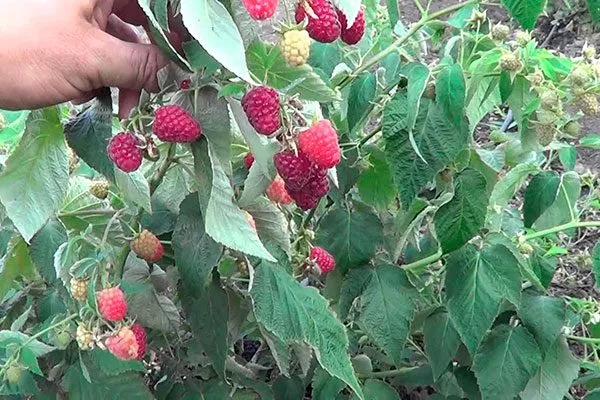
The leaves are narrow blades, slightly curved toward the base, with a pointed tip. Other features:
- The edges of the leaves are lined with teeth that are regularly shaped and perpendicularly oriented.
- The color of the leaves is soft green without inclusions or bright shades.
- During the season, two or three leaves appear on each shoot node.
- The size ranges from 6 to 8 cm in length and does not exceed 3.0-4.5 cm in width.
- The pubescence is average, especially noticeable on the back side, but decreases by mid-summer after the first harvest from the bush.
Flowers
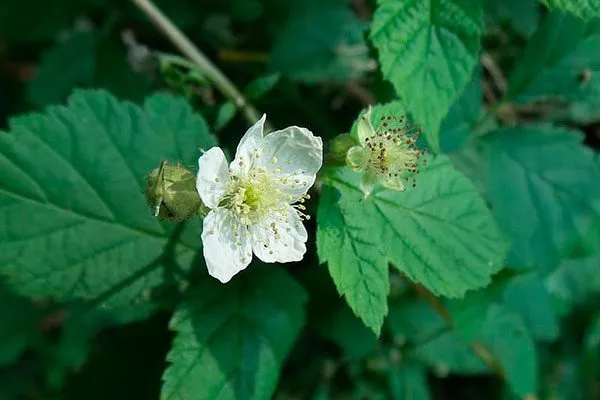
The Brilliant variety has simple flowers. They have a subtle scent that attracts insects for the necessary, complete pollination process. Other varietal characteristics:
- The dimensions are as follows: the height of the receptacle reaches 0.5-0.7 cm, the depth of the flower ranges from 0.3 to 0.6 cm, and its diameter together with the petals can be up to 1.5 cm.
- The petals of this variety are distinguished by a distinct teardrop shape with a rounded tip and a narrow stalk that attaches to the receptacle. Each petal is no more than 0.9 cm long and 0.5 cm wide.
- One flower can have up to five petals open.
- The stamens are filiform, grow and develop irregularly, are attached to the pistil, and vary in length from 0.5 to 1.2 cm. At the end of each stamen is a brown or black tip.
- The receptacle is a powerful spherical formation of a light green tone, which over time turns into the ovary of the first berries.
Fruit
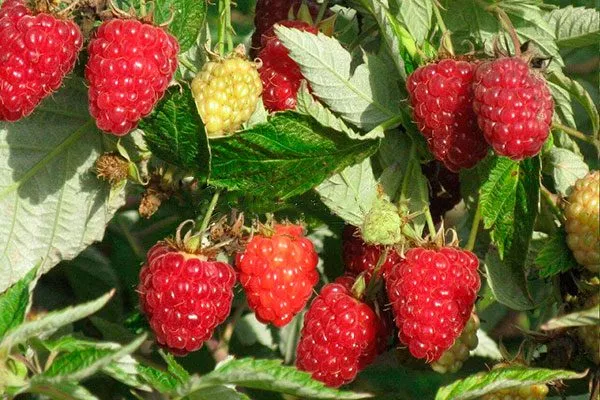
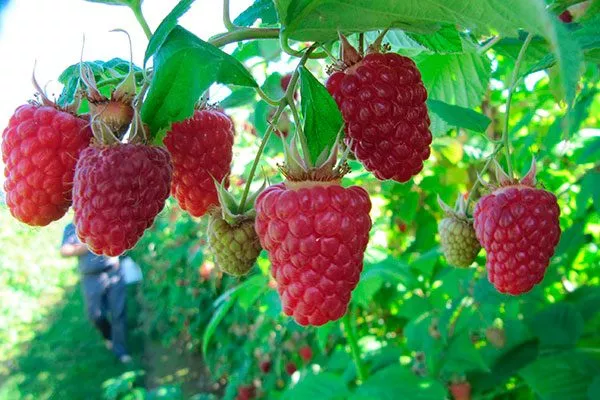
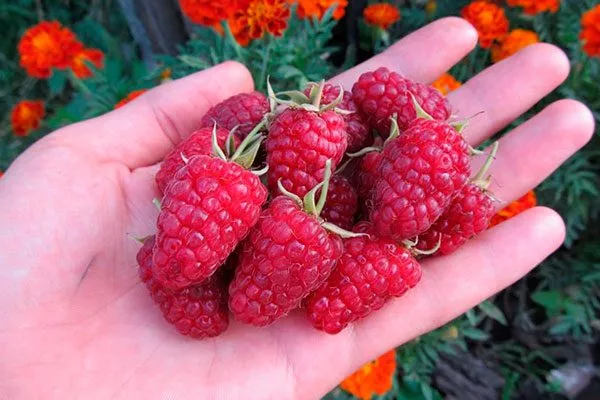
This is a cross between a drupe and spherical segments. Its appearance is impressive, with its velvety texture, dense flesh, and the presence of a small stone. When pressed, it releases a rich reddish juice.
Key parameters of fruits:
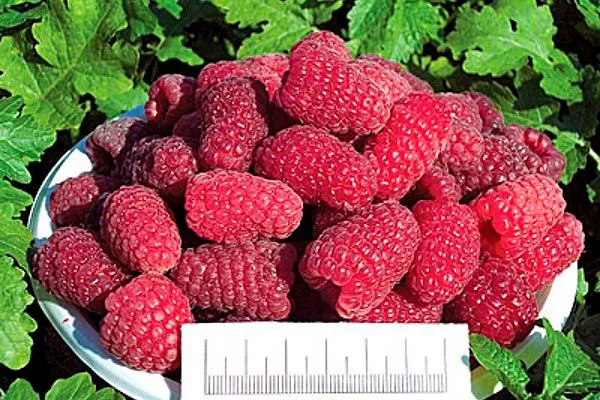
- Dimensions: The length reaches 1.2-1.5 cm, the width is 0.7-0.9 cm, and the internal diameter of the hole after separation from the stalk is a maximum of 0.7 cm, the depth of the fruit is up to 0.9 cm.
- Weight of each berry: fluctuates between 4 and 7 g.
- Form: resembles a regular cone with extensions located at an angle of 35 degrees and a rounded edge.
- Berry tone – A rich, deep ruby that becomes even more vibrant as it matures.
- The taste qualities of the berry are – Initially sweet and sour, the sourness gives way to a pleasant sweet aftertaste as it reaches technical ripeness. Professionals rate the taste of the Brilliant variety 4 out of 5.
- Aroma: The berry is almost imperceptible, but when crushed it becomes more noticeable.
- Preservation of berries: high due to their density and elasticity.
The fruits have the following composition:
- The berries are rich in sugars, including fructose and glucose, which make up to 12%.
- The mucous part, located in the pulp, contains up to 7% cellulose.
- Acidic components such as tartaric, citric and malic acid are present in amounts up to 2.5%.
- The seeds in the berries provide up to 1% of tannins.
- Proteins account for up to 1.2%.
- Fats are present in quantities of up to 0.4%.
- Carbohydrates make up to 5.5%.
- Raspberries are rich in vitamin C, the content of which reaches 20.5 mg per 100 g of product.
Caloric content: despite the sour taste and high acid content, the caloric content of raspberries is slightly lower than that of other types of remontant raspberries - no more than 45 kcal per 100 g of fresh product.
Bones
They are small in size, each containing 15% to 25% essential oils used in pharmaceuticals and cosmetics. The seeds of this variety are easy to grind and do not contain toxic substances.
Resistance to frost and drought
Resistance to low temperatures is limited to -15 degrees, which means that the raspberry bush needs protective covering during the cold months, even in the climatic conditions of the Central zone.
Pollination
Everbearing raspberries are capable of producing fruit without the need for insect pollination. However, the lack of cross-pollination results in reduced yields and small, light-weight berries.
Therefore, to improve fruiting, it is recommended to plant other remontant raspberry varieties that bloom at the same time near the Brilliantovaya plantation. It is also advisable to introduce bees.
Features of fruiting and ripening
This variety produces two harvests of delicious and juicy berries per year. It's considered a late-ripening variety, so the first berry harvest won't begin until early August, and in dry weather, it can last until the second ten days of the month.
The second harvest appears on the bushes shortly before the first frost, usually in October. Thanks to the variety's high frost resistance, even a slight drop below freezing does not threaten the bush, and it continues to bear fruit.
What kind of harvest does it produce?
Under ideal growing conditions, a single bush can yield 2.5-3 kg. The harvest period is limited: in the central part of the country, it lasts no more than 2-3 weeks, and in the southern regions, it is reduced to 2 weeks. After this period, the berries begin to quickly wilt under the influence of sunlight, as they are practically detached from the stem.
To achieve the desired results, you should use various care techniques:
- provide support for the bushes using a trellis, as the plants need constant support;
- perform regular watering, which has a positive effect on the volume of the harvest;
- This variety is sensitive to potassium deficiency, so it is necessary to carefully prepare the soil and apply the necessary fertilizers in a timely manner.
Storing berries
To maximize the yield, it's important to pick the fruit when it reaches technical ripeness. The Brilliantovaya raspberry variety has elastic flesh and retains its freshness well.
To preserve the taste and attractive appearance of the berries, only sturdy containers should be used for transporting and storing them, preferably wooden boxes with ventilation holes to prevent the fermentation process from starting too early.
Other storage features:
- To ensure long-term storage, the inside of the box must be lined with porous paper to absorb the leaking juice and the condensation that forms on it.
- The optimal place for storing berries is a dark basement, pantry, or other room where good ventilation is guaranteed, while the absence of light will help prevent the fruit from drying out prematurely.
- To store berries in small quantities, it is recommended to place them in the refrigerator or evenly distribute them on a cloth in a single layer and leave them on a horizontal surface, protected from the sun.
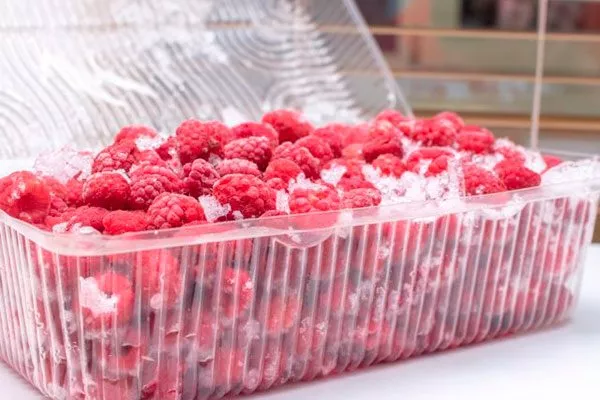
- If you plan to store berries for more than three to four weeks, it is preferable to freeze them.
- Preferred temperatures range from +10 to +15 degrees with air humidity not exceeding 70-75%.
Planting nuances
It's important to choose sites with nutrient-rich soils for planting seedlings. Soils with high permeability and moisture, such as loams and chernozems, are best. The recommended groundwater depth should not exceed 150 cm.
Other parameters:
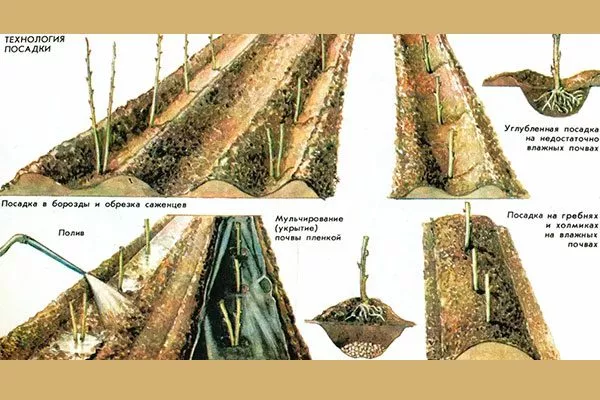
- When choosing a planting site, make sure it's level. Avoid planting raspberries in low-lying areas where water can accumulate, which can lead to plant rot.
- Preparation involves digging a hole 50 to 65 cm deep and about 50 to 55 cm wide. Some gardeners prefer to use trenches for planting seedlings.
- The optimal time for soil cultivation is autumn. Evenly distribute 10-12 kg of compost mixture, 50-60 g of superphosphate, and 30-40 g of potassium fertilizer per square meter.
- Immediately after planting, trim the bushes to a height of 15-25 cm.
Care instructions
To ensure that your raspberry harvest meets varietal standards and the berries are not only juicy but also sweet, it's important to meticulously monitor every detail of care. You'll need to follow a specific sequence of steps:
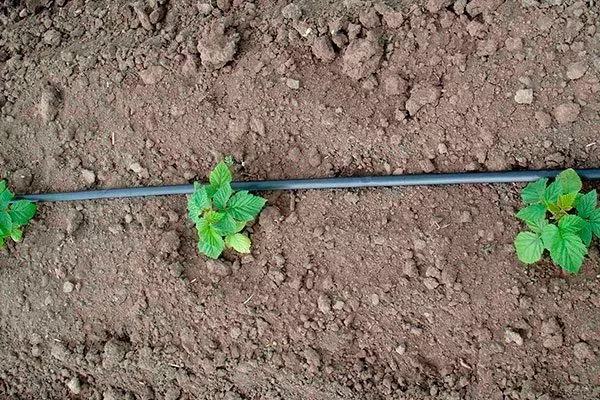
- During the growing season, provide plants with regular watering. Ideally, water the roots no more than once every two days under normal temperature and humidity conditions, and daily during periods of heat and drought. To maintain moisture in the crown, leaves, flowers, and fruit, it is recommended to install a drip irrigation system.
- When the first symptoms of disease appear, it is important to promptly begin treating plants with specialized chemicals that do not contain toxins hazardous to humans.
- This variety requires two-stage pruning. Here's how to do it correctly:
- At first, remove any excess or excessively long branches; do this in the last days of May or the first of June.
- Cut the upper branches back 10 cm from the top to stimulate the growth of lateral stems, which will later form flowers and fruits.
- Despite the pruning, after 3-4 months, by early autumn, new bright red young shoots appear on the raspberry bushes, reaching 40 cm in length. It is recommended to leave the bush in this condition for the winter.
- Next year, in the spring, shorten each of the autumn shoots by 12-15 cm, which will promote the awakening of the buds and activation of budding.
- Regardless of regular pruning, remove any branches that are dying, show signs of disease, or have been damaged over the winter.
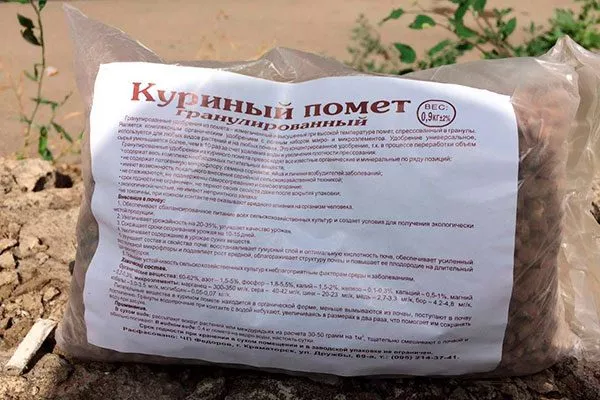
- Before the berries ripen, water the raspberries twice a year with diluted chicken manure or urea. Providing the soil with nitrogen is critical for vigorous growth. During flowering and the formation of the first berries, add phosphorus and potassium to the soil.
To maintain the health of the bush, stimulate the growth of shoots and leaves, and prevent the death of the root system, it is advisable to add a small dose of magnesium to the soil.
Preparing for winter
Preparing everbearing raspberries for winter requires less effort than summer varieties, since the shoots have already been pruned. Your task is to protect the root system:
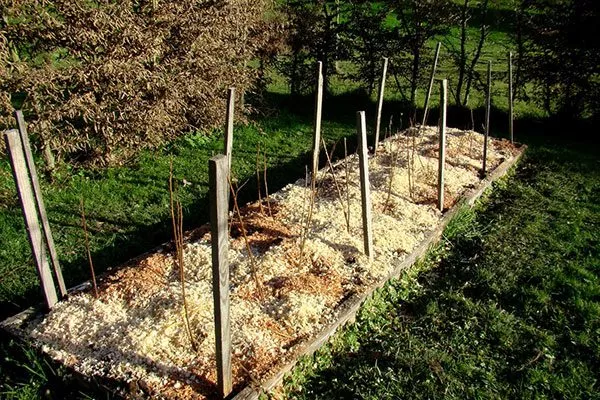
- Mulch with a 20-40 cm layer of dry leaves, and place two layers of spruce-pine bark with the needles facing up on top.
- For reliable snow retention, it's important that the raspberry orchard be covered with snow. The thicker the snow cover, the better. Therefore, in winter, don't leave snow on paths; instead, pile it on overwintering raspberry bushes or roots.
Pests and diseases
The Brilliantovaya raspberry is highly resistant to harmful insects and diseases, the result of a targeted selection process for a developed immune system. However, these problems sometimes arise due to adverse weather conditions, improper crop rotation, etc.
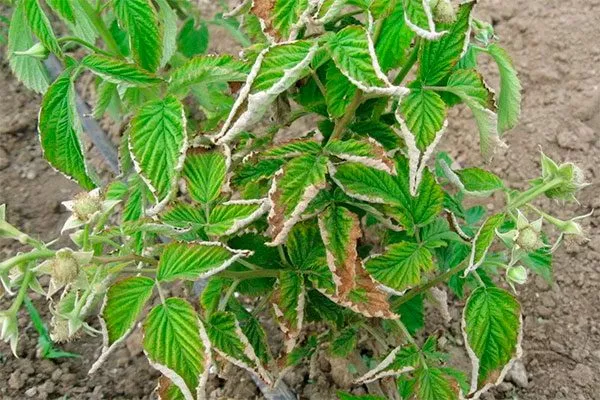
To protect your bushes, take a number of measures:
- If raspberries are infested with mites, treat the leaves, stems, and young shoots with specialized products, such as Fufanon.
- If numerous punctures are found on raspberry leaves, this may indicate an attack by weevils or caterpillars. Simple insecticides are sufficient to control these pests.
- Aphids are one of the most dangerous enemies of raspberries. If the insects have taken up residence on a bush, its leaves and branches will become cracked and turn yellow, requiring immediate removal and destruction to prevent the pest from spreading to healthy parts of the plant.
- This variety has moderate moisture requirements, so overwatering can lead to the development of gray mold on the roots. To prevent this, do not water until the soil and root system are partially dry.
For prevention, use Bordeaux mixture or similar solutions. Start applying protection in the spring to preserve the health of trunks, leaves, and future fruit.
What is the best way to propagate?
During the period of intensive development of the raspberry bush, new shoots will actively emerge from its root system, which can become excellent materials for further propagation.
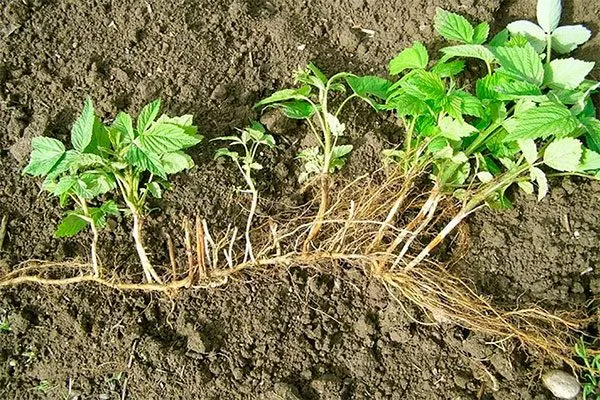
The reproduction process is as follows:
- First, prune the shoots at the base of the bush;
- then plant the resulting shoots in separate containers;
- To maintain optimal moisture in the root system, use a jar or other protective element;
- When roots appear, transplant the seedlings.
Research shows that shoots up to 4-5 cm long have the highest chance of successful rooting, while older shoots take root slowly.
What are the advantages and disadvantages?
Brilliantovaya is one of the most popular remontant varieties in our country. This variety possesses several important qualities that distinguish it from other garden crops:
However, not all farmers and gardeners are inclined to choose the Brilliantovaya variety for their garden beds. This variety is not without its drawbacks:
Gardeners' reviews
Brilliantovaya raspberry seedlings take root easily when planted along fences. They require regular, but not excessive, watering, pest control, and the addition of nitrogen fertilizer to the soil. The fruits have a sweet and sour taste and a rich ruby color. They are harvested immediately after ripening and sold seasonally at markets throughout Russia.