
The Brigantina raspberry is an excellent choice for gardeners seeking a bountiful, high-quality berry harvest. Its drought tolerance, high frost resistance, and ability to ripen fruit at the same time make it ideal for growing in a variety of climates. Proper care and a little attention are essential.
History of selection
The Brigantina variety was developed by I. V. Kazakov and V. L. Kulagina, employees of the Kokinsky Research Center of the All-Russian Scientific Research Institute of Vegetable Breeding. It was created in the 1970s by crossing the Ottawa and Sayan subspecies. Testing began in 1981, and it was officially registered in 1997.
The recommended growing regions are the Central Black Earth and East Siberian regions, but the plant is actually cultivated throughout Central Russia, the Moscow region, Ukraine, and Belarus.
Introduction to the variety
This variety has a number of positive qualities. Detailed characteristics and a description of the Brigantine are provided below.
Description of the plant
The shrub grows up to 2 m in height, with gently spreading branches that give it a compact appearance. The stems of the first year are purple and covered with a barely noticeable waxy coating. In the second year, they turn brown. The shoots bear a small number of purple spines.
The leaves are complexly shaped, resembling a pointed oval. The edges are downward-facing, the surface is corrugated, and a faint pubescence is visible underneath. They are dark green, with medium-length petioles and light green spines.
Fruit characteristics
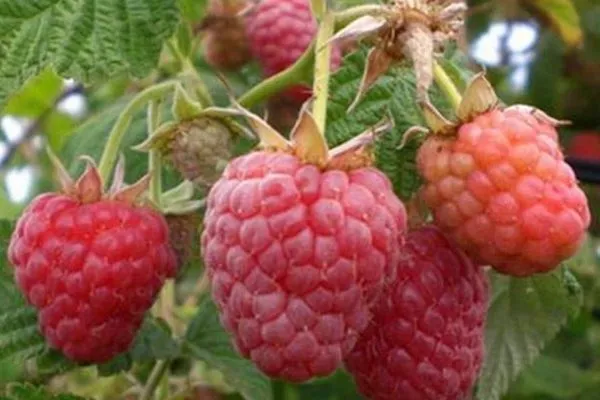
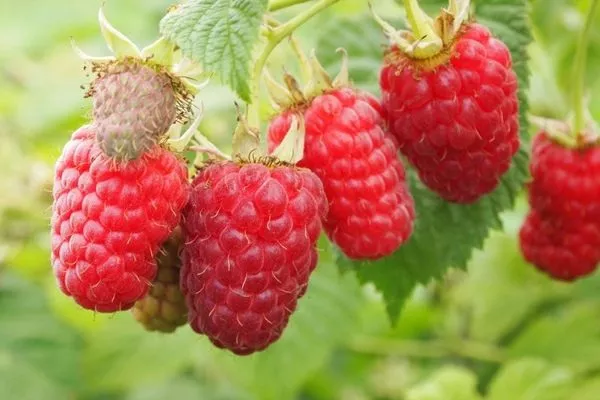
The fruits are large, with a rich, glossy dark crimson color, weighing from 3 to 3.8 g. They have a round-conical shape and are slightly pubescent. The flesh is quite firm. After freezing, the berries retain their shape and do not run when defrosted.
Resistance to frost and drought
The variety has moderate frost resistance and can grow in cold regions. In northern regions, raspberries are covered for the winter to ensure their preservation during the winter. It is highly drought-resistant.
Pollination
The crop is self-pollinating, so there is no need to plant other raspberry varieties nearby.
Features of fruiting and ripening
Brigantine is a non-everbearing variety with a mid-late ripening period, producing a single crop per season. It blooms with large white flowers that produce large berries.
Fruit harvesting begins in late July or early August. The fruits are easy to separate and are not prone to spontaneous shedding.
What kind of harvest does it produce?
A single bush yields up to 2.2 kg of fruit. In commercial cultivation, productivity reaches 55 centners per hectare.
Storing berries
Store them in the refrigerator or in a cool, dark place. Collect them in special baskets if you need to transport them long distances.
Landing
To ensure Brigantine grows well and produces abundant fruit, plant it correctly. Follow a few important rules:
- In central Russia, plant seedlings from late September to mid-October. Spring planting is also possible, but it's important to prevent sap from starting to flow.
- The plant prefers fertile soil with a neutral or slightly acidic reaction. It thrives in soil rich in organic matter.
- The planting site should be sunny, without stagnant groundwater, which can cause root rot.
- If the soil is not fertile enough, add 10 kg of humus and a little superphosphate. Add 50 g of potassium sulfate or ash.
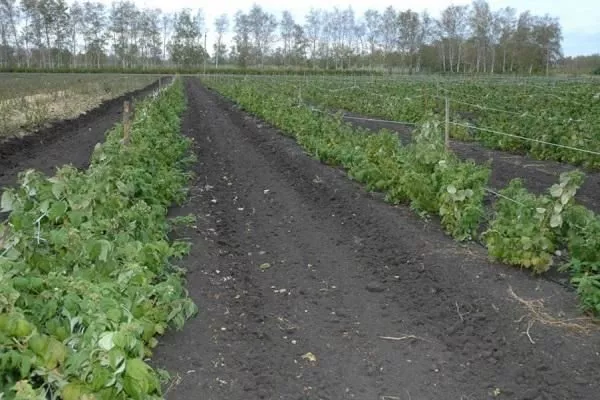
- Place the bushes under the trellis in two rows, arranging them from north to south to receive maximum sunlight.
- The distance between rows should be 2 m, and between seedlings in the same row – from 0.8 to 1 m.
- For each plant, dig a hole 30-40 cm deep and 40-50 cm wide.
- Place the seedling in the hole so that the bud at the base of the stem is 2-3 cm below ground level.
- Cover the roots with soil mixed with humus, water, and mulch with leaves, hay, or sawdust to prevent moisture evaporation. This way, you won't have to water the plant for 2-4 days.
By following these rules, Brigantina raspberry seedlings will quickly take root and delight you with a bountiful harvest.
Care tips
Raspberries are low-maintenance plants, suitable for gardeners who don't have much time to devote to their plots. However, with proper care, raspberries will yield an even greater harvest. Basic care includes:
- Watering. In rainy summers, watering is rarely necessary. In arid southern regions, water the bushes periodically, especially during flowering, berry setting, and when preparing for winter. Moisten the soil to a depth of 30-40 cm, where the roots are located.
- Trimming. Begin the process when the bushes are two years old. Perform the first pruning after winter, when the snow melts, removing damaged and dead branches. Shorten any overly long shoots.
In July, before buds appear, pinch out strong green shoots from the main stem to stimulate flower stalk formation and increase the yield. In the summer, thin out the raspberry patch periodically, removing young growth that drains the plant's energy. Before winter, remove diseased, broken, and weak branches. - Top dressing. Periodically use compost, humus, and rotted leaves as mulch. This will slow weed growth and conserve moisture. For nutrients, use manure, ash, and other organic fertilizers.
Preparing for winter
Avoid applying nitrogen fertilizers before winter. It stimulates foliage growth and can increase the plant's sensitivity to frost. Instead, focus on removing diseased and dead branches to prepare for frost. This will help reduce the risk of disease and protect the bushes from damage.
Diseases and pests
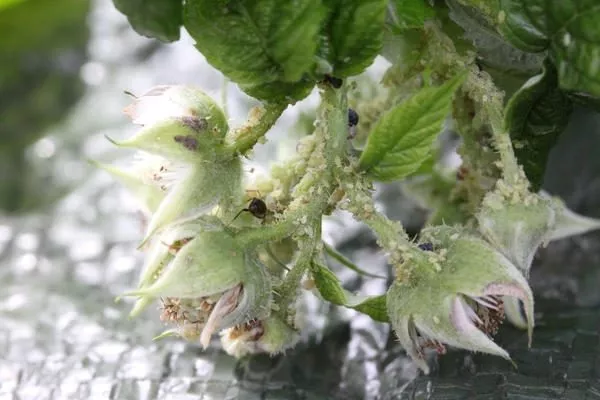
This variety is susceptible to various pests and diseases. These become a problem for the plants:
- Stem fly. It causes shoots to wilt and leaves black spots on them. To control the pest, use Bordeaux mixture, Malathion, or Confidor.
- Shoot and stem gall midge. They cause the bush to dry out. If signs of damage appear, cut out the affected stems and use pesticides such as Calypso, Karbofos, or Karate.
- Raspberry beetle. It eats buds and young leaves, causing berries to become wormy. To combat this, use Kinmix Iskra tablets.
- Weevil. Causes bud failure. Use various insecticides to control it.
Reproduction
To establish a new raspberry patch in the fall, use young one-year-old shoots. Step-by-step procedure:
- Selection of planting material. Select healthy plants with no signs of disease or rhizome rot. Freshly dug seedlings are preferable to prevent the roots from drying out. Shorten the shoots to 50 cm.
- Preparing the soil. Prepare planting holes in advance. The depth should be about 10 cm.
- Planting seedlings. Root them to the root collar (the junction of the roots and stem), and water thoroughly after planting. Make sure the roots are evenly distributed in the hole and not bent.
- Mulching. Mulch the soil around the seedlings to retain moisture, prevent weed growth, and protect the roots from drying out.
By following these recommendations, you will ensure successful rooting and survival of your planting material, which will ultimately lead to a good harvest in the future.
What are the advantages and disadvantages?
Before planting a bush in your yard, carefully review its pros and cons. Brigantine has many advantages:
- Drought-resistant and undemanding to soil. These qualities make it suitable for a variety of climatic conditions and soil types.
- Frost resistance. The shoots can withstand frosts down to -30°C, which ensures stable fruit production in cold regions.
- High yield. The variety is known for its abundant fruiting.
- Uniform ripening of berries. They ripen evenly and in large quantities, which simplifies harvesting.
- Excellent taste. The fruits have a sweet taste with a slight sourness.
- Bright appearance of fruits. They have an attractive bright color.
- Good survival rate of seedlings. Ease of propagation and a high probability of successful rooting make the crop popular among gardeners.
Among the disadvantages of the crop, some gardeners note the need to tie to a trellis, a sour taste, a late ripening period, problems in rainy weather (the berries lose density, making harvesting difficult), a late ripening period, and susceptibility to diseases and pests if not properly cared for.
Gardeners' reviews
The Brigantina raspberry has gained popularity among gardeners due to its high yield and excellent taste. This variety boasts a number of unique characteristics, including frost resistance and strong immunity. The key is to take care of the plant and implement timely agricultural practices.