
Boysenberries are easily confused with raspberries or blackberries, the crops from which they originated. This hybrid is popular in America and virtually unknown to Russian gardeners. Let's learn what makes this hybrid crop so interesting, how to plant and propagate it, and what makes its berries unique.
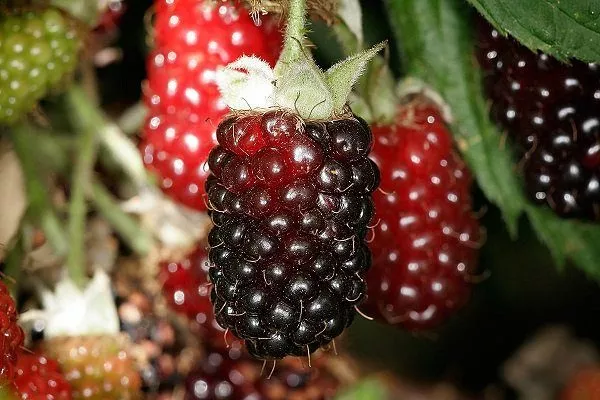
Boysenberry
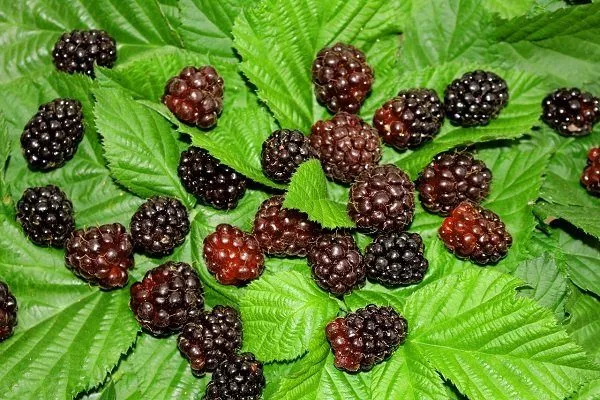
Boysenberries are larger than raspberries and blackberries.
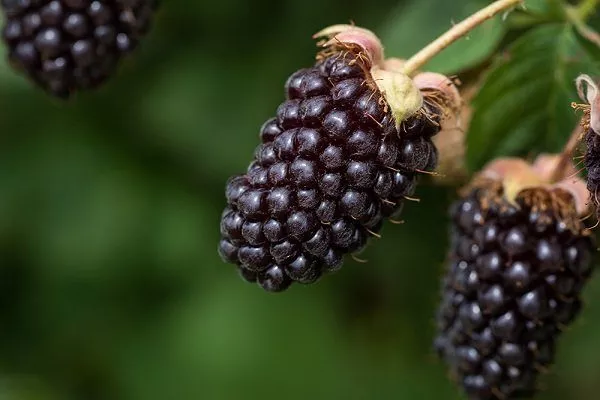
Boysenberries have a sweet and sour taste and hard seeds inside.
Boysenberry: What is it?
Boysenberry is a hybrid fruit obtained by crossing the loganberry (a hybrid of blackberry and raspberry) and the blackberry Rubus baileyanus. The crop was developed by North American farmer Rudolph Boysen in 1920.
The crop belongs to the Rosaceae family. It is known for its hardiness and strong immunity. Currently, boysenberries are widely grown on farms in North and South America and Australia.
The plant is found in North American forests in its feral form. Sometimes it grows "of its own accord" in garden plots.
People often confuse the hybrid with blackberries.
Description of the plant
Boysenberries most closely resemble blackberries. They grow quickly and can quickly fill empty spaces. Most varieties have long, spiny tendrils that the plant uses to cling to supports.
The plant is a summer-green shrub, up to 2.5 m tall and 1.5 m in diameter. The branches from which the berries are collected are pruned. The shrub grows new shoots after each winter. In the first year, these shoots bear only leaves, in the second year, fruit, and in the third year, they die off.
Flowers and leaves
Boysenberries make a beautiful decorative hedge. The plant is beautiful at any time of year, but it looks especially luxurious when in bloom.
The hybrid's leaves are serrated, raspberry-like, large and textured, arranged in clusters of several. The white flowers have five petals and are 2.5-3 cm in diameter.
Fruit
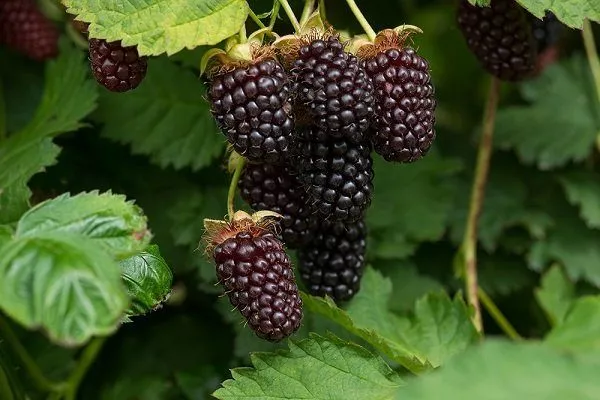
The fruits resemble raspberries and blackberries. They are dark red drupes with thin skin and juicy pulp. Each fruit consists of numerous small spheres containing hard seeds.
The berries grow up to 3 cm in length, weighing 8 g each. They are 2-3 times larger than raspberries and lighter in color than blackberries. The flavor is balanced, sweet and sour.
Uses of boysenberry:
- eaten fresh;
- freeze;
- make juices, jellies, jams, syrups, fillings, add to smoothies.
The fruits have a delicate texture, so they become bruised and quickly lose their marketable appearance after picking. They can be stored in the refrigerator for about three days.
European countries import mainly canned boysenberries.
Advantages and disadvantages
Boysenberries have many beneficial properties, which confirms the widespread use of the crop in American farms.
Advantages:
- the fruits are larger than blackberries and tastier than raspberries, and have a beautiful commercial appearance;
- berries have medicinal and health-improving properties;
- endurance and unpretentiousness.
Benefits and harms
Boysenberries contain substances that provide powerful health benefits. 100 grams of the fruit contain 37 kcal.
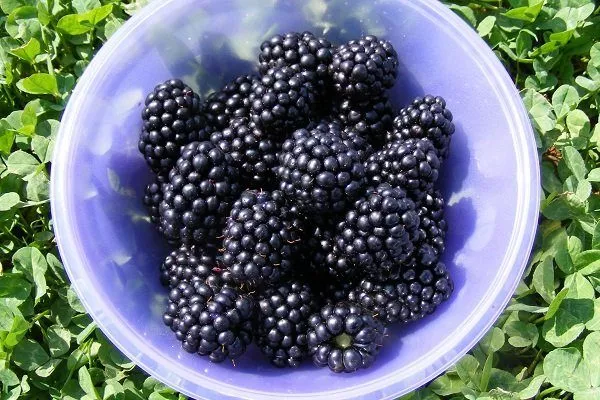
Benefits of fruits:
- iron prevents anemia;
- calcium strengthens nails, teeth and hair;
- Vitamin K maintains bone health and ensures normal blood clotting;
- Folic acid improves immunity and activates the formation of red blood cells;
- Vitamin C helps overcome colds and viral diseases;
- Vitamin E prevents the formation of blood clots, the development of cancer and heart disease;
- potassium normalizes blood pressure;
- Ellagic acid provides anticarcinogenic, antiviral and antibacterial properties.
Potential harm of boysenberries:
- in case of allergies – consumption of fruits may cause a rash and throat irritation;
- Excessive consumption can cause stomach upset, increased acidity and dangerously low sodium levels in the body;
- In diabetics, berries cause an increase in blood glucose levels.
Varieties and characteristics
| Name | Type of spikes | Aroma | Disease resistance |
|---|---|---|---|
| With spikes | Prickly | Raspberry-blackberry | High |
| Without spikes | None | Raspberry-blackberry | Average |
Boysenberry is one of the varieties blackberries, which differs from its counterparts in that, along with the main parent forms, loganberries were used in its creation.
There are only two types of boysenberries:
- with spikes;
- without thorns.
The distinctive feature of this blackberry variety is the unique raspberry-blackberry aroma of the berries, thanks to which they produce unique wines.
Other varieties of blackberries are Tayberry, Tummelberry, Marionberry, Darrow, Youngberry.
Subtleties of planting
The best place for boysenberries is a well-lit area, protected from drafts and cold winds.
- ✓ Seedlings must have a healthy root system without signs of rot or damage.
- ✓ Preference should be given to seedlings with a closed root system, as they take root better.
Site requirements:
- the best soil type is sandy loam;
- soil acidity – pH 5.8-6.5;
- Do not plant after tomatoes, potatoes, or eggplants.
If seedlings are planted in the fall, they should be planted a month before the first frost. This will give the plants time to establish and root, which will help them survive the winter.
How to plant boysenberries:
- Dig over the planting area in the fall. Fertilize with humus or compost. Add organic matter as you dig.
- In spring or fall, dig a planting hole. It should be large enough to accommodate the roots of the seedlings. A standard hole is 40 x 40 cm.
- Fill the hole with a soil mixture made from fertile soil and humus. If necessary, add sand or clay, depending on your soil type.
- Place the seedlings in the hole, carefully spreading the roots along the soil mound.
- Cover the roots with the fertile soil obtained from digging the hole and water well.
Boysenberries are rarely planted alone; to reap a substantial harvest, at least 10-20 bushes are needed. The intervals between adjacent holes are 1-1.5 m, and between rows, 2-3 m.
If seedlings are planted in the fall, planting holes are prepared in the fall; if in the spring, a month before planting.
Growing and care
Boysenberries are undemanding in terms of growing conditions, but they do require care to produce good yields. Given that they are a commercial berry, care is crucial when growing them.
Boysenberry care measures:
- Trimming. In spring, perform sanitary pruning, removing branches damaged by frost. Stems are trimmed back to healthy buds, leaving a 2-3 cm extension.
Pruning can be done in the fall, after the berries have been picked. Side shoots and older shoots are trimmed. Six to nine shoots are left on each bush, and their number is reduced in the spring, if necessary. - Garter. Bushes with long stems require support. Long stems are most easily tied to trellises. These are installed during planting. Two or three rows of wire are stretched across the supports, spaced 2-3 meters apart.
- Watering. The hybrid is drought-resistant and easily tolerates water stress. However, droughts negatively impact the quality and quantity of the harvest, so the plant requires moderate watering. The soil should be kept moist at all times, but not stagnant.
- Top dressing. Farmers feed the berry crop with complex mineral fertilizers and also add fish meal and blood meal.
Reproduction
Boysenberry, like any hybrid, is propagated by layering and cuttings – green or woody.
- ✓ The cutting must be at least 15 cm long.
- ✓ The cutting should have 2-3 healthy buds.
The procedure for vegetative propagation by cuttings:
- During autumn pruning, cut off the apical shoots with buds - one or two are enough.
- Plant the cuttings in a nutritious soil mixture - in a pot or directly in the ground.
- Cover the cuttings with glass jars to create a greenhouse-like microclimate. Moisten the soil periodically.
- In spring, transplant the shoots that have taken root to a permanent location.
The procedure for propagation by layering:
- In the spring, dig a 20-cm-deep trench in the tree's trunk circle and insert the cutting into it. Secure it in place and cover with soil.
- Water the cuttings periodically, and in the fall, separate the shoot from the mother plant and plant it in a permanent location.
The plant can also be propagated by division or root layering. In the spring, the plant is dug up and its roots are separated into 10-cm-long shoots, which are planted in the ground and grown until they become seedlings.
Pest control
Boysenberries are susceptible to the same pests and diseases as their parent varieties. Under unfavorable conditions and without proper care, they can be susceptible to powdery mildew, rust, and fungal diseases.
To prevent disease development, spray the bushes with a 1% Bordeaux mixture. Topsin and Fundazol are also used for prevention and treatment (according to the instructions).
Boysenberries can be susceptible to attacks from weevils, gall midges, and raspberry beetles. Preventative spraying with Fufanon or Karbofos (as per instructions) can help prevent widespread infestations.
Although boysenberries are a man-made crop, they are in no way inferior in their characteristics to raspberries, blackberries, and especially loganberries. Moreover, they surpass them in yield and resistance to adverse factors.