
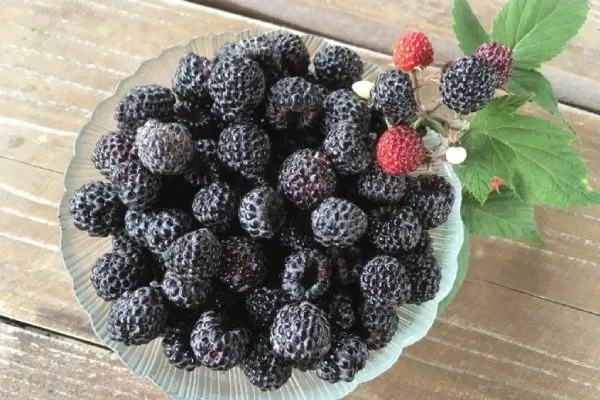
Black raspberries are easily confused with blackberries, as their berries are black rather than red, which is traditional for this crop. These raspberries not only look beautiful but also have an excellent taste. This exotic variety isn't particularly common in Russia, but it certainly has a chance of becoming popular—black raspberries, while harmoniously complementing red raspberry patches, pose no problems for gardeners, as they are very easy to grow.
Description of the plant
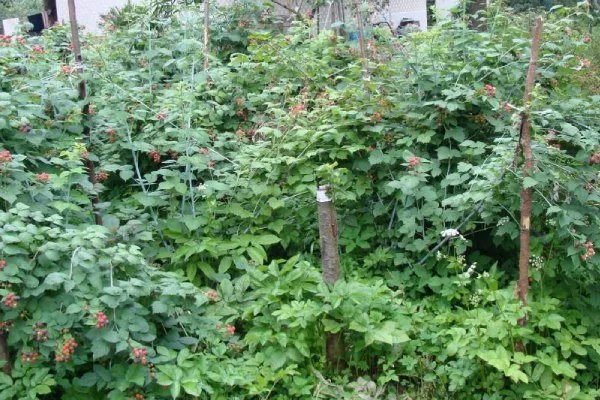
Black raspberry bushes are tall, wide, and spreading, reaching heights of 100-2500 cm, depending on the variety. The plants are quite dense, with strong and thick shoots, approximately two dozen of which can be found on a single bush. If left unpruned, they reach a length of 3-3.5 m. Root suckers are virtually nonexistent.
The shoots are arched, curved, and covered with a waxy coating. They are covered with small, curved, and sharp spines. There are quite a few of them. The leaves are clustered five per branch. They have a glossy surface and serrated edges. The root system is fibrous, with several taproots.
Description of fruits, their taste and uses
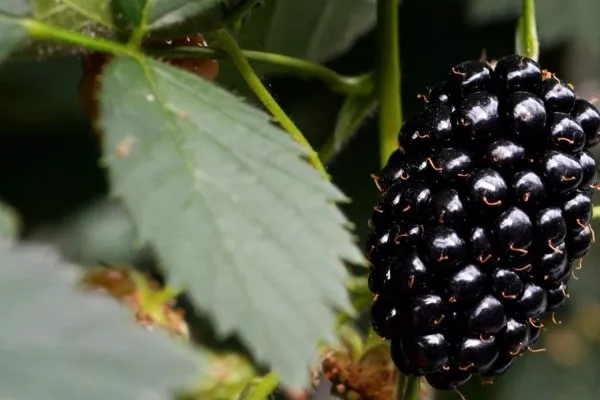
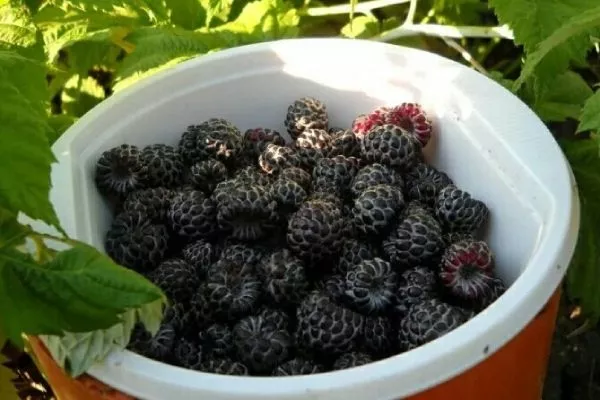
The berries are purple-black in color. There's a light bloom between the seeds. The fruits are round and large, weighing 1.9-2.3 g. They have a pleasantly sweet flavor with a hint of blackberry. The aroma of black raspberries also contains notes of blackberry.
Black raspberries can be eaten fresh or used to make jam. These berries are often used to add vibrant color to compotes. They impart a red, rather than black, tint to the water. Black raspberries are recommended for adding to apple compotes.
Productivity and other characteristics
Raspberry bloom begins in early summer, when the threat of cold weather ends. Black raspberry yields are very high, exceeding standard yields by approximately 1.5 to 2 times. One bush produces 4-10 kg of berries. Fruiting lasts 4-5 weeks.
This variety is considered frost-hardy, able to withstand temperatures as low as -30-35°C without any adverse effects. This raspberry is extremely disease-resistant and rarely affected by pests.
Pros and cons
Black raspberries have many advantages, making growing them in the garden not only worthwhile, but also enjoyable.
Pros:
Cons:
Raspberries grow in almost any soil, but the planting location is crucial. It should be open, sunny, and free from wind and drafts.
Landing features:
- It's not recommended to plant this variety after other raspberries. Planting should be done in spring or fall, in well-warmed soil. In fall, seedlings can be planted until October. However, early spring is considered the best time to plant, as fall plantings can result in frost damage.
Raspberries can also be planted in the summer. Seedlings root fairly well during this period, but if there's a lack of moisture, the roots begin to dry out, and the young leaves can burn in the sun. - It's best to plant black raspberries near a fence or other barrier. However, the plants should not be left without adequate air circulation; they must be well-ventilated, otherwise there's a risk of rot.
- The root system of seedlings is inspected before planting. If their roots are fibrous, they should be planted in moist soil; if they have taproots, they will root well even in dry conditions.
- When planting black raspberries, add a mixture of organic and mineral fertilizers to the planting hole. This will last for the first 2-3 years. Subsequently, apply additional fertilizer annually. In the spring, while still covered with snow, spread bird droppings or cow manure.
The next fertilizer application is made after the bushes have flowered. Compost or humus, potassium salt, and superphosphate are used for this fertilizer. Herbal infusions and wood ash can also be used. The final fertilizer application is made after harvesting. - The maximum groundwater level is 1.5 m. Higher groundwater levels will cause root rot and plant death.
- Undesirable predecessors for black raspberries are nightshade crops - tomatoes and potatoes, as they can be carriers of the most dangerous disease for raspberries - verticillium wilt.
- Planting is carried out using standard technology. The optimal planting pattern is 0.5-0.7 x 2 m. The planting hole diameter is 50 cm, and the depth is 40 cm.
Care Features
In order for the crop to show a decent yield, it requires regular care.
How to care for raspberries:
- Watering. The frequency and amount of watering depend on the weather and site conditions. Raspberries planted in open, sandy soils require more frequent watering than raspberry bushes planted in loamy soils and partial shade.
Providing raspberries with water is especially important during the first 2-3 years. During this period, avoid allowing the soil to dry out or overwater. Subsequently, water as needed. - Trimming. Young bushes are not pruned. The first pruning is done in the summer, at the peak of growth. Lateral shoots are removed to encourage the buds located in the axils to produce new shoots. New shoots are shortened by half. In the fall, sanitary pruning is limited to removing all dry and damaged branches.
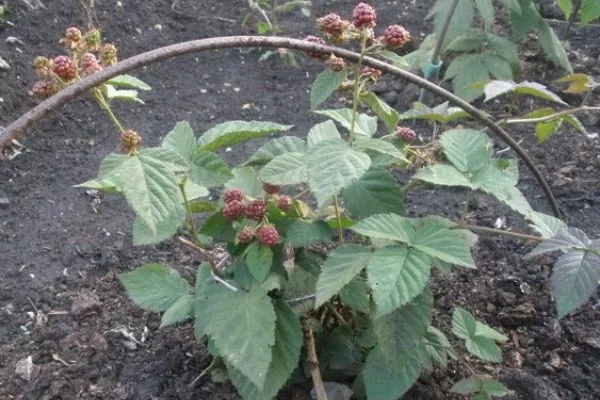
- Garter. This is done immediately after planting. It simplifies plant care and harvesting. The best way to support raspberries is with a trellis. These are installed in the second year after planting.
- Top dressing. This variety is sensitive to fertilizers; it is recommended to feed raspberries three times during the season. The first feeding should be done before flowering, at the beginning of fruit set, and after harvest.
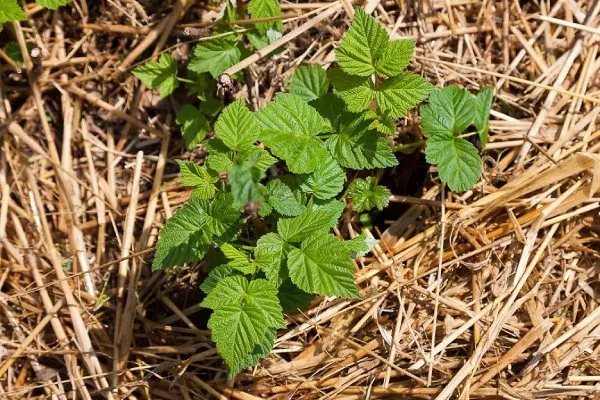
It's recommended to alternately feed raspberries with organic and mineral fertilizers—urea, superphosphate, mullein, and boric acid. The easiest option is to purchase specialized raspberry fertilizers. - Mulching. Raspberry beds are covered with loose organic matter. Humus, hay, peat, and dried leaves are all suitable. It's best to combine different types of mulch. The key is to ensure it's dry and lightweight, allowing air to reach the roots. Denser materials are used for protection from the cold.
- ✓ Soil pH should be between 5.5-6.5 for optimal growth.
- ✓ The soil should be well drained to avoid water stagnation.
Pest and disease control
Black raspberries can be affected by anthracnose, canker spot, and raspberry leaf curl. However, the most dangerous disease for the Cumberland variety is verticillium wilt. To prevent this disease from developing, plant black raspberries away from red raspberries. When signs of infection appear, the affected bushes are dug up and burned.
This species is not affected by the raspberry midge, but can suffer from aphids, stem gall midges, raspberry flies, and spider mites. To combat these pests, use infusions of yarrow, calendula, marigold, and garlic. For severe infestations, chemical treatments such as malathion and bitoxibacillin are used.
Berry picking
Ripe black raspberries have strong stems and do not fall off, but the berries easily separate from the branches during harvest. The first berries are picked in early July and then picked again every 2-3 days.
- ✓ The berries are easily separated from the stem without any effort.
- ✓ Presence of uniform black color without green areas.
Black raspberries, like any red raspberries, don't keep well. At room temperature, the berries can last a maximum of 2-3 days. After that, they turn into a soggy mess. Therefore, the best storage option for these berries is freezing.
How to propagate black raspberries?
Black raspberries are propagated vegetatively, and there are several options.
How to propagate black raspberries:
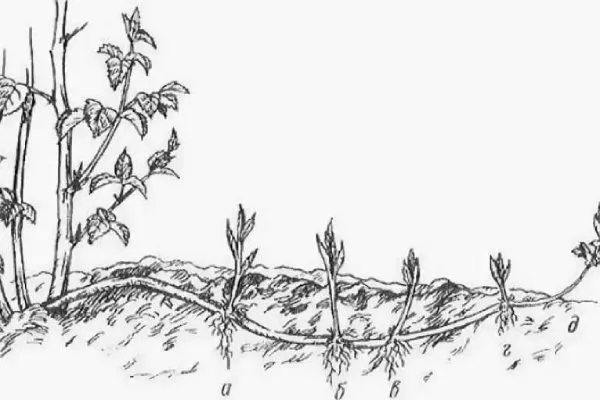
- Apical layers. At the end of summer, the tops of the bushes are bent toward the ground and then hilled. The cuttings are then watered to encourage the buds to develop adventitious roots. For the winter, the cuttings are covered with peat or humus. With the arrival of spring, the young plants are separated from the parent plant and transplanted to their permanent location or for further growing.
- Horizontal layers. The healthiest and most vigorous bushes are used for propagation. Early in spring, shoots are pruned to 15 cm from the ground surface. In summer, strong new shoots form, which are placed in pre-made furrows and covered with soil. Only the foliage and apical buds are left uncovered.
The cuttings are watered and insulated before winter. The future seedlings are separated from the mother plant in the fall. This propagation method allows for a large number of planting stocks to be obtained simultaneously. The downside is that the parent plant dies after a couple of years. - Green cuttings. This method is more complex and labor-intensive; the cuttings require care and long cultivation. It takes effort to grow strong seedlings from small cuttings. Therefore, gardeners use this method less often than the previous two.
Reviews
Black raspberries will appeal to lovers of unusual varieties, compotes, and winter preserves. This tall, vigorous raspberry will not only reward you with a bountiful harvest but also add a pleasant touch of variety to your garden.