
Traditionally, Russian gardeners prefer the familiar red raspberry. But white raspberries are equally good in many ways, and new, improved varieties are becoming more common every year. Therefore, this type of raspberry is no longer considered exotic and is steadily gaining popularity.
Description of white raspberries
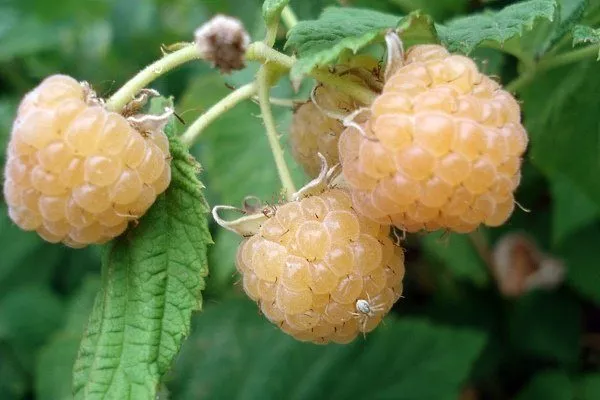
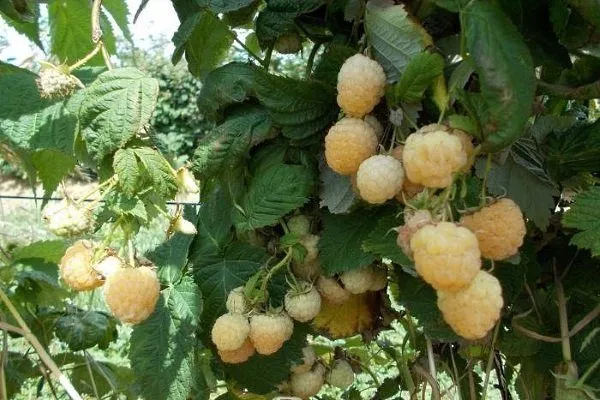
The name "white raspberry" is a misnomer. In fact, it's a yellow raspberry. The confusion probably stems from the fact that the unripe berries are white, but when ripe, they turn pale yellow to golden. Furthermore, the first varieties bred were indeed almost white.
White raspberries, unlike red ones, fall off very quickly when ripe, so picking them is essential. Once picked, ripe white raspberries quickly lose their marketable appearance. Therefore, they are not used for commercial cultivation. However, they can be purchased in small quantities at markets.
White raspberries, compared to traditional red raspberries, have lower acidity and higher sugar content. They are a safe treat for allergy sufferers, as they are hypoallergenic due to their low coloring (anthocyanins). This also makes them suitable for pregnant and lactating women, and they are also suitable for young children. White raspberries contain more folate.
Like red raspberries, white raspberries can bear fruit in one-year, semi-everbearing, or everbearing varieties. With proper care, white raspberries can yield large yields—up to 9 kg per bush.
This type of raspberry retains all the beneficial properties of red raspberries. It can also be used to treat colds and stomach problems. All methods of processing red raspberries are also suitable for white raspberries.
The best varieties of white raspberries
The first white raspberry varieties appeared in the middle of the last century. However, they weren't widely known and couldn't compete with traditional red raspberries in terms of flavor. Since then, breeders have done a tremendous amount of work to improve white raspberries and develop new, promising varieties.
| Name | Yield (kg per bush) | Winter hardiness | Taste rating (points) |
|---|---|---|---|
| Apricot | 4-5 | High | 4.5 |
| Pineapple Vigorova | 4.5 | Average | 4.7 |
| Altai dessert | 2.5-4.5 | High | 4.3 |
| Golden Everest | 4 | High | 4.6 |
| Cornish Victoria | 3.5 | Low | 4.8 |
| Golden Giant | 8 | High | 4.9 |
| Honey | 8 | Average | 4.7 |
| White spirina | 3 | High | 4.4 |
Apricot
This Russian-bred variety has been included in the State Register of the Russian Federation since 2004. This high-yielding, everbearing Apricot raspberry yields up to 4-5 kg per bush. The berries resemble apricots in color (hence the name), with a slight blush when ripe.
The bush grows from 1.5 to 2 meters tall. Due to the large number of berries, it requires staking. It has few, small, downward-curving thorns located at the base of the shoots. The Apricot raspberry is resistant to most diseases and pests and is cold-hardy. In winter, it can withstand temperatures down to -30°C.
The berries of this variety are pleasantly flavored, slightly tart, and have a delicate texture. They are rated at 4.5 points for taste. The berries are suitable for all types of processing.
Pineapple Vigorova
This variety was bred by Professor L. I. Vigorov in Siberia. The plant is moderately winter-hardy and reaches two meters in height. It is not a remontant raspberry, but it produces a good harvest and does not produce many shoots.
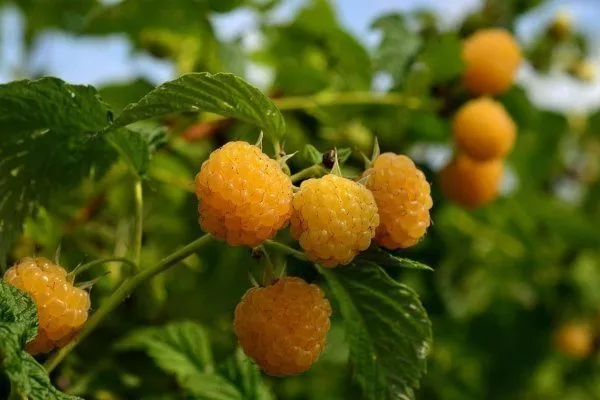
Vigorova's Ananasnaya raspberries are quite large, weighing up to 4.5 g. When ripe, they are amber-colored and pleasantly sweet, developing a slight pineapple flavor when fully ripe. These berries are versatile, but are especially delicious fresh.
Altai dessert
This variety was bred at the Siberian Horticultural Research Institute. It's one of the most winter-hardy varieties, so it doesn't require pruning during the winter. The Altai dessert raspberry bush grows up to 1.5 meters tall, with straight shoots and moderate suckering.
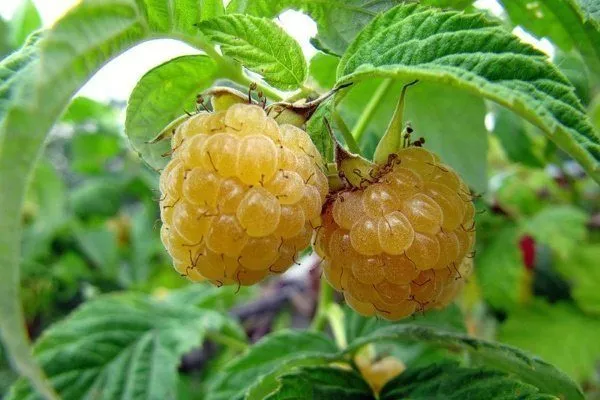
This non-everbearing variety ripens from late July and produces a good yield. The berries are yellow, borne in dense clusters, weighing from 2.5 to 4.5 g, and have a sweet flavor. It is a versatile variety.
The downsides include susceptibility to both fungal and viral diseases. Therefore, constant and careful maintenance of the bushes is required.
Golden Everest
This is one of the most popular varieties bred abroad. Golden Everest is distinguished by good winter hardiness, able to withstand temperatures down to -30°C. The bushes are moderately spreading, up to 1.5 m tall, producing medium-sized shoots with upright stems.
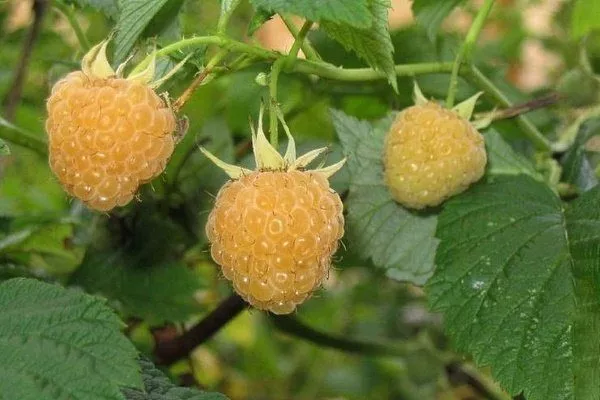
The berries are orange when fully ripe and large (up to 4 g). This is a remontant variety, but the best-tasting berries ripen in late summer and early fall. The raspberry flavor is sweet and sour, with some finding a hint of persimmon. Eaten fresh, the berries are ideal for jam.
Cornish Victoria
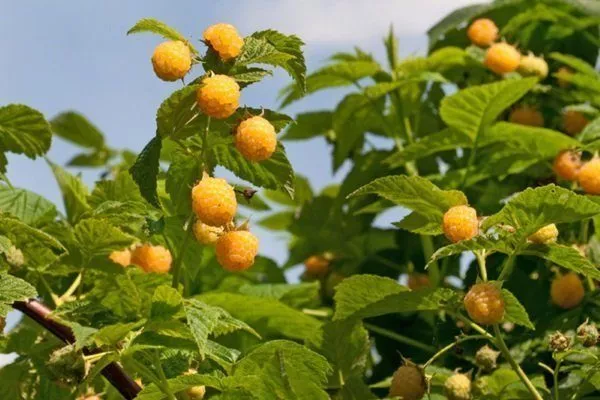
This raspberry variety is a Western European selection. Cornish Victoria is not zoned in Russia and is not widely grown, but it can still be found in hobby gardens across various climate zones. Because it is not particularly frost-hardy, it requires staking and additional covering at the first frost. However, it can freeze in winters with little snow.
In the first few years after planting, it produces vigorous growth, and after a few years, moderate growth. The bushes are low and spreading, with thick shoots covered with small, soft spines, especially on the underside.
In Europe, the Cornish Victoria is considered one of the most delicious dessert white raspberry varieties. The berries are large, a pleasant cream color, and have a strong aroma. The flesh is tender and literally melts in the mouth. Cornish Victoria raspberries are especially delicious fresh, but they can also be processed.
Raspberry bushes are severely damaged by the raspberry beetle and weevil. To prevent this, periodic insect protection is required.
Golden Giant
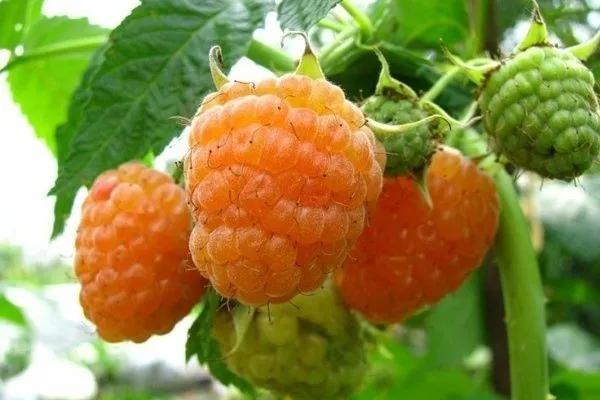
This variety is often confused with the Yellow Giant, or even considered to be the same. The Golden Giant was bred at the Supermalina nursery from the Yellow Giant and is an improved variety. However, the Yellow Giant has been included in the State Register since 2008, while the Golden Giant has not.
The Golden Giant is highly productive and winter-hardy. With proper cultivation practices, the yield per bush can reach 8 kg. The bushes are tall, upright, and vigorous. The berries are dark golden in color, fairly large (8-14 g), and have a good marketable appearance, but are not transportable. The berries have a flavor similar to wild raspberries; they are very juicy, with virtually invisible seeds.
Honey
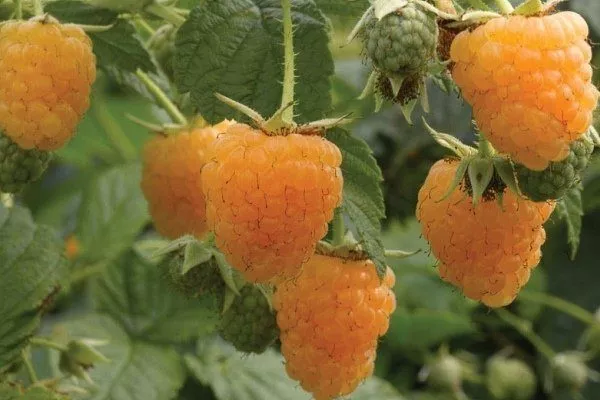
A non-everbearing white raspberry variety. It has average winter hardiness but is highly resistant to various pests and diseases. It produces moderate shoots, grows up to 1.5 m, and is spreading and thornless. Yields can reach up to 8 kg.
The berries are medium to large (3-6 g), white-yellow to yellow in color. They have a dessert-like flavor and a strong, distinct aroma. A distinctive feature of this variety is that the ripe berries do not fall off.
White spirina
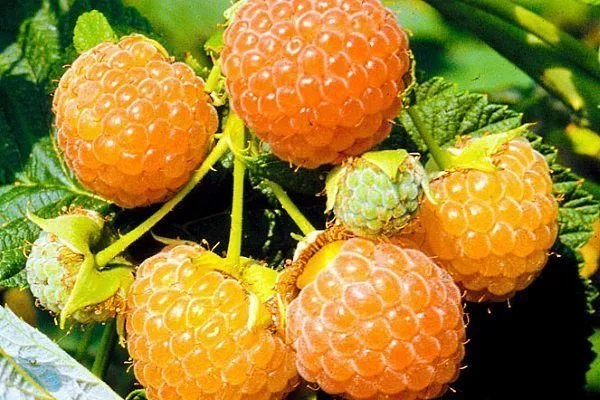
The Spirina Belaya raspberry variety is distinguished by good winter hardiness. Its yield is average, but this is compensated by the large berries. The bushes are medium-tall and moderately spreading, with few root suckers. The berries have a dessert-like flavor, sweet and sour, and when fully ripe, they turn a delicate golden color.
Professor V.V. Spirin developed this variety over 100 years ago. However, interest in white raspberries was low at the time, and now they're almost forgotten, thanks to the emergence of many modern white raspberry varieties. White Spirina remains in hobby gardens, but it hasn't become widespread.
Peculiarities of care
Caring for white raspberries is generally considered to be little different from caring for regular everbearing raspberries. However, there are some special considerations:
- Choose the right site for growing white raspberries. While red raspberries tolerate some shade and thrive alongside, for example, apple trees, white raspberries absolutely require full sun. And the more sun, the better.
- White raspberries thrive in open spaces, but they don't tolerate drafts. Choose loose soil; light loam or sandy loam is ideal, but acidic soil is a definite no-no.
- It is better to plant white raspberries in the fall, but no later than the beginning of October.
- ✓ The area must be completely open to sunlight, without the slightest shading.
- ✓ The soil should be loose, preferably light loamy or sandy loam, with neutral acidity.
- ✓ Avoid areas with acidic soil and drafts.
It is better to plant white raspberries in trenches; burying the seedlings too deep is strictly prohibited.
Watering
Like any other raspberry, white raspberries love moisture but absolutely cannot tolerate stagnant water. If rainfall is insufficient, raspberries should be watered thoroughly during the period of active shoot growth and after harvest. Overwatering during the fruit formation period makes the berries watery and tasteless. Mulching is effective at retaining moisture. Grass clippings, compost, and straw can be used as mulch.
Top dressing
White raspberries respond well to both mineral and organic fertilizers. Autumn and spring are best for fertilizing. Furthermore, nitrogen fertilizers are recommended to be scattered over the snow so that they reach the roots with meltwater. This will prevent the plants from producing excessive shoots.
Nitrogen is most important during the first three years of white raspberry growth. It promotes good bush development, resulting in a consistently high yield. When planting white raspberries in trenches, mineral fertilizers are applied once, spread over several years.
If you prefer organic fertilizers and don't like mineral ones, use rotted manure (cow or horse manure). Vegetable mulch and kitchen scraps are also excellent sources of organic matter.
Trimming
For everbearing white raspberry varieties, it's best to completely prune all shoots in the fall. This way, the new shoots will only produce a fruitful harvest in the fall, but it will be abundant and especially delicious. For non-everbearing bushes, fruit-bearing shoots are pruned. Unlike red raspberries, the remaining shoots don't need to have their tops trimmed.
Harvesting
White raspberries need to be picked promptly, as the vast majority of varieties drop their leaves once they reach ripeness. White raspberries also don't keep well, so they should be eaten quickly or processed immediately.
White raspberries are delicious, healthy, and unique. A wide variety of varieties allows you to find the perfect one for your needs. However, a good harvest is only possible with proper and regular care.