
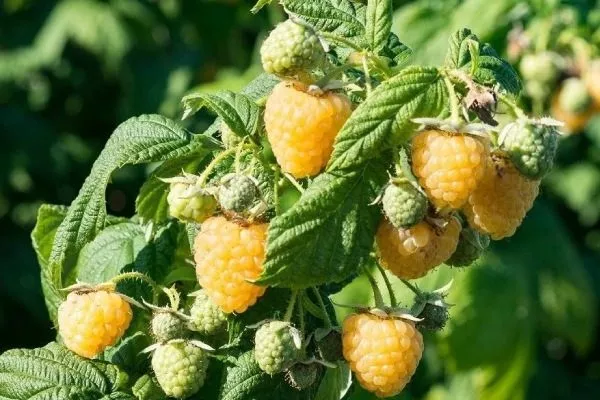
Beglyanka is a yellow-fruited, early-ripening raspberry variety. It's a favorite among Russian gardeners for its easy-to-grow nature, disease resistance, and beautiful apricot-orange berries. By growing it in your garden, you'll be able to harvest twice a year: in summer and fall.
History of selection
Beglyanka is an achievement of domestic breeding, developed in the early 1990s. It was developed by I.V. Kazakov and the Kokinsky Research Center of the All-Russian Scientific Research Institute of Raspberry Plants. This everbearing variety was developed through research aimed at developing disease-resistant raspberry varieties.
In 2009, it was added to the Russian Federation State Register and approved for cultivation in the Central Region. It is successfully cultivated in the following regions:
- Moscow;
- Vladimirskaya;
- Smolensk;
- Ryazan;
- Tula;
- Ivanovskaya;
- Kaluga;
- Bryansk.
Introduction to the variety
If you're planning to plant the Beglyanka raspberry in your garden, check out the description of its bushes and fruits, as well as the technical characteristics of the variety.
Description of bushes
Plants of this berry variety are medium-sized and not very spreading. They reach a height of 1-1.5 m. Each bush contains up to 8 shoots. Its characteristics are as follows:
- upright structure;
- annual shoots are covered with brown bark and bend towards the ground;
- second-year branches: grey, reaching towards the sun, require tying to a support during the fruiting period;
- a small number of hard green thorns covering the shoot in its lower part;
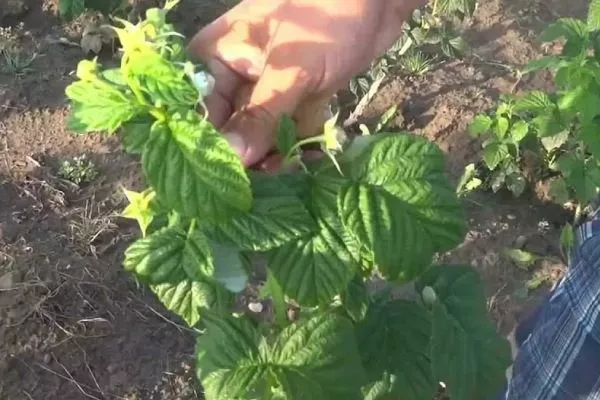
- foliage: three- or five-leafed, medium-sized, green, oval with a pointed tip, wrinkled, without pubescence;
- Flowers: not very large (their diameter is up to 1 cm), white, emit a faint aroma.
Characteristics of berries
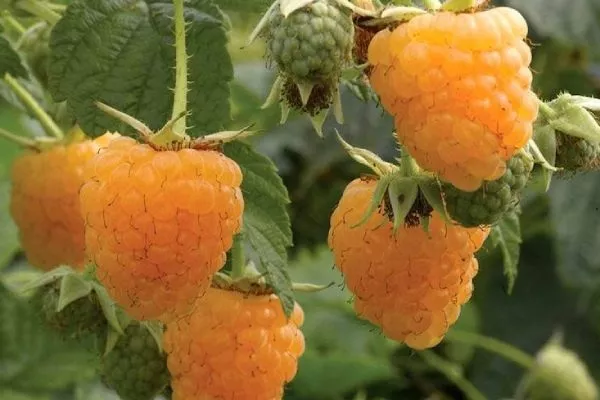
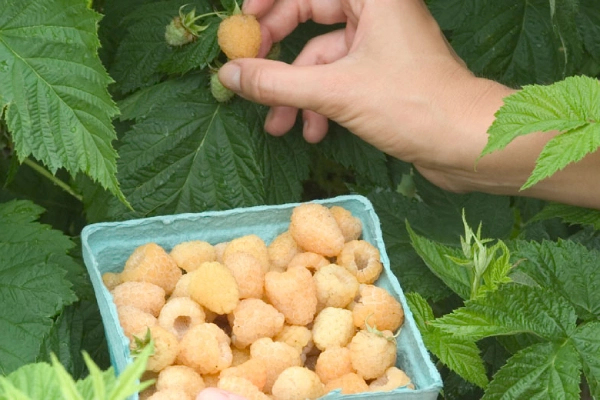
Beglanka fruits are renowned for their unusual coloring, reminiscent of apricots. They are beautiful and appetizing. They have the following characteristics:
- conical shape with a rounded top;
- weight - 3 g (with intensive feeding and high-quality care the weight reaches 5-7 g);
- weak adhesion of drupes (during the picking process the berry may fall apart);
- elastic, loose skin;
- tender, juicy, watery softness;
- small seeds that are not noticeable to the eater.
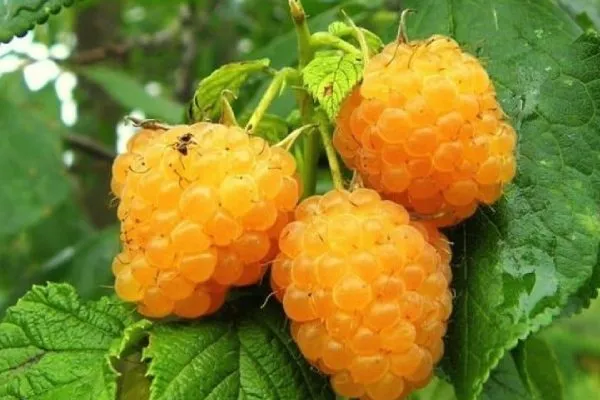
The flavor of yellow raspberries is satisfactory. It's predominantly sweet, with a distinct tartness. When fully ripe, the fruit is sweet without a sour note. The pulp sugar content is 7-7.5%, and titratable acids are 1.6%. Tasting score: 3.5 out of 5.
The harvest of this variety has a universal purpose:
- the berries are eaten fresh;
- add them to desserts;
- they make compote, juice, syrup, jam, baby food, marmalade from them;
- freeze;
- dry;
- preserved in the form of jam.
Frost resistance
Beglyanka is a winter-hardy berry variety. It tolerates harsh winter temperatures. Hardiness zones 3-4.
Thanks to its excellent frost resistance, as well as the heat and drought resistance typical of raspberries, this variety is suitable for cultivation not only in the central regions of the Russian Federation, but also in areas with colder climates, as well as in the south.
Beneficial properties
Beglanka berries are rich in substances beneficial for human health:
- malic, citric, tartaric, salicylic acids;
- fructose, sucrose and glucose;
- minerals (iron, potassium, magnesium, copper, calcium);
- carotene;
- B vitamins;
- ascorbic acid (its content in 100 g of pulp is 20 mg).
By eating yellow-fruited raspberries fresh, you will get maximum health benefits:
- improve your vision and skin condition;
- normalize metabolism;
- strengthen your nervous system, bone tissue, and heart muscle;
- stimulate digestion.
Yield, when to harvest
The bushes bloom in May. The first berries ripen in late June. They reach their peak in July. The second wave of fruiting begins in late August and continues until the first frosts in October. The raspberries ripen uniformly, allowing for several harvests.
The yield indicators of the variety are as follows:
- 1.5-2 kg yields 1 adult plant;
- 7000-8000 kg are collected by farmers growing garden crops on an industrial scale.
The berries are easily separated from the receptacle, simplifying harvesting. The variety is not prone to shedding ripe fruits. They cling firmly to the stems and remain on the vine even if overripe.
The Beglyanka raspberry doesn't have a good shelf life. Its harvest doesn't travel well over long distances, which is why it's rarely used for commercial cultivation.
Landing
Plant berry bushes on your plot within the following timeframes:
- in early spring, when the soil has already thawed;
- at the end of September or in October (during leaf fall).
If you purchased a seedling with a closed root system, you can plant it at any time during the frost-free period of the year.
Selecting a site and preparing the soil
To get a bountiful harvest of sweet, large raspberries, choose the right planting location in your garden. The best site is one with the following characteristics:
- solar;
- smooth;
- located neither in a lowland nor on a hill;
- protected from drafts and strong winds;
- without close groundwater table;
- with neutral or slightly acidic soil (the variety is not demanding regarding soil composition, but feels best in sandy, drained soil).
- ✓ Optimal soil acidity for Beglanka: pH 5.5-6.5. If the acidity is higher, lime should be added 6 months before planting.
- ✓ The distance between rows should be at least 2 m to ensure sufficient ventilation and reduce the risk of fungal diseases.
Prepare the planting site in advance:
- clear it of stones and plant debris;
- destroy weeds, in particular perennials such as sow thistle, couch grass, and bindweed;
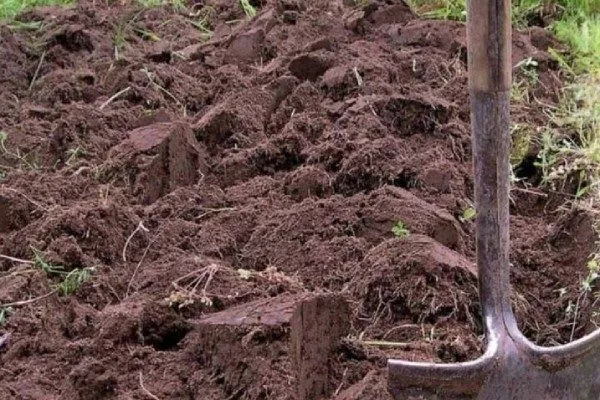
- Dig to a depth of 30 cm and add organic matter (humus, mullein) 15-20 days before planting raspberries.
Planting in holes
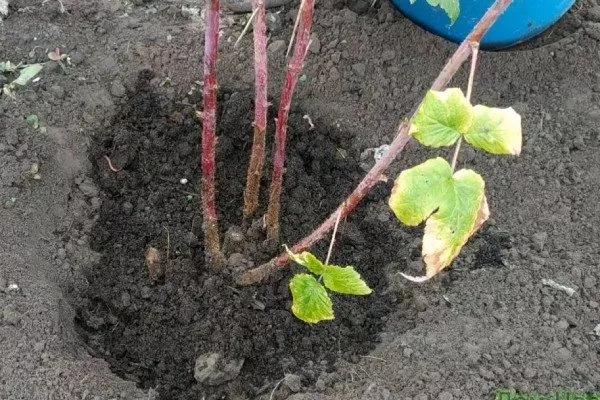
Plant the Beglanka bushes in holes dug two weeks beforehand. If you didn't apply fertilizer when digging the plot, add it to the planting holes. Use a mixture of rotted organic matter, superphosphate, and potassium salt.
If you have chosen a bush planting, follow the scheme:
- pit depth - 0.3 m;
- the distance between planting holes is 0.5-0.7 m;
- the distance between rows is 1.6-1.8 m.
When planting a raspberry bush, plant it 3-5 cm deeper than it was in the nursery. Prune the above-ground portion of the seedling to a height of 0.5 m.
Planting in trenches
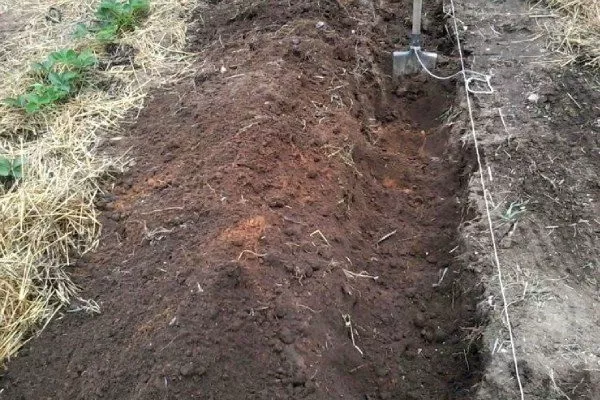
In a plot of soil pre-fertilized with organic and mineral compounds (30-50 g per 1 sq. m), dig trenches 0.4-0.5 m wide and 0.3 m deep. When planting raspberries, follow the diagram:
- distance between rows - 1.5-2 m;
- between seedlings - 1 m.
Plant raspberry bushes following the following algorithm of actions:
- Place the seedling in the trench.
- Spread out its roots. Place the root collar slightly above ground level.
- Cover them with soil and compact it.
- Water the seedling.
- Mulch the soil underneath it.
- Cut the shoot, leaving 0.3 m above the ground surface.
To make raspberry maintenance easier and harvesting easier, surround each row with a trellis. This will prevent the stems from bending under the weight of the fruit, provide access to each seedling, and allow for easy pruning, mulching, and fertilizing.
Care tips
With proper raspberry care, you'll reap a bountiful harvest of delicious and juicy berries. Take the following steps to care for your raspberry bushes:
- Watering. Water the bushes regularly, especially in the spring when they bloom. Water the raspberries in furrows once every 7 days. Use 30 liters of water per plant. Once the fruit begins to ripen, reduce watering.
- Weeding and looseningThese procedures will ensure soil aeration and prevent the growth of weeds that deprive the crop of water and nutrients.
- TrimmingThis procedure is aimed at removing thickening branches and excessive root shoots. In the spring, starting in the second year after planting, shorten fruiting shoots by 10 cm to a strong bud. Trim off frozen branch tips. Each fall, remove all two-year-old branches, cutting them back to ground level.
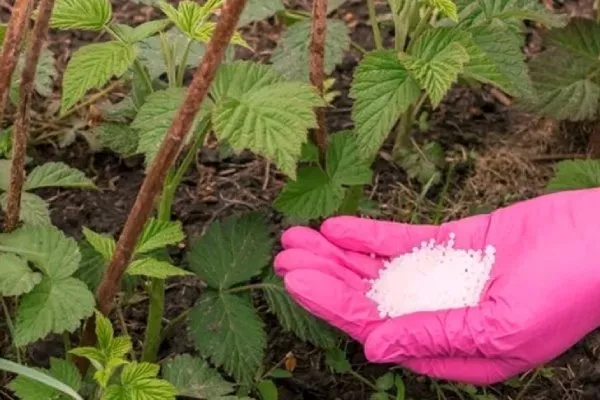
Use the root shoots that appear around the bush for propagation. - Top dressing. If you grow the crop in poor soil, feed it several times per season:
- In spring, when the buds begin to swell, feed the plant with an infusion of mullein or chicken manure, ammonium nitrate, or urea. It's also a good idea to add superphosphate.
- In the summer, when fruit buds are actively developing, fertilize the raspberry patch with potassium-phosphorus fertilizers. Wood ash is a good organic fertilizer.
- Apply the third fertilizer in the fall after harvest. Use superphosphate, potassium sulfate, and potassium magnesium sulfate.
Preparing for winter
Beglyanka is a frost-hardy raspberry variety. If you grow it in an area prone to autumn frosts before snow falls, or in a dry climate, mulch the area around the trunk with straw, leaves, or peat (10 cm deep). Avoid using compost as mulch due to its high nitrogen content.
Diseases and pests
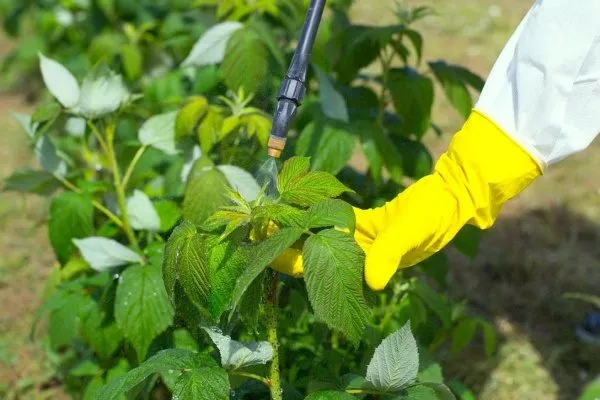
Runaway is known for its disease resistance. It's immune to fungal infections, but susceptible to spider mites. Take preventative measures to avoid disease and pest attacks:
- regularly cut out old and diseased branches;
- remove fallen leaves;
- weed out the weeds;
- in spring and autumn, loosen the soil to a depth of 8-10 cm;
- Before flowering, treat the plantings with Karbofos;
- Grow calendula, mustard or dill near your raspberry bush to repel pests;
- To prevent an invasion of beetles and weevils during the flowering period, shake the pests off the branches onto a film spread on the ground;
- To prevent the development of diseases, in the fall, after the leaves have fallen, treat the planting with iron sulfate (300 g per 10 liters of water), and in the spring, before the buds swell, with Bordeaux mixture.
Reproduction
Experienced gardeners propagate the Beglyanka raspberry using cuttings. Follow these steps:
- Take cuttings in June on a cloudy day. Choose two-year-old root suckers 10-12 cm long with 2-3 leaves.
- Immerse the cuttings in water with a rooting stimulator added to it for 12 hours.
- Plant them in containers (volume - 0.5 l) filled with a mixture of sand and peat.
What are the advantages and disadvantages?
Domestic gardeners have appreciated the variety for its advantages:
The variety also has some minor disadvantages:
Gardeners' reviews
Beglyanka is an excellent variety for gardening novices who love yellow raspberries. The plant doesn't require complex cultivation techniques. Its bushes are easy to care for and rarely suffer from diseases or pests. Even inexperienced gardeners can handle it.